Category: hiking journal

Journals of recent hikes, including accessibility, who went, kid- and dog-friendliness, weather, and nearby trails or other nearby cool spots. Posts layer photos with trip-specific moments, reflections, and thoughts. Other journals show past adventures and past nature spot reflected on based on a prompt or thought, some photos maybe added when available.

  • Oglebay Park Frozen Painted Falls &  Winter Adventure

    Oglebay Park Frozen Painted Falls & Winter Adventure


    Best for:

    Winter photography, accessible nature trips, quick day trips in West Virginia.


    Morning at Oglebay Park After Work

    Interstate 470 entering Saint Clairsville
    Blazing my way across Ohio.

    Picture this: I am just getting off a 12-hour overnight shift, barreling towards my hometown, Wheeling, West Virginia. I pulled into the small pull-off along the guardrail near the falls at Oglebay Park on February 11, 2026.

    The morning is a little chilly under normal circumstances but, honestly felt like a heatwave compared to the consistent below negative temperatures of the previous weeks. It was roughly 10:30 in the morning by the time I made it, and my friend from high school was already parked and waiting.

    Winter doesn’t mean stillness. It means finding layers of life hiding beneath the snow and ice.

    Frozen big Wheeling creek with new wooden stairs to creek bank at Oglebay Park
    Stairway to the creek bank

    Oglebay Trails

    The trails at Oglebay, some paved, others stairs or rocky slopes, hold a wild invitation that always reminds me of childhood. Sadly, the trail from the Schenk Lake area to the waterfall was destroyed in the devastating 2025 flash flood that wreaked havoc on many small West Virginia river valley towns.

    However, Oglebay Park still offers roughly 4.5 miles of paved walking trails and 8 miles of unpaved hiking trails.


    Blue orange and green multicolored squirt guns
    I think squirt guns in the winter might be better than in the summer even.

    What is there to do at Oglebay Park

    In the winter months, Oglebay Park transforms into a powder-covered playground. You can frequently catch winter sports in action like skiing and snowboarding. The Winter Festival of Lights turns the park into a six‑mile sparkling trail of displays. The frozen trails and landscapes create a quiet, magical world perfect for photography, hikes, walks, and taking in the crisp air.

    Beyond winter, Oglebay Park is a year‑round destination blending natural beauty with resort-scale amenities. The 1,650-acre park includes a golf course and driving range, gardens, museums, glass blowing demonstrations, paved paths for gentle walks, hiking trails, animal encounters at the Good Zoo, and much more. There’s something for every pace, interest, and season.


    Ogelbay Park: What’s New?

    There is a new stair set down to the falls which means safer access to the area. This is a great addition since most people who would have accessed the area from the now unusable trail would have to fight the hillside for any time in nature. Stairs offer a bit of nature access without having to fight the hillside to make up for the trail devastation.


    Our Plan for the Trip

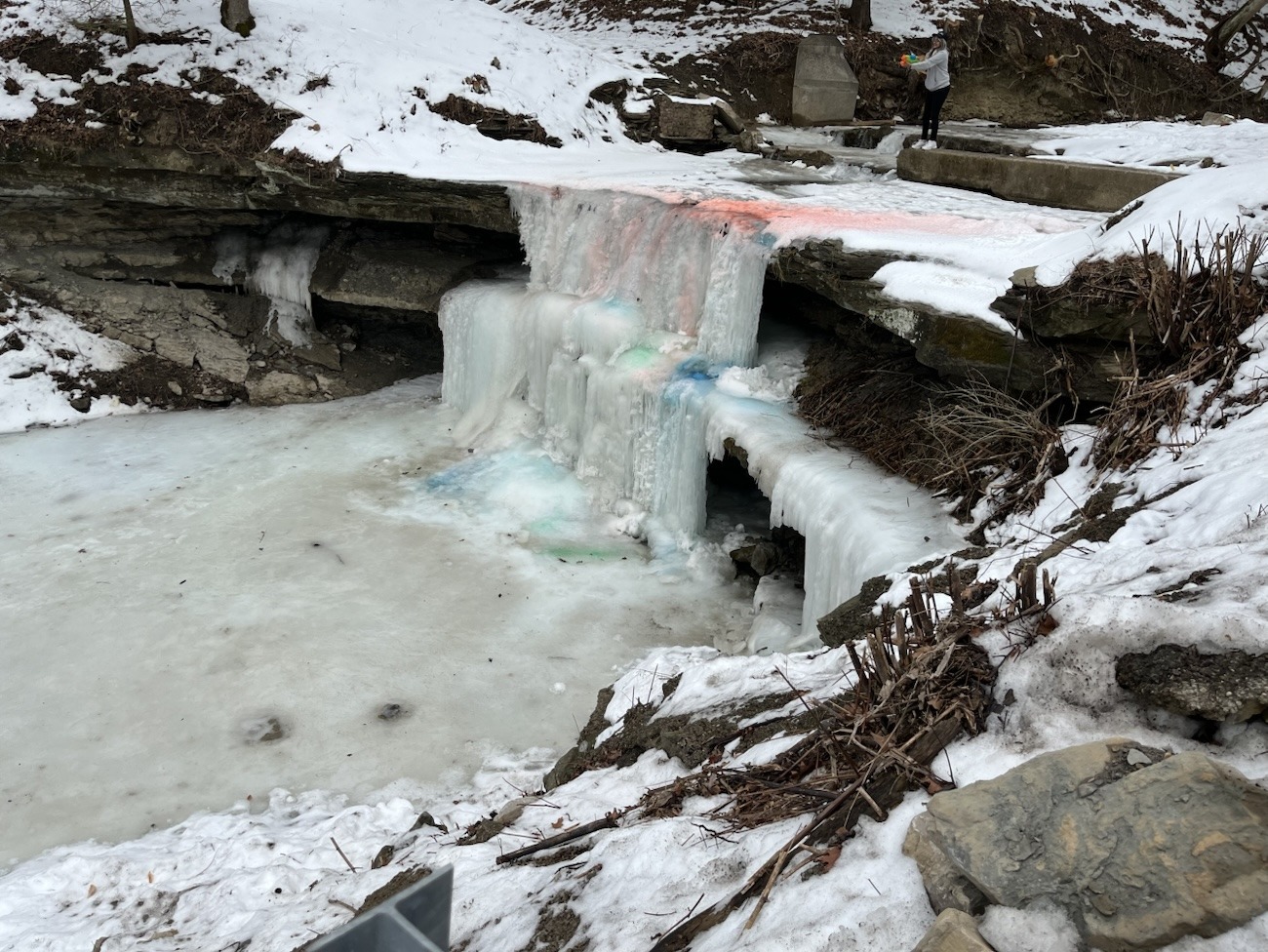
    Ogelbay’s roadside waterfall complete with food coloring on ice
    Don’t go a painting waterfalls, or whatever TLC said.

    So, I stopped and bought squirt guns and non-toxic food coloring for the occasion. Nessa brought the bottled waters. We filled them up with water and non‑toxic food coloring. We proceeded to spray the slowly melting waterfall an arrangement of speckled colors.

    Had Vanessa gone sooner, and not waiting for me it probably would have turned out more vibrant. The experience was definitely one of my new core memories. This was top-tier in my book and something I’m definitely going to have to recreate in the coming winters.

    Some memories are made in the quiet, speckled colors of a frozen waterfall.


    The Oglebay Park Good Zoo and Beyond

    Oglebay’s Good Zoo is nationally accredited and home to more than 50 species from red pandas and otters to cheetahs and exotic birds. Providing a perfect family‑friendly day trip critter moments included.


    Schenk lake frozen surrounded by trees and snow
    Schenk lake

    Winter Water Safety Tips

    A quick safety memo: my friend didn’t listen when I said the ice was thin. If you can see the flow of water over ice, do not step on it. Never traverse icy water without proper cold-weather gear. She found out the hard way that winter edges are slippery, and she took an early exit. Both of our cars were within a stone’s throw of us or she wouldn’t have tried anyway, safety first even when being a little risky. Hypothermia isn’t an ancient myth, it’s an equal‑opportunity spoiler.


    Oglebay in Winter Is Worth the Trip

    If you think winter means stillness, you’re right. It also means layers of life under snow and ice. Changing natural spaces temporarily is winter’s favorite game.

    Moss-covered rocks by the falls now slick with ice.

    The frosted tree limbs along the trails might just be in full bloom or still covered in the orange hues autumn brings.

    Oglebay Park brings nature, adventure and quiet beauty together in a package that’s worth a roadtrip in any season.


    Seeing this waterfall is incredibly accessible, you can view it directly from the road or even from your car.


    Another adventure

    Be seen, celebrated, and connected! All Free! Submit to Poeaxtry Spotlights today. By form or email Poeaxtry@gmail.com

  • Hartman Rock Garden in Winter, A Snow-Covered Folk Art Detour

    Hartman Rock Garden in Winter, A Snow-Covered Folk Art Detour


    Best For:

    Folk art enthusiasts, Ohio history buffs, budget-friendly day trips, and creatives seeking inspiration.


    Hartman rock garden sign surrounded by snow
    Hartman rock garden 🪴

    Springfield, Ohio- Hartman Rock Garden:

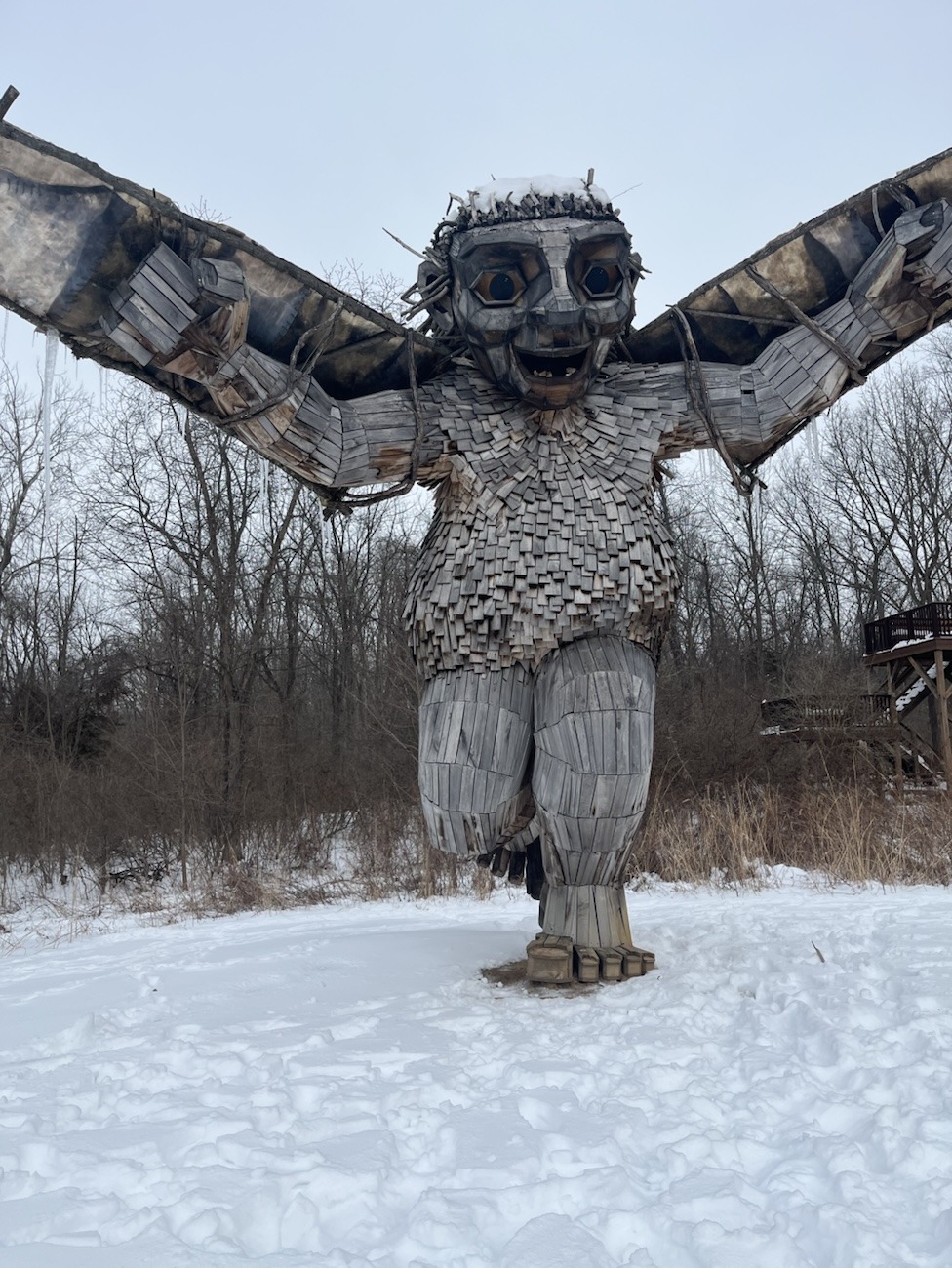
    I was passing through Springfield, Ohio, on my way home from the troll exhibit in Dayton. So I decided to stop at the Hartman Rock Garden. Nearly a foot of snow buried much of the site. I did not want to pass up the experience of seeing this piece of living art.

    I knew I would need to return in warmer months to see the full detail. There was still no way I was going to miss the chance to stand in front of a place built during the Great Depression. Even under snow, the garden still held presence, quiet, patient, waiting for discovery.

    Blue sign with yellow font explaining the history of the Hartman rock garden
    History of the exhibit signage

    The Visit

    The exhibit is in the yard of a cute home in a calm neighborhood. There was a dog loose on the street so I left Luna in the car.

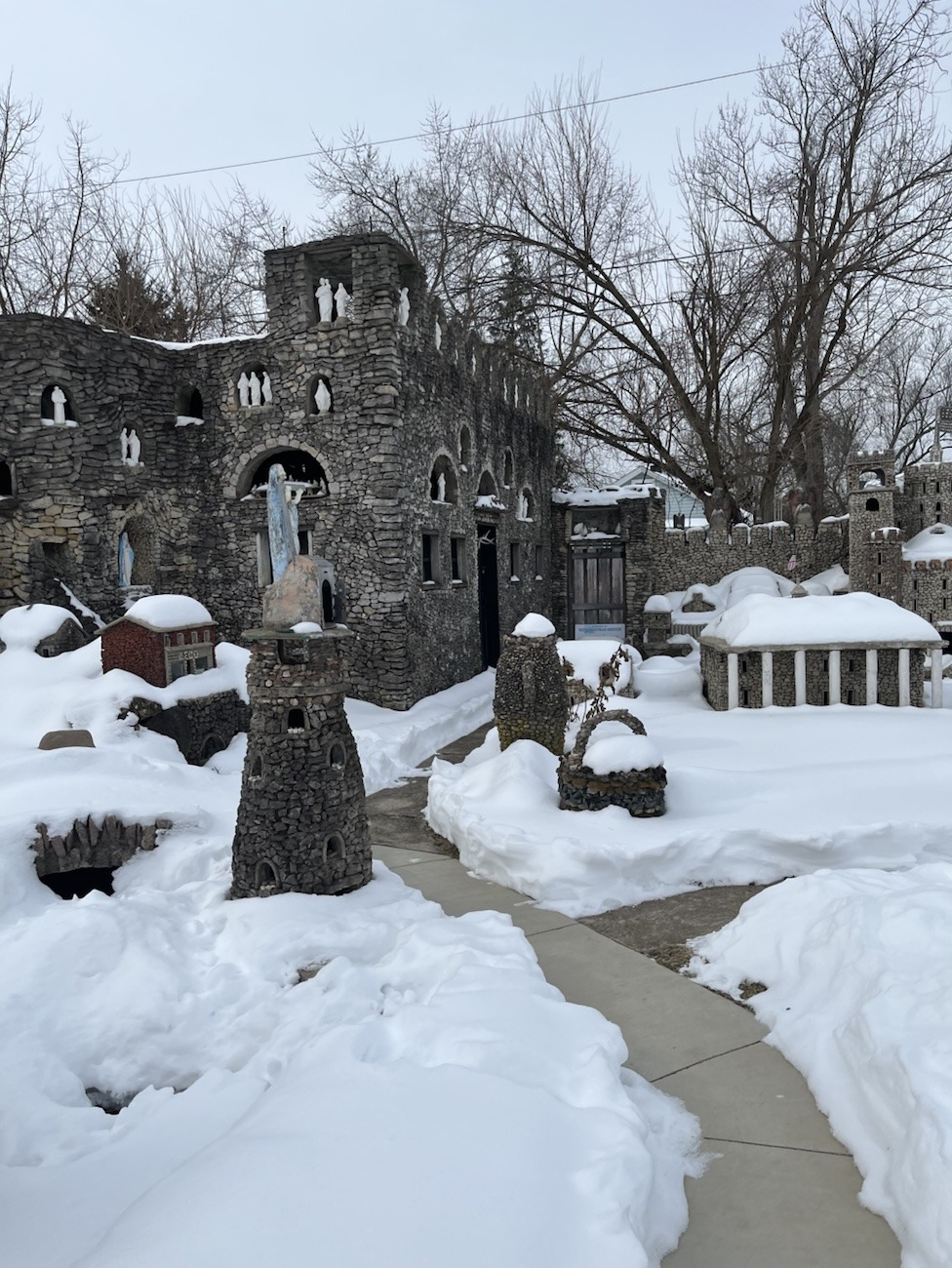
    Snow covered some of the sculptures, turning towers, miniature buildings, and stone pathways into partially hidden shapes. Some figures were not visible; others rose clearly above the drifts, hinting at how intricate the site must be once everything is uncovered.

    When the snow falls, these stone sculptures don’t disappear…

    they go into a deep, patient hibernation, waiting for the spring thaw to tell their story once more.

    It felt less like visiting a tourist attraction and more like stepping into someone’s preserved imagination. Even in winter, the sense of scale was obvious. You could see how much labor had gone into the stonework, how many small details were layered into the larger structures. The snow did not erase the experience. It simply turned it into a preview, a promise to come back and see the full story when the ground clears.

    The coffee cup but it’s full of snow
    One of my favorites

    History of the Hartman Rock Garden

    The Hartman Rock Garden was created by self-taught artist Harry George “Ben” Hartman, a Springfield foundry worker who began building the garden in 1932 after being laid off during the Great Depression. 

    Using concrete, glass, metal, and hundreds of thousands of stones gathered locally, Hartman transformed his backyard into an elaborate folk-art environment filled with miniature buildings, patriotic scenes, religious imagery, and imaginative structures. 

    History isn’t always found in dusty textbooks; sometimes, it’s hidden in a quiet backyard, built stone by stone from the ashes of a depression-era dream.

    Between 1932 and 1939 he constructed more than fifty detailed structures, including castles, historic landmarks, and symbolic sculptures representing education, religion, and American history. 

    After Hartman’s death in 1944, his family preserved the site for decades, and restoration efforts in 2008–2009 helped ensure the garden’s long-term survival as a recognized folk-art landmark maintained by a nonprofit organization. 

    Today the garden remains open to the public year-round, free to visit, standing as one of Ohio’s most unusual and personal art environments. 

    The school house and donation box surrounded by snow
    My other favorite

    My Experience

    Seeing the Hartman Rock Garden under snow felt like walking through a paused moment in time. The structures that rose above the snow allured at the complexity waiting beneath, reminding me that some places deserve more than a single visit.

    Two of my favorites were the tea or coffee cup and the large schoolhouse structure.

    It is a profound reminder that we are the architects of our own resilience, turning the broken pieces of a hard season into a permanent, public monument of hope.

    Even partially buried in winter, the Hartman Rock Garden proves how powerful individual creativity can be. Built by one man during one of the hardest economic periods in American history, it continues to stand decades later, inviting travelers to pause, look closely, and remember that imagination leaves physical footprints.


    Have you been to a rock garden like this? Or have you been to Hartman rock garden? Tell me in the comments your favorite folk art exhibit.


    Thomas Dambo Trolls- Trip One
    Be seen, celebrated, and connected! All Free! Submit to Poeaxtry Spotlights today. By form or email Poeaxtry@gmail.com

  • Aullwood Audubon Troll Trail Winter Trek

    Aullwood Audubon Troll Trail Winter Trek


    Best for:

    Art Lovers, trips with friends, day trips with the kids, solo reflections, trail lovers.


    The troll that hatched an egg sign in Aullwood Audubon
    The troll that hatched an egg.

    Aullwood Audubon

    Winter mornings have a different rhythm. The quiet roads, pale skies, and the soft anticipation of snow-covered trails. So on February 5th we left the house around 8:30 a.m., heading toward Dayton, Ohio.

    Luna and I arrived mid-morning with one goal in mind: the troll trail at Aullwood Audubon Center and Farm. With Luna geared up in boots that refused to stay put. Wr set out to see what the snow-heavy woods would allow us to reach.

    The house on the hill surrounded by snow and bare trees
    The Aull House, built in 1909 on a grassy knoll, became a historic site and was gifted to Five Rivers MetroParks in 1977.

    The Trail Experience

    The troll installations at Aullwood were created by internationally recognized Danish recycle artist Thomas Dambo. These large-scale sculptures built from reclaimed materials are designed to draw people deeper into nature while telling environmental stories.

    The Dayton installation, “The Troll That Hatched an Egg,” features three trolls placed along forest and farm trails, encouraging visitors to hike between locations rather than view them from a single spot. 

    Snow was still thick across the trails that morning, slowing our pace and turning a simple hike into a small endurance test. We completed roughly 1.5 miles, reaching the first two trolls.


    Trolls

    Bo

    Sign for Bo surrounded by snow
    Bo’s sign

    Bo (Troll #85), sitting quietly among the stream.

    Snow covered Bo the troll by Thomas Dambo
    Bo sitting in her frozen stream.

    Bibbi

    bibbi’s sign at Aullwood Audubon
    LOOK OUT FOR BIBBI!

    Bibbi (Troll #83) trying to fly away, equally impressive.

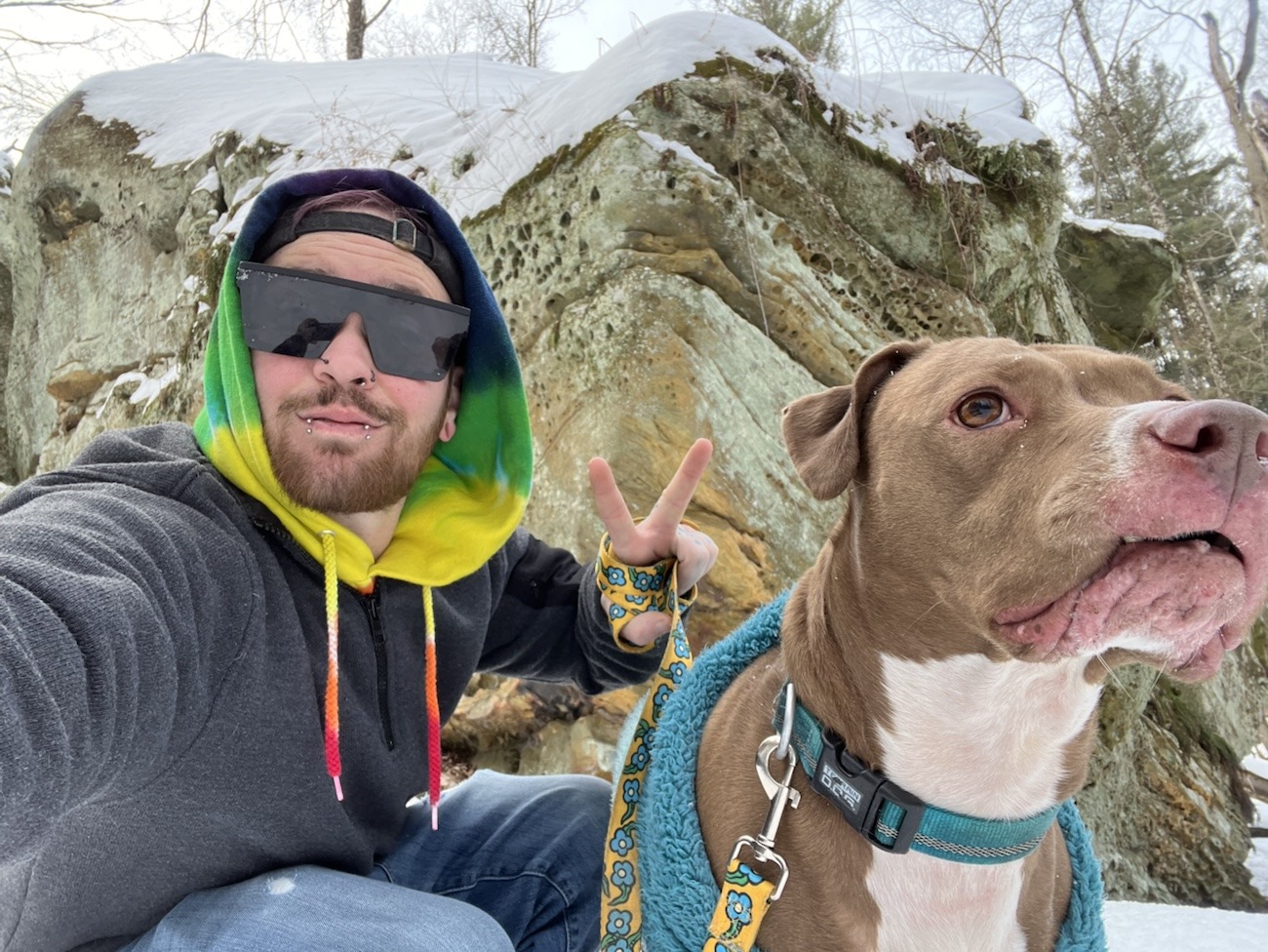
    Luna in boots and a tie die coat with Axton in his yellow jacket in front of Bibbi the troll
    It’s giving: Where the Wild Things Are

    I love how the artist blends reclaimed materials with woodland surroundings

    The sculptures both form a surreal contrast against the white winter landscape. Wooden textures rising out of frozen grounds and leafless branches. Trails at Aullwood can be primitive in sections, often dirt or gravel with exposed roots and uneven terrain, which becomes significantly more challenging under snow and ice. 


    The boots

    Luna’s boots repeatedly disappeared into deep snow, forcing several stops to refit them after finding them. The sheer amount of snowfall we have had recently really just doesn’t mesh with her booties. Eventually, between the conditions and the repeated gear adjustments, we decided to save the third troll for a return trip later in the month.

    A nicely marked trail sign surrounded by snow
    Trail sign pointing towards Bo and Bibbi

    About the Location

    Located just outside Dayton, Aullwood Audubon operates as a nature sanctuary, sustainable farm, and environmental education center with miles of trails passing through woods, meadows, streams, and prairie habitat. This troll exhibition is one of 155 of Dambo installations across 5 continents. This makes the trail both an art destination and a conservation-focused outdoor experience. 

    Bibbi from the side surrounded by trees and snow
    Bibbi 🩷

    Vibes

    Even shortened by winter conditions, this hike delivered exactly what winter trails promise, quiet woods and the reminder that unfinished hikes are simply invitations to return. We headed out after completing the first section of the trail, planning to revisit the remaining troll next week.

    After leaving we stooped to see a Great Depression era rock garden!


    Have you seen any of the Thomas Dambo trolls? Tell me which you’ve heard or seen in the comments.

    Don’t forget to share with someone you want to see the Dayton installation with.


    Internal links

    Dublin art Hartman rock garden

    Trip 2 Thomas Dambo trolls


    External links

    poeaxtry’s links

  • A Reflective Hiking Journal by Axton N.O. Mitchell

    A Reflective Hiking Journal by Axton N.O. Mitchell


    Best for:

    Beginners interested in emotional nature journaling, hiking enthusiasts looking to emotionally reflect, independent press fans, and those who need a place to sit with their feelings.


    Published by Poeaxtry’s Prism


    Waterfall Confessions

    Some trails lead you forward.

    Some lead you inward.

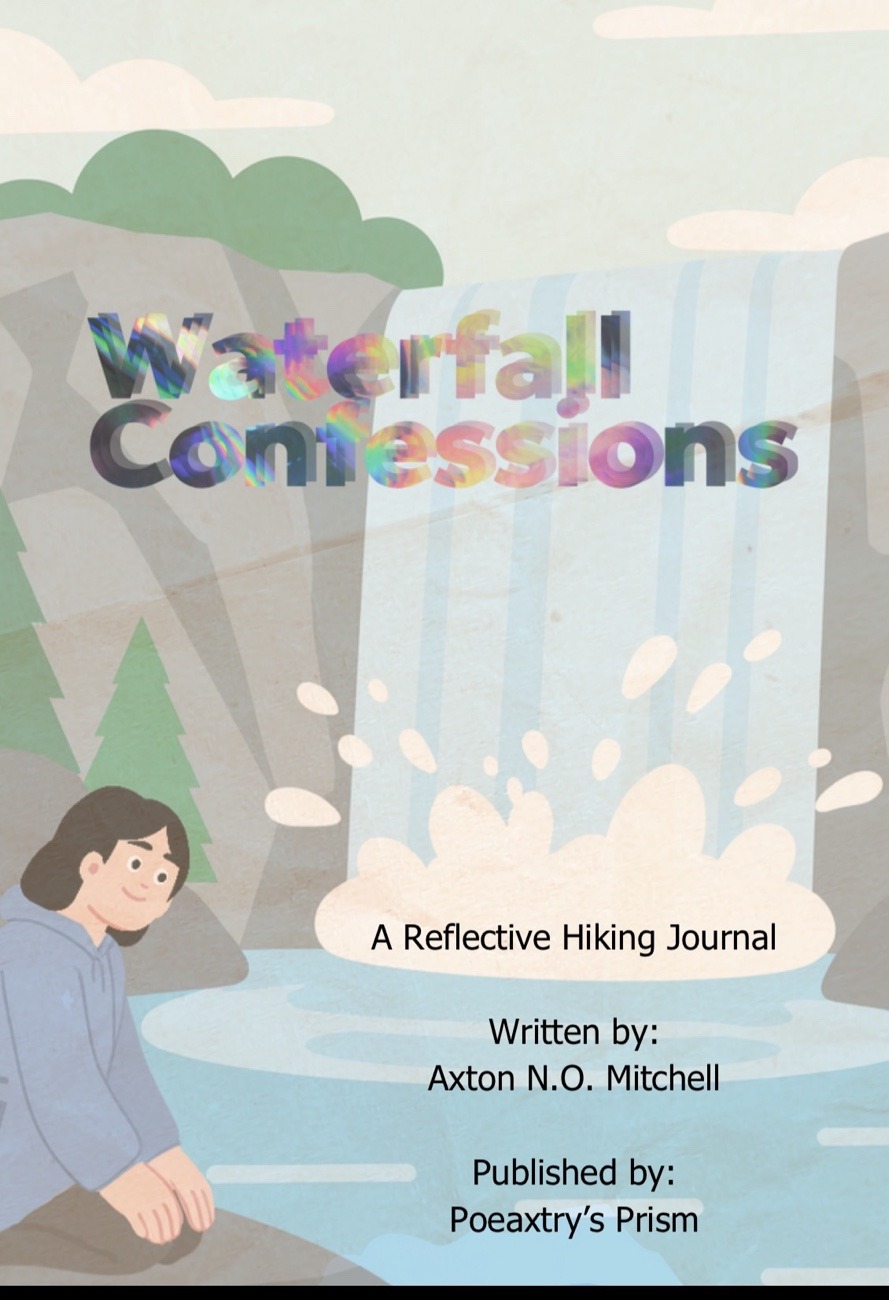
    Waterfall Confessions is a guided reflective hiking journal designed for those who process life best with dirt on their boots and wind in their lungs. Built around immersive prompts rooted in real trail moments, this collection invites you to confront anxiety, memory, identity, forgiveness, and release while standing in front of something ancient and unmoved.

    Cartoon human sits on rock by waterfall
    Waterfall Confessions By Axton N.O. Mitchell

    This is not a “how was your hike?” notebook.

    This is a mirror made of water.


    Why I Made This Collection:

    • I hike because movement clarifies what sitting cannot. There are things I have only been able to admit to myself while standing in front of a waterfall.
    • The noise gives permission.The constant motion makes stagnation impossible. The scale reminds me that my spirals are small in the grand scheme, even when they feel overwhelming.
    • Too many journals feel disconnected from lived experience. Too many prompts float in abstraction without grounding.
    • I created this collection because reflection hits differently when your heart rate is elevated and your breath is syncing with something wild.
    • Mental health conversations belong outside fluorescent lighting. Some of us untangle trauma better in motion.

    This journal exists at the intersection of hiking, emotional processing, and radical self honesty.


    What Makes This Different:

    Trail grounded prompts inspired by real outdoor moments.

    Questions that move beyond surface gratitude into trauma, identity, fear, surrender, and growth.

    Space to document locations visited or reflected on.

    Designed for hikers, wanderers, overthinkers, and anyone healing in motion.

    Created by an indie poet committed to minority voices, accessibility, and community driven publishing.

    This is not fluff journaling.

    This is confrontation, softened by nature.

    Green background black writing title page for Waterfall confessions by Axton N.O. Mitchell with small waterfall doodle at bottom
    Title page of digital collection

    How to Use This Journal:

    • On the trail: Bring it printed or digitally accessible on your device. Pause at waterfalls, creek crossings, or other water features. Answer what hits. Skip what doesn’t. Come back later.
    • After the hike: Reflect on what surfaced physically versus emotionally. What shifted between movement and stillness?
    • At home: Use it as a meditative return to places that grounded you. The prompts work even if you are reflecting on memory instead of current terrain.
    • For repeat visits: Return to the same waterfall months later. See what changed. See what didn’t.

    There is no “right” way to move through it. It only asks for honesty.


    Green background watercolor texture with black font 2 prompts with black lines to add response
    Inside the Prompt Journal.

    Who This Is For:

    Hikers who journal

    Journalers who need a reason to go outside

    People processing anxiety, depression, trauma, or transition

    Minority creatives who do not see themselves centered in traditional wellness spaces

    Indie souls who prefer grassroots tools over mass market therapy aesthetics

    If you have ever stood somewhere wild and thought, I can admit it here, this is yours.


    Where to Buy:

    Waterfall Confessions: A Reflective Hiking Journal is available as a digital collection through:

    Payhip Gumroad Etsy

    Purchasing directly supports independent publishing, minority centered creative work, and future community driven projects through Poeaxtry and the Prism.


    Other ways to read:

    Barter, review exchanges, and accessibility conversations are always welcome. Paywalls were built to be questioned. Email poeaxtry@gmail.com and ask for more information.

    An Emotional Adventure Journal:

    Water erodes stone through persistence, not force.

    Healing often works the same way.

    Waterfall Confessions is an invitation to let something steady move through you.

    To name what you are carrying.

    To release even a fragment.

    To document the version of yourself that showed up that day.

    Not the polished one.

    The real one.

    Take it to the trail.

    Let it echo.

    Write anyway.


    Internal links:

    Care for You. Because Who Else Will?

    The text that almost scared me away.

    Staying human. Kelso 2. I like to read;

    Prince. Ramblings. Endings.


    External Links:

    Poeaxtry’s Links. Portfolio.

    Amazon Author.

    Goodreads.


  • Night Walk Through Moonville Tunnel , Snow, Steel, and the Lavender Lady

    Night Walk Through Moonville Tunnel , Snow, Steel, and the Lavender Lady


    Best For:

    History buffs, ghost story lovers, low grade trail walkers, night hikes with friends, individuals interested in Appalachian folklore.


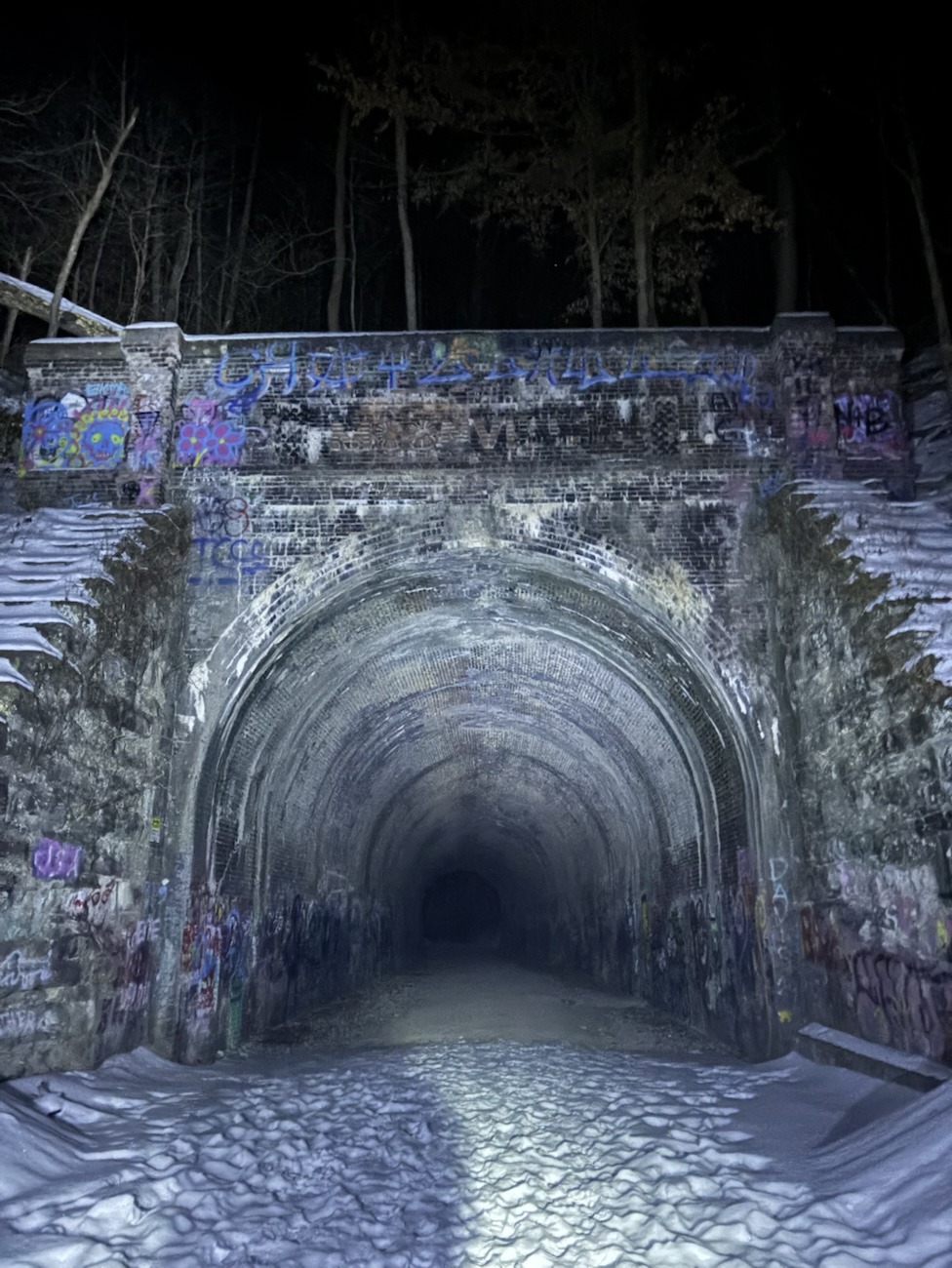
    On February 4th, from about 8 pm to 10 pm, we finally did it.

    A late evening walk out to Moonville Tunnel in McArthur. Our headlamps and flashlights cutting through the cold air, snow still thick enough to slow our steps. What was supposed to be just Kylie, my new headlamps, me, and Luna turned into a small night crew. Kylie was still a little freaked out about going at night, so her sister Adi and her partner Houston came along. Kelsey, my partner decided they would come too.

    Snow snow snow
    Can you see the tunnel in the darkness?

    The Walk In

    There is a bridge right off of the trailhead. The fence on the bridge is threaded with hair ties and locks sticking in the metal. Little offerings, remnants, signs that people come here holding onto something.

    Our light cut through the Ohio cold while mingling with the shared, quiet thrill of reclaiming a place left behind by time.

    Hair ties on the fence on the bridge
    The hair ties on the bridge

    Moonville Tunnel

    The tunnel is not far past that bridge.

    Though, we did about 1.5 miles total. The mostly flat terrain was covered in snow. I would call this a highly accessible trail in better conditions depending upon what the material the ground is composed of under the snow. The snow slowed us down, almost mid-calf in some spots. We were thankful the grade itself stays gentle.

    At night, the tunnel does not announce itself. It absorbs light. Our headlamps and flashlights carved the dark into sections of stone, ice, breath, and silhouettes of my friends. I got some shots of the tunnel mouth, and others where my homies looked like figures in a story.

    I have been trying to do this walk for a while. Doing it at night made it better.

    Moonville tunnel at night in the glow of snow.
    The haunted moonville tunnel

    A Railroad That Refused to Die Quietly

    The Moonville Tunnel stands as the most prominent vestige of a once-bustling mining community. Thriving in the mid-to-late 1800s, Moonville was a vital coal and iron hub along the Marietta and Cincinnati Railroad. While the town faded into the forest by the mid-1900s following the decline of the mines, stone tunnel which was completed in 1856 remains a haunting monument to Appalachian industry and the ghosts of its labor.


    Standing as a monument to the labor that built Appalachia. The tracks might be gone, but the stone remains, holding the weight of communities left begind.

    The area now connects to the Moonville Rail Trail, a corridor through the Zaleski State Forest and surrounding public lands. Tracks that once groaned under the weight of coal and passengers now carry hikers, ghost hunters, and those of us simply wanting to see what the dark does to a place left behind.

    One of my favorite pieces of graffiti inside Moonville tunnel.
    Graffiti

    The Haunted Stories, Lavender Lady and Lantern Light

    Moonville Tunnel is considered one of the most haunted locations in Ohio folklore.

    Of all the restless spirits said to walk the Zaleski woods, the Lavender Lady is the most gentle. Legend says she was struck by a train near the tunnel’s mouth, some say while gathering wildflowers, others say while simply walking home. She is rarely seen, but often sensed; a sudden, misplaced drift of lavender perfume cutting through the damp, mossy scent of the stone tunnel.

    The Brakeman is the most famously seen or sensed apparition of them all. His story is etched into the local records of 1859, a man named Theodore Dixon. He was caught in the path of the very iron beast he served. Now, visitors speak of a rhythmic, swinging lantern cutting through the pitch-black bore of the tunnel. They hear the heavy crunch of boots on gravel where no one stands, and voices that bleed through the stone, echoing a warning that arrived a century too late

    Shadows here have a way of detaching themselves from the walls, and the air can turn bone-cold even in the humid swell of an Ohio summer. Whether it is the weight of collective grief, the power of suggestion, or something older that refuses to vacate the line, the stories cling to the stone like the moss that feeds on the damp. Decades of paranormal investigations have only deepened the silence that follows when the laughter of unseen voices fades.

    Houston got a piggie back ride from adi
    Houston and Adi

    Devils Head Table, A Daytime Return

    I have heard I will need to go back during daylight to see Devil’s Tea Table, a nearby rock formation. Night swallowed everything beyond our immediate beam range. The snow kept us focused on footing.

    So yes, I will be back. In daylight. Different lens, different mood.

    All of us from the trip in front of the tunnel in the dark
    The Homies

    What the Night Actually Felt Like

    It was not terror.

    It was tension, yes. Curiosity. A little adrenaline. A little laughter. Snow crunching.

    It felt like reclaiming space. An abandoned industrial scar turned into a nature trail. A haunted legend turned into a group walk with queer love, chosen family, and muddy boots.

    axton in grey hoodie and vest and Kelsey in black jacket
    My stink

    Accessibility

    Accessibility-wise, outside heavy snow, the grade is gentle and mostly straight. Minimal elevation change. Wide enough for side by side walking in most sections. If clear, this could be a solid accessible trail option for many people.

    Accessibility isn’t one-size-fits-all. In daylight, during warm seasons this trail is a gentle path.

    At night, it becomes a fight with shadows, shifting sensory makes your depth perception vanishes. All but your hands nearly invisible. Winter adds slippery ground and uneven footfalls.

    At night though, accessibility shifts. Vision narrows. Shadows distort depth. It becomes a different terrain entirely.

    Graffiti from inside Moonville Tunnel
    More cool tunnel art

    Moonville Tunnel is not just a haunted hotspot in Ohio folklore. It is a relic of Appalachian labor, industrial rise and fall, and the way stories survive longer than towns do.

    Walking it at night with people I trust made it less about ghosts and more about presence. Snow slowed us. The dark sharpened us. The tunnel held all of it.

    I will go back in daylight for Devil’s Tea Table. But I am glad my first full walk out there was under headlamp beams and winter air, because some places deserve to be met in the dark first.


    Poem written reflecting on moonville

  • 100 Poems in 100 Days, Day 26: “Crunch, Snap, Sigh”

    100 Poems in 100 Days, Day 26: “Crunch, Snap, Sigh”


    Crunch,

    ice breaks beneath shoes.

    Snap,

    stick breaks under weight.

    Sigh,

    cool breaths escape hastily through nostrils.

    Red, chilled cheeks,

    sweat-soaked brow.

    A squirrel scurried under brush,

    a paw print planted in otherwise pure snow.

    Wind whistling,

    then whispering

    in between barren trees.

    The only cure for a wild wanderlust.


    Poet’s Note

    This poem was written after reflecting on a winter hike. I spent time reflecting on the same places I frequent just through a new lens. Snow transforms familiar paths, changes the sounds, the textures, and the way the world feels underfoot. Every crunch of ice, every snap of a stick, and every exhale of cold air is magnified in stillness. The small details, the squirrel darting under brush, the paw print in pure snow, become markers of moments. Fleeting and yet permanent.

    The poem is about noticing those shifts, both in the landscape and in myself. How a place can remain familiar and yet feel entirely new depending on the season, the weather, or the mind walking through it. The final line, “The only cure for a wild wanderlust,” is a quiet acknowledgment that these moments of attention, these walks through snow and cold, are what feed the urge to wander, to explore, to feel alive.

    It is a meditation on presence, observation, and the subtle ways the world changes around us, even in places we thought we already knew.


  • A Hidden Winter Waterfall Stop Near Mohican, Ohio

    A Hidden Winter Waterfall Stop Near Mohican, Ohio


    Trail signs at hemlock falls

    Some hikes are not about mileage… they are about stepping into a frozen moment.

    On a cold winter morning at Hemlock Falls between Malabar Farms and Mohican we found the perfect frozen moment. Luna and I explored a lesser-known waterfall tucked into sandstone ledges and forest. What All trails and trail signs claimed was a quick 0.3-mile trail turned into 1.4 miles (2.25 km). A waterfall stop transformed into a long walk along creekside trails. Quiet winter corridors where snow recorded every footprint before ours.


    Frozen creek surrounded by snow

    What to Expect

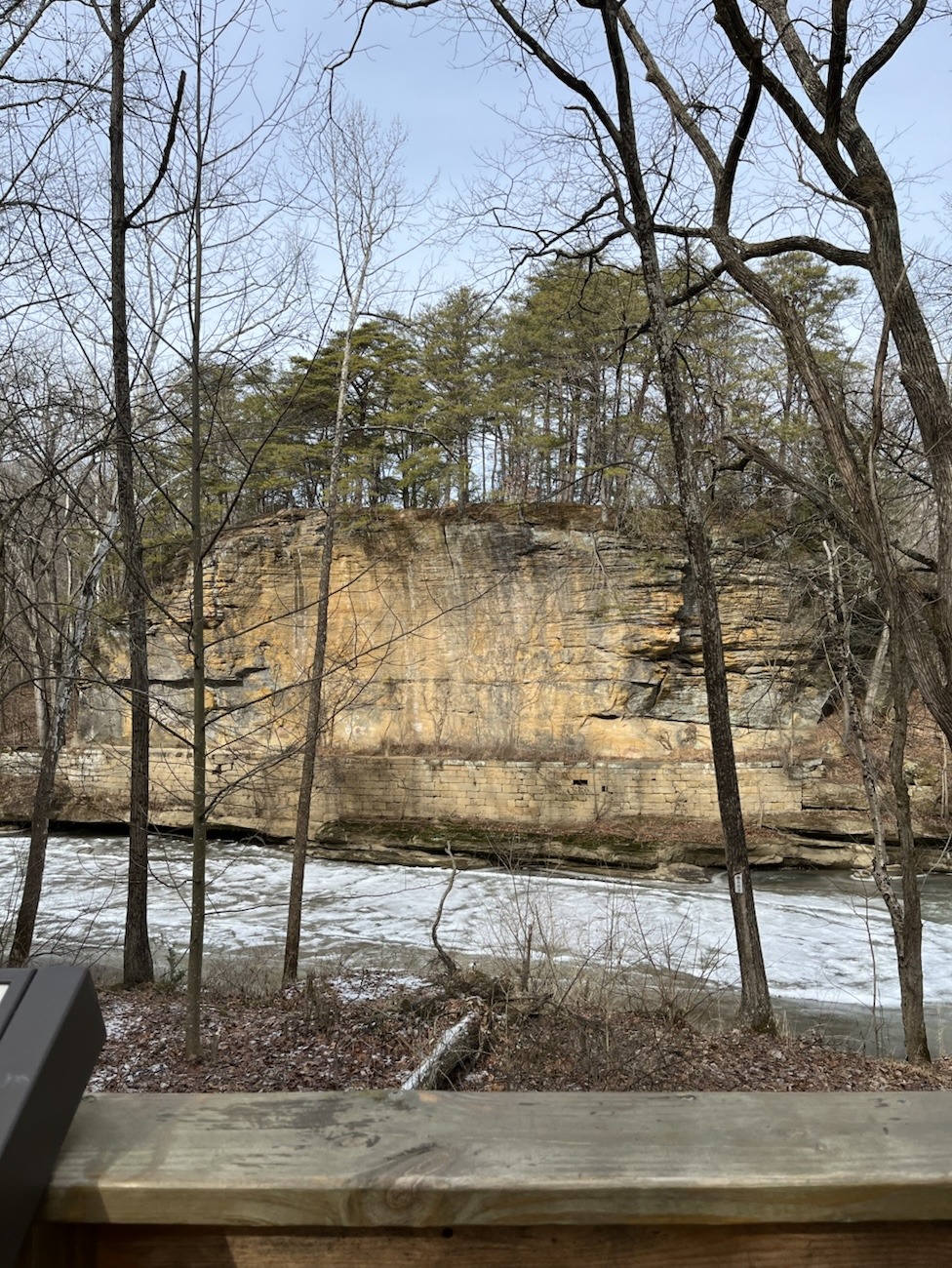
    The terrain follows the familiar Ohio ledges and gorge formations, where layered sandstone cliffs frame narrow streams and waterfalls. Trails are well-marked, with bridges, boardwalk segments, and conservation signage asking hikers to stay on trail to protect native plants.

    Today, winter changed everything.

    Both waterfalls were frozen into towering sheets of ice. The stream still audibly flowing beneath the surface of the second fall as we stood at its base. The first cascade dropped over the ledge beside a small viewing bridge, forming thick icicles along the rock face. Standing near a frozen waterfall that you can hear moving underneath you is something photographs will never fully capture.

    We encountered no other hikers, only the quiet of snow, rock walls, and the steady sound of water moving under ice.


    One Foot Bridge at the Hemlock Falls trail

    Trail Notes

    • Distance explored: ~1.4 miles (2.25 km) plus
    • Marked waterfall trail listed at ~0.3 miles (0.48 km)
    • Terrain: rocky gorge trails, bridges, short boardwalk sections, creek crossings
    • Accessibility: Not ADA accessible
    • Difficulty: Easy in dry conditions, moderate in snow or ice
    • Facilities: No restrooms, no trash cans
    • Parking: Small gravel lot, limited winter maintenance
    • Conservation: Stay-on-trail enforcement to protect plant habitats

    Ohio’s sandstone gorge regions formed through long-term erosion of sedimentary rock layers, creating the ledges, small caves, and waterfalls. These features are common throughout central and eastern parts of the state.


    The First Frozen Fall Surrounded by trees

    Why Some Locations Stay Quiet

    Certain natural areas remain intentionally low-profile, especially smaller preserves without infrastructure, staffing, or waste services. Keeping traffic manageable helps prevent erosion damage, plant loss, and litter buildup in fragile gorge ecosystems. If you’re looking for the exact location, feel free to ask privately. Always follow Leave No Trace practices when visiting.


    This year we’re working toward visiting every Ohio state park and preserve. As well as art sites, and outdoor landmarks, and hidden gems. I’ll be documenting the journey one trail at a time. Some places are well known. Others are small, quiet, and almost secret.

    Sometimes those are the ones that stay with you the longest.

    This location features multiple waterfalls. The preserve sits along sandstone cliff formations carved by ancient glacial runoff, a landscape that has shaped the Mohican River valley for thousands of years.

    The area is quiet and lightly trafficked, making it ideal for those seeking solitude rather than crowded scenic stops.


    Frozen Hemlock Falls

    Bonus Stop on This Route

    If you continue the drive back toward Licking County, Honey Run Falls in Knox County makes an easy additional stop. The roadside waterfall drops roughly 25 feet beside a short walking path, making it one of Ohio’s quickest waterfall visits.


    Luna & Axton in front of the fall

    Why This Stop Is Worth It

    Ohio hides countless micro-adventures, places that do not require a full-day hike but still deliver dramatic scenery. This waterfall stop is one of those locations where towering cliffs, groves, and rushing water converge within a short walking distance from the trailhead.

    It is an ideal quick scenic stop when exploring the Mohican and Malabar Farm region, especially for photographers, waterfall collectors, and travelers documenting Ohio’s natural hidden gems.


    Fat women squeeze at Hemlock Falls

    Accessibility Notes

    This trail is not ADA accessible due to uneven terrain, rock crossings, and elevation changes near the gorge. Winter ice can significantly increase difficulty.


  • Blackhand Gorge Winter Hike, Quarry Rim Loop & Canal Lock Trail

    Blackhand Gorge Winter Hike, Quarry Rim Loop & Canal Lock Trail


    Axton in a yellow jacket, sunglasses, and black beanie with the bluie sky and bare trees in the background

    A Solo Winter Morning at Blackhand Gorge State Nature Preserve

    In the morning on January 22nd, I left around 10am to hike Blackhand Gorge State Nature Preserve in Licking County, Ohio. I returned home after 4pm after a full day of cliffs, ledges, history, and unexpected ice underfoot. This preserve is a roughly 957-acre park in Ohio dedicated to protecting the Black Hand sandstone gorge carved by the Licking River. The gorge is rich in geological narrative and human history. 


    Black Hand Gorge Quarry Rim Trail Sign

    Blackhand Trail and Quarry Rim Loop: Ice, Ledges, and Views

    Pond- Frozen Cliffs Filled with bare trees

    I began on the Blackhand Trail, the main paved corridor in the preserve. This trail follows old rail grades and river views. Beloved for its more than 4 miles of paved path through narrow gorge walls and rock outcrops that showcase Black Hand sandstone.

    View From the Paved trail at blackhand of the frozen river

    The morning winter air was crisp, but the issue came in the form of an unsalted blacktop. The paved trail was covered in black ice, invisible in patches and treacherous underfoot. I moved slowly, croc junipers skidding, awareness high. The river whispering beside me as cliffs loomed straight up from the trail. Visibility was bright, but traction was minimal, a reminder that winter hikes require respect even on flat, paved miles.

    The Quarry Rim Loop connected to this route, passing overlooks above old sandstone quarry sites. Here stone was once mined for local industry and left behind as scattered cliffside pockets. These ledges and cliff views are part of what Ohio brags about in natural aspects at least. These dramatic rock faces that make winter light and shadow feel cinematic as the sun sits low in January. 

    Axton In jeans, a yellow jacket, black hat, and cunglasses sits on a down tree with fall leaves and bare trees around him

    Together the Blackhand Trail and Quarry Rim Loop carved a narrative of stone and river that felt good under winter skies. Even if each step on the paved trail required calculation and care.


    Ledges at blackhand gorge

    Old Lock At Blackhand Gorge

    Historical Echoes on Canal Lock Trail

    After the main loop, I finished the day on the Canal Lock Trail. A short off-shoot that brings you to Lock No. 16 from the Ohio & Erie Canal era. This remnant of 19th-century engineering stands as a block of weathered sandstone surrounded by leafless woods. A quiet monument to the time when canal boats and towpaths linked Ohio’s growing towns. 

    Axton in a Yellow jacket, black hat, and jeans stands in front of the ancient train tunnel

    Beyond the lock, the trail skirts through an old train tunnel. A rock-blasted passage used in the early 1900s by interurban railcars and linked to Newark and Granville rail service. The tunnel sits still and cool. Its stone walls shaped by industry, reminding you that this preserve holds as much human history as natural history. 

    These features, canal lock remains and an abandoned tunnel, give the trail a multi-layered story. Pulling you between river, rock, and the passage of time.


    View from ontop of the Black hand cliff back across at the Paved Trail

    Winter’s Challenges and Worthwhile Views

    Walking solo in winter has its hazards and its rewards. The Blackhand Trail’s paved corridor was closed in parts for construction through 2025.

    The Black Hand sandstone cliffs named for a prehistoric petroglyph lost to canal blasting in the 1800s, rise steep and unyielding above the Licking River. Today you can still read the layers of stone and river action in every ledge and bend. In winter, without leaves, the gorge’s angles and depths stand out in sharp relief. 

    Canal history, interurban tunnel remnants, old quarry outcrops, and riverside views all layer together into a preserve that feels alive with stories. These stories can be heard when the trail is quiet and the light is cold.


    Axton in a yellow jacket, black hat, and jeans sits on a cliff wall

    Why Blackhand Gorge Deserves Winter Days Like This

    Blackhand Gorge is both geological wonder and historical capsule. Its narrow east-west gorge, carved over millennia by the Licking River. It was a Native American corridor, named for a hand-shaped rock carving noticed by early settlers. Later transformed by canal and railroad builders. 

    Today, amid mixed hardwoods and spring wildflowers in warmer months, the gorge attracts hikers, bikers, and history lovers alike. In winter, it becomes a quiet classroom of stone and cold air.


    Sign for the Train Tunnel At Black Hand Gorge

    Trail Tips for Winter Explorers

    Prepare for black ice on paved paths in winter. Winter boots or traction devices can save your otherwise ruined day trip. Stay aware of trail closures or construction updates before heading out. Bring layers. Gorges can hold cold air long after the low sun rises. Plan time, winter light fades early, and even short sections take longer on icy ground.

    Blackhand Gorge was a solo day, a morning out that turned into a full afternoon return. I met the ice, river, stone, and the whispers of history in old canal locks and tunnels. There’s a rawness in winter hiking that feels honest. A preserve like this, carved by time and human hands both, deserves days spent learning its angles.


    Another View from ontop of the Black hand cliff back across at the Paved Trail

    Share this with someone you want to explore Black Hand Gorge with. Tell me in the comments your favorite Black Hand Gorge trail or the feature you enjoy the most when visiting.


    All Poeaxtry Links Piatt Gorge

  • A Winter Solo Hike at Morris Woods, in Licking County

    A Winter Solo Hike at Morris Woods, in Licking County


    Morris woods preserve sign surrounded by snow

    My Afternoon at Morris Woods State Nature Preserve

    In the afternoon of January 23, after returning from my Hocking Hills winter hikes, I made my way to Morris Woods State Nature Preserve in Licking County, Ohio. This was just perfect for a short solitary walk. This preserve, about 107 acres of mature beech‑maple forest, wetlands, and a small lake, was a perfect slow‑paced follow‑up to big gorge trails. A nice breath of quiet nature before heading home. 

    The area is managed by the Licking Park District and owned by the Ohio Department of Natural Resources. Morris Woods is marked by easy natural surface trails weaving through forest, wetland, and along stands of trees that feel almost ancient in winter stillness. 

    snow covered trail surrounded by bare trees

    Homestead to Albert’s Pond Trail: Short, Serene, and Snow‑Laced

    I chose the Homestead to Albert’s Pond Trail, a little over half a mile loop that stitches together forest paths, small ponds, bridge walkways, and plenty of quiet space to notice nature up close. While the trail is short, it’s rich in moments: wide, easy‑going terrain, boardwalk sections crossing wetter ground, and the little water of Albert’s Pond frozen and surrounded by leaf‑bare branches. 

    The snow underfoot held prints from deer, squirrel, and smaller creatures, turning the woods into a living page of tracks and tales. Here and there, snow‑covered trees dipped low, the bare boughs forming tunnels of quiet shade and soft echoes. The trail itself loops gently back toward the trailhead, making this a perfect winter afternoon walk when shorter daylight and cool air demand restful pace. 

    raccoon print in snow

    What Makes Morris Woods Unique in Licking County

    Morris Woods feels different from big trailed preserves. Its boardwalk sections over wetland areas, pockets of open water, and surrounding beech‑maple forest create habitats for birds and wildlife throughout the seasons. Ducks, frogs in warmer months, squirrels, and various songbirds are regulars and in winter, their tracks and calls make every moment feel like a lesson in attentive observation. 

    Because this is a State Nature Preserve, rules are clear: visitors stay on marked trail, no pets are allowed, and the focus is on passive recreation, nature observation, and quiet respect for habitat. 

    Frozen pond surrounded by bare trees

    Trail Conditions, Scenery, and Winter Reflection

    On this winter day, the light was gentle and low, shading the forest floor with long shadows. The snow offered a blanket of quiet, muting distant sounds and letting every crack of a twig or footstep feel more intimate. The pond, frozen, reflected winter sky like a small mirror, and the wooden bridges crossing wetter sections made me think of how careful design and nature can coexist without disturbance. 

    Wildflowers and bird species make this preserve worthy of return in spring and summer, but January gave its own rewards. Animal prints in snow, bright cold air, and a walk that felt like a soft invitation to pay attention. 

    Animal print in snow

    Trail Tips for Morris Woods Visitors

    Easy to moderate terrain makes this perfect for short winter walks or quick morning excursions.  Boardwalks and natural surface trails can be slippery in wet or snowy conditions so traction matters. Again pets aren’t permitted within this nature preserve, plan accordingly. 

    Frozen Stream surrounded by snow

    The Last Licking County Preserve

    Morris Woods wasn’t about waterfalls or cliff edges. It was about stillness and winter whispers, about snow tracks that tell stories and ponds that hold cold light like a secret. It was a short trail, but it was enough. Granting me a breath in the woods. A quiet reminder of the simple power of nature close to where we live.


    Let me know your favorite nature preserve in the comments. What do you like about it? Share with someone you enjoy going to nature preserves with!


    Discover all Poeaxtry Links. Glenford Preserve Fossil Park

  • Buckeye Lake Dam Trail Winter Walk with Luna,

    Buckeye Lake Dam Trail Winter Walk with Luna,

    Sign at the start of the bike trail at buvkeye lake

    A Late Afternoon Walk Around Buckeye Lake with Luna

    After a day of winter hikes on January 23, I picked up Luna and headed to the Buckeye Lake Dam Bike Trail. This is a scenic paved loop beside Buckeye Lake in central Ohio. The trail follows the top of the Buckeye Lake Dam and shoreline path. It offers panoramic views of the reservoir and winter skies on a quiet Friday stroll. 

    Buckeye Lake, was created in the early 19th century as the Licking Summit Reservoir. Built to support the Ohio and Erie Canal. It sits in Fairfield, Licking, and Perry counties. Today it is known as both a historic waterway and a recreational lake.

    Luna a red nosed pitbull walking in her winter jacket and snow boots

    The Buckeye Lake Dam Bike Trail Experience

    The Buckeye Lake Dam Bike Trail is about 4.1 miles long, paved, and designed for both walkers and cyclists. On this winter afternoon, Luna and I walked about 1/4th of it. I spent my time here appreciating the cold, crisp air and the skyline view of the lake.

    You can glimpse water stretching wide, bordered by lakeside homes and wetlands that draw local wildlife, even in winter’s quiet. 

    Docks and ice on a frozen lake

    Winter Ice, Open Water, and Why That Matters

    On this January walk we saw large stretches of unfrozen water near the shoreline and docks. Many lakes in Ohio, including Buckeye Lake, have yearly reports of unsafe ice conditions leading to rescue calls and hypothermia risk. At times when ice isn’t fully formed people or pets have fallen through thin ice. 

    Local authorities monitor ice thickness for ice fishing and boating safety. Though, conditions can change quickly, always check current ice thickness advisories before venturing out. 

    Sun high in the sky partially cloud covered with a half frozen lake

    Trail Vibe with Luna: Quiet Water, Wind, and Tracks

    Walking the trail with Luna was peaceful. The wind on the lake’s surface moved cold ripples rather than creating it’s normal waves. The paved path beneath our feet was cleared of snow and ice. However, the low winter sun cast long shadows over the trail’s curves and lake edges. Open water makes for dramatic sky reflections and unexpected wildlife sightings. Winter brings its own kind of life to cold days. 

    Luna pulled at the occasional scent, alert to waterfowl. a distant train whistle echoed along the shorelines near Buckeye Lake Village. This mix of trail, water, open space, and quiet winter light made for a satisfying end‑of‑day walk.

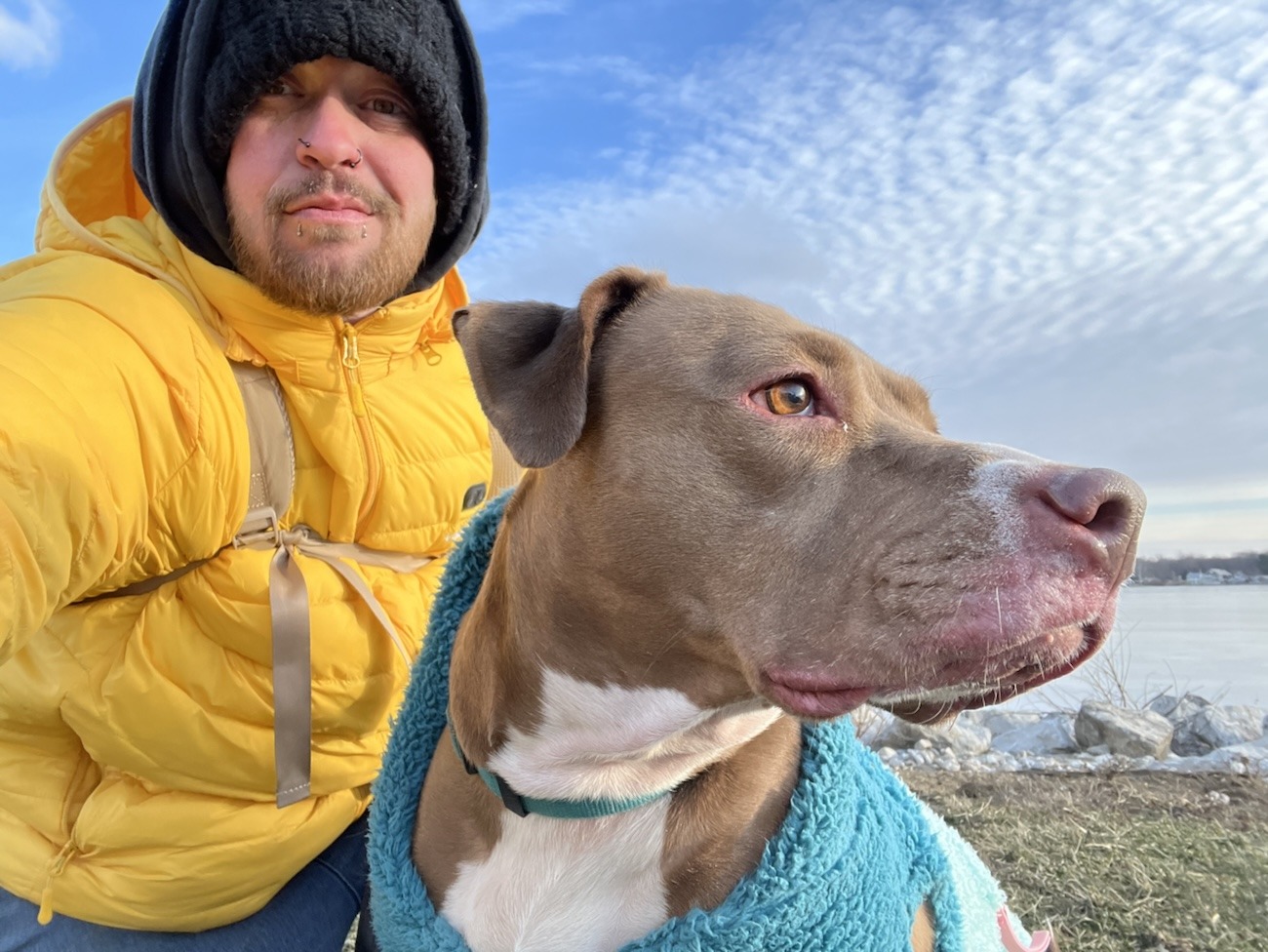
    Axton in a yellow coat and black hat luna the rednosed pitbull in a blue jacket with blue sky and white clouds behind

    Why Winter Safety Matters at the Lake

    While reservoirs are beautiful in winter, they demand caution.

    Ice conditions vary with depth, flow, and temperature. Thin ice can’t support weight and can collapse suddenly.  Hypothermia risk is high when cold water hits exposed skin. Knowing ice and lake safety matters to the risks you take when navigating nature in the winter.

    Even on trails, winds from open water can turn cold quickly, making layered clothing, good boots, and awareness essential.

    The Buckeye Lake Dam Bike Trail walk with Luna wasn’t about distance, it was about stillness and attention. The open water in the cold and the quiet knowledge that winter beauty must always be met with respect. Buckeye Lake holds history in its water and shoreline, and in winter it reminds you that water can be both mirror and mystery.


    Have you been to Buckeye Lake in the winter? What local lake do you often visit in the winter? What do you enjoy most about winter lake walks? Tell me all about your winter wonders in the comments and share with someone else who loves winter walking.


    Want to explore more?

    Visit Poeaxtry and the Prism’s Archive Cheat Sheet. Discover all post categories, with a blurb and link to full post archive for each. Then find every post in that category in chronological order.


    Check out all Poeaxtry Links