Author: poeaxtry_

  • Zipper Titty: 18-Page Trans Poetry Zine

    Zipper Titty: 18-Page Trans Poetry Zine

    What Is Zipper Titty?

    Introducing Zipper Titty, the newest zine from Poeaxtry_. This 18-page collection including the cover, table of contents, dedication page, 14 bold poems, and an end page, creates a complete and immersive reading experience. Each page is designed to pull readers into a world that is honest, dysphoric, positive, and deeply rooted in transgender experiences.

    The name Zipper Titty reflects humor, reclamation, and a bold transmasc perspective. The work leans into identity, embodiment, and resilience. While the zine carries a transmasc viewpoint the add-ons are useable and meaningful for readers of any gender identity as well as the general themes, just from a transgender man’s point of view.

    What Makes This Zine Special?

    Zipper Titty is completely independent from the TransOhio Symposium seminar I am giving. Each copy comes with the collectable zine specific image and at least 5 other add-ons. These elements are meant to be explored, revisited, and treasured by collectors and readers alike.

    This is my second zine released to date , so it also introduces the second collector’s image in the Poeaxtry_ series. Every detail, from layout to crafted add-ons is developed to provide a full, immersive, collectible, and resourceful zine experience.

    How Was Zipper Titty Created?

    I realized Saturday night… because of an email filter I didn’t know existed I found out I had actually been approved to speak at Ohio’s 16th Annual Transgender &y symposium. Despite the late realization, I had everything ready by Friday night way before my Monday deadline. This means I made an entire speaking layout, a zine, all the zine add-ons, 2 companion handouts, a PowerPoint presentation, and edited it all. The attendees of the symposium do get the zine for free and another digital copy to gift a homie. The zine itself, however, stands alone as an independent work, and its add-ons and content are not tied to the presentation or handouts. This was a way I saw to allow the attendees to experience some of my work after hearing about it, and to allow them to gift it to a friend. This also is open to other speakers at the symposium to grab a handout to download and or gift.

    What Interactive Elements Are Included?

    Interactive elements hidden throughout the zine hide individual letters missing to complete the url to receive 3 extras by finding bold, italic, and yellow letters to spell different words, 3 QR codes link to at least 3 extras as well for quicker access to some ad-ons. Other instructions to find any additional add-ons may be placed through the material, so keep your eyes peeled!

    How Can You Get Your Copy?

    Someone told me you wanted a copy, so I’ll let you in on how:

    TransOhio Symposium Attendees, speakers, and the Homies of anyone there have access to a Free download.

    Everyone Else: $4.99 via Poeaxtry_ stores. This version (like any other zine) does include all add-ons and the collector’s image (handouts tied to the presentation are not included). And if you’d like it on a free for honest reviews model I’ll be glad to provide you a free download discount, after we go over what that entails.

    Email Poeaxtryspoetryprism@gmail.com and ask about How the free E-books & E-zines for honest reviews model works.

    Or

    check out my ✨Poeaxtry’s Contact Page ✨ for other ways to get ahold of me for all things Poeaxtry related.

    Why Does Zipper Titty Matter?

    Zipper Titty is more than poetry, it’s a resource containing interactive experience. While it also makes trans positive artwork and solidifies transgender identities. Therefore, making the ability to erase our existence impossible. Its 18 pages, 14 poems, multiple add-ons, and resources make it a must-have for LGB people, trans community members, allies, and anyone who wants to engage with bold, immersive transmasc artistry.

    Find all my shops and more: All things Poeaxtry any time

    Or

    Read more about my panic upon finding the email from TransOhio so late here:

    TransOhio 16th Annual symposium- Here Axton Comes

    And some of my work is here if you wanna look at it:

    Poeaxtry’s Link

    What are your experiences with transgender poetry? Have you collected zines before?

    Share your thoughts in the comments!

    Portfolio

  • Adventures in Powell County, KY: Rock Bridge, Waterfalls, and Rockhounding

    Adventures in Powell County, KY: Rock Bridge, Waterfalls, and Rockhounding

    From Night Shift to Nature’s Wonders:

    Let me start by saying I clocked into work at 5:57 pm on Tuesday August 26th and I clocked out of that shift at 6 am Wednesday August the 27th.

    We hit the road at around 8 am. We traded work a full- day-and-night adventure in Powell County, Kentucky. Along for the ride were my coworker, her energetic daughter, and my adventurous dog. We all were beyond ready to explore, climb, and hunt for hidden treasures.

    How to Find Hidden Gems Along the Way:

    I recently (as in Tuesday night at work) discovered fotospot as well as the roadside America app. So the first stop was obviously the eccentric Mushroom House in Cincinnati. This home is a quirky, eye-catching landmark perfect for a quick photo and stretch before the second half of the drive down to Powell county Kentucky. We left the intriguing house and, headed straight to the Rock Bridge Loop, an approximately 3-mile trail that quickly revealed why Red River Gorge is a hiker’s paradise.

    Natural bridge red river gorge Ky
    Natural bridge

    What Makes Rock Bridge Loop Trail Special?

    The trail is a loop of majestic rock formations, hidden caves, and dramatic steps, some steep and challenging, others gentle but endlessly captivating. Every glance… up or down, presents another opportunity to discover a natural sculpture carved by time. I couldn’t resist climbing one formation to sit at the edge. I pre warned Sky so she could take my picture when I got up there of course.

    Man on top of a rock in red river gorge Ky
    If I fit I sit

    Where Can You Find the Best Water Features?

    Water was another highlight. We found ourselves playing above one waterfall along the loop. Though, below, you can relax on a small sandy beach for an impromptu smoke and splash session. The combination of flowing water, mossy rocks, and sunlight filtering through the trees created a perfect views..

    Where to Find Kentucky Agates and Gemstones?

    After the loop, we shifted gears from hiking to rock hounding at the Middle Fork of the Red River. So for anyone who like me, loves collecting gemstones, quartz, and Kentucky agates, this spot is a treasure trove. At the end of the day, my trunk was packed full of glimmering finds, each one a reminder of the beauty waiting off the beaten path.

    Why Powell County Should Be Your Next Adventure:

    This adventure combined the best of Powell County: a child and dog friendly hike, dramatic rock formations, hidden caves, a waterfall for fun, and world-class rock hounding opportunities. For anyone planning a trip to Red River Gorge, Kentucky, this full-day itinerary is a perfect mix of exploration, adventure, and discovery.

    A sunset in Powell county Ky
    A sunset in Powell county Ky

    Check out the last rockhounding trip Sky, the baby, and I took to Indiana just last week here!

    Poeaxtry’s Links

    Have you been rockhounding in Kentucky?

    What treasures did you find?

    Share your own adventure stories in the comments!

  • Speaking at the 16th Annual TransOhio Trans & Ally Symposium

    Speaking at the 16th Annual TransOhio Trans & Ally Symposium

    When the Universe Has Plans for You:

    Sometimes the universe knows what you’re supposed to do before you even know it yourself. That’s exactly what happened with me and the TransOhio Symposium.

    I signed up months ago. Saw some posts online, clicked through their website, thought “hmm.” A few days went past and I was seeing them all over, I mean I have lived in Ohio most of my life and never heard of TransOhio before Spring 2025. So I went back to their website. Signed up to present at this symposium and then… completely forgot about it. When I recently thought about it I chalked it up to just me not being picked. And honestly There were a few other prior times I had thought about it like damn that would have been cool. But I was in a sense moved on from that idea.

    How I Almost Missed My Big Opportunity:

    Then, while cleaning out my inbox at the 2am midnight shift drag purging the nonsense, unsubscribing the usual clutter that I never get to. I happen on three emails from TransOhio. One of them told me I did get accepted I received it over a month ago. Filtered, messages can eat my booty. It didn’t go to spam or and if the folders. I didn’t notice it in my general inbox, but I randomly go through my subscription list and WAM! BAM! Thank you not so random urge to clean that up. Just about ten days prior to kick off. Don’t worry I’m gonna deliver.

    What Is the TransOhio Symposium?

    TransOhio is the annual 3-day symposium at Owens Community College in Toledo, Ohio, this year from September 5th through 7th. Over 200 participants, 40 workshops, continuing education credits, entertainment, food, and a space alive with connection, conversation, and creation. It’s a place where trans artists, thinkers, and allies come together.

    My session is “Poetry, Ink, Identity, and Insistence: Transcreation and Survival in Defiance” at 3:15 PM in room A. I’ll have printouts, slides, maybe even other physical items you can keep. I will bring the kind of threads that link through art, poems, ideas, and experiences. Some will overlook this thinking it’s just another poetry session. This is tangible real life community building.

    From Fear to Acceptance: My Journey to the Stage

    Honestly, I had completely forgotten about this thing. I thought it wasn’t happening. When I signed up I thought I was way out of my league, but I like to aim high. My speech class in college of less than 15 people was scary. I am going to stutter but I’m going to totally fucking do it. I really didn’t expect it. And I guess that’s the point. Sometimes you do something you don’t even know you’re supposed to do. You don’t even know it. The universe knows, though. And it makes sure you get there, at the perfect time, in the right way, for the right people, and you’ll know exactly what you’re supposed to say.

    How This Differs From My Previous Experience:

    I’ve done one seminar before, if you want to call it that. I stood shirtless under 1 year post op with my surgeon at GenderFest Vegas also a trans conference. I was just Standing there bar-b-Que sauce on my titties, kidding. Anyway the lovely artist, surgeon, god Brandon Reynolds did all the talking and I just tried not to stare at anyone too long, or make direct eye contact, and I fought so hard to hold still and still lost.

    Why This Event Matters Beyond Just a Presentation

    This isn’t just a seminar or a conference I stand in-front of shirtless. It’s a community, a vision, a connection, a series of small nudges and echoes for change. It’s 10 days before showtime, filtered emails, patterns in timing that line up so perfectly you can’t call it luck. It’s survival. It’s defiance. It’s insistence. It’s my mom being the best damn guardian angel a transgender son or any son could need.

    So, whether you’re reading this sooner or later. Maybe you’re thinking about the symposium, either way the lesson is clear: do the thing. Yes, even if you don’t know why. Sometimes the universe handles the rest. Sometimes it’s emails in the right moment, or it’s seeing a new thing or place nonstop now. The best is when you just stand there and everything clicks.

    But that is what it’s supposed to do. That’s how it’s meant to happen. 10 days. Three emails. One untraceable filter. And suddenly, the universe is in motion, the room is ready, the words are ready, and somehow I know I will be too.

    This is my yellow and I keep experiencing more and more yellow things. Listen to Coldplay or something.

    Poeaxtry’s Links

    Are you attending the TransOhio Symposium?

    Have you ever had a moment where the universe seemed to push you toward something important?

    Share your experiences in the comments!

  • A Poem About Letting Go of a Toxic Friendship

    A Poem About Letting Go of a Toxic Friendship

    The Truth Behind the Poem:

    Friends can break your heart too, and friendship breakups can hurt as worse than some romantic ones. “Miss Me With It” is a unfiltered poem about ending a toxic friendship, walking away from betrayal, and reclaiming self-respect. Written in Axton’s own jagged, concrete style, this poem shows how letting go of someone who used you isn’t weakness by any stretch. But is a show of one’s power. If you’re searching for poems about toxic friendships, cutting ties, or healing through poetry, this one’s for you. You can even send it to your toxic ex. My reason for writing it doesn’t have to be your reason for resonating with it.

    “Miss me with it”

    I hope that one day you wake up

    U

    p

    And you no longer know me

    N

    O

    I hope one day you wake up

    And you no longer reach out.

    No fake check-up

    No pretend care.

    I know it makes you feel

    B

    E

    T

    T

    E

    R

    Before asking me to

    B

    U

    M

    A ride, my money, my home

    Miss me…

    it’s getting old

    Miss me…

    it’s s

    a

    d

    Used me when you had me

    Now you’re used up, washed up.

    With no where to turn

    No one to

    R

    U

    N

    to.

    You miss me

    B

    U

    T

    Miss me with it

    Pretend you don’t know my name

    Why Letting Go Is Sometimes the Only Option:

    Friendship endings are often overlooked. Yet, they leave scars just as real. “Miss Me With It” is a poem for anyone who’s walked away from a toxic relationship of any kind and chosen closure over chaos. Share this poem if you’ve ever had to let go of anyone that no longer served you.

    Links

  • Jordan Peterson’s Anti-Trans Rhetoric

    Jordan Peterson’s Anti-Trans Rhetoric

    The Pattern of Harmful Misinformation:

    Jordan Peterson has long presented himself as a defender of free speech, but when it comes to trans rights his rhetoric crosses into documented misinformation and targeted harassment. This is not about debating his philosophy or nitpicking semantics. This is about two verifiable cases where Peterson’s words had real-world impact: his false claims about Canada’s Bill C-16 and his public misgendering of actor Elliot Page that led to YouTube penalties. Both instances are grounded in evidence, not opinion, and together they illustrate how his voice has fueled anti-trans hostility.

    What Was Bill C-16 Actually About?

    When Canada introduced Bill C-16 in 2016, the purpose was clear. The bill extended protections in the Canadian Human Rights Act and Criminal Code to cover gender identity and gender expression, ensuring that trans people could not be legally discriminated against in housing, employment, or public services. Peterson went on record insisting that the bill would criminalize refusal to use someone’s chosen pronouns and that he could be arrested for declining to comply. He described the legislation as a form of compelled speech, warning that Canadians would face state punishment for what they did or did not say.

    How Legal Experts Debunked Peterson’s Claims:

    Legal experts immediately pushed back. Brenda Cossman, a University of Toronto law professor, explained that Peterson’s interpretation was simply wrong. The law did not create new criminal offenses, nor did it authorize arrests for pronoun misuse. Instead, it placed gender identity and expression alongside race, religion, and disability as protected categories. Kyle Kirkup, another legal scholar, stressed that the legislation did not criminalize speech but instead provided mechanisms for addressing discrimination under existing human rights law. In other words, Peterson’s widely broadcast warnings were false. By misrepresenting Bill C-16, he cast a law designed to protect vulnerable people as a threat to free expression, distorting public understanding and fanning the flames of anti-trans panic.

    The Elliot Page Controversy: From Words to Consequences:

    Years later, Peterson’s rhetoric crossed another line, this time aimed directly at an individual. In 2022, he targeted actor Elliot Page, who had come out as transgender in 2020. On Twitter, Peterson misgendered Page, referred to him by his former name, and accused him of committing a “criminal act” simply for receiving gender-affirming surgery. Misgendering and deadnaming are widely recognized as forms of harassment, and Peterson’s comments were not neutral critiques of policy. But they were aimed squarely at a trans man living publicly and proudly.

    How Platforms Responded to Peterson’s Harmful Content:

    The controversy deepened when Peterson used his YouTube platform to expand on those remarks. In videos uploaded to his channel, he misgendered Page again and compared gender-affirming healthcare to Nazi-era medical experiments. This comparison was inflammatory and grotesque, equating the lifesaving care sought by trans people to some of the worst atrocities in human history. YouTube responded by demonetizing at least two of his videos, citing violations of its ad-friendly and hate-speech policies. The enforcement notice confirmed that Peterson’s content had crossed the line into harassment and harmful rhetoric. For a creator of his size, demonetization was a major penalty: his videos could no longer generate advertising revenue, and their visibility was curtailed. The action was widely reported by outlets like Axios and documented by watchdog organizations such as GLAAD, underscoring that this was not a matter of debate, it was a formal acknowledgment by one of the world’s largest platforms that his anti-trans speech was unacceptable.

    Why This Pattern Matters for Trans Communities:

    These two moments, taken together, illustrate a consistent pattern. In the case of Bill C-16, Peterson distorted a legal protection for trans people, framing it as an assault on free speech when no such threat existed. In the case of Elliot Page, he engaged in direct harassment, weaponizing misgendering and historical trauma to attack a visible trans figure. Both are documented, verifiable, and consequential. One misled the public about law, the other triggered enforcement action from a global platform.

    This matters because Peterson’s words do not exist in a vacuum. His misrepresentation of Bill C-16 has echoed across international debates, shaping narratives that oppose protections for trans people in other countries. His attacks on Elliot Page amplified harassment against one of the most visible trans men in the world, reinforcing stigmas that make everyday life dangerous for trans communities. The facts are not abstract. They show how rhetoric becomes reality, shaping law, culture, and personal safety.

    Jordan Peterson claims to defend free expression, but these cases reveal something different: a pattern of misrepresentation and targeted hostility. Bill C-16 did not compel speech or create new crimes, despite his warnings. Misgendering Elliot Page was not free inquiry, but harassment that led to real penalties. Both moments are on record, both have been fact-checked, and both prove the same truth — his rhetoric is not neutral. It is anti-trans, it is harmful, and it has been met with consequences.

    Poeaxtry’s Link

    What experiences have you had with misinformation about trans rights?

    How do you think we should respond when public figures spread harmful rhetoric?

    Share your thoughts in the comments.

  • Haircare Safe Spaces for LGBTQ+ and Minority Communities

    Haircare Safe Spaces for LGBTQ+ and Minority Communities

    Why Affirming Haircare Matters:

    Accessing safe and affirming haircare is an often overlooked need for LGBTQ+ and minority communities. While most mainstream salons and barbershops do not always provide inclusive or culturally aware services, networks like Strands for Trans and The Dresscode Project create spaces where clients can confidently express their identity without fear. These initiatives, along with local inclusive salons, online communities, and affirming haircare brands, help form a comprehensive ecosystem that supports safe, respectful, and professional haircare experiences for all clients.

    How Strands for Trans Creates Safe Spaces:

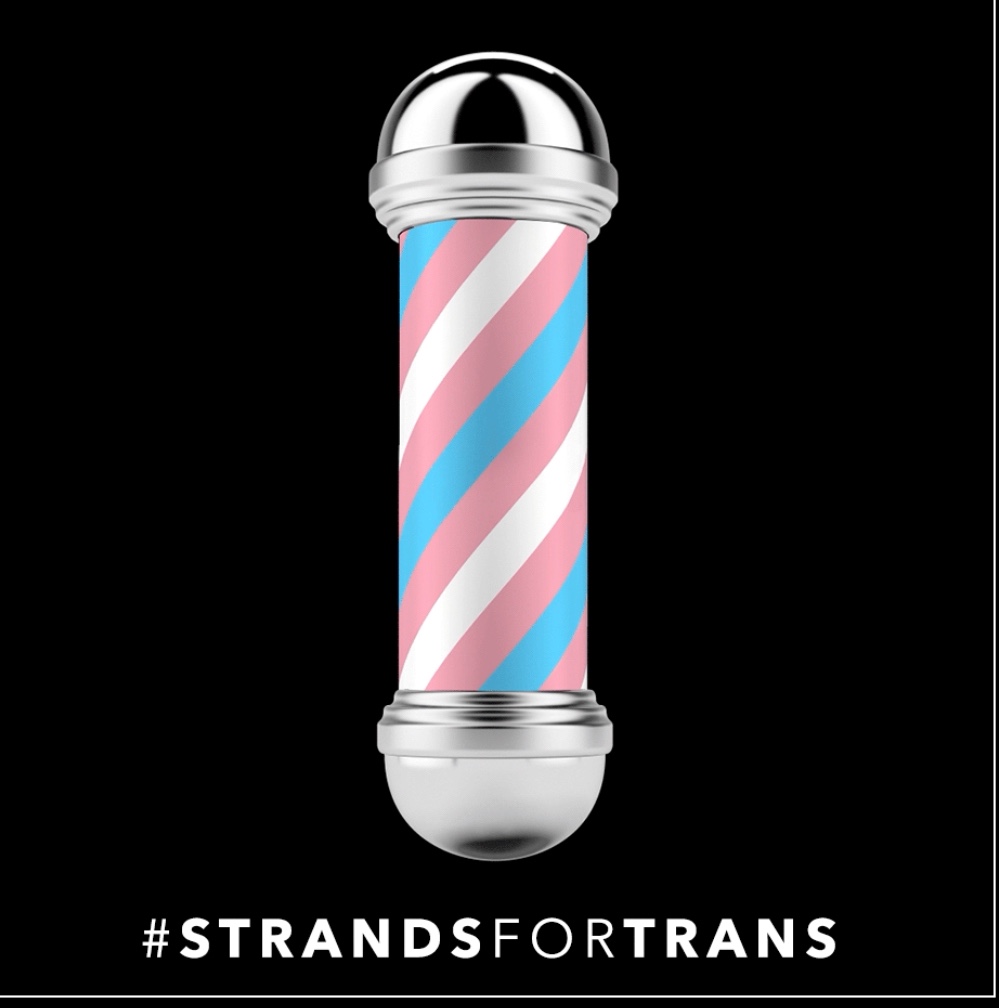
    Accessing affirming haircare is an essential need for LGBTQ+ and minority communities. Networks like Strands for Trans provide a membership-based platform connecting trans and non-binary clients with barbers and hairstylists trained in gender-affirming services. Members gain access to a map of verified stylists and locations, making it easier to find trusted professionals across the country or internationally. Strands for Trans also offers stylists guidance and training on communication, safety, and inclusive best practices. Participating salons and barbers receive a trans-affirming barber pole, in pink, blue, and white, signaling that the space is safe, supportive, and welcoming for trans and non-binary clients. And by fostering a network of trained professionals, Strands for Trans reduces anxiety and ensures clients experience predictable, safe, and affirming care when visiting salons or barbershops.

    What Resources Do These Networks Provide?

    Strands for Trans also builds broader community support through resources and guides designed to help trans and non-binary people thrive in multiple spaces. One standout resource, “The Gender Euphoria & Beyond: A Guide for Creating Affirming & Safe Spaces,” was developed from extensive research and focus groups, bringing together diverse experiences and perspectives. This guide offers practical strategies for creating safe, affirming environments not only in haircare but across communities, workplaces, and social spaces. Members of Strands for Trans have access to this guide, enabling both individuals and organizations to cultivate spaces where trans and non-binary people feel respected, supported, and celebrated.

    Strands for trans
    Strands for trans

    The Dresscode Project: Hair Has No Gender:

    The Dresscode Project (DCP) is a global initiative founded by Kristin Rankin (they/them) to create safe, gender-affirming spaces in salons and barbershops for LGBTQ2S+ individuals. At its core, DCP upholds the belief that hair has no gender, advocating for non-gendered haircuts that allow clients to express their authentic selves without being confined to traditional gender norms. Through education and training, DCP empowers stylists to provide inclusive services that respect each client’s identity. The organization also promotes gender-neutral pricing, ensuring that costs are based on factors like skill, time, and hair length, rather than gender. One of DCP’s signature initiatives is the Gender-Free Haircut Club, a monthly event where salons offer free, gender-affirming haircuts to marginalized queer individuals. With over 550 member salons worldwide, DCP is transforming the beauty industry by fostering environments where every client feels seen, respected, and celebrated.

    Dress code project

    What Does an Affirming Haircare Experience Feel Like?

    Imagine walking into a barbershop and noticing a trans pride symbol barber pole on the door or window. You feel an immediate sense of ease, knowing that the stylist understands pronouns and gender-affirming care. The stylist greets you warmly, listens to your style preferences, and communicates respectfully. By the end of the appointment, you leave feeling both cared for and affirmed. This kind of welcoming environment is exactly what Strands for Trans and The Dresscode Project work to create, a space where clients can express themselves confidently without fear of discrimination.

    How to Find Local Inclusive Salons:

    Outside of these formal networks, there are local salons and barbershops recognized by community members as LGBTQ+ and minority-inclusive. Urban salons often display gender-neutral signage, pronoun policies, and affirming mission statements. Barbershops in college towns may openly welcome clients of all genders and cultural backgrounds. Word-of-mouth recommendations, local community boards, and LGBTQ+ or minority organizations help clients identify these affirming locations. Visible symbols, clear communication, and a culture of respect indicate that clients can expect safe, affirming, and professional care in these spaces.

    Online Communities for Haircare Support:

    For those seeking affirming haircare advice and community support, there are online resources that cater specifically to LGBTQI+ and minority individuals. Platforms like Reddit communities such as r/TransHairCare, NaturallyCurly.com forums, and HairCareTalk inclusive discussion boards provide spaces for users to share experiences, ask questions, and find guidance for safe and supportive haircare practices. These forums connect people from around the world, making it possible to locate affirming stylists, learn about products for diverse hair textures, and engage with others navigating similar experiences.

    Social Media Resources for Inclusive Haircare:

    Social media offers vibrant, interactive spaces for connection and education. Instagram accounts like @TransHairNetwork, @InclusiveHairCommunity, and @CurlCollective, along with Facebook groups such as “Queer Haircare Collective” and “Minority Haircare Advocates”, provide supportive communities where members can exchange tips, share local recommendations, and spotlight inclusive salons or stylists. These groups are particularly valuable for LGBTQI+ and minority individuals looking for spaces that celebrate their identities while offering practical haircare guidance.

    Inclusive Haircare Brands and Products:

    A number of indie and minority-owned brands focus on inclusive, affirming haircare for a wide range of textures and identities. Examples include SheaMoisture’s Pride Collection, Aunt Jackie’s Curl Care Line, The Mane Choice formulations, Eden BodyWorks, and Camille Rose Naturals. SheaMoisture’s Pride Collection is a collaboration with the Marsha P. Johnson Institute, celebrating the legacy of LGBTQ+ activist Marsha P. Johnson and supporting LGBTQ+ communities. While the brand itself is owned by Unilever, this collection, along with other initiatives, reflects SheaMoisture’s commitment to inclusivity and support for marginalized communities. These brands prioritize diversity, representation, and accessibility, offering products that cater to curly, coily, and textured hair while supporting LGBTQI+ and minority communities through inclusive marketing and community engagement.

    By leveraging resources such as Strands for Trans, The Dresscode Project, local LGBTQ+ and minority-inclusive salons, online communities, and affirming haircare products, clients gain access to a full spectrum of safe and affirming haircare options. These networks not only ensure professional, respectful services but also foster confidence, community, and identity affirmation. Investing in these spaces and resources helps build a broader culture of inclusion in the haircare industry, ensuring that every client can feel safe, valued, and celebrated.

    Have you found an affirming haircare space in your community?

    What made it feel safe and welcoming?

    Share your experiences or recommendations in the comments!

    Links

  • Joe Rogan and Transphobia: How His Platform Amplifies Harmful Narratives

    Joe Rogan and Transphobia: How His Platform Amplifies Harmful Narratives

    Joe Rogan, one of the most influential podcasters in the world, has repeatedly used his platform to promote harmful ideas about transgender people. While some of his commentary may appear casual or comedic, the cumulative effect of his words perpetuates misinformation and stigmatizes a community already facing high levels of discrimination.

    Rogan has publicly misgendered prominent trans figures, including Caitlyn Jenner, suggesting that her transition is more performative than authentic. He has hosted guests like Abigail Shrier, whose controversial book Irreversible Damage promotes the debunked theory of “rapid-onset gender dysphoria,” framing trans youth as victims of social contagion rather than individuals with valid experiences of gender dysphoria. By amplifying these perspectives without critical challenge, Rogan normalizes skepticism and hostility toward trans identities.

    Sports have also been a recurring theme in Rogan’s rhetoric. His comments on transgender athletes such as Fallon Fox and Lia Thomas frame their participation as inherently unfair, emphasizing biological differences in a way that dismisses the reality of trans athletes’ lived experiences and the inclusive policies many organizations employ. These remarks reinforce the false narrative that trans people are threats to cisgender norms rather than competitors on equal footing.

    Beyond interviews, Rogan’s own material often veers into transphobic humor. His Netflix special Burn the Boats included jokes that mocked transgender people, contributing to a culture that trivializes their existence and struggles. Even seemingly absurd claims, like the debunked “litter box in schools” rumor, have been repeated by Rogan, giving them credibility in the eyes of his massive audience.

    The impact of such commentary is not hypothetical. Public figures with massive reach have a measurable influence on social attitudes, and when misinformation is normalized on platforms like The Joe Rogan Experience, it can fuel legislation that restricts trans rights, embolden harassment, and create hostile environments in schools and workplaces.

    Holding influencers accountable is not about silencing opinions… it’s about recognizing the power that comes with a platform and the real-world consequences of amplifying harmful narratives. For Rogan, casual dismissal or mockery of trans experiences contributes to a broader pattern of marginalization, one that demands critical scrutiny rather than passive consumption.

    Links

  • Joyful Actions That Promote Change

    Joyful Actions That Promote Change

    Creating meaningful change can feel overwhelming if you’re not sure where to start, but it doesn’t have to be. Change is built through consistent, joyful actions. These are small steps that add up to a bigger impact over time. In this guide, you’ll learn ways to make a difference weekly, monthly, and bimonthly. Each action is explained with practical examples, so no matter your experience or resources, you can start contributing immediately. At the end, you can download 3 full checklists and a bonus checklist for easy reference.

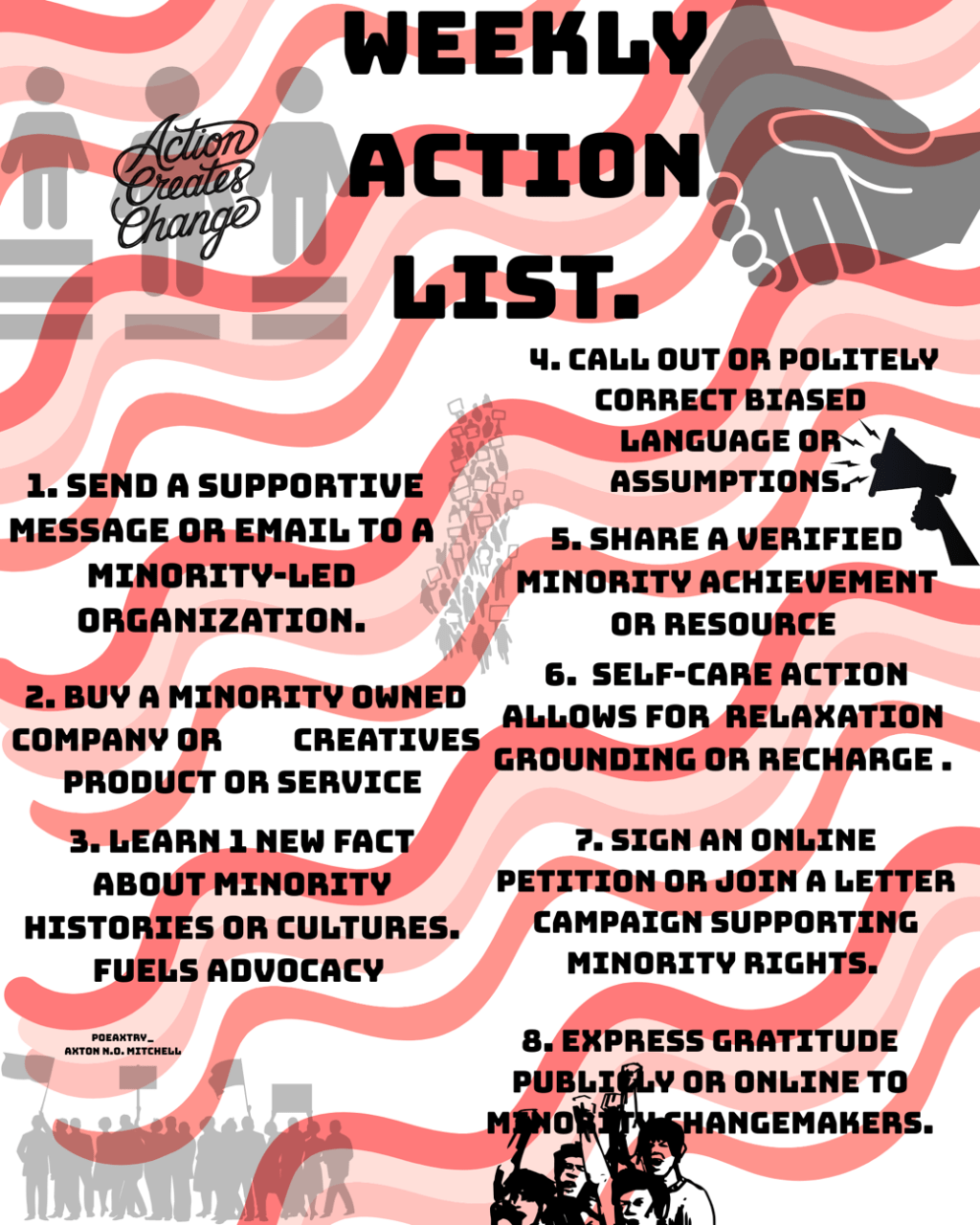
    One of the easiest ways to begin creating an impact is by taking small, weekly actions that are actionable and meaningful. We also added joy to the mix to give a reward to ourselves for becoming the change. For instance, sending a supportive message or email to a minority-led organization might seem simple, but it can make a real difference. Even a brief note like “Hi, I just wanted to thank you for your work; it inspires me…” can boost morale and let these organizations know that their efforts are seen and appreciated.

    Using or purchasing from minority-owned businesses is another small but powerful action. By intentionally supporting products or services from these businesses, you’re directly contributing to economic empowerment. You can find minority-owned businesses through directories like Buy Black, Official Black Wall Street, or even local listings. Even one small purchase counts.

    Learning one new fact about minority histories or cultures each week expands your understanding and counters misinformation. Things like reading an article, watching a short video, or listening to a podcast, then sharing what you learned with a friend. Over time, these small learnings compound into a deeper awareness that influences your daily choices and conversations.

    Calling out or politely correcting biased language or assumptions is another way to take weekly action. It doesn’t need to be confrontational; calmly explaining why a comment is harmful helps educate those around you and encourages accountability. Similarly, sharing a verified minority achievement or resource with someone… like a news story, a blog post, or a social media feature can help amplify important voices and keep these accomplishments visible.

    Self-care also counts as an action. Taking time for yourself by going for a hike, cooking a favorite meal, doing a face mask, getting your nails done, reading a book, or listening to uplifting music can keep you grounded and energized for advocacy. You simply signing an online petition or joining a letter campaign are other ways to use your voice and influence policy. Finally, expressing gratitude publicly or privately to minority changemakers reinforces positive recognition and strengthens community bonds.

    Monthly actions give you a chance to take slightly bigger steps that still fit within a manageable schedule. Participating in a virtual or local minority-supporting event, like a webinar, a virtual or local open mic, a lecture, or a cultural celebration. These expose you to new perspectives and help you connect with the work being done. Things like trying one new minority cultural experience: cooking a traditional dish, exploring music, or viewing art, can be a joyful way to learn and share culture, either with friends or online communities.

    Self-paced online workshops on allyship or cultural understanding are perfect for deeper learning. You can take them on your own schedule, allowing you to reflect and use what you learn at your own pace. Volunteering remotely for advocacy or awareness tasks, such as moderating online discussions, sharing resources, or helping campaigns These let you contribute meaningfully without needing to attend in person.

    By documenting and celebrating a minority achievements by writing a short post, vlogging, or highlighting someone on social media. You spread positivity and recognition. Sending letters or emails to officials advocating for inclusive policies is another actionable step, giving your voice weight in shaping decisions. When you highlight a minority-owned business or creator in your network it increases visibility and supports economic empowerment. Lastly, reflecting on and sharing a story or resource related to minority rights, even in casual conversation or online posts, expands understanding and encourages others to engage.

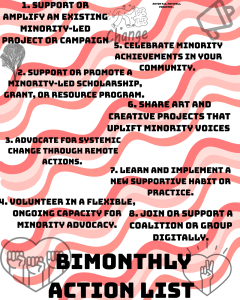
    Bi-monthly actions involve taking on larger, more flexible commitments that can still be done by anyone. Supporting or amplifying existing minority-led projects or campaigns is one way to have a broader impact. This could mean sharing updates online, signing up for notifications, or contributing in small ways. Promoting scholarship, grant, or resource programs created by minority leaders, expands opportunities for others and can be done digitally.

    When you advocate for systemic change through remote actions, like policy emails or participating in online, you allow anyone a voice in shaping outcomes. Volunteering flexibly for advocacy by things like resource sharing, digital organization, or communications allows you to make an impact when you can. Celebrating minority achievements in your community, either publicly or online, reinforces visibility and encouragement.

    If you can create optional joyful projects to amplify minority voices you have another avenue. You can contribute creatively, write, draw, record, or otherwise produce something meaningful. Implementing a new supportive habit, like sharing resources, mentoring via email, or spotlighting stories, builds consistent impact. Finally, joining or supporting digital coalitions or advocacy groups allows participation in campaigns, discussions, and advocacy initiatives. This connects you to larger networks.

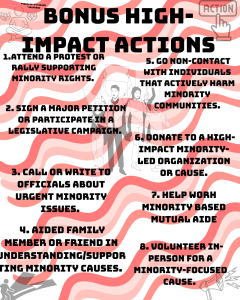
    Occasionally, you might want to take on high-impact actions. This could be going to a protest or rally, signing major petitions, or participating in legislative campaigns. These give your voice significant weight. You may want to call or write officials about urgent minority issues which directly engages policy influence. You may help a family member or friend understand and support minority causes or spread awareness in your immediate community. You may decide to go no-contact with harmful individuals or companies, donate to high-impact minority-led organizations, organize awareness events, or volunteer in person. These all can be transformative actions, and are optional but powerful ways to amplify your impact.

    Change is built through consistent, joyful actions that anyone can take. By following this guide, incorporating weekly, monthly, and bi-monthly steps, and exploring the Bonus Round opportunities, you can make a meaningful difference in supporting minority communities. Start small, celebrate progress, and remember that your actions whether big or small all add up.

    Below are the checklist images to view you can download them for free from my gumroad and Payhip as well.

    Links

    Weekly action list
    Weekly action list
    Monthly action list
    Monthly action list
    Bi monthly action list
    Bimonthly action list
    Bonus actions list
    Bonus actions
  • My Emergency Preparedness Plan for Public Spaces

    My Emergency Preparedness Plan for Public Spaces

    Create an emergency preparedness plan.

    Emergencies in public aren’t always predictable, but they can happen anywhere. From accidents to violent incidents, the ability to respond quickly can save lives. I’ve lived in cities where danger is a reality, and I know that being prepared is essential and not at all optional. That’s why I’ve built a personal emergency preparedness plan for whenever I am in a more crowded public area.

    It starts with awareness. I pay attention in crowds, note exits, and look out for patterns of potential hazards. Being alert doesn’t mean living in fear; it means noticing what’s normal so I can act fast when something isn’t.

    Communication is critical. My phone stays charged and accessible, and I share my whereabouts with trusted contacts. I also have backup methods like multiple phone batter pack chargers. Clear communication can be the difference between safety and chaos.

    Supplies are practical and discreet. I keep essentials in a small bag: water, snacks, medications, ID, a flashlight, a whistle, and more than one portable charger. I wear clothing that allows for quick movement and shoes that won’t slow me down. Every item is chosen to give me flexibility and survival options without drawing attention.

    I plan my routes and safe zones. Before I enter a public space, I identify exits, open areas, and safe shelters. Multiple options are important because situations can change in seconds. If an attack or accident occurs, knowing where to move reduces panic and improves my chances of staying safe.

    Group awareness enhances safety. I stay near friends or trusted allies when possible, observe my surroundings, and quietly communicate hazards if needed. Safety is collective and keeping an eye on each other strengthens everyone’s chance of staying unharmed.

    Finally, mental preparation matters. I rehearse scenarios silently: how to move quickly, how to stay low, how to follow the exits I’ve scoped. Planning ahead means I don’t have to figure things out in panic if danger hits.

    Being prepared in public isn’t overthinking. It’s a practice in staying proactive, alert, and ready. My plan helps me respond to sudden emergencies confidently and effectively, so I can navigate public spaces with safety in mind.

    Links

  • Fossils, Falls, and Full Bags – An Evening in Richmond, Indiana

    Fossils, Falls, and Full Bags – An Evening in Richmond, Indiana

    Overlooking thistlewaite falls from the stairs
    Thistlewaite falls

    Yesterday’s “hike” wasn’t really a hike. Not the kind with switchbacks and summits, anyway. This was slow, head-down wandering… moving from one patch of rock to another, eyes scanning for anything that didn’t quite match the rest.I first saw Thistlethwaite Falls on TikTok just yesterday morning, in fact. I’d just woken up, still half tangled in my blankets, when this video popped up showing this cute fall you could get right in. The next video showed the fossils. You know I was SOLD! It was one of those moments where the phone goes down and you just know you’re going. Within hours, we were in the car, snacks packed, bags ready, heading toward Richmond with no real plan except “play in a waterfall and find as many fossils as possible.”

    Front view of thistlewaite falls in Richmond Indiana
    Thistlewaite Falls

    It was me, my home slice Sky, and the baby, out on a late-summer day at Thistlethwaite Falls in Richmond, Indiana. The water spilled wide over its limestone ledge, humming in that steady, drum-like way waterfalls do. The spray caught in the warm air, carrying the smell of wet stone. And right there, underfoot, was where the real action was… fossils embedded in the rock like the past had been gift-wrapped for us to find.

    We started small, a crinoid here, a shell impression there but things escalated quickly. Before long, I was hauling multiple bags of fossils back up from the falls to the car. And then back down again. And then up again. The baby, apparently inspired by all this rock action, decided to test her throwing arm. At one point, I took a direct hit to the head and felt it rattle around my skull like a maraca. Sky caught a rock to the face not long after. Adventures are never without their battle scars.

    Rock haul from Thistlewaite in my floorboard
    Rock haul featuring a baby cup

    Next stop was Richmond’s Fossil Park, which felt like a fossil hunter’s open-air market . A broad gravel bed scattered with chunks of rock, each one a possible time capsule. This is where I found some of my favorites: a few pieces with shimmering quartz inclusions, and a whole brachiopod! The dude has both valves, hinge and all . It was like it had been waiting all this time just to be found. The creek bed here and the gravel is also just basically nothing but fossils and stuff. That’s actually where I found one quartz piece.

    Mural at the fossil park in Richmond Indiana
    Mural at fossil park

    The front floorboard of my car became a rock bed of its own, layered with crinoids, coral pieces, and other prehistoric odds and ends. Along with two bags in the back seat full… well overflowing if I am being honest. The sun was dropping toward the horizon by the time we finally looked up around 7:30 p.m. and the baby’s rock-throwing streak had given way to full on running baby.

    We never made it to our planned third stop. Time just slipped through our fingers, as it tends to do when the hunt takes over. I’m not mad about it. That place will still be there. And now, I have more than enough reason to go back . Let’s pretend as if the fossils alone weren’t reason enough.

    Rockhounding isn’t fast, and it isn’t clean. It’s slow, deliberate, and sometimes chaotic. It’s a mix of patience, luck, and a little chaos courtesy of the smallest member of the crew. But it’s always worth it. Because in the end, you walk away with more than just rocks. You walk away with pieces of the earth’s history and the stories you’ll tell about how you found them.