
Best For:
The Essence:
Ohio hikers, nature preserve enthusiasts, and locals looking for budget friendly activities.
Read Time: 10 mins 🕰️ | Weight: Feather 🪶 | Mood: Historic & Exploratory 🧭 |
Trail Notes:
- Our trek: May 15, 2026 | mid morning| 1.7 miles| 43 minutes|
- Dutch Fork Wetland an extension of Dawes Arboretum | dog friendly |
- Keywords to know: Wetland, Peeper, Satellite Park, Blue Flag Iris,
Dutch Fork Wetland Heath, Ohio
A Satellite Park of Dawes Arboretum

Dutch Fork Wetland:
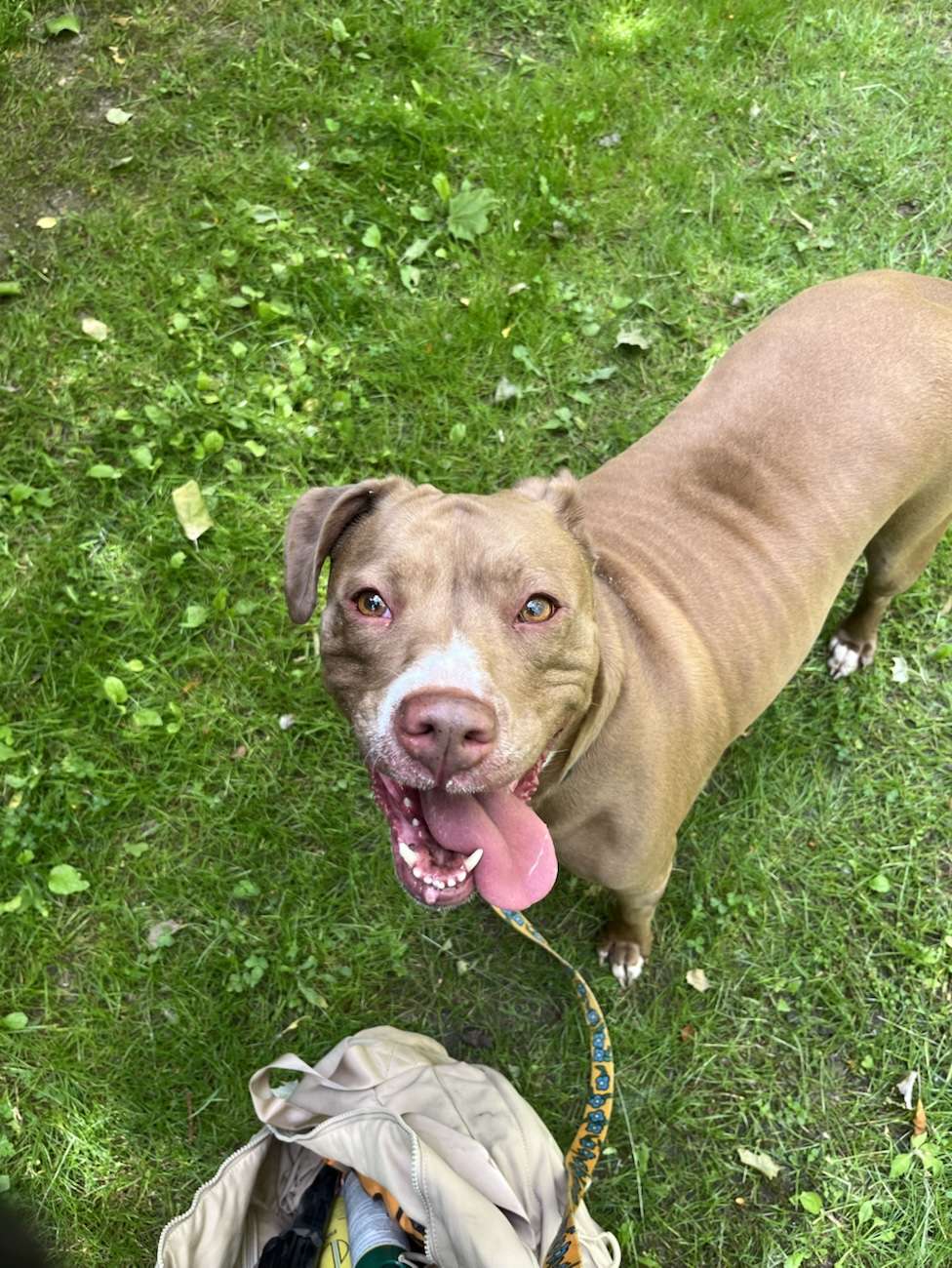
Come trek with Luna and I in one of our local green areas Dutch Fork Wetland.
Listen to the sounds of spring and experience Ohio’s beautiful spring wildflowers. We were left with a great experience even if we only stayed just shy of an hour.
Let’s trek this Licking County satellite park.

Mid-May:
By the middle of May, central Ohio had already skipped over spring and started flirting with summer.

The air was heavy even right after breakfast. The kind of warmth that settles into your clothes before you’ve even finished lacing your hiking shoes. Luna and I headed out early, hoping to stay ahead of the heat while exploring somewhere entirely new to us.
Just a few days earlier I hadn’t even heard of Dutch Fork Wetland, thanks Kylie and the construction. The main road being worked on rerouting us towards the unseen preserve.
Hidden away from the main grounds of the Dawes Arboretum, this free satellite property felt almost like stumbling onto a secret.
No crowds.

No admission gate.
Just a gravel parking lot, wetlands, birdsong, and the promise of discovering a landscape I hadn’t yet walked.
Some places announce themselves immediately but Dutch Fork whispered instead.
At first glance it looks simple. You see mostly flat trails alongside a few small ponds with open water areas that meet the edges of meadows.
Here you can even see young trees still growing into the roles they were planted to fill.
Wetlands:
Wetlands have never been simple.
Did you know that for a lot of Ohio’s history, wetlands covered the state?
Before widespread settlement, wetlands covered millions of acres across the state we now call Ohio.
Marshes, wet prairies, floodplain forests, and seasonal pools that filtered water, stored floodwaters, and supported an incredible variety of wildlife.
By the twentieth century nearly ninety percent of those wetlands had disappeared beneath drainage projects, agriculture, roads, and urban development. What once covered the landscape had become fragmented remnants scattered across the state.


Conservation:
Dutch Fork Wetland exists partly as an answer to that loss.
The property was restored through a collaboration involving the Ohio Department of Transportation after wetland habitat was impacted elsewhere during roadway construction, transforming former agricultural fields back into functioning habitat once again.

Spring Visits:
Walking the trails in May means visiting during one of the busiest times of the year.
Everything is breeding; then the new births are all growing. Everything else is eating or trying not to be eaten.
The wetlands were loud long before we ever saw the first frog.
Peepers:
Spring peepers called to us from hidden pockets of water and flooded vegetation.
Did you notice when you last heard the peepers, how their voices carry much farther than something so tiny should reasonably allow?
Most people hear peepers long before they ever see one. At barely over an inch long, these tiny tree frogs spend much of their lives hidden among leaves and grasses, emerging each spring to create the soundtrack of Ohio wetlands.

Their chorus echoed across the water while Luna searched every scent the trail had to offer. Somewhere nearby different frog species also joined the morning conversation.
Green frogs, bullfrogs, and maybe even chorus frogs tucked beneath a sedge or patch of reeds.
Wetlands like Dutch Fork Wetland are particularly valuable because of the shallow seasonal pools they typically form. These often contain fewer fish predators, creating much safer nursery habitat areas for amphibian eggs and tadpoles.
What is just noise to some hikers is actually an entire generation announcing its existence.
Flowers:
The flowers were impossible to ignore.
Among the greens and browns of early wetland growth stood flashes of color that almost felt misplaced against the marsh.
Irises.
These same flower blooms could somehow glow yellow while also carrying deep blue petals that shifted toward purple depending on how the light struck them.
These incredible flowers are known as the blue flag iris. The native to Ohio flower has long been associated with wetlands throughout the state and much of eastern North America. Their thick rhizomes help stabilize muddy shorelines while tolerating waterlogged soils that would kill many other flowering plants. Their blooms last only a short time, making mid-May one of the best windows to encounter them at their peak.


Wetlands often hold these complicated stories where beauty and ecological impact exist side by side.
Dutch Fork Wetland Offers:
Dutch Fork Wetland itself contains far more than small ponds of open water.
The preserve includes six wetland pools connected through a carefully designed restoration system alongside meadow habitat, prairie plantings, observation areas, and riparian corridors. The result is not simply a pond with a walking path around it but a layered ecosystem designed to support insects, amphibians, mammals, and migratory birds while filtering water and slowing runoff before it reaches larger waterways.

The plants many visitors overlook are doing important work. The sedge that acts to anchor saturated soils; rushes that provide cover for nesting birds.
Buttonbush offers food and shelter for pollinators. Prairie grasses create habitat for insects while protecting shorelines from erosion.
Wetlands are among the most productive ecosystems on earth, rivaling forests and coral reefs in biodiversity despite rarely receiving the same attention or admiration.
They clean water and reduce flooding. While they capture carbon, and also create nurseries for wildlife. Wetlands, like Dutch Fork Wetland do the work quietly enough that most people only notice them when they’re gone.
The Heat & Humidity:

They say each summer season is the coolest one we will ever experience again, meaning the world is warming up, Today on our trek we experienced this.
The heat continued building as the morning moved forward toward the afternoon. Standing water has a way of changing the atmosphere around it. Wetlands create their own weather in a more miniature aspect.
Moisture rises from the surface while dark water absorbs sunlight and radiates warmth back into the air. By the time Luna and I had explored most of the property, the coolness of morning had already surrendered to the afternoon’s humidity.
Finding Hidden Things:
Summer was coming whether spring was ready or not. That may be part of why this hike remains so vivid in my memory. Not because it was difficult, and it was not because it was dramatic…
It wasn’t. It felt more like finding something hidden just out of the line of sight on your usual drive. A place I hadn’t known existed only days earlier had suddenly become one of the more memorable landscapes I’d visited that season.
There is a special kind of joy that happens when you discover a trail you know will soon become a favorite local stop of yours. Before the route becomes routine; soon every turn will come to hold the expected.
Luna:
Dutch Fork Wetland still held surprise around every bend this morning. Luna seemed to understand that, she used every new smell as a well deserved reason for investigation.
She felt every movement in the grass deserved attention, and every sound across the water meant another creature to discover or attempt to eat.
By now the peepers will be quiet. The irises will have long disappeared.
You can expect that the wetlands would be taller, greener, and much harder to see into. But for one warm May morning the marsh was fully awake and willing to introduce itself.
Luna and I just happened to arrive at exactly the right time.


TLDR:
Trek through Dutch Fork Wetland in Licking county. Hear the peepers and see the blue flag iris blooms.
Luna and Axton explore along the wetland property mid-May which is peak season for the wetland in Ohio.
Key Terms Defined:
Wetland– areas where water covers the soil, or is present either at or near the surface of the soil all year or for varying periods of time during the year.
Peeper– a type of small North American frog, the males of which make a repeated high sound from around the beginning of spring
Satellite Park– small urban green area or park, typically under 1 acre
Blue Flag Iris– are characterized by violet-blue flowers with yellow markings on the sepals. These Wetland plants also feature sword shaped leaves.
What the Hike:
- Panhandle Trail Closures: Periodic trail closures are in effect from July 3 through mid-July 2026. A tree service contractor is actively removing hazard trees and branches between Dayton Road and Felumlee Road. Hikers and cyclists must steer clear of active work zones.
- Equestrian Trails Status: Bridle paths at Infirmary Mound Park, Lobdell Reserve, and Taft Reserve remain fully open to horses. Riders are reminded by the Licking Park District to clean up trailers and parking stalls before leaving.
- Columbus & Central Ohio Greenways: Minimal disruptions are reported across major paved networks, though localized utility brush clearing continues along powerline easements near Blacklick Woods and Three Creeks Metro Park.
Plan Your Trek:
Explore Licking County – Dutch Fork Wetland
Beyond Your Backyard – Dawes Arboretum
Chestnut Ridge. Wildflower Fairy Trail.
Hike Yes:
Get your Hiking Prompt Journal Here made to help your log your emotions and the locations over the miles your trek. Use digitally or print and keep the physical copy with you!


Leave a Reply