
Best For:
Individuals looking to set personal boundaries, prompt response & journal entry readers, people seeking deeper introspection, and poetry enthusiasts reclaiming peace.

The Vault:
- My Lack of boundaries: a short history
- My Routine: my daily journaling app that called me out
- My Gain: Two new creations, A Goal, & A Plan
- The Guide to Reclaiming Peace: Poeaxtry’s Healthy Boundary Guide
The Prompt:
Write your guide to setting healthy boundaries in relationships.
Open Your Eyes or Get Face-Palmed by Life:
Life has a way of repeating the same lessons until we have no choice but to let it finally click.
For a long time, most my life if I am being honest. I treated boundaries as optional, polite suggestions even. As if I could negotiate away when things got hectic or when someone else’s crisis felt larger than my own.
But the universe doesn’t deal in suggestions; it deals in consequences. When I refused to build walls, I was left to weather every storm that wasn’t mine to begin with.
This prompt came perfectly aligned with my own self-intervention response to my lack of boundaries. This is one result of what happens when you stop ignoring the signs and start listening to the quiet, persistent voice demanding you protect your own space.
I am pulling back the curtain on my own journey, from the data my daily journal captured to the raw vulnerability of the two poems I wrote this week, to show you what boundary setting looks like when it is no longer a choice but a requirement for survival. Work through boundaries with me while we achieve the goal of reclaiming peace.

The Context of My History:
My inability to set boundaries wasn’t born in a vacuum. It was forged from my fear of abandonment through a learned trauma response in environments that demanded my silence. A lot of these spaces also took my labor at the expense of my own spirit.
I stayed in abusive relationships for years, clinging to many things like an attachment to children that weren’t mine, fearing what would happen to them if I left or even the fear of letting go or starting new.
I endured physical and mental abuse and the seemingly consistent heartbreak of cheating sometimes by myself in the villain shit as well. I didn’t know how to place myself above the toxicity.
A lot of my friendships were no different. I am sure that isn’t a surprise. I poured a decade of my life into a bond where I was consistently robbed and lied to, only fully cutting those ties last year.
I even found myself trying to maintain space for a person whose two most recent partners were actively spewing transphobic rhetoric or hurling threats at me publicly.
Then there is still the professional exhaustion, by means of my refusing to set boundaries with work. I am constantly picking up shifts until I have nothing left to give myself. I was working very hard at keeping the doors open for people who had no business being in my house.
I was bleeding out on the floor of my own living room just to make sure everyone else felt comfortable enough to keep walking around my chalk outline.

Journals Reveal Things Even to Their Authors:
I didn’t realize how loud my need for boundaries was until I looked at the cold, hard insights from my Storia: future self coach journal app. For a few weeks, my entries had been documenting a recurring conflict: the struggle to maintain personal boundaries amidst chaos. Showing the fatigue from a packed schedule, and the emotional toll of managing exchanges with others in distress.
The insights provided by my daily digital journal emphasized that I have a recurring challenge in managing stress. It pinpointed my lack of boundaries and even my nonexistent attempts to maintain personal boundaries.
The recap highlighted the contrasts between my appreciation for solitude in nature and the chaos of interpersonal conflicts suggested a need to find balance between social obligations and personal peace. The data made it clear that I was caught in a cycle of overextension.

My weekly recap even issued me a few direct challenges for the coming week:
1.) Consider setting clearer boundaries to protect my peace, especially when dealing with demanding situations.
2.) Embrace the therapeutic effects of my outdoor activities more regularly to manage stress.
3.) Reflect on my interactions and consider if there are ways to communicate my needs more effectively to my friends and family.
4.) While I continue to lean on my supportive circle.
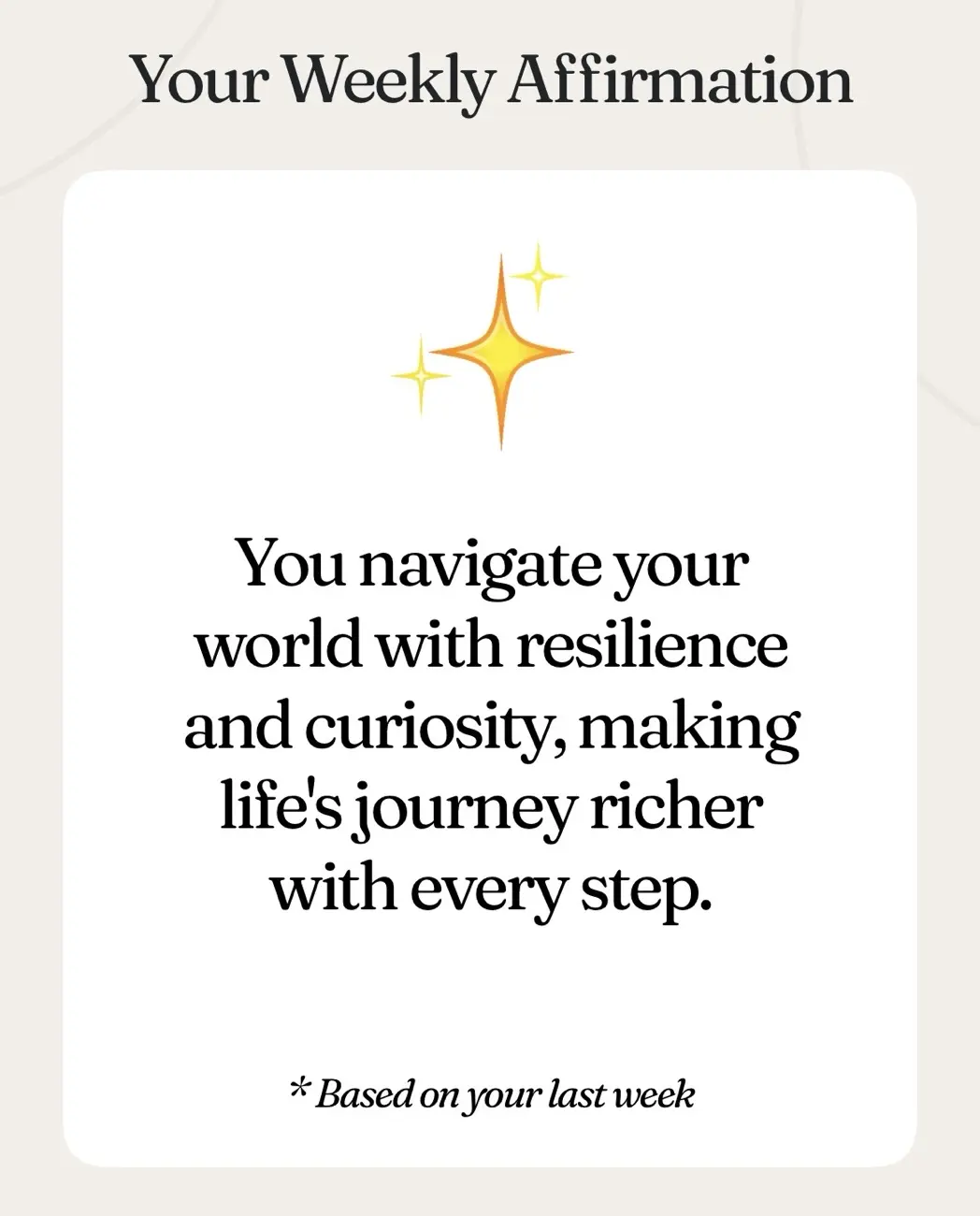
Seeing this laid out in an action plan felt less like a suggestion and more like a mirror. It was confirmation that I was navigating the world with resilience and curiosity, making life’s journey richer with every step, but I was also paying a price for it.
That realization didn’t just stay in the app. It bled into my writing. This week, the pressure to stop ignoring these truths became so acute that it found its way into two poems, two different perspectives on the exact same necessity: the desperate, beautiful, and non-negotiable act of finally saying no, I cannot, or even not exactly.

Your Place:
An original poem by: Axton N. O. Mitchell.
I can be the Villain in your tale
Just know in mine you are not existing
A milestone along the way
A challenge to overcome
A bump in my road along the route I must travel
Do not overstate your place
Be sure to not attempt to gain an inheritance
You didn’t earn
I’ll always be the reality check
Exhausted but existing
To
Knock
You
Down
A
P
E
G
Or
Two

Eviction- Reclaiming Peace:
The first poem was about drawing a line in the sand with the people who thought they could walk all over me. I am happy to announce that the second side of this coin isn’t about them at all. It’s about the quiet, heavy work of forgiving myself for ever letting them get that close in the first place.
The first poem wasn’t just anger.
It is a declaration of eviction. For too long, I let people believe that they had a permanent lease on my life, that they could walk in, take what they wanted, and leave their trash behind, all while I sat there and watched it happen.
I was too polite to call them out.
This poem was the moment I stopped caring if they labeled me the “bad guy” for finally locking the door. If being the villain in their version of the story is the price I have to pay to get them out of my house, then I’ll take that role any day of the week.
This isn’t about being reactive. It’s about being done. It’s about acknowledging that for years, I allowed people to treat me like a resource they could exploit without ever putting in the work to actually earn my trust or my presence.
They felt entitled to my time, my support, and my silence, and I gave it to them until I had nothing left for myself. Writing this poem was me finally drawing the line: you don’t get to demand space you didn’t earn, and you don’t get to act like you’re entitled to an inheritance of my life that you never contributed to.
This is the boundary in practice. It’s the refusal to negotiate with people who think my kindness is a weakness they can leverage for their own gain.
When I say they aren’t existing in my story, I mean that the access they once had has been fully revoked or some of them really just weren’t as important in my story as they made me in theirs. They aren’t entitled to an explanation, they aren’t entitled to a debate, and they certainly aren’t entitled to a seat at my table anymore.
I am done being the “support system” for people who only show up to take or fake.
Reclaiming the Garden
If the first poem was the eviction notice, this second piece is the act of cleaning up the rubble they left behind.
In a world when the first poem was an eviction notice for the parasites, this second piece is about the people I actually choose to keep.
It is about the heavy, necessary work of forgiving myself for ever opening the door to the wrong people in the first place. It is for the years I was a martyr for causes that didn’t deserve my blood, holding onto ghosts because I was too terrified of the silence that comes with being alone.

I learned that my silence wasn’t kindness. It was self-abandonment.
This poem is the reclamation of my own narrative.
This is the realization that I do not have to be the villain in anyone else’s story to be the hero in my own. I don’t need to explain my boundaries, and I don’t need permission to exist in a space where I am safe.
I am done shrinking to fit into spaces that were never built for me to thrive in.
Crucially, this isn’t about running away from the people I love. It is about proving that I can be here for them and for me, at the same time.
I love the homies just as much, maybe even more now, because I am no longer disappearing into the void just to keep the peace
. I need the room to roam,
to breathe,
to exist as myself instead of just existing in the spaces I fix for other people.

“This Is”
An original poem by: Axton N. O. Mitchell
This is not
pulling
away…
Abandoning you, never.
I fear the same.
Never
could I
do it to
another.
Nor,
is it
growing
apart.
Space tends to feel negative; though it doesn’t have to.
If it isn’t
meant to.
It is me
learning to breathe
loving my
skin
feeling the sunshine on my
soul;
growth.
Still
I love the homies
the same,
more
even.
No longer disappearing….
I need me to
prove I can be here
For me
the same.
Need
The R O O M
To
roam not just existt
only in the spaces
I fix for others.
This I need for
me.

The Lens of Interpretation:
I know that what I put on the page looks different depending on who is reading it. Some people will look at these poems and see a hard wall. Others will see a door I finally decided to unlock. Both are accurate. As well as any others outside of those are accurate.
Art and literature are not meant to be locked away in one singular meaning, they are meant to be mirrors. You bring your own history to these words, so if you read them and see something different than what I intended, you are not wrong.
You are just reading them from your own life.
I welcome that.
I want you to find your own truth in this, even if it has nothing to do with mine.
For those of you curious about where the author or artist was standing when they created their piece, there you go. These poems are not just lines on a screen, they are the sound of me putting down a weight. If you find yourself reading these and feeling the same itch to reclaim your own space, take it. Interpret them, tear them apart, or hold them close. Just make sure that whatever you take away from them helps you breathe a little easier in your own skin.

Guide to Building the Necessary Walls:
People love to talk about boundaries like they are soft or polite things, like they are something you negotiate over tea. Real boundaries are not.
Real boundaries are architecture. They are the load-bearing walls that keep your life from collapsing under the weight of other people’s demands. After everything I have been through, the abuse, the betrayals, the theft of my time, and the exhaustion of being a revolving door for people who did not respect me, this is what my guide looks like in practice.
Presence is a privilege, not a right.
- I no longer offer my energy for free.
- If someone cannot respect my existence, if they spew transphobic rhetoric or threaten me or around me, they lose the right to occupy my time.
- I cannot keep the peace by sacrificing my safety. The door is locked.
- Labor is not my identity. I spent years picking up work shifts until I was bleeding out on my own floor.
- Now, I understand that my value is not measured by how much I can carry for a company or a friend.
- If a request drains me past the point of replenishment, the answer is a full, complete sentence. No.
- History does not grant immunity. Just because we have a decade of history does not mean you get a pass to lie to me or rob me today.
- My loyalty is earned in the present tense.
- I am done being the support system for people who only show up to take.
- Protect the sanctuary. My journal made it clear that I am at my best when I am alone in nature. My boundaries are now designed to protect that time.
- If I am not guarded about my solitude, I am not capable of being anything for anyone else.

Your Own Guide:
Building these walls was not a punishment for others. It was a rescue mission for myself. I am done being the backdrop in someone else’s movie. I am writing my own script now, and in this version, the boundaries are made of flint, chert, and knowledge.
If you take one thing away from all of this, let it be the permission to be difficult.
Let it be the knowledge that saying no is not an act of aggression, but an act of preservation. You do not owe anyone access to your peace, and you certainly do not owe them the version of yourself that kills you to sustain.
Walk out of the rooms that don’t fit, build the walls you need to survive, and start living in the space you’ve finally cleared for yourself. You are the only person who can decide what your house looks like, and it is time you started acting like you own the place.

TLDR:
Boundaries are not punishments. They are tools that protect your peace, energy, and wellbeing. Ignoring boundaries often leads to burnout, resentment, and emotional exhaustion.
My journaling data revealed a recurring pattern of overextending myself for work, friendships, and other people’s crises. The solution was not working harder. It was learning where my responsibility ends.
My poem “Your Place” explores removing access from people who feel entitled to your time, energy, or support. Then my poem “This Is” explores creating space for yourself without abandoning the people you love.
Saying no does not make you selfish. It allows you to remain present for the people and responsibilities that matter most. Long history, shared memories, or guilt are not reasons to tolerate disrespect, dishonesty, or harm.
Protecting your solitude is as important as protecting your schedule. Healthy boundaries help you support others without sacrificing yourself in the process.
Your peace is not owed to anyone. Access to your life is earned through respect, trust, and reciprocity. Build the walls you need. The people who belong in your life will learn how to use the door.
Tag – You’re It:
Psychology Today – People Pleasing & Setting Boundaries
Mayo Clinic – Wellbeing & Boundaries
Storia – Journal with Me
Part of Our 12.8 Mile Multiple State Trek


Leave a Reply