
Best For:
Nature enthusiasts seeking low-effort recovery days, creative writing and lived-experience readers, lovers of botanical and artistic storytelling, individuals interested in the history of community green spaces, seekers of whimsical and interactive public art.

The Vault:
- The Butterfly Encounter: The main enclosure offers a rare, immersive experience where tropical butterflies may land on you, providing a deeply personal & spiritual connection to the space.
- Interactive Installations: Keep an eye out for the musical, misting archways throughout the outdoor grounds. These are fun, whimsical, & make the space feel alive.
- The Bird’s Nest Overlook: Make the trek up to the bird nest structure; seeing the giant-sized eggs is a fantastic detail that feels straight out of a storybook.
- Artistic Transparency: Do not miss the glass-blowing demonstrations; the artists are incredibly knowledgeable & provide a behind-the-scenes look at how their work is crafted.
- The Dimple Rocks: Throughout the Children’s Garden, keep an eye out for the collection of dimple rocks. These are decent sized, sculptural stones integrated into the landscape, each featuring distinct, circular basins or “dimples” naturally eroded into the surface.
- Navigate with Patience: Even with a map, the conservatory’s layout can be winding. Embrace getting lost; it is the best way to discover the smaller, hidden indoor waterfalls & quiet botanical corners.
Franklin County Conservatory
Columbus, Ohio

Cliche but, Compromise is Key:
Hiking has to be my absolute favorite way to exist; I feel like that goes without saying, but I’ll say it anyway. Did you know if I could I’d live on trail? I would not even humor it with a second thought. However, that being said compromise should still be included in an intimate partnership or platonic friendship.
This often means finding those shared moments where you can explore and connect in ways that work for everyone.
On May 7th 2026, my eleven years on testosterone anniversary, Kelsey and I decided that we’d switch it up a little bit, so we leaned into something on theme for us but still different. We fired up the Honda and set course to the Franklin Park Conservatory and Botanical Gardens in Columbus.
It was a day for low effort but high meaning, a deliberate choice to trade the physical grind we usually find on trail for a sensory experience that felt like stepping into another world entirely.

Finding Magic in the Butterfly Habitat:
The thing I think we were both looking forward to the most was the butterfly exhibit. My mother always told me , while I was growing up that when our loved ones pass away, they come back to visit us as butterflies.
That is not just a passing thought for me. It is a belief that has shaped how I view the natural world my entire life. You notice upon reading hiking journals, I’ve written, especially in the springtime, me and butterflies are pretty close knit.
Before we stepped into the main flight area, we walked through the emerging space before you go through the checkpoint doors.

Here we were actually able to see the process in real time and it was fascinating.
Behind glass walls were cocoons hanging in rows, some still sealed tight, others showing signs of life, and a few hung empty and open, signaling that the creature inside had already left.
Behind this glass viewing area the escaped and still escaping butterflies are able to be viewed too. It puts the cycle of life into a perspective that you just cannot get from a textbook, the wilderness or inside a documentary.

When we finally walked into that enclosure it felt less like a tourist activity or curated experience to learn about nature and more like a pilgrimage.
Then came the moment that felt like it was written for me from the goddess or maybe even my mother. There was a group of school children on a field trip, and the staff were explaining to them how rare it is to have a butterfly actually land on you.
They were setting expectations, telling the kids that they should not count on it happening. I listened in, as we were the group directly behind them, Kelsey and I exchanged knowing looks. Finally we walked into the enclosure; Within two minutes maybe even less, four tropical butterflies landed on me.

The Vibe:
The vibe here leads to a quiet, surreal, and intimate experience. I am not looking for a scientific explanation of why it happened, but in that space, surrounded by color and humidity, it felt like a left over trace of my mom’s energy.
It reinforced everything my mom ever told me about our connection to the spiritual and natural worlds. It was a moment of pure, unadulterated wonder that I would not trade for anything.

The Indoor Biomes & Our Botanical Game:
The conservatory is not just one room; it is a series of distinct, meticulously maintained biomes and an outdoor area as well.
Each one serves a different purpose and offers a different feeling. We wandered through the desert area, and I was completely floored by the size of the plants.

Agave:
The agave plant specifically was massive. It was towering, sturdy, and clearly had been growing for a long time.
I learned a bit about their blooming process, which is quite the event, or so I am told. This was a reminder of how much goes on in the plant world that we have not the slightest idea about while we are rushing through our daily lives.

Bonsai Trees:
Kelsey and I are also guilty enjoyers of bonsai trees; the collection here is truly expansive. Though I will admit I knew nothing about these trees before meeting Kelsey.
The idea of a tree’s lifespan being so large it will typically live long enough to be passed down as a family heirlooms.

Kelsey and I turned it into a game; more honestly stated Kelsey turned it into “Hey Axton guess the ages of this tree now for each one we saw here. I was of course not even anywhere close with most of my estimated ages.
I would try to guess the appropriate age of each tree before we fully reached it and then check the age plaque of each.I was terrible at it, never even got close.
I honestly thought it was a fun way to engage with different trees instead of just walking past. They are not furniture, after all.

I’m the Map – Come on Everybody Let’s GO:
I had a map on my phone and a physical guide in my back pocket we kept referring to. We still managed to get lost.
It was not a frustrating experience though, aligning closer to the lost where you end up exploring the areas near you. Every thing experienced that you did not know existed a small interactive gift.
Sometimes, letting go of the need to be efficient and just wandering is exactly what the soul needs.

Whimsy & Art in the Outdoor Gardens:
Moving into the outdoor space felt like a shift from the internal quiet to a vibrant, public celebration of color. There is this incredible rainbow archway that reflects colors across the sidewalk. When you walk through it, you feel like you are walking through a prism. I have always been a fan of whimsical, colorful installations, and this was a highlight of the visit.
The outdoor area is also filled with hidden details if you look for them. They had hidden painted rocks scattered throughout the grounds. I believe there were eight total, and we managed to find four of them. It felt like a low-stakes scavenger hunt that made us pay closer attention to the textures of the garden, the base of the trees, and the edges of the walkways.
We also saw various wooden sculptures and funny, offbeat statues. I love that kind of art. It does not take itself too seriously. We even climbed up into the bird overlook structure. It was set up so well, and seeing the giant, oversized bird eggs in the nest was one of those details that just made me smile. It felt like walking into a storybook.

Interactive Elements & Human Craft:
One thing I absolutely did not expect was the interactive art. Throughout the outdoor path, there are multiple archways that do more than just frame the view. They make sounds, they include carvings of owls, foxes, or gourds, and some even have misters that spray you as you walk under them. There was one that featured a spider on a web that was so well done. These are the kinds of interactive pieces that bridge the gap between art and environment.
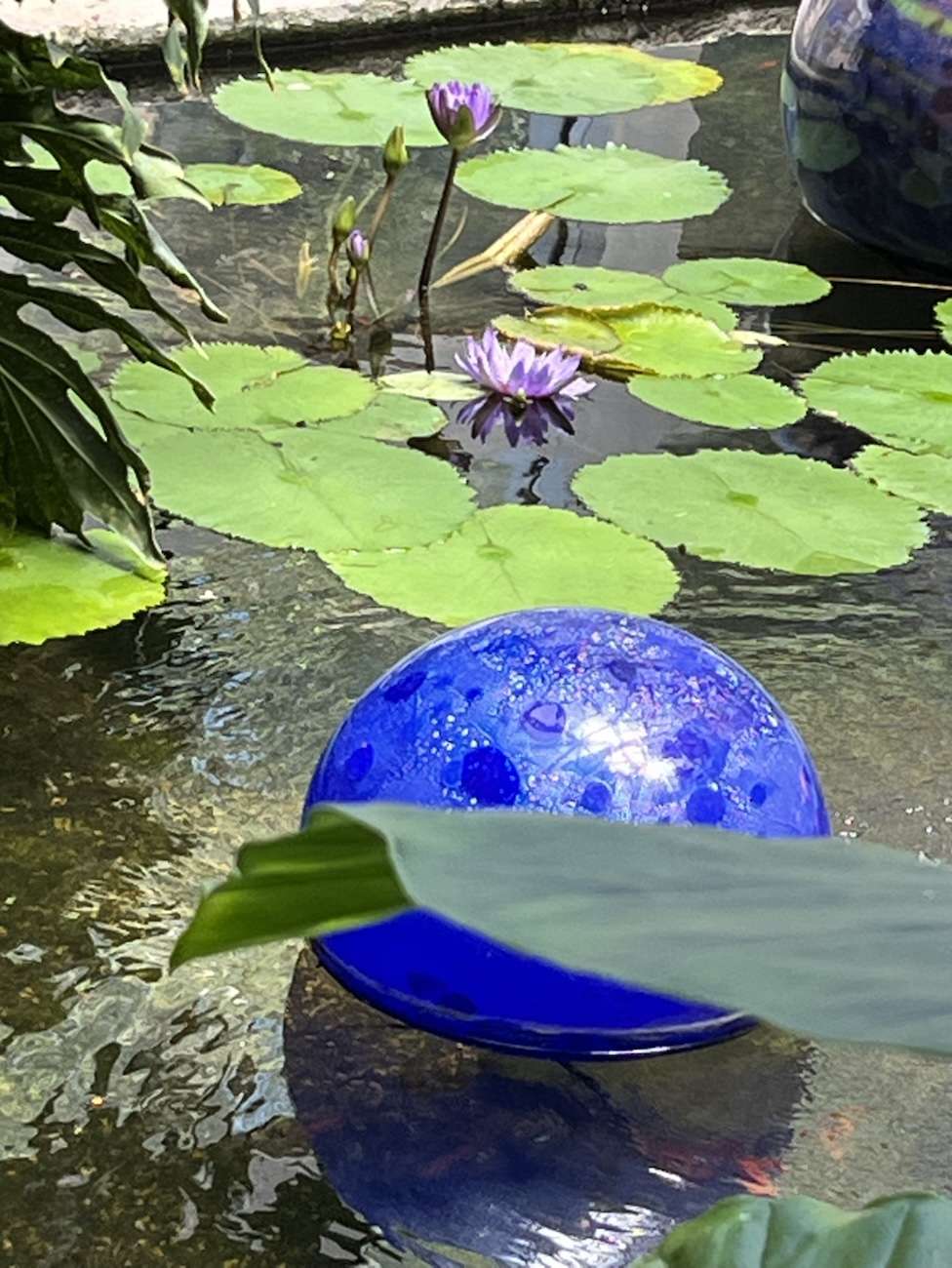
We also stumbled upon a live glass-blowing demonstration. You could watch the artisan work, ask questions, and hear them walk a group of people through the process. The person blowing the glass was clearly a master of their craft—creative, knowledgeable, and more than happy to let us step into their creative space for a while. Seeing something so fragile being made from raw heat and sand was the perfect capstone to the day.

The Atmosphere of Inclusion:
A big thing I noticed here is the demographic of the space. There was a high concentration of queer people, both in the staff and the visitors. It reached a point where the visitors who weren’t queer actually seemed like the minority.

I am not sure if that is just typical for this specific area or if it was a happy coincidence for our visit, but it made the space feel incredibly safe and authentic. There is a different energy when you are in a place where people can just exist without having to perform or hide.

It felt like a genuine community space.
I paid around fifty dollars for our two tickets, and honestly, I would have paid more. It is a rare thing to find an educational, natural space that is this well-tended and open to all ages. I find myself feeling much better about putting my money into experiences like this, where I can see it being used to maintain the gardens and support the staff, rather than spending it on disposable consumer goods.

A Brief History – From Fairgrounds to Botanical Sanctuary:
The land that the Franklin Park Conservatory sits on has a deep, layered history that predates the glasshouse we see today. Long before it was known for its exotic plant collections, the site was part of the expansive Franklin Park area.
In the late nineteenth century, this land served as a fairgrounds.Perhaps most significantly for the local history of Columbus, it served as a vital community space for African Americans.
During an era when segregation was the norm and many public spaces were closed off or restricted, this area offered a place for leisure, gathering, and connection. It was a space where people could organize and enjoy their time in a way that was often denied to them elsewhere.

The John F. Wolfe Palm House, which stands as the signature structure today, was constructed in 1895. It was a classic Victorian glasshouse, designed with the aesthetic of the City Beautiful movement in mind. It was meant to be a place of beauty, architecture, and horticultural study.
The site truly evolved on a global stage during AmeriFlora ’92. This was an international horticulture event that brought massive investment and attention to the grounds. This event acted as the catalyst for the modern expansion, turning what was once a local greenhouse into the sophisticated series of biomes we enjoy today.
It has traveled a long road from its days as a segregated fairground to becoming a modern sanctuary that prioritizes public art, climate education, and historical preservation. It is a living, breathing testament to how a space can grow and shift while still maintaining its roots as a community focal point.

Heading Back Home
Leaving the Franklin Park Conservatory, I felt that rare, grounded satisfaction that usually only comes after miles of heavy trekking. It reminded me that you don’t always need to climb a mountain to find a profound connection to the natural world; sometimes, you just need to walk through a glass door and be open to what finds you.
Whether it was the literal brush of butterfly wings, the shared laughter over our terrible bonsai-guessing game, or the quiet appreciation of a space that honors both history and inclusion, the day felt like a perfect, living gift. It was a beautiful reminder that wonder is everywhere, sometimes, you just have to slow down, wander off the map, and let yourself be found by it.

TLDR:
The Franklin Park Conservatory proved that meaningful nature experiences do not always require miles on a trail.
The butterfly habitat was the highlight of the visit. Within minutes of entering, multiple butterflies landed on me despite staff explaining how uncommon that is.
The conservatory contains multiple indoor biomes, including desert gardens, tropical spaces, and an impressive bonsai collection.
The conservatory felt welcoming, inclusive, and community-focused. It was one of the most comfortable public spaces I have visited.
The site’s history stretches from nineteenth-century fairgrounds to a modern botanical destination rooted in education, preservation, and public access.
For around fifty dollars for two tickets, the experience delivered far more value than many traditional entertainment options.


Leave a Reply