There are some loves that never leave the room, even when the person does.
This poem is for anyone who has ever reached into an empty kitchen and still felt warmth. Who has caught themselves folding towels the same way, or found their heart beating to a rhythm that was first taught by love.
Loss doesn’t silence that bond…
it transforms it into echo, ritual, and the quiet kind of forever that hums through the smallest parts of life.
“Where Her Hands Still Are”
By: Axton N. O. Mitchell
I still hear her in the quiet, her quiet giggle. A low hum the house learned from her, The lines around her mouth, soft percussion of spoons on porcelain, Her sigh as the curtains breath with the wind.
She was the kind of gentle that never had to announce it existed; you just felt it. In the way light hit the kitchen table, Or how your shoulders settled when she walked into a room.
She always swayed, and somehow, it made everything feel safe.
Now every sound leans toward memory. The kettle whistles her name, the wind carries faint notes of her perfume, and every dawn feels a little more unsure how to begin without her.
Her hands made warmth out of thin air and love. Even the dust knew her touch. I fold laundry the way she did, sleeves tucked in, corners neat a quiet ritual… to keep my world from unraveling.
Grief doesn’t shout anymore; it lingers in the shadows, breathes through the walls, sits down beside me at dinner every single night, waiting for me to notice.
I talk to her often… just not out loud. I I find her in the places silence but quiet best: the garden, the car, anywhere I know she lingers.
Life goes on, yes, but oh so differently, like a song missing its first note. Yet her love hums underneath it all, steady, ancient, woven into everything I touch.
Even gone, she’s everywhere. She is the steam of morning tea, the lilac scent after rain. I feel her in the echo of my own heartbeat,
After all it learned its rhythm from hers.
Her absence will always ache,
but the ache itself is proof,
she’s still here.
She is woven into the pulse of every moment I’m still living.
Love doesn’t end when the heartbeat stops;
it just finds new ways to hum.
Poet’s Note:
I wrote Where Her Hands Still Are after realizing that grief isn’t always loud. Sometimes it’s patient. It waits, hums, and reminds you that love this deep doesn’t vanish. It simply reshapes itself. You don’t ever lose a mother completely; you just start learning to speak in her silence.
I have decided to launch Poeaxtry’s Poetry Prism Press. A free quarterly digital magazine. This publication will: spotlight creatives, single creative works, and themed collections. All while sharing indie voices, who all share different minority perspectives, and creative work in a space that’s inclusive, thoughtful, and full of surprises.
What’s inside each issue:
Poetry & Writing: Submissions paired with contributor bios, flowing naturally through the magazine.
Art &Art Pieces: Modern, bright visuals highlighting artists and creatives
. Interactive Extras: QR codes or shortened links may unlock playlists, prompt journals, collectible images, actionable self-care checklists, and so much more. *These are not guaranteed in every issue like they are in my e-zines.
Interviews & Community Features: Q&As with authors, creatives, and indie voices: full or sidebar size.
Resource Highlights & Prism Picks: Curated books, music, art, and community projects.
Trans Truth & Hot Takes Thoughts Column: Opinions and reflections from a trans man’s perspective
. Letters from Readers: Shared throughout to amplify community voices.
Call-to-Action Panels: Join The Prism community, submit work, or support Poeaxtry_ via tips, all accessible via QR codes.
Newsletter Early Access: Sign up via QR code to receive the next issue early.
Differences from e-zines& ebooks :
E-zines include a minimum of six interactive add-ons and hidden layers only visible after purchase or free download of a digital copy. The digital magazine is free, public-facing, and curated. Submissions are reviewed to fit the issue’s flow and ethos.
This is a space to read, explore, and engage. Submissions, feedback, and tips are welcome. We don’t accept violent or discriminatory content.
Get ready for our first issue. Free, quarterly, and made with care for indie voices and the creative community.
Ebooks:
50 plus poems written over a period of a few months, no theme, and some may include a playlist but that is it.
✍️ Free Publishing & Creator Support Through Poeaxtry_
Poeaxtry_ was built on the belief that everyone deserves to be seen and heard. Instead, of just those who can afford to buy their way into visibility. Through The Prism, I offer free publishing opportunities for minorities and supportive allies… on a first-come, first-served basis. Access should never be a gatekeeping game.
Each accepted project gets as much help as the creator needs: editing, formatting, layout design, covers, eBook setup, visual direction, listing on their store fronts, and a forever spot in our catalog linking to you’re store, website, whatever.
If it makes your work shine, I have accomplished my goal. Some need a single pass of edits; others want to build the look from scratch. Either way, we work together until the final piece feels right. Like it’s theirs, not just an extension of mine.
I’ll even handle the form designl if they’re unsure how to begin, or we can build it collaboratively step by step. There’s no wrong place to start, and no creative too small to deserve care and craft.
Nothing about this process is paywalled. No one is ever charged for publishing, spotlighting, or showcasing their art, words, or anything else. Book spotlights, creator features, and collection highlights — all of it stays free for minority creatives always. I do have paid avenues and ways to continue.
I don’t measure success by profit. I measure it by impact. If a creator I helped goes on to something bigger, that’s the whole point. I’ll never regret contributing to someone’s growth or seeing their art evolve beyond Poeaxtry_. That’s what this brand is built for. When I started my poet and publishing journey I decided ai wouldn’t come up without offering a hand to other minorities as well. I open doors, And I do not close them without reason.
☕ Supporting is Appreciated, Never Required
Ko-fi and Buy Me a Coffee are simply there for anyone who wants to tip or offer support . It will never be a requirement for other marginalized individuals . This is especially for creatives in marginalized communities. Every free project, collab, and spotlight stays free, always. Support is welcome, not expected. On theme contributors will have at least But up to all submissions included in our community first collabs,
I haven’t been sleeping very well since mid‑October. Not from tossing and turning, but because my nights have gotten populated by fragments of her dead, walking through scenes that don’t make sense. I know she was cremated. My brain knows that. My dreams don’t care. They hand me versions of her that are wrong in small, cruel ways, and I wake up hollow, disoriented, and exhausted.
Usually I don’t remember my dreams. That had always felt like mercy. Now the dreams are sharp,enough to cut me out of the fabric of my sleep. A physical reaction to what I know can’t be real. I would trade anything to stop carrying them into daylight . They are grotesque and tender in the same breath. Sometimes a dream turns ridiculous.
Kelso as some “boob‑head” character, storming heaven like an absurd hero to bring her back. You know the boobs stayed as a stubborn, surreal trophy. I laughed when I woke from that one at noon when I should have been sleeping for work. This is ugly, honest, and necessary. Humor slides under grief like sunlight through cracked glass. And it doesn’t fix anything, but it convinces you for a second that you’ll survive the next hour.
Facing the Anniversary and Birthday Blues
Saturday, November 8th is the fourth anniversary of her death. My birthday is November 16th. Those two dates sit like magnets on the calendar and pull at everything around them. People say time heals, but time just rearranges the edges. The hole stays, and never really goes away. The fall light grows brittle and memory gets louder. The anniversary reopens the wound; the birthday asks me to pretend there’s room for celebration when there’s barely room to breathe.
Some years I was prepare with self care and such things. As if lighting a candle, walking a trail she loved, and writing a letter I never intended to send was better. Others, I keep the day hollow and move through it like a ghost that has learned to mimic presence. This year the dreams have made it worse: they throb up from sleep into waking, so the days (I work nights) feel longer and the nights feel thin.
The Only Constant in Nearly Thirty Years
My mom was my base code. For almost thirty years she was my first and fiercest believer. You know the person who read my early poems, who clasped my hands and told me to keep going when I wanted to hide. She was not only a supporter; she was the architecture of my risk. She taught me to put words out into the world, and to take the small, stupid leap that turned into Poeaxtry_. Without her, I’m not convinced I would have trusted that anyone needed the corners of my voice.
Losing her didn’t just remove a person; it removed orientation. There are empty chair conversations, and moments when I start to share a small victory and realize there’s no one there to make that face I used to chase: the proud, slightly embarrassed, always‑loving face. I carry her in the choices I make now. She’s in every collab I push for, the minority voices I refuse to let slip, and the low‑cost entry points I design. She believed access mattered. Those are her fingerprints on everything I build.
Dreams as Mirrors of Grief
Dreams become a theater where loss rewrites itself nightly. Sometimes she appears whole and familiar; sometimes she’s an impossible version that breaks my chest open. When my subconscious stages the Kelso quest, ridiculous, cartoonish, oddly tender. I saw how the mind tries to make sense of an impossible absence. There’s grieving and then there’s surviving. Your brain will invent a plot if it thinks it can get you through the night.
Those surreal bits matter. They remind me that grief is not a problem to be solved. And is a presence to be navigated. The dream logic is vulgar and honest: it says, if I can’t have her back, then let me at least laugh at my ridiculous attempt to smuggle her home. That laughter is not betrayal. It’s armor.
Laughing, Crying, and Writing Through Loss
Writing has been the only honest map I possess. Pouring the ache into lines gives my grief shape; sharing the lines gives it witness. Public writing didn’t start as strategy. She passed away and I hadn’t done it yet. So it started because she pushed me toward it even in death. She would read my messy poems and she always insisted they mattered. She was the one who taught me to put emotions in my words. So I write because she taught me; I publish because she believed it was worth the risk.
There’s a thin, fierce purpose that comes from turning grief into craft. That is this: every poem, every collab, every free spotlight I give a marginalized voice is a way to keep her impulse alive. She taught me to make room at the table. I try to make that room as wide and stubborn as she would have wanted.
The Weight of Absence and the Persistence of Love
The absence is heavy, but it is proof. Proof that something true was there. The ache is the mirror of what I had: it indicates depth, not failure. I miss the private conversations, the small practical kindnesses, the ways she was present without trying to be noticed. Missing someone who was your constant is also learning to carry them differently. You see she is in policy decisions for the collabs, in the language I use when I offer critique, in the empathy that underpins how I run things publicly.
Grief shapes you into a different steward of your work. I find myself patient with voices that are less polished, insisting on publication for those a gate would have stopped. That stubborn inclusionism is a living tribute.
Carrying Her Presence Into Creation
This November has been the sharpest yet. The anniversary and the birthday will land, and I’ll meet them the only way I know how: by making something that outlives the day. I write because she told me to. I run Poeaxtry_ because she imagined I would. I build community because she taught me generosity wasn’t optional.
I can’t call her. I wish I could. I can’t ask what she thinks about the newest collab. I can’t show her the little victories and expect that laugh that makes everything feel both ridiculous and necessary. But I can work. I can create spaces for the marginalized voices she would have defended. I can keep her first faith in me alive with every small, defiant publication.
For now, that has to be enough… because it is after all, all that I have.
Every voice carries a story worth hearing. At Poeaxtry’s Poetry Prism. We shine a light on those stories. The raw, real, and resilient. Our Book Spotlights celebrate independent authors and poets who speak truth through art. Today, we’re honored to feature The Good Die Young by Shela Brown — a powerful, vulnerable collection that transforms pain into poetry and healing into art.
The Good Die Young (TGDY) is a 91-page digital poetry collection and memoir, evoking raw, unfiltered emotion. These poems follow a young woman navigating heartbreak, identity, and the depths of mental health struggles—depression, anxiety, and PTSD.
Through each verse, TGDY explores how innocence transforms, how pain shapes us, and how expression becomes survival. This project is more than poetry; it’s reflection, release, and rebirth. A right of passage and a pivotal part of the author’s healing journey.
For the art lovers. For the healers. For anyone who has ever felt deeply and quietly at once.
For those still finding themselves after the storm. This is a safe space …soft, heavy, and honest.
The Good Die Young reminds us that art is survival, and that writing can be a home for every emotion we’ve been told to silence.
Through The Prism, we continue to uplift voices like Shela Brown’s . The voices that turn pain into power, and vulnerability into strength.
If her story resonates with you, share it forward. Every share helps another poet, author, artist,or creative be seen. And another story be heard.
I created Poeaxtry’s Poetry Prism because too many voices were told they weren’t enough. Either too soft, too loud, too different, too much. And I wanted to build a space where “too much” becomes exactly right.
Every spotlight, every poem, every project under Poeaxtry_ exists to remind creators that their stories matter. The goal isn’t fame or followers … it’s community visibility, validation, and connection.
I do this for the ones who never saw themselves on the shelf. For the ones who were told to edit out the truth. For the ones still healing, still creating, still daring to speak.
Because when one of us is seen, we all shine brighter.
There are rooms that speak without words. Spaces where light, sound, and presence…or absence, tell stories the heart quietly knows. In “Can You Read the Room?”, this poem navigates the fragile space between life and stillness, showing how even the smallest elements, like the hum of a heater, the gaze of a pet, anchor us in a world of quiet reflection.
Can You Read the Room?
The lamp’s gone cold,
its bulb a frostbitten moon.
Light spills out wrong,
pale and unconvincing,
a blue hue.
The air hums sterile,
a clinic without purpose,
a stillness once safe.
Soft. Solace.
The heater drones on,
groaning through the night,
spitting warm breath
that never reaches cold hands.
Blinds drawn tight,
as if the outside could judge,
or the sun might bite.
Even the usually lit TV’s
dark eye is closed.
No flicker.
No laugh. No light.
A blanket rises…
enough to prove life is here.
The body beneath,
neither dreaming
nor sleeping.
The dog watches quietly,
devoted without demanding.
The cat’s tail curls,
a question mark still,
but he’s stopped asking.
A clock ticks,
the only noise
for nothing worth timing.
Every second,
a whisper saying:
“Can you read the room?
Can you taste the air gone flat,
the hum of things pretending to function?”
This is how a heart
plays dead
without truly dying.
Life exists even in muted forms. The poem reminds us that presence is not always loud and that subtle signals, like the rise of a blanket, the loyal eyes of a pet, can speak louder than words. “Can You Read the Room?” challenges us to notice, to feel, and to recognize the understated pulse of being alive, even when everything else seems still.
Poet’s Notes:
This poem was inspired by quiet, personal observation and the way empty spaces reflect our emotional landscape. The imagery aims to balance the sterile with the intimate: a room devoid of action yet full of subtle life. I focused on sensory contrasts like cold and warmth, light and darkness, movement and stillness, to capture the tension between isolation and connection. The repetition of questions mirrors the mind’s own attempt to engage with emptiness, urging the reader to “read the room” both literally and metaphorically.
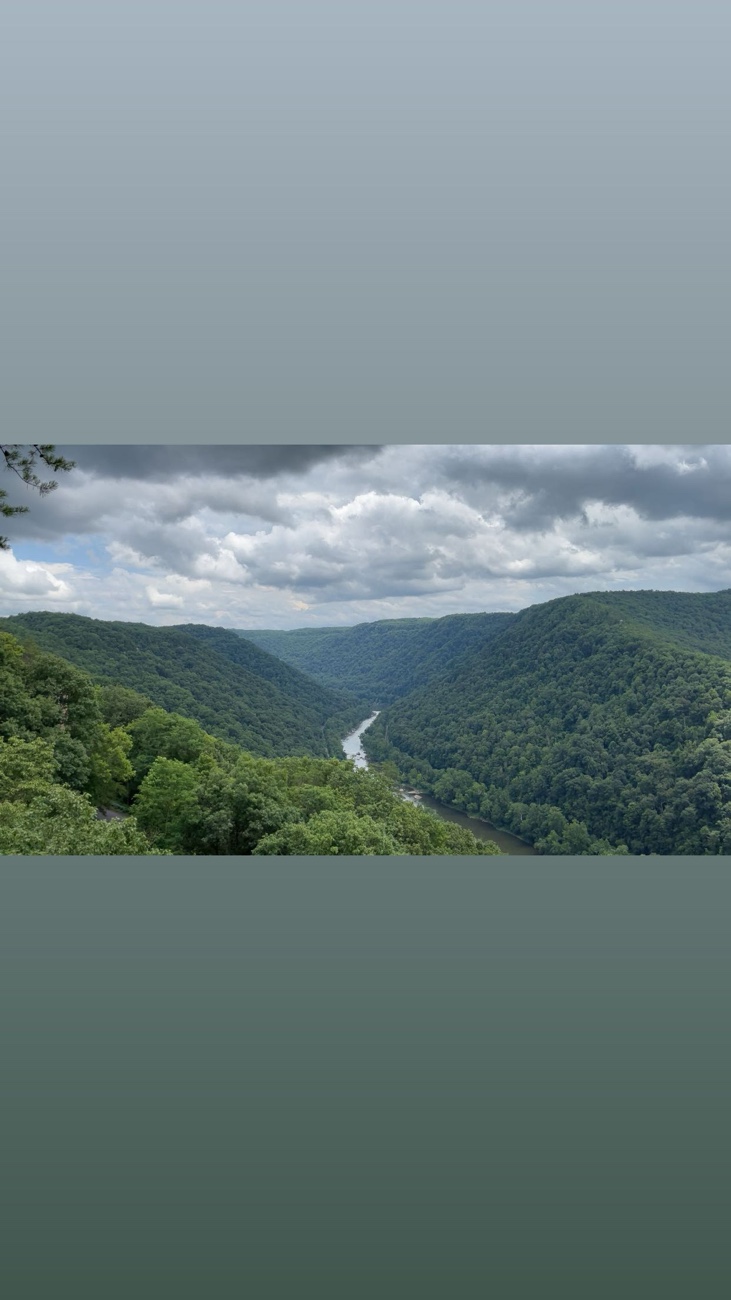
November 8th marks four years since I lost my mom. Four years since everything I knew broke open and the world is still shifting in ways I still can’t fully name. Grief isn’t a straight road, it’s a labyrinth. It’s a mess and a maze all at the same time. Some days I walk through it calmly, breathing deep, grateful to have survived another turn. Hiking through places I knew my mother would love breathing in crisp air and I know then I can feel her there. Other days, I slam into walls made of memories, and I ache like it just happened yesterday.
People say time heals, but it doesn’t, not even slightly. Time teaches, especially how to fake it. It also teaches how to carry the weight differently. Some mornings I can laugh, work, create, and feel almost whole. Other mornings I stare at the ceiling and think about the space she left, a space that no one else could ever fill.
I’ve kept working through all of it. I’ve kept building my life piece by piece, even when it felt like holding everything together with shaking hands. I built this business for her, for the strength she gave me, for the words she never got to read. I’ve published my own work many times now, and I’ve even been published by others. Every success feels like a conversation I wish I could have with her. “Mom, look. I did it.”
There are so many things she’s missed.
The late-night laughs. The healing. The slow, quiet days when I finally felt peace again. She hasn’t seen my sisters growing up into young women… strong, funny, and fierce in ways that remind me of her. She hasn’t seen me learn to be happy again, to find joy without guilt. She hasn’t seen the forgiveness that never came from others, but still bloomed in me.
And then there’s my dad. That’s a different kind of grief, the kind you choose. I finally cut him off, and though it hurt, it was necessary. You can’t heal in the same place you were broken. That decision came from love. A love for myself, and for the memory of the woman who taught me what love should feel like.
There’s a hole where she was, and nothing fills it. I’ve stopped trying to. I’ve learned to build around it instead. And while I try to let light pour through it sometimes. It is hard to honor it on the dark days. Grief isn’t something you get over. It’s something you grow around.
Four years without her feels impossible, and yet I’m still here. Still writing. Still working. Still remembering.
Because she never left entirely. She just changed forms. She’s in every poem, every stone I pick up, and every person I help heal through my work.
Grief changes shape, but it never disappears. It becomes part of your story. And if you let it, it can become the fire that keeps you creating, surviving, and loving through the loss.
Here’s to four years of missing her, and four years of finding myself again in the space she left behind.
We live in a world that feels like it’s cracking under the weight of its own reflection.
As of 2025, humanitarian crises and genocides continue across the globe, largely ignored or exploited by the same systems that profit from their pain. In Gaza, tens of thousands have been killed and displaced as infrastructure collapses and access to aid remains restricted. In the Democratic Republic of Congo, the cobalt and coltan mined by children still power the batteries of our phones, laptops, and electric cars. And in Sudan, an ongoing civil war has displaced millions, yet receives almost no media coverage compared to Western conflicts.
Meanwhile, Americans scroll and spend, buried under debt, inflation, and propaganda. While, being told that freedom can be found in the checkout aisle or the next algorithmic distraction comes along.
This poem was written as both confession and confrontation: a moment of truth-telling from within the belly of a capitalist empire that feeds on silence.
Poem:
“The World Burns, and We Scroll”
I wake beneath the hum
of screens,
each one a sermon preaching more for sale,
their glow a ghost of what we lost…
to comfort,
convenience,
and compliance.
The world burns,
not metaphor,
not news,
she just burns.
In Congo,
in Sudan,
in Palestine,
children trade their breath for minerals.
Their parents’ lives
for borders drawn by hands
that never had to bleed.
Their cries travel
through copper veins
to light our phones, our news feeds,
our many, many screens.
The guilt, we share.
We spend.
We pretend.
America,
land of the barely living wage,
where grief is taxed,
and outrage costs extra.
We chant freedom in discount aisles
while bombs hum lullabies abroad,
and children go to bed with dread
fed by hunger.
You’ve got to start to
wonder.
We are not free.
We are stitched into these machines,
screaming between algorithms.
We need only to bear witness,
to cradle a world that keeps unraveling,
to tell everyone still fighting:
we see you.
Even if our country won’t.
May every dollar dripped in blood
rot back to dirt.
May every empire collapse
under its own reflection of depravity.
May mercy outlive profit.
May love…
unfiltered, defiant, unbranded,
outlast the hands that sell it.
And may God hope He isn’t real
after what He’s let these children
feel.
The violence unfolding in Palestine, Congo, and Sudan is not distant. It is wired directly into our daily lives. It is in our consumption, our comfort, our denial. Every tap, every scroll, every “neutral” stance allows empires to continue unchallenged. Bearing witness means refusing silence. It means calling it what it is: systemic greed, colonialism reborn, a global machine powered by both apathy and profit.
But awareness can still become action. Sharing verified updates, supporting on-the-ground organizations like Doctors Without Borders, UNRWA, Refugees International, and Congo Relief Missions, or simply breaking the silence in our own communities. Each and every act chips away at the narrative that tells us we are helpless.
Art alone cannot stop war, but it can refuse to let it vanish unseen.
This poem stands as both lament and rebellion… against complicity, against erasure, and against the idea that humanity can be priced.
Poet’s Note:
I wrote this piece as an American who has grown exhausted by the repetition of history. We are watching the same injustices dressed in new slogans. We are taught to chase comfort while others are buried beneath it. This poem is not just grief; it’s a refusal to look away.
If you read this and feel angry, good. That means you still have something the system hasn’t stolen, your empathy. Hold on to it. Use it. STAY WOKE!
Because the world is burning, and still, somehow, we have the power to bear witness, to refuse to forget, and to keep telling the truth.
We often think of major historical tragedies… such as the transatlantic slave trade, the treatment of people of color during and after the civil-rights movement in the United States, or the Holocaust, as distant. Important. Horrific. But past. What is less comfortable: the patterns they formed still echo today. And we may be witnessing a new chapter of systemic threat. But this time, not abroad or in previous years , but in our own country right fucking now.
From Slavery to Civil Rights
The oppression of not white Americans through slavery and the trail of tears (and many other horrible historical events) created generational trauma, economic disparity, and social exclusion. The civil-rights era sought to dismantle legalized segregation and voter disenfranchisement. These struggles were about identity, dignity, belonging, equality of rights. Americans rightly look back and say: “Never again.”
But “never again” only works if we recognise the signs when they return. Never again only works if we are not continually doing the same damn shit just in other ways.
The New Frontline: Rights Under Fire
Transgender Passports & Identity Documentation
In early 2025, the Donald Trump administration issued Executive Order 14168 titled Defending Women From Gender Ideology Extremism and Restoring Biological Truth to the Federal Government. The order declared that federal documents must align with “biological sex at birth.”
As a result, the U.S. Department of State suspended changes to gender markers on passports and revoked the “X” gender designation option for many applicants. Which affects many people who aren’t trans but are intersex and left to figure it out.
Legal action followed. A federal judge blocked parts of the policy that prevented transgender and non-binary Americans from obtaining accurate passports, recognising the policy was likely unconstitutional.
But the damage is real. People have been forced to use documents that mis-mark their gender, creating risk and exposing identity. In other words: state-sanctioned mis-identity.
SNAP Cuts and Food Insecurity
Around 42 million Americans rely on the Supplemental Nutrition Assistance Program (SNAP) for basic food security. The government shutdown and refusal to allocate contingency funds means SNAP payments risk being withheld starting November 1, 2025.
When we compare this to historical deprivation of rights and access, for example: poll taxes or economic exclusion of minorities, the parallel is stark. Denial of sustenance is denial of dignity. Most Snap recipients are your friends, the workers, the disabled, and the elderly. As well as the children the party that is causing this is so quick to claim they care about.
Deployment of Troops and Erosion of Checks & Balances
In 2025 the Trump administration has explicitly floated deploying the Army, Navy, Air Force and Marines into U.S. cities, bypassing traditional guard & civilian limitations.
Cities led by Democratic governments have seen National Guard troops deployed despite objections from local authorities. For example, Washington D.C., Los Angeles, Portland, and even West Virginia?
Legally this raises questions of federal overreach, the Posse Comitatus Act, and state sovereignty. When the military becomes an instrument of domestic policy without proper checks, the separation of powers erodes.
Moreover, framing transgender people, activists, or political opponents as domestic “threats” or “Antifa” emboldens the machinery of suppression, another echo from historical oppression.
Why This Matters
When identity is controlled (who you can say you are, what documents you carry), then belonging becomes conditional. When access to sustenance (food stamps) can be politically withheld, then the social contract falters. When the military is repurposed to internal enforcement without clear guardrails, then the rule of law and democratic accountability are at risk. When these issues disproportionately target minorities: trans people, racialised communities, the poor, it reflects the same structures that enabled slavery, Jim Crow, Nazi bureaucracy.
Who’s Affected
Transgender and non-binary people facing documentation that erases or mis-represents them, as well as intersex people. Low-income families reliant on SNAP who may lose assistance, elderly, working class Americans, and people with disabilities. Not to mention the cut local economy will face without snap being pumped back into it. Communities in states where federal troops may intervene despite local governance. Allies and minority voices who stand for change, inclusivity, and equity.
What We Can Do
Raise awareness: Highlight these issues in your networks, your blog, your community. Support legal advocacy organisations: American Civil Liberties Union (ACLU), Lambda Legal, etc. Document personal stories and amplify minority voices who are most impacted. Push for structural policies: Transparent oversight on troop deployments, secure funding for social programs, identity-affirming documentation rights. Build inclusive publishing forum to centre voices that are excluded, silenced, or under-represented.and most importantly create community and help one another when you can!
Don’t Be Silent
The historical parallels are evident. This is not hyperbole, it’s reality. And if we don’t write it, publish it, challenge it, then we risk letting history’s darkest chapters repeat. Use your voice. Raise the spark. Let every word matter. What side of history will you look back and be able to say you were on.
Because when the lines blur between democracy and dictatorship, when troops march where civilians should walk… we have to ask… where is fucking NATO?
As indie authors, we’re constantly looking for ways to get our work seen, and sometimes we pay for services that promise exposure, listings, or spotlights. I recently had an experience that reminded me how important it is to know exactly what you’re paying for and, how things can still go sideways, even when you follow the rules.
Here’s the full story:
I paid for a premium promotion service that promised to list and feature my books. On the first day, I submitted all of my materials: titles, synopses, blurbs… exactly as instructed.
Initially, the platform’s owner told me to submit via messages, but it turned out the correct process was to submit on their website.
Honestly, if I’d been given the correct instructions from the start, I would have submitted everything on the website that first day, and this entire situation could have been avoided. Instead, I was given wrong directions & I ended up waiting, checking the site multiple times, and ultimately being the one who suffered
I didn’t know this at the time. Over the next month, I waited and followed up checked the sight multiple times to see if anything had gotten posted as promised.
I simply wanted to make sure I wasn’t being left behind while they focused on attracting new paid subscribers. Despite all my patience, silent checks, one actual check in, only one author spotlight, and one book listing went up.
Frustrated, I reached out after more than a month since having paid. Instead of resolving the issue, the platform issued a refund. I wasn’t trying to cause trouble! I even offered to pay again because my goal wasn’t the refund; it was simply getting the posts I had paid for. Though I was informed that I should have put them on the website not in the chat as i was instructed to just prior.
Throughout, I apologized if my messages came off as rude and clarified that my only concern was making sure my work wasn’t overlooked or forgotten (I get it) in their push for new paying clients. Because let’s face it it’s easy to forget one thing when focusing elsewhere. I wasn’t even mad I just wanted to make sure all was well.
Always an advocate, now art is demanding the same.
-Axton N. O. Mitchell
The takeaway for indie authors:
Check the process thoroughly before paying. Make sure you understand exactly how subscribe and listings work. Document everything. Keep a record of submissions, communications, and timelines. Follow up professionally, but be aware of limitations. A refund may resolve payment and I am glad I got at least that , but it doesn’t replace lost exposure or wasted time waiting.
Advocate for your work. Paid services are tools, and not guarantees. Your work’s visibility still depends on how well you communicate and follow up.
Paying for exposure is only effective if the platform has a system that honors it. This experience was frustrating, but it taught me to be proactive, organized, and realistic about what paid services can and, can’t do for indie creators.
It is still rather upsetting I was just attempting to touch base after over a month of radio silence and I get snubbed.