I didn’t think blackout poems were for me. I’ve never considered myself a visual artist, not in the least bit. I wasn’t sure I had the eye for it. Then I saw this comment, before work tonight, and something clicked.
It was a public comment on my Facebook, under a WordPress post I’d shared. I wrote the post on a topic that I feel strongly about: that I’m not “LGBT without the T.”
The man who commented wasn’t a follower. He was just some creep who had something cruel to say, like people often do when they’re not being watched. Sending in the comment and, blocking me this afternoon while I was asleep for work.
And before I could even reply. I don’t delete comments, and I usually kill with kind snark. But this time, I made him into forever art.
I blacked out the rest.
And what was left.. well that is the art.
I didn’t expect to like this process. I didn’t expect to feel like I could even do it.
Now I have and, it feels like something I’ll keep doing.
There’s something quiet and satisfying about revealing the truth that was already buried in the noise.
My first thought is let’s make it pretty The art Chris helped me make
Theodor Seuss Geisel, widely known as Dr. Seuss, is often celebrated as a beloved children’s author whose whimsical stories have enchanted generations. However, beneath this nostalgic legacy lies a troubling reality of racism. Dr. Seuss was also responsible for spreading racist imagery, harmful stereotypes, and participating in practices that reinforced systemic racism.
During World War II, Geisel created political cartoons for the U.S. military and newspapers that featured dangerous caricatures of Japanese Americans and other Asian people. These cartoons amplified xenophobic sentiments and contributed to public support for the forced internment of Japanese American citizens, a grave injustice that violated civil rights and caused lifelong trauma. That is still widely ignored by people as a whole when speaking on American transgressions against minorities.
Beyond his political work, Dr. Seuss’s children’s books included offensive and demeaning portrayals of Black, Asian, and Indigenous peoples. His illustrations often leaned on racial stereotypes that reduced complex cultures to exaggerated, harmful tropes. The severity of this imagery was such that in 2021, several of his titles were officially pulled from publication by the publisher due to their racist content.
Adding to this, less known but equally disturbing, is Geisel’s association with pamphlets circulated during the early 20th century that listed people of color for sale under racist terms that commodified them in deeply offensive ways. This reflects a direct involvement in perpetuating dehumanizing views of Black people and communities of color. It underscores that the harmful narratives linked to Dr. Seuss go beyond caricatures in books and into real-world racist practices.
Dr. Seuss presents a confusing legacy of contradictions. The reality of his good vibes and racism” is summed up by “green eggs, red flags”. While his playful stories like Green Eggs and Ham charm generations, these beloved tales mask the red flags hidden beneath. His cheerful façade conceals troubling racist imagery and messages that demand a closer, critical look. This contrast shows how something seemingly innocent can still carry deep and harmful issues. Also reminding us to question and unpack what we celebrate.
These facts highlight a deeply problematic side of a figure many of us grew up idolizing without question. It reminds us that cherished childhood stories and authors can harbor legacies of racism and oppression that deserve acknowledgment and critique.
The cultural impact of these racist portrayals is significant, given the widespread reach of Dr. Seuss’s works in schools and homes worldwide. When children are exposed to stereotyped and racist imagery under the guise of innocent stories, it reinforces prejudiced worldviews early on. This demands a critical examination of the stories we pass down and the voices we elevate.
We don’t buy books to worship. We buy them to question. So thrift, borrow, secondhand your way through the wreckage of art, but be the voice for those who cannot be one. Point out what’s broken when you see it. Respect the talent, when it exists, not the trash. Respect the people affected more than the pen.
So if you grew up on the racism of Dr. Seuss tell me did you notice the issues before? Did you know he was involved in more than cute kiddie books? Or do you think I’m out of line?
Second one in a month. I’d looked it up before driving out to Blue Rock State Park, and every trail map and hiker report said the fire tower cab was open. So I drove. I hiked. I climbed.
And it was locked. I wouldn’t care if it wasn’t supposed to be open, the view was still amazing.
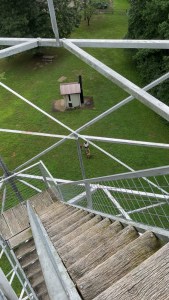
No interior. Just wire railing, rusted stairs, and that strange feeling of being high up and let down at the same time.
But the trail still gave me something. Actually, two things. Two Heart-Shaped Fossil Plates, Found By Accident
They look so tiny!
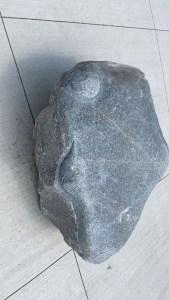
I wasn’t fossil hunting, not really. But like always, my eyes stay low to the trail. Always scanning for the strange and the almost-heart-shaped. And there they were. These two fossil plates, shale-gray and layered, both shaped like hearts. One had coral lines across the surface like it had been pressed into memory. The other was chunkier, heavy in the hand.
I keep these for my fiancé. Wherever I go, if the earth offers me a heart, I take it to them. And then kelso puts them in a heart jar.
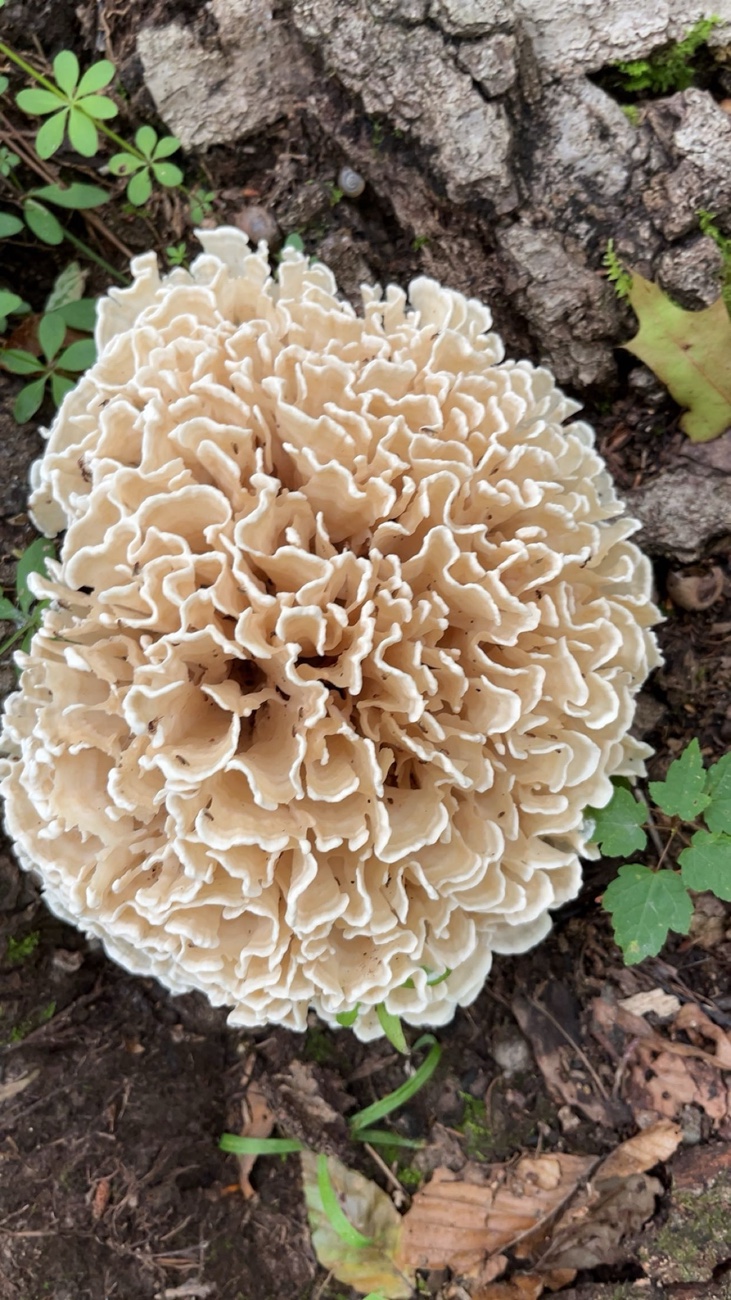
I’m a sucker for fungi photos
These two are the latest in the growing pile. None of them are polished or perfect. Most still have dirt in the lines. But that’s the point. They’re not shaped by effort they’re just found, already waiting. Like gifts from the earth for me to take home.
The Tower Was Closed, But the Trail Gave More
The cab being locked wasn’t that big of a deal. I’d imagined sitting cross-legged on the floor of the tower, eating a snack, writing a line or two. Smoking a joint. Just being above the trees for a while.
Instead, I stood on the platform, held the railing, and looked through the metal. I did get to see a cute tiny lock a couple but in the fencing on the side together. I love locks on the wild.
Sometimes the ground gives more than the sky.
I got to see Luna from way up above. My friend sky and her baby stayed on the ground with her.
Second visit in 8 days / brought a friend this time
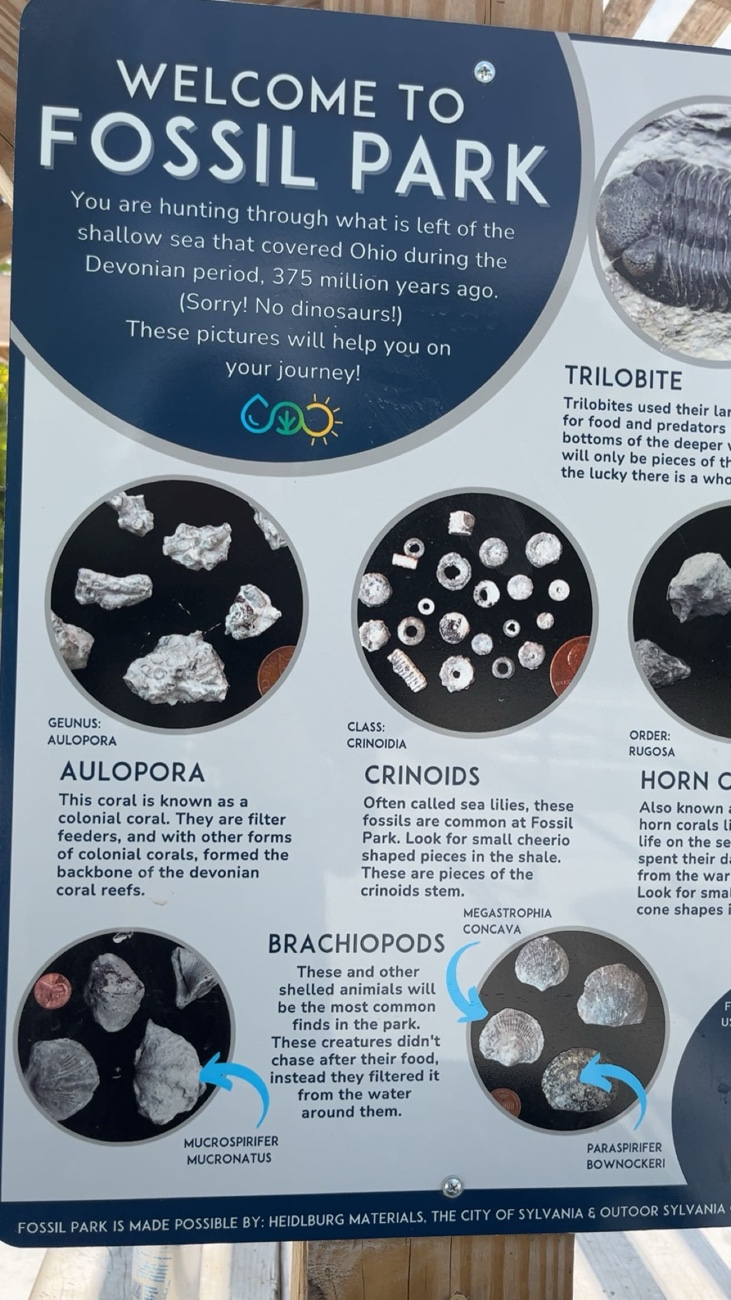
Back again, second time in just over a week. I didn’t plan on becoming someone who returns to the same place so soon, but here I am. Fossil Park’s got a hold on me, apparently.
This time I brought a friend. They’d never been either, and she didn’t know what to look for, what was real, what was just rock. Same as me the first time, honestly. But where I was breaking apart crumbly layers of mud and shale, they were out there going at full boulders like a one-person demolition crew. I looked over at one point and they were dead-serious trying to crack open a rock the size of a car battery. I told them, “You’re working too hard. You look for these.” And I handed her some shale. Eventually she caught on, just as I had. As for me? I found a rock shaped like a heart. That’s already a good day.
The water tower that marks the parking lot
But this one had fossils stretched across the surface… tiny patterns and lines like pressed flowers, just petrified. It’s rough, imperfect, and absolutely getting added to the little collection I’ve been building for my fiancé. I always keep heart-shaped rocks for them. This one just happens to be 375 million years old and covered in dead sea life. Felt right.
We took our time heading back. Talked. Wandered. Didn’t even feel rushed. That’s two visits now, and I’m already thinking about the third. Might be soon.
Stephen King is undoubtedly one of the most prolific and influential authors in modern horror literature, but his depiction of disabled women often falls into troubling patterns that reinforce damaging stereotypes. In particular, the characters Annie Wilkes from Misery and Jesse from Gerald’s Game illustrate how King’s narratives tend to frame disabled women either as violent threats or tragic victims, a portrayal that not only simplifies disability but also perpetuates societal stigma.
In Misery, Annie Wilkes is introduced as a physically disabled former nurse who rescues author Paul Sheldon after a car accident. However, as the story unfolds, Annie’s disability becomes closely intertwined with her erratic and dangerous behavior. She kidnaps Paul, holding him captive and subjecting him to physical and psychological torture. The character’s violent instability is amplified by her disability, which reinforces the harmful trope of the disabled individual as inherently unstable or dangerous. This representation can contribute to real-world prejudices by implying that disability is connected to unpredictability and violence, rather than portraying Annie as a complex person shaped by many factors beyond her physical condition.
On the other hand, Gerald’s Game presents Jesse, a woman who becomes physically disabled after a traumatic event—a bondage game with her husband that goes wrong, leaving her handcuffed and stranded in a remote location. Jesse’s character is depicted with more psychological nuance as she battles not only her physical limitations but also her history of trauma and abuse. While this portrayal gives insight into the emotional and mental struggles tied to disability, it still frames disability largely through the lens of suffering and victimhood. Jesse’s survival story is powerful, but King’s focus on trauma risks reducing her disability to a symbol of pain rather than allowing for a broader, more empowering representation.
Fact 1: Studies of disability in media highlight that disabled women are often confined to narratives of victimization or menace. Annie Wilkes’s violent actions in Misery and Jesse’s vulnerable predicament in Gerald’s Game both echo these patterns, emphasizing danger or helplessness as defining traits.
Fact 2: These portrayals perpetuate social stigma against disabled women by framing their identities through extremes of fear or pity, limiting public understanding and empathy for their real-life experiences.
King’s depictions mirror broader issues within popular culture, where disability is frequently sensationalized or used as a shorthand for horror and tragedy. This oversimplification overlooks the complexity and diversity of disabled individuals’ lives and fails to challenge the biases that continue to marginalize disabled women.
Furthermore, the cultural impact of King’s storytelling is significant because of his vast audience and influence. When such stereotypes go unchallenged, they reinforce misconceptions and contribute to the social exclusion of disabled people. It is essential for media creators and consumers alike to critically analyze these portrayals and advocate for stories that present disabled women as fully realized individuals with agency beyond their disabilities.
Adding to this complexity is the inequity in whose perspectives are valued when discussing disability. Disabled creators and activists who critique harmful portrayals are often dismissed or labeled as “dramatic” or “attention-seeking,” while mainstream authors like King receive less scrutiny. This double standard highlights ongoing challenges in elevating marginalized voices and underscores the importance of amplifying authentic narratives from disabled women themselves.
By addressing these issues openly, readers and creators can push for more accurate and empathetic representations in literature and media, helping to dismantle stigma and foster a culture of inclusion.
Have you noticed these instances in work from “the king” of horror? Do you also see the ugliness they perpetrate?
Describing yourself to someone else isn’t always easy and especially when you’re made of a million pieces. Some are polished like my tumbled stones and some still lost in stage’s in-between. Some of my pieces sit quietly. Though, most are able to be heard well before being seen. If you really want to know me, here’s what I’d say:
I’m a transgender man, a poet and a brother. I am someone who’s lived more lives than years and still chooses love every time. I’m a little wild around the edges but hold a huge interests is things bigger than myself. I’m the kind of person who sees beauty in broken things and meaning in the mundane. A rockhound, literally and metaphorically speaking. I find clarity in chaos and treasures in the dirt. I’ve always found peace in nature’s small wonders, whether it’s a strange fossil in a ohio, a waterfall along the road in North Carolina, a field of wildflowers, or the hush of a quiet morning with no one around.
I’m a pet dad and an animal lover through and through. My heart stays full because of the furry ones that trust me to protect and care for them. I’m a fiancé, a son, a momma’s boy in every way that matters, and someone who’s learned how to carry a big heart inside even bigger walls. They exist not to keep people out forever, but to make sure what comes in is real and worthy.
I work as an STNA in Ohio. It’s an honest job that reminds me daily of the fragility and strength of being human. I’m queer and neurodivergent, which means I see the world differently in many ways. Sometimes my thoughts drift, sometimes I hyperfocus, sometimes I forget where I was going mid-sentence. I call it my squirrel, but I always circle back to what matters. I’m easily amused, deeply emotional, and hard to knock down for good.
I call it like I see it. And I know I am one hundred percent not for everyone. I don’t lie about who I am. I’ve survived abuse, addiction, mental illness, and more than my fair share of days that almost ended me. And yet I’m still here still as ever curious, still kicking, and still kayaking down rivers like they owe me answers. I’ve always loved a little danger, a little chaos, and a lot of loudness. Pop-punk is home for me: shouty lyrics, raw feelings, and the unapologetic right to feel everything too much.
I’m an activist, not because it’s trendy, but because silence has never saved anybody. I believe in showing up for all people, for justice, for love, especially if it’s hard. I support human rights because mine have been denied, delayed, and debated too many times not to.
And above all else, I’m a human being. I am not a checklist of identities or a walking experience for others to analyze. Just a person doing his best with what life’s handed him. I laugh, I mess up, I start over, I love hard, and sometimes I fall apart. The best part? I keep showing up. And I hope that counts for something. I will always.
So, how would I describe myself? I’m someone still in motion. I am actively making space in a world that wasn’t built for people like me, but damn sure isn’t ready for what I bring to the table either. I’m full of contradictions, full of love, and full of fight. And if you don’t get it… well, keep it cute, or put it on mute.
This post was prompted by a Substack account literally named “LGBWithoutTheT.”
I wasn’t going to say anything. Then I remembered who threw the first brick. People quickly forget the hands that built their liberation.
Consider this a journal entry, a call-out, and a refusal to be erased.
And for the ones who keep trying to correct me about Marsha P. Johnson. Yes, she was a drag queen. But don’t weaponize that title to strip her of her womanhood or her role in our lineage. You say it like it means she wasn’t trans, like that disqualifies her from this fight.
Let me remind you: they didn’t make names for us back then. We weren’t supposed to exist, they lumped us in boxes for sexual orientations and forgot about gender. So excuse her for only fitting in the box allotted.
They didn’t have the language because they didn’t want us to exist. DUH! They could no longer deny the “sexual orientation” aspect. That is why we always fight together. Yet, some still find it hard to see how we ended up together.
It is erasure in eyeliner and eyeliner in erasure.
– That Tranny Axton
You really think they were out here making neat little identity labels for people they were trying to erase entirely? They shoved us in boxes with the rest of the “undesirables” called us faggots, trannies, freaks, perverts, criminals, and left it at that. We weren’t given nuance because they weren’t interested in letting us live long enough to need it.
They forced us into the same box as the cis gay and lesbian community. Even then, we still fought for you. We stood beside you when no one else would. We understood oppression, and still do. I, for one, know how it moves, how it mutates, how it devours the most vulnerable first.
Still, when it’s time to return that solidarity, a lot of you disappear. You go quiet. Or worse, you join in.
I don’t see many of you showing up when it actually counts… not even for yourselves…. When there’s no parade, no post, no performance, and nothing in it for you. That’s the difference between LGBT & queer, we show up for others you all just show up for beer.
And to be clear, this isn’t an attack on the LGB community as a whole. I do know most of y’all aren’t the ones trying to cut the T off the end of the alphabet. However, bisexual folks have also been erased, belittled, and pushed out of both straight and queer spaces. You know the feeling of being treated like a phase. You understand when you’re seen as a joke. It’s familiar to be considered a threat to the comfort of others. So please consider that when you are transphobic.
This is about the ones who align themselves with exclusion once it starts to advantage them. The ones who climb out of the struggle and turn around to shut the door behind them. It’s not about whom you’re attracted to but, who you’re willing to throw under the bus. Sadly, to feel more palatable to people who never wanted any of us around in the first place. Remember that before you try to put your boots on our necks.
The “LGB without the T” movement is not only a slap in the face. You spit on the memory of our history. Look! There goes the ungrateful child pretending to have raised themselves. We know whose hand was held through the storm. We saw who clothed, fed, and got them safely to where they stand now. It’s galling. The way some cisgender community members will proudly wave rainbow flags and say “We’re finally free.” Wholeheartedly, leaving behind the people who took the first swing at their oppressors. It is cowardice dressed up as “purity politics.” It is erasure in eyeliner and eyeliner in erasure.
You do not get to rewrite history because you’re uncomfortable with the mirror trans people hold up to your face. Marsha P. Johnson, a Black transgender woman, was on the front lines at Stonewall. And not to become a sanitized footnote in your cis-centric, whitewashed retelling. Sylvia Rivera, a Latina trans woman, was screamed at and booed by cis gays when she dared to stand onstage. She told them the truth: trans people were dying while they were sipping cocktails in their freshly legal bars.
The first bricks thrown at Stonewall weren’t chucked by some white suburban gay couple who just wanted to get married. ALso not sorry we never wanted to blend in. They were thrown by trans women of color, by drag queens, by homeless youth, the “too political,” and “too much.” Your comfort was built on our chaos. Your legal rights were carved out of our blood. The very idea of “Pride” was born from our refusal to die quietly. You do not get to inherit our revolution and then evict us from it.
It’s not just historical revision, it’s betrayal. Newsflash, it’s not new. The movement gets close to acceptance, cis LGB folks try to cut the T loose. Like we’re some inconvenient asterisk instead of the architects of your liberation. You wanted our rage when it was marketable and our defiance when it made you feel brave. Yet, now you don’t want our truth when it challenges your false comfort. You want our fashion, our language, our style, our slang, but not our struggle.
Let’s be honest, a lot of you didn’t just forget us. You actively turned your backs. You watched the same system that once crushed you now turn on us, and you looked away. You even joined in, parroting right-wing points like “biological reality” or “just protecting the children.” Without the slightest trace of irony. As if they won’t come for you next. As if they didn’t already.
You try to frame this as a boundary, some protective line drawn around “just LGB issues.” But how can you talk about queerness and not talk about gender? Do you think homophobia just pops up in a vacuum? Don’t you see how much of it is rooted in the fear of people who deviate from gender norms? Effeminate men, masculine women, people who don’t “perform” their gender in a way that straight society deems appropriate? The line between “too gay” and “too trans” is razor-thin and violently enforced. You think they only care who you sleep with, but they care how you walk, talk, and dress. How you take up THEIR space.
And let’s not even pretend this movement is about safety. Nothing makes a space safer than removing the people who’ve been targeted the most, right? Trans people are not the danger. We are the canaries in the coal mine. When our rights start to fall, yours are already next in line. If you think throwing us under the bus will delay the fascists at your door… wrong and next are both words describing you.
So let me say it plain, in a way even the “respectability gays” can’t misinterpret:
You did not build this alone. You do not get to gatekeep the house we all bled to build. And you sure as hell don’t get to evict us and redecorate in rainbow pastels.
You are not the only letters that matter. They never were. You only got here because of the ones you now try to cut off the end like a typo. But we are not a mistake. We are not your footnote. We are the reason you get to pretend that’s your flag in the first place.
So if you’re uncomfortable, GOOD. That’s fine. Be uncomfortable. Sit with it. But don’t you dare rewrite the story, and don’t you dare call it unity when you mean uniformity.
Keep it cute. Put it on mute. Or better yet, keep it honest. Remember who threw the first brick so you could afford to forget it.
This isn’t a debate. It’s a reckoning.
To every trans person reading this: we were never the problem. We are the reason there’s anything to celebrate at all.
To the LGB folks cutting us out:
You can’t take the T out of bigot.
And you sure as hell can’t scrub away the stain it leaves behind.
Being seen as a man, only until they learn I’m trans, is a violent erasure. It strips transgender men of adulthood, manhood, and safety! All in the same swift breath. This poem, “Stealth Safety,” explores what it means to “pass.” Then to be treated differently the moment you’re not assumed cisgender. Stealth doesn’t equal safety. Don’t forget, some of us never wanted to be seen as cis. Nor are we granted the privilege of being left alone. Others of us refuse to stay silent when the temperature changes.
An original poem by: Axton N.O. Mitchell 9/23/2025
Reflecting is a deeply personal poem that journeys through heartbreak, growth, healing, and looking back. This piece is an honest transformation from sadness to strength. Making it relatable to anyone thinking this heartache will do them in. Perfect for fans of authentic, introspective poetry and those seeking comfort through words. Available now in my first collection, “Beginnings and Endings.” Gumroad & PayhipEtsy & Amazon
“Reflecting”
In your bed with you (which was actually mine, but never mind)
Feeling alone with you (probably because I was more alone than ever)
always a fight with us (which was really you gaslighting me, but what do I know)
Nothing’s ever right with us (nothing was ever good enough for you, not even the moon).
What’s going on with us? (this was your game of cat and mouse.)
want to lay down (killing my energy for your own enjoyment)
Want to feel your love (the effects of life without care)
Lust to feel your touch (you keep it away so I wouldn’t realize I didn’t need it)
But what is going on with us? (your narc spiral around and around)
If I could rewind to a time where you were sure (I wouldn’t; now please fast-forward)
I’d be there in an instant (not now, not ever).
I don’t like the distance in this California king (I bought a smaller one; now it is fine)
Our dreams turn to unseen things (my self-consciousness was onto you the whole time).
What’s going on with us? (You need another break? Oh, you just want to go on another date.
Are you done with me? (the answer I learned was no, you will never be.)
Can’t you see? (I’m done and leaving. No contact)
You can’t be you and I can’t be me without connection in between. (you wanted me to feel this way, so I would never escape.)
The added lines in “Reflecting” are in the (parenthesis).
If reflecting resonates with you, you can get your own copy at the links above! OR If you would like to support my work, get the collection for free by emailing poeaxtry@gmail.com and asking about “Honest reviews in exchange for free e-books and zines.” Seriously, all you have to do is review it and be honest, and I’ll give you another after that for the same purpose!
Your support helps keep my solo Poetry and collabs alive and growing. Thank you for coming on through!
If you won two free plane tickets, where would you go?
Sydney, Australia.
Because I wanna see the Great Barrier Reef in person before it’s just a footnote in history.
Exploring the outback.
Exploring the outback, where the ground looks like Mars and the sky’s a painting.
Adventures through the outback, where every rock hides a fossil, a geode, or a mildly venomous surprise.
In the outback, where I can spot emus, cassowaries, and kangaroos. Though, they might square up like it’s Fight Club: Marsupial Edition.
Wondering the outback, because I want to walk where Aboriginal stories were carved into stone thousands of years ago.
Exploring the outback offers unique experiences. I might see a bush fire glow in the distance. A koala chilling in eucalyptus. I would probably come across a meteor crater I wasn’t expecting.
Oh to explore the outback. Discovering the lush Daintree Rainforest. Just think to visit the Twelve Apostles along the Great Ocean Road. Don’t miss the Blue Mountains near Sydney.
Exploring beaches, ones that are wild and empty and perfect for screaming existential thoughts into the surf.
Exploring tide pools is fascinating. So is exploring reef flats. at least I imagine so. Those gnarly rock formations look like they were made by a fantasy game designer.
We are exploring the coastline. We hope to see a reef shark or a sea turtle. Maybe we will spot a saltwater crocodile (from a safe-ass distance, obviously).
Did I mention exploring yet? And beaches? And reptiles?
Oh yeah and “the dingo ate my baby” (too soon? Come on I was not even alive when that happened).