Emotional hiking journal: What hidden smell on this trail makes your chest tighten or expand?
The Scent of Honeysuckle: How a Summer Smell Carries My Childhood
There are certain scents that time refuses to let fade. For me, honeysuckle is one of them. One inhale, and I’m no longer standing where I am. Now, I’m transported back to warm West Virginia afternoons when the air was heavy with sweetness, and life was simple enough to fit inside a summer day.
and the Pools That Raised Me
Every time I catch that scent, I’m back at the Oglebay Park pool, chlorine in the air and sunlight bouncing off the water. I can almost hear the echo of kids laughing, the splash of cannonballs, and my mom calling from the side to remind me to reapply sunscreen.
Then I’m at Grand Vue Park in Moundsville. In yet another summer memory stitched together with the same smell. My hair slicked back with pool water, my skin sticky from popsicles, and my heart full of the kind of joy only childhood knows. Those pools weren’t just places to swim; they were where my mom and I found our rhythm. She’d sit in the shade, content just watching, while honeysuckle crept along the fence line and filled the air with something that even then felt sacred.
The Ballfield and the Blizzard
Sometimes that same scent meets me at a softball field in my mind. The crack of the bat, the dirt on my cleats, the sting in my arms from connecting just right. I can still feel the weightless moment after hitting a grand slam. There’s my mom’s cheer cutting through the noise, louder than the crowd itself.
After the game, we’d stop for a cookie dough Blizzard at Dairy Queen with the whole team. I’d be sweaty, dirt-streaked, and proud. She would smile like the world was ours for that one small window of time. That’s what honeysuckle smells like to me… victory, summer, and love.
The Scent of My Mother’s Hands
Fresh-cut grass does it too. My mom always took care of everything: mowing the yard, planting flowers, washing the car by hand. She smelled like grass, soil, soap, and sometimes honeysuckle all at once. It was the scent of someone who built comfort out of effort, who held entire summers together with her bare hands.
Even now, when that smell drifts through a window or lingers on a trail, I pause. I breathe it in like a prayer. Because somewhere in that sweetness, in that green freshness of grass and bloom, she still exists. Not gone… just layered into the air.
Why Smell Is the Strongest Memory
Science backs it, sure… the olfactory bulb is tied to emotion and memory. But for me, it’s simpler. Honeysuckle is a time machine. A gentle reminder that some parts of us never grow up, never move on, never stop reaching for the hand that kept us steady.
It’s more than nostalgia… it’s grounding. It’s a way of saying, I remember. I’m still here. And so is she.
What smell does this for you on a trail? In a bakery? Anywhere?
This poem confronts the realities of racism, fascism, and systemic oppression in the United States. Through vivid imagery and raw emotion, it exposes how fear, privilege, and institutional violence shape American life, while highlighting the resilience and voice of marginalized communities.
“The State of the Dis-United”
An original poem by: Axton N.O. Mitchell
Rabid preacher,
lying through perfect teeth
straightened by the braces of minorities.
Speaking of liberty and God,
sitting there choking on both.
You draped hate in Stars and Stripes,
hung pride from every porch post,
called it patriotism…
it was merely your fear
in a pretty JoJo bow.
Your police hunt.
Your politicians feed.
And your children pledge allegiance
to the god, and to the country,
that never answered a single prayer
from the lips of someone “different.”
You see shelter
where I see a cage.
I scream bullets.
You respond justice.
Where white is “normal,”
and everyone else…
a “problem.”
I’ve seen your suburbs
built on
brown
and
black
bones,
your schools still teaching how to forget
by preaching white lies.
You sell “unity”
with a Confederate discount,
while renaming oppression
“freedom of speech.”
Your anthem is a siren,
and every verse
bleeds red, white, and bruise.
And still…
we breathe.
We march.
We write.
Turning every war-won wound
into witness.
No fascist flag
can outshine
the fire of the people
they try to silence.
This poem is born from my lived experience as a trans person navigating a country built on fear, exclusion, and hierarchy. I wrote it to call out the hypocrisy, the violence, and the ways systems crush those they deem “other.” But it’s also a testament to: resilience, survival, and the voices of all marginalized communities. This is me and I stand with you. Every line is a refusal to stay silent, every image a witness to injustice. I wrote it because poetry is my weapon, my witness, and my way of demanding that the world see us, hear us, and reckon with what we endure.
I think, it would walk softly but carry the weight of worlds. It would not announce itself. It would arrive between words, slip into the pause after laughter, and linger long after everyone else has gone home.
Silence is both thief and teacher. It doesn’t always come empty-handed but, it never leaves without taking something, either.
What Silence Steals
Silence steals connection first. It builds walls between people who need to speak but can’t find the right words. It turns “I’m fine” into armor and conversation into an empty stare.
It steals knowledge, too. The kind that grows in shared stories, in hearing others’ truths, and in daring to speak your own. When silence settles too long, understanding dies quietly underneath it.
And it steals growth, the slow becoming that happens when we face conflict or confess fear. Silence freezes us in the moment before change, where everything we could say might shatter what we think we know.
What Silence Gives
Yet, silence gives, too. It brings peace, the kind that hums beneath chaos and exhaustion. It gives us room to breathe, to listen to ourselves when the world feels too loud.
Silence also gives questions. Sometimes uncomfortable ones that echo in the dark: Who am I without the noise? What do I actually believe?
And sometimes, silence gives fear. The fear that no one will answer back. The fear that the quiet means we’ve lost something vital or someone.
The Balance Between Noise and Nothing
Silence is never just absence. It’s a mirror. It shows us what we’ve hidden and what we’ve lost, but also what we’re strong enough to face.
I’ve learned that silence isn’t my enemy and, it is only my reflection.
What it steals, it teaches me to fight for.
What it gives, I try to understand.
In the end, silence doesn’t ask for my voice. It reminds me how much power I have when I finally choose to use it.
I have a scar on my left shin. It’s a small, pale reminder from around 2003, back when I was a sixth grader at Bridge Street Middle School in Elm Grove, West Virginia.
It was a “free day” in gym class, the kind every kid waited for. The gym was a normal one. Located in the school auditorium, long and rectangular, with bleachers lining one of the walls. About three-quarters of the bleachers ran along the wall, then there was an opening for the doorway, and on the other side, a smaller section, maybe a quarter of the full set.
I was up top on the longer side, full of energy, no sense of danger. I came running down the steps with my friend Brittany right behind me. We were laughing, just messing around, not thinking twice about how fast we were going.
I hit the bottom and made it to that open space between the bleachers, but Brittany didn’t. She slipped on a wet spot on the gym floor, lost her balance, and went sliding. Of course, straight into me.
We crashed hard, and both of us went down.
The smaller section of bleachers. You know that quarter part by the doorway I mentioned earlier. Had metal edges under, where you’d rest your feet. When we fell, one of those sharp metal bars caught my shin just right. It tore into my leg deep enough that I saw white… bone white. My favorite pants instantly stained with blood. Somehow remained unripped.
A U-shaped chunk of skin was gone. There was blood everywhere. My stepdad nearly passed out when he saw it, upon picking me up.
That was the first time I ever got stitches, but definitely not the first time I should’ve.
Now, every time I look at that scar, it’s not just pain I remember. It’s that wild mix of laughter, fear, and youth. You know, the way chaos and joy used to collide so easily before life got complicated.
That little scar on my shin is more than a mark.
It’s a snapshot of who I was before the world told me to grow up.
This past Tuesday, Luna and I set off for an afternoon hike at Honey Run Waterfall in Knox County, Ohio. We left Licking County around 3 p.m. The sun still high and the temperature sitting comfortably in the low 80s. Pretty perfect hiking weather if you ask me.
The short trail leading to the falls is shaded and inviting, opening up to the sound of rushing water and sunlight glittering off the rocks. Luna wasted no time running straight into the pool beneath the falls. Of course, I followed her in. The water was cool and clear, a refreshing contrast to the warmth of the day.
Discovering the Ledges
After drying off a bit, we continued on the trail that follows the Kokosing River. That is when I found out there were ledges. I had no idea they existed here. Luna and I have been here a few times before. I just have really bad special awareness. Anyway… The rock formations stretched along the riverbank, carved out by years of water and weather. We climbed up and around, exploring ledges and paths that weren’t to hard for Luna. I was soaking in views that felt almost misplaced.
There’s something about a place like Honey Run. Sure, it is small. Yet somehow it is still full of quiet beauty. Between the falls, the sunlight, and Luna’s joy bouncing from rock to rock. This was one of those hikes that reminds you why getting outside matters.
Hike Notes
📍Location: Honey Run Waterfall Park, Knox County, Ohio
👣Trail Length: Around 1 mile total (moderate terrain)
Last Friday afternoon, Luna and I set out for Scioto Grove Metro Park in Grove City, just south of Columbus, Ohio. It marked my sixth tower climb since July, and the late-day light gave the whole loop a golden edge. The perfect mix of calm and movement that clears my head.
About Scioto Grove Metro Park
Scioto Grove Metro Park spans roughly 620 acres along the Scioto River, offering a mix of wooded trails, open meadows, and riverside overlooks. It’s one of the newer Metro Parks in the Columbus system, officially opened in May 2016 as the 19th Metro Park.
You’ll find:
More than 7 miles of hiking trails Canoe and kayak access points on the river Fishing ponds Archery ranges (traditional and 3D) A disc golf course Picnic shelters and overlook decks Backpacking campsites for overnight stays
📍 Address: 5172 Jackson Pike, Grove City, OH 43123
The centerpiece of Scioto Grove is the Keystone Fire Tower, originally from Jackson County, Ohio, and carefully relocated and restored for visitors.
Standing at 111 steps tall, this 82-foot tower offers panoramic views of the Scioto River valley and even a distant glimpse of the Columbus skyline. Which is roughly seven miles away on a clear day. The structure was re-galvanized and rebuilt for safety, giving hikers a rare chance to climb an authentic fire lookout still in working condition.
If you’re bold enough to climb it, the reward is pure . Including: wide air, open view, and the grounding quiet that only comes from being above the noise.
The Loop Hike with Luna
We started our hike in the late afternoon, taking one of the park’s easy-to-moderate loop trails that weave through forest and along the riverbank. The route brushed sections of the REI River Trail, Mingo Trail, and Overlook Trail. They all connected for a solid 5–5.5 mile loop.
The terrain was steady with just enough elevation change to feel earned. Luna explored every scent, tail up and curious. I slowed down and let the rhythm of the park take over.
At the tower, she waited at the base, head tilted as I climbed. From the top, the world widened. With the Scioto curling below and autumn barely brushing the trees. It felt like ritual, this sixth climb. A ceremony in motion, a quiet victory stacked on all the others since July.
By the time we looped back, the sun had dropped low, casting long shadows over the trail. The kind of ending that feels less like goodbye and more like pause.
Tips & trail notes
🕒 Tower Hours: Open during daylight; check the Metro Parks site for closures. 🐾 Dog-Friendly: Pets welcome, must remain on leash.
🥾 Trail Difficulty: Easy to moderate. Mingo Trail (~5 miles) offers light elevation gain (~100 ft).
🎒 Best Route: Connect REI River Trail, Mingo Trail, and Overlook Trail for a scenic loop.
💧 Bring: Water, sturdy shoes with grip, and a flashlight if hiking near dusk.
☔ After Rain: Expect mud on lower Overlook Trail and riverside paths.
When I was two, my mom and my stepdad made their relationship official. He worked the barges then, and I remember looking at photos of all the gifts he’d bring me back when he was off the boat. By the time I was seven, they married, and I stood in the wedding as a child who didn’t yet have the words to describe what I knew deep down… this man was already a father to me. He is the father of my twin sister’s, but he raised me as much as he raised them. If not more. I sometimes feel like I got the best of our parents, but that’s another story. He was there for everything: my games, my chorus concerts, my basketball practices where he taught me how to perfect my jump shot. He showed up, over and over, in the small everyday ways that add up to a lifetime of love.
That’s why I called him Dad 1.
And I said it to both of their faces. And everyone else’s face. I didn’t care and I still don’t.
My biological dad, the one tied to me by blood but not by presence, became Dad 2. He didn’t take that lightly. Actually he flipped out. I can still remember his anger when I claimed my stepdad as my first dad. But I remember more of his anger than. I do anything else about him. I can also remember darker things: him stalking my mom and stepdad from bar to bar, trying to intimidate but never standing tall when confronted. One night, my stepdad called him out, made him stand, and he folded. He was the barstool coward. He definitely stood up on one and proclaimed he was a “pussy” so he didn’t get beat down.
The contrast between the two couldn’t have been clearer. One earned the title through presence, love, and constancy. The other lost it through absence, fear, and bitterness.
My stepdad passed away three years before my mom, taken by cancer. Our relationship wasn’t perfect but we were working on it. Losing him took that away and when my mom followed though they weren’t together and hadn’t been, the wound split wide open again. But his role in my life is undeniable: he wasn’t a replacement father, he was my father.
That’s why when you see my poem by the title of Dad 1, you know now what it means. It isn’t casual. It’s deliberate. The names weren’t a joke, or a jab. They were a truth I recognized early: fatherhood is about presence, not just blood. 🩸
Sometimes poetry isn’t just something we stumble into, and it’s something that threads itself into our family history. My stepdad, as a teenager, had a poem published. That poem became one of his early milestones, a moment of recognition that showed him his words carried weight and resonance.
For years, that story lived in our family as a point of pride. A reminder that poetry can reach beyond the page, that it can take a teenager’s thoughts and stamp them into the world for others to see.
Carrying the Torch: My Poetic Response
Recently, I found myself thinking about that poem again. But instead of just admiring it, I decided to step into the conversation myself. I wrote a response piece… no, not to his father, as his original poem had been written, but to him.
In doing so, the poem became something multi-generational. His words reached back toward his father. Mine reached back, to him. The thread stretched, carrying a dialogue that spans decades, relationships, and grief, yet ties us together in the language of poetry.
Here is that poem, my response to his legacy:
“Dad One”
From the son…
To dad one with love Remember when you came into my life, stepped to the plate, and even taught me how to play ball?
Dad, you never missed a game, a practice, or a play.
You helped mold me into the man I am. I may not share your genes, but I carry all of you.
I would give many things to have another conversation with you, to say what we have left unsaid.
This is coming from the heart. Though we can never start again, every day I wake knowing you are proud of me.
Why This Matters
Poetry has a way of crossing boundaries. Whether it is between time, between people, or even between generations. My stepdad’s published poem and my response to it stand as proof that art doesn’t live in isolation. It echoes, it answers, and it evolves.
This wasn’t just about writing a poem. It was about creating a bridge. His words to his father, and my words to him. That’s what makes poetry eternal. It has a way of inviting others into the conversation, long after the ink has dried.
Family stories take many forms. Ours happened to take the shape of poetry, a legacy written in lines and verses. My stepdad’s published work planted a seed, and my response poem carries that seed into new ground.
Maybe that’s the real beauty of poetry. It never really ends. It just keeps finding new voices to speak through.
Samhain, is one of the most powerful Sabbats on the Wheel of the Year.
Observed from the evening of October 31 through November 1, it marks the transition from the light half to the dark half of the year. Many witches regard it as the Witches’ New Year, a liminal time when the veil between the worlds is at its thinnest.
It is a season of endings, beginnings, remembrance, and transformation.
This resource explores the history of Samhain, its multiple cultural roots, the way people celebrated in the past, how witches celebrate it now, the symbolism and correspondences tied to this sacred night, and ways to practice sustainably.
History and Origins of Samhain:
Samhain comes from Gaelic and Celtic tradition and was celebrated in Ireland, Scotland, and the Isle of Man. It marked the end of the harvest season and the arrival of winter. for ancient people, this was not only the division of the year but also a sacred turning point. Archeological sites like the Mound of the Hostages at Tara show alignments with sunrise around Samhain, suggesting the importance of this moment stretches back even further than Celtic times.
In medieval Irish texts, Samhain appears as one of the great seasonal festivals. The name itself is tied to “summer’s end,” and in the Irish language, Samhain is also the word for November.
During this time, the burial mounds or fairy hills…were believed to open, becoming portals to the Otherworld. Spirits, fairies, and ancestors could move more freely, and it was customary to honor and appease them.
Bonfires were central to Samhain. Families would extinguish their home hearths and relight them from the great communal fire. People cast stones, bones, or tokens into the flames, sometimes as offerings or as part of divination.
The Ashes and fire were believed to carry cleansing and protective powers. In some accounts, livestock were culled and sacrificed to ensure survival through the winter.
Samhain was also a season of prophecy. Masking and guising also have deep roots here. Villagers disguised themselves to confuse or avoid malevolent spirits, and many went door to door reciting verses or performing small acts in exchange for food what we now know as trick-or-treating.
Symbolism and Correspondences
Samhain’s imagery is steeped in themes of death, rebirth, and liminality. The colors most often associated with this Sabbat are black, deep purples, fiery oranges, and blood reds.
Crystals like obsidian, smoky quartz, onyx, hematite, and amethyst resonate strongly with Samhain energy.
Herbs such as mugwort, sage, rosemary, cinnamon, and wormwood are commonly used in spells and rituals.
Symbols that dominate this season include skulls, bones, cauldrons, jack-o’-lanterns carved from pumpkins or turnips, and keys or crossroads imagery.
Animals tied to Samhain include ravens, crows, owls, bats, and black cats.
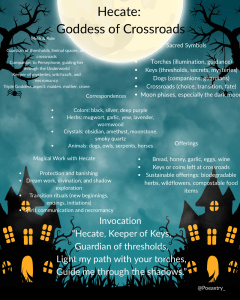
Spiritually, this time is connected to deities of the underworld and death, such as the Morrígan, Hecate, Donn, Hel, or the Cailleach, depending on tradition.
Fire and earth are powerful elements here, representing both purification and the return of life to the soil.
Traditional and Modern Practices
Rituals of Samhain historically centered on fire, offering, divination, and honoring the dead. Today, witches and pagans adapt these practices to personal and cultural needs.
Altar and ancestor work are central. Many build altars decorated with autumn harvest foods, skull imagery, bones, and photographs of loved ones who have passed. Offerings of bread, fruit, or herbs are common, left either at the altar or outdoors. Some practitioners hold a “dumb supper,” a ritual meal eaten in silence where a place is set for the dead, inviting them to share in the gathering.
Fire remains an important symbol. Witches may light bonfires, hearth fires, or candles as a way to purify and honor the season. Writing down things you wish to release and casting them into flame is a powerful practice at Samhain.
Divination thrives during this liminal night. Tarot readings, runes, scrying mirrors, pendulums, and dream work are all seen as especially potent now. Journaling or meditating on what must be released and what new cycles need to begin helps align with the natural energy of death and rebirth.
Samhain can be a night of shadow work. Or a time to face inner truths and release old habits. Some may focus on protection and cleansing rituals, strengthening psychic shields, or setting wards for the long winter ahead.
Because of urban living, fire restrictions, and ecological awareness, many witches adapt ancient practices. Instead of bonfires, they light candles. Instead of leaving large offerings at cemeteries, they create home altars or symbolic offerings. Many now prioritize sustainable and ethical practices, ensuring offerings do not harm the land or wildlife.
Samhain’s rituals often involve burying, burning, or leaving offerings, so ecological mindfulness matters. Use biodegradable materials such as paper towel rolls, untreated wood, or natural herbs. Avoid synthetic glitters, plastics, or toxic inks. Reuse jars, cloth, and candles rather than buying new every year.
A Flow for Ritual
A Samhain ritual can be as simple or elaborate as you like. You may begin by cleansing and grounding yourself, then inviting ancestors and guides into sacred space. Lighting candles or a fire connects to the ancient communal flames. Offerings and prayers to the dead bring remembrance and connection. Divination, journaling, or meditation help you gather insight for the year ahead.
A practice of release: whether by burning, burying, or composting, is powerful at Samhain. Once you have let go of what must die, you can set new intentions, plant seeds, or carry charms to symbolize rebirth. Close the ritual with gratitude to spirits, ancestors, and deities, then return to the mundane world with renewed focus.
Samhain is a threshold in the year, when endings and beginnings weave together. It honors death as a part of life and opens a space for transformation. Whether you light a single candle, share a feast with friends, or hold a private vigil, Samhain reminds us that magic is not only in growth but also in release. By walking with our ancestors, respecting the cycles of the earth, and practicing sustainably, we carry forward the essence of the Witch’s New Year.
Download free digital/printable book of spells insert at Gumroad or Payhip below
Visit Poeaxtry and the Prism’s Archive Cheat Sheet. Discover all post categories, with a blurb and link to full post archive for each. Then find every post in that category in chronological order.
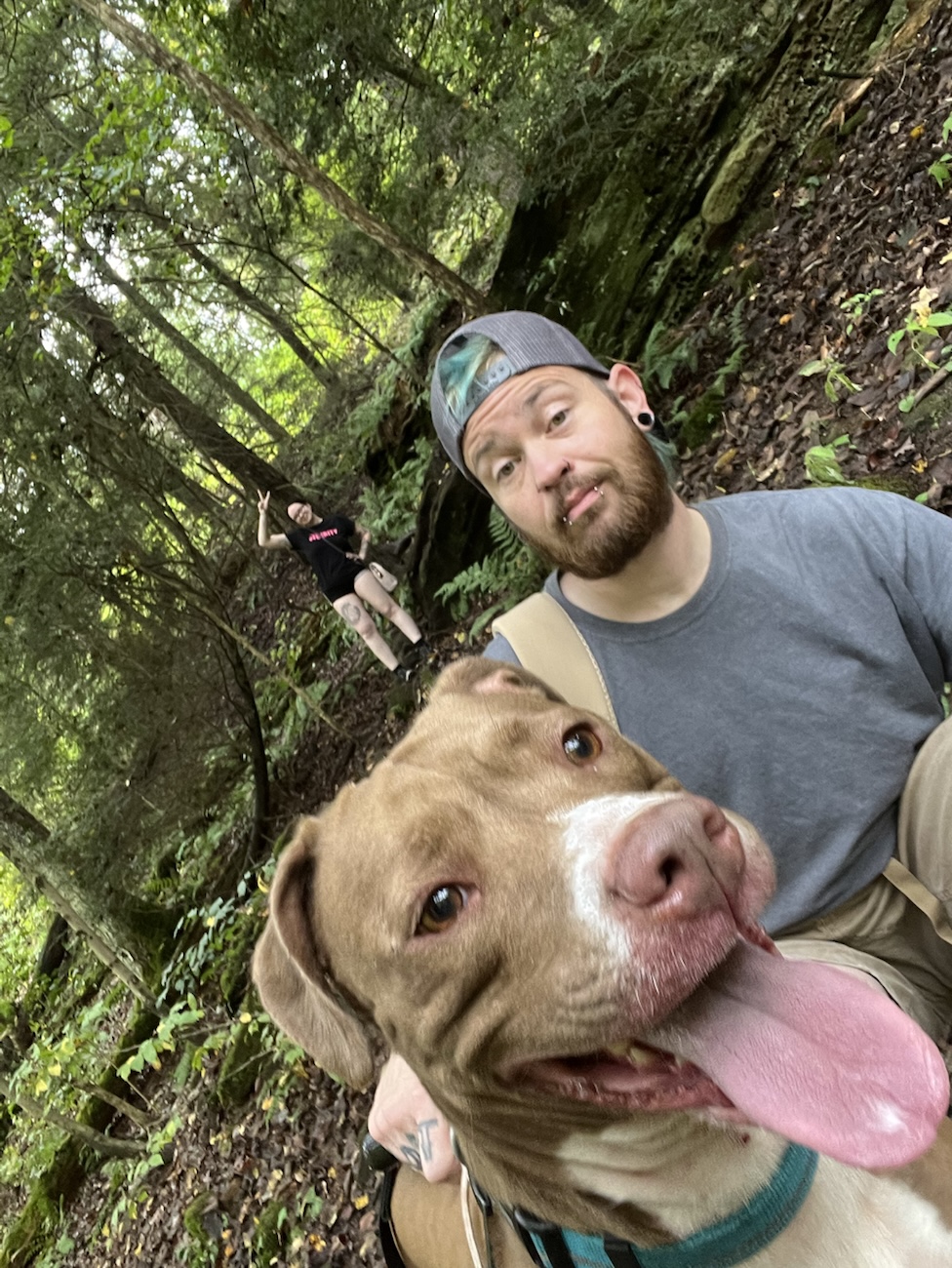
It was around 70 °F when we set out today. I think that’s close to a perfect temperate for wandering among waterfalls, woodland, and scars left by the river currently and years ago. The crew: Luna, Kylie, and me. We parked by the covered bridge at Mohican State Park and embarked on a loop that wove us past 2 cascading falls, a dam and spillway, forested slopes, and the gentle murmur of the stream flowing through.
🌿 Trail & Park Overview
Mohican State Park spans about 1,110 acres, nestled in Ashland County, Ohio, along the south shore of Pleasant Hill Lake. The Clear Fork branch of the Mohican River carves a gorge through the park. Surrounding it is the Mohican-Memorial State Forest, which adds many miles of trails to explore.
The hike we did is a combination of what’s called the Pleasant Hill & Lyons Falls Loop or Covered Bridge → Little & Big Lyons Falls → Pleasant Hill Dam route. Though many sources list that loop as ~2 to 2.5 miles, I stretched ours into an “almost 4 mile loop” by taking side paths, lingering, and sometimes doubling back for shots.
The covered bridge by which we parked is a picturesque structure over The Mohican River, built in 1968 using native hardwoods. It’s a frequent trailhead point for the falls loop and a favored photo spot. There’s a link at the end of the post for an album containing the photos i took!
Big Lyons Falls (the “larger” fall) and Little Lyons Falls are named after historic characters Paul Lyons and Thomas Lyons (yes, Thomas allegedly wore a necklace of 99 human tongues in lore). Big Lyons is often described as having a more dramatic drop into a canyon-like cliff amphitheater; Little Lyons offers views from above, a box-canyon feel.
After the falls, a side spur leads to Pleasant Hill Dam and the “morning glory” spillway (a flood control feature) that adds a modern, engineered contrast to the raw rock and forest. The dam and spillway are part of the hydrologic control for the Pleasant Hill reservoir system.
The return path follows riverbanks, crossing small footbridges and boardwalks, letting you drift back to the covered bridge.
📷 Our Experience & Photo Highlights
We parked at the covered bridge, as before when Luna and I visited during the fire tower hike. Thus, the place feels familiar, comfortable. With the selfie stick + tripod, we paused at multiple vantage points: on bridge itself, on a walkway by the dam, under a boulder, and close to the falls. At Big Lyons, the amphitheater pour with, wet rocks, and water access we recorded videos walking under. We climbed stairs near the falls, careful on slippery surfaces (wet rock + moss = tricky). Little Lyons offered a vantage from the top edge of the drop; we explored carefully, watching our footing. I am clumsy.
We detoured toward the dam & spillway, capturing architectures meeting water, especially at the “morning glory” opening. Our loop felt longer than standard because we paused, lingered, and sometimes retraced paths, or lingered longer. My dog trotted ahead excitedly, nose to stone and river spray, bounding between roots and rocks. The 70 °F warmth made the forest feel lush and alive, especially when we broke into sunlit clearings.
📝 Tips & Observations
Footwear & grip matter. Moss, wet rock, stairs near falls = slippery. Timing light. Early or late in day gives softer side-light on falls and river. Bring gear and protection. Water spray + humidity can fog lenses. Know trail mileage is flexible. The “loop” is often marketed shorter, but you can extend or wander. Dogs are allowed (on leash). I kept mine leashed, especially near drop edges. Use the covered bridge as start/anchor. It’s accessible and scenic. It is a great staging point. Pause for sound & mood, not just visuals. The river murmuring, leaf rustles, quiet corners enrich the story.