
Best For:
Low-commitment Ohio Hikers, individuals interested in reading nature journals, rockhounds, & fungi enthusiasts.
The Essence:
Read Time: 🕰️ 13 minutes | Weight: 🪨 medium| Mood: ✌️ peaceful & curious|
Trail Notes:
- Date: May 25th 2026 | Time: Evening | Trail: Unmarked Nature Trail at Flint ridge
- Distance: 1.5 miles | Time: 45 minutes
- Leave No Trace
- Rockhounding Tips
Flint Ridge Nature Preserve, Licking County, Ohio.
The Places We Return – Flint Ridge Nature Preserve:
There is a quiet comfort in returning to places close to home; where the trails are familiar, the commute is minimal, and the barrier to getting out in nature is low. On a late May evening, Luna and I returned to Flint Ridge Ancient Quarries and Nature Preserve.
We opted for an understated, lesser-known loop across the road. Though the trek was short at just 1.5 miles, it turned out to be an event-filled excursion. Between muddy trail washouts, vibrant amphibian calls, wet-weather fungi, and curious surface finds which included a heart-shaped piece of carved flint, the evening delivered a full dose of nature’s magic.
Even when an expiring phone battery and the sudden darkness of a late-spring canopy nearly threw us off track, the woods reminded us why even the simplest trips are worth taking.

The Value of Local Traditions:
I’m a firm believer that not every excursion needs to be a grand, multi-day expedition into uncharted territory. We all know that life can often bring days defined by low energy, limited free hours, or a simple lack of motivation to drive long distances.
It is in those moments, that the impulse to stay inside is strong, but the need for time in green space will always remain. Having a reliable, close-to-home trail system is a simple yet great fix for this issue.

For me revisiting familiar parks isn’t a compromise; it’s a practice in noticing the subtle changes over time.
When I’m not focused on navigating brand-new terrain or hitting strict mileage goals, my mind has room to settle. I begin to notice how a familiar trail responds to recent rainfall, or the way seasonal fungi cycle through the timber, or even the differences when twilight filters through the canopy in late spring versus early autumn.
It allows you to get me to get my shoes in the dirt while I breathe fresh air without the mental friction that can come with planning a more complicated trek.

The Unnamed Loop at Flint Ridge:
While the main side of Flint Ridge draws most of the area’s visitors, there is a quieter stretch across the road, marked subtly by a small sign behind a small wooden fence. It appears on mapping apps like AllTrails, but it lacks an official name on the signposts.
It tends to be far less populated, probably because of the obscurity. Offering the opposite of the other trail with its museum and informative features; you find a quiet haven where you are far more likely to hear wildlife than other hikers.

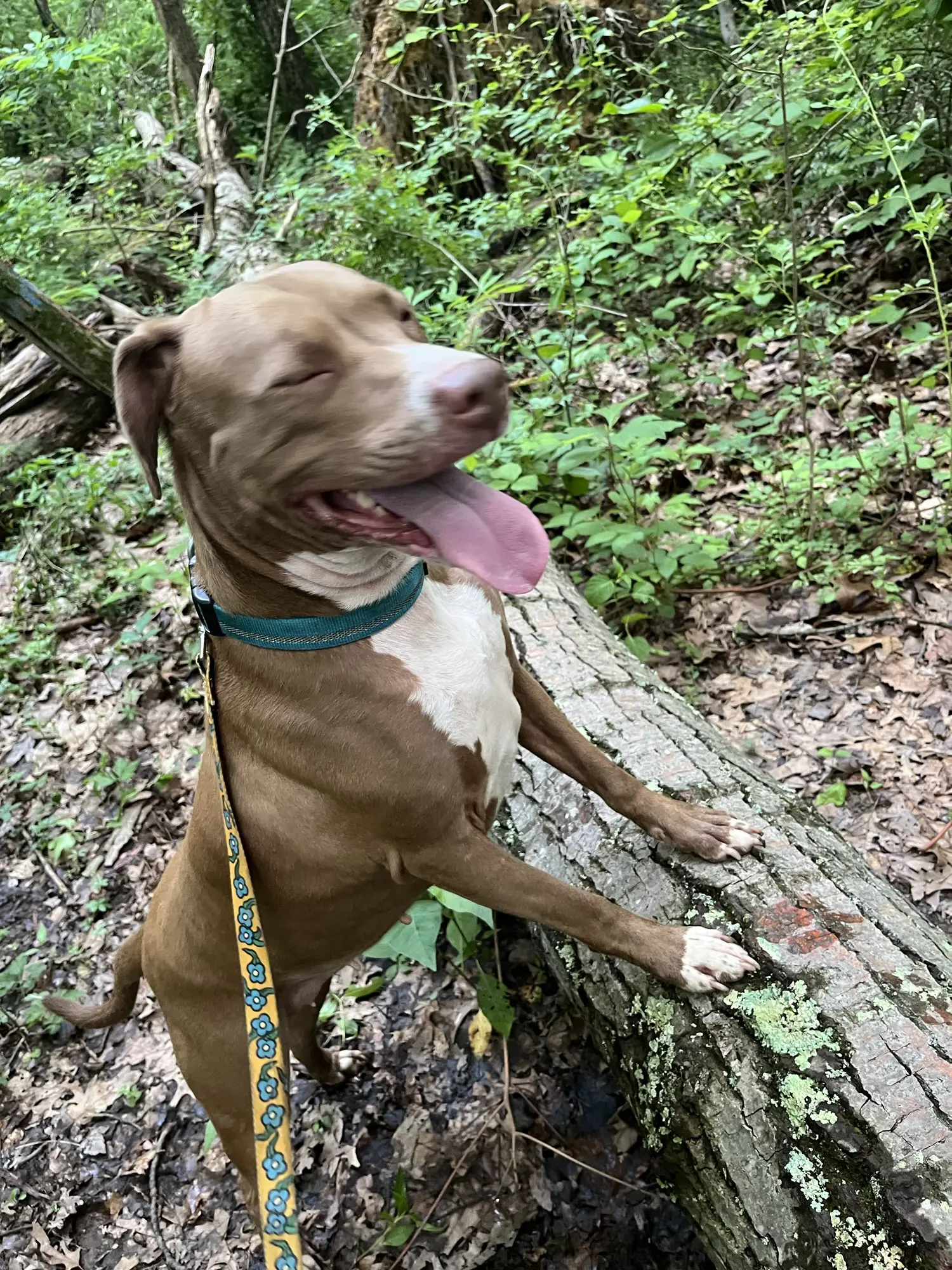
On May 25, 2026, Luna and I set out across that threshold around mid-evening. The air was pleasantly mild, carrying the distinct damp coolness only the late spring does. While it wasn’t actively raining during our walk, the sky had spent the preceding week pouring down over Licking County.
The trail was heavily washed out, turning low spots into temporary streams and filling the historic, moss-lined flint quarries along the path with deep puddles.
This standing water brought the woods to life. The forest echoed with a loud, layered chorus of spring peepers, bullfrogs, and other amphibians celebrating the high water table. Naturally, the dampness also brought out swarms of mosquitoes, but the trade-off was worth it: the humidity had triggered a vibrant flush of varied forest fungi, which I paused to document along the trail edge.

Reading the Ground & Uprooted Trees:
Walking through Flint Ridge is an exercise in looking down.
The soil along the trails at Flint Ridge are rich with geological history, heavily lined with scattered pieces of raw flint and small quartz clusters that glisten against the dark, wet earth.
While surface rocks are visible along the beaten path, one of the best micro-habitats for mineral hunting and photography is beneath the root balls of fallen trees.

When a heavy storm topples a tree, the lifting root plate pulls up years of undisturbed soil, creating a natural vertical cross-section of the ground.
Inspecting these uprooted root systems often reveals freshly exposed, unweathered specimens that have been buried for many years. The dirt clinging to the roots washes away in heavy rains, leaving clean mineral veins, embedded fossils, and sharp-edged flint nodules hanging in plain view. It offers a fascinating glimpse into the subsurface layers of the ridge without ever disturbing the ground yourself.

Small Finds along the Way:
Right about midway through our walk, we paused at a trailside concrete bench, a convenient spot to catch our breath and check our surroundings. Resting on the wood were a couple unexpected human traces: a small, squishy toy green rabbit, and, most surprisingly, a piece of flint clearly worked and carved into the shape of a heart.
Finding carved or worked stone in the wild always brings a moment of curiosity with it.
While ancient Indigenous peoples quarried high-grade flint across this very ridge for thousands of years to craft tools and weapons, modern visitors still feel that same connection to the stone, and sometimes that looks like leaving behind hand-worked tokens for others to stumble upon.
I collected the little squishy and the heart-carved flint, leaving the bench clean again as we pushed forward.

Respecting the Preserve:
Leave No Trace:
Flint Ridge is a protected State Ancient Monument / State Reserve.
Collecting rocks, minerals, or artifacts here is strictly illegal.
Preservation protects both natural habitats and historical sites.
To collect legally, visit nearby fee-based sites like Nether’s Farm.
When seeing such rich geological specimens lying along the trail, the temptation to fill one’s pockets can be strong. However, Flint Ridge is a protected State Nature Preserve and cultural site.
This means that state regulations strictly prohibit the collection or removal of any rocks, minerals, plants, or historical artifacts from the grounds.

This rule exists for two vital reasons:
- Historical Preservation: Flint Ridge was one of the most important quarrying sites in pre-contact North America. The pits, debris fields, and stone scatters are part of an invaluable archaeological landscape that belongs to the public and future generations. Removing pieces breaks the context that archaeologists and historians use to understand how the site was utilized over millennia.
- Environmental Conservation: Heavy collection strips the natural habitat, causes soil erosion, and degrades the trail corridors.
Though photographing quartz clusters, mossy nodules, and surface flint allows you to document the beauty of the site while leaving the landscape intact for the next hiker.

Looking to Collect legally? Visit Nether’s Farm:
For those rockhounds and collectors who specifically want to hunt and keep Ohio flint… I want you to know that you don’t have to break preserve rules.
Just down the road lies Nether’s Farm, a well-known private property situated on the same rich flint vein. For a small fee, the farm allows rockhounds, lapidary artists, and families to dig through field tailing piles and take home raw, high-grade Ohio flint by the pound. This provides a legal, ethical alternative where you can gather material for tumbling, slabbing, or knapping without disturbing protected state lands.

Lost at Dusk:
As Luna and I pressed further down the unnamed trail than we had on previous visits, we were eventually relieved to confirm that the path did indeed loop back toward the road rather than dead-ending deep in the timber. However, our timing hit a snag.
My phone battery died mid-hike, leaving us without a digital map or a quick way to check the time.
Around the same frame, dusk began to settle in. If you have spent time inside a dense forest near sundown, you know how deceiving the light can be. While the open sky above the tree line may still hold the soft orange glow of dusk, the forest floor beneath a heavy canopy drops closer and closer toward darkness much faster.
The shadows lengthened rapidly over the muddy, water-logged trail, making footing trickier and landmarks harder to distinguish. With Luna leading the way at a steady pace, we navigated the remaining bends in the loop with willpower and hope pushing us on, emerging safely back at the wooden fence and the roadside just as night started to set in.

Flint Ridge – A Local Staple:
Our 45-minute, 1.5-mile loop across from Flint Ridge served as a perfect reminder that outdoor adventures don’t need to be elaborate to be memorable. A short evening walk provided a rich mix of sights and sounds, from the chorus of amphibians in the flooded quarries to the damp fungi clinging to fallen timber, and the simple thrill of spotting raw quartz and worked flint along the path.
By respecting the regulations of state preserves and relying on nearby ethical alternatives like Nether’s Farm for collecting, we help ensure these sacred, historical landscapes remain preserved.
While we got caught in the fast-approaching forest gloom without a phone screen for a quick reality check, it only heightened the sense of quiet satisfaction that comes from stepping off the pavement, getting your shoes muddy, and connecting with the land right in your own backyard.

Plan Your Trek:
Nethers Flint Quarry. Flint Ridge.
Hopewell Mounds. Glenford Fort Preserve.


Leave a Reply