
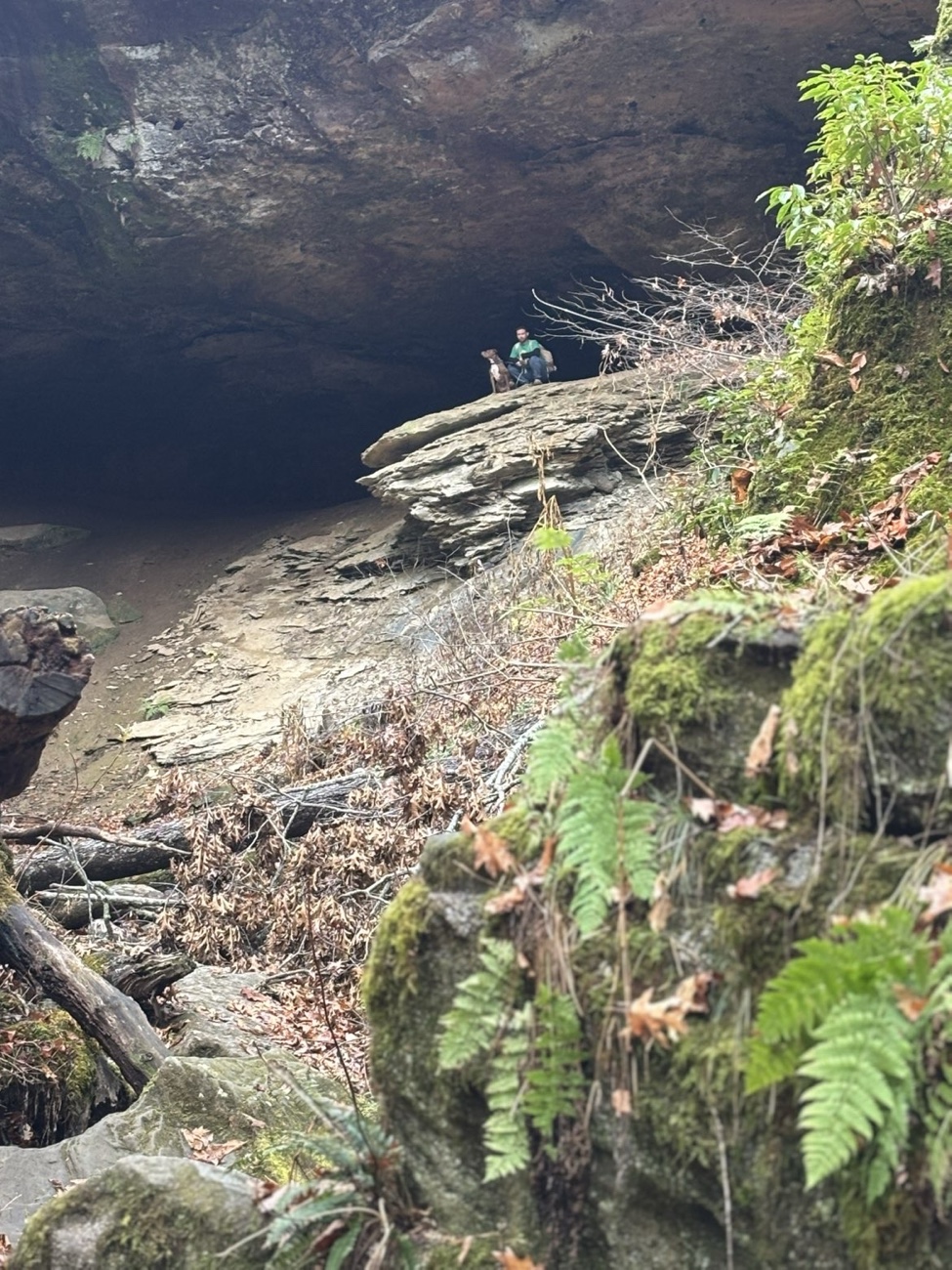
Planning the hike:
We set out pretty early considering we got off work at 6am. I left my house and headed to pick up Sky and The baby shortly after 12 noon. We had been planning three hikes. The Hosak’s Cave Trail to warm up. Then Morgan’s Knob Loop for waterfalls and a summit. Finally finishing up with Stone House Loop to walk through history. By the time we came down from Knob loop, though, the sky was reaching beyond dusk. The pine trees formed a tunnel of shadows, and there was no way we could safely complete the third trail. Considering our lack of headlamps and the baby in tow.. we left it. But what we did finish the cave, the climb, and the peace felt like more than enough.
Exploring the Cave
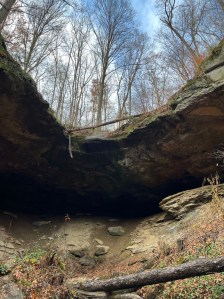
Climbing into Hosak’s Cave was like slipping into another world. We ignored the “trail ends here” signs. Well Luna and I did at least. We then pushed past rough sandstone walls, slipped on loose dirt way to high up, and then found a seat up there too tucked just under the cave’s roof. I sat there for a long moment. I felt the rock beneath me, the forest breathing just beyond the cave’s mouth, and the drip of water somewhere i couldn’t quite see. It felt sacred, strong, feral. It was like the stone held stories just for me. It reminded me of Red River Gorge, but quieter, deeper, soaked in stillness.
Morgan’s Knob Loop
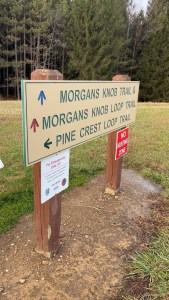
Then came Morgan’s Knob. The trail wound through rooted forest, climbing gently, until it opened up into rocky outcroppings. At the top, the wind and the stone told me a few import things. The fists was that this land was older than all of us. It reminded me time does not rush here the way people do. Before I left thought it added that no matter what people who are different belong.
Salt Fork State Park: Geology and Geography
All around us, Salt Fork State Park stretched wide. It’s the largest state park in Ohio. This park covers a massive 20,181 acres roughly of rugged hills, ravines, and ridges. Its terrain belongs to the unglaciated Allegheny Plateau. Simply put that means the hills and valleys were never flattened by ice. This gives the park its wild, carved feel. The rock underfoot is sandstone, shale, and siltstone. These formed in ancient layers of Pennsylvanian-age geology. They eventually erode unevenly over time, forming caves like Hosak’s, cliffs, and even blocks of sandstone that break off and slump down.
Salt Licks and Human Use
The name “Salt Fork” comes from mineral salt springs. The natural licks where animals once gathered.
Native Americans, including the Wyandot, harvested the salt for food and trade. In the 1800s, settlers drilled wells nearly 450 feet deep to extract brine, which was boiled down into salt for commercial use.
These salt licks helped shape how the land was used, how people lived, and what wildlife visited.
History and Local Lore
Speaking of people, history runs deep here. Kennedy Stone House, built in 1837 from sandstone quarried nearby. Is still standing in the park. It was built by Benjamin Kennedy, whose family lived there for more than a century. The house eventually became a museum, preserved by a volunteer group that revived it in the early 2000s. Local lore suggests Hosak’s Cave was used as a hide-out during the Civil War. This rocky overhang, as creaky as it looks, has seen more than just hikers.
Legends and Bigfoot
If you hike Salt Fork, you’ll find places you wouldn’t expect: meadows, deep forest, ridges, and stream valleys. But there’s also a weird, beautiful piece of legend here. Bigfoot tales swirl through these hills. According to local reports, more than 36 Bigfoot sightings have been claimed here since the mid‑1980s. The park even hosts Bigfoot Night Hikes. These hikes are where people walk in the dark, listening, eyes open, hoping for something monstrous and mysterious. One of the wildest things the park was ranked by USA Today as one of the top “Squatchiest” places in the U.S.
The upcoming Eco‑Discovery Center includes a Bigfoot character for environmental education.
I for one am totally down for a Bigfoot night hike!
Native American Stories
Native American stories, too, speak of the place. According to a geological survey, the Wyandot people used the caves for shelter. They may have harvested salt from the licks. In certain remote caves, “hominy holes” or pits in the stone used as ovens served as places to bake cornbread. It’s hard not to feel their presence when you touch those walls.
Modern Park Activities
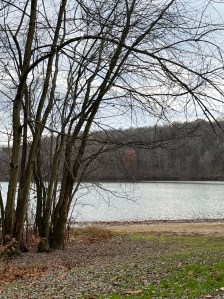
Today, Salt Fork is alive for modern adventurers. There are 14 scenic hiking trails and six bridle paths. The lake, made when the Salt Fork Dam was built (completed in the late 1960s), spans thousands of acres. The lake offers boating, fishing, and quiet reflection as common in Ohio lake life. There’s also a nature center, archery range, miniature golf, and a lodge nestled in the woods. For families, the park runs a gem‑mining station, where kids sift for semi‑precious rocks and fossils. Which we all know kid or not is RIGHT UP MY ALLEY! Geologically, this place is a gem.
Personal Reflection
Walking Salt Fork felt like walking through time. The cave and rocks held ancient stories. The summit whispered of wind, motivation, moss, and manifestation . The forest pulsed with leaves, legends, salt, and shadow. By the time we left, I carried something soft and heavy. As well as a piece of earth, memory, and wonder.o
Nature as Meditation
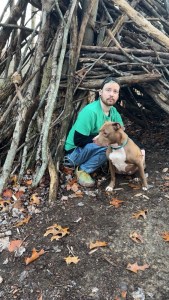
This hike felt different… refreshing, soul‑cleansing still but different. I didn’t think about deadlines or noise. For once my head was full of only leaves and rocks, trees and quiet hours, quality time with nature instead of running amuck. This hike wasn’t about conquering anything. Today was about listening, slowing, and sitting in spirit. Nature held still for us, and we held still for nature.
Hiking today felt different for me. I wasn’t pushing for a peak, checking my watch, or rushing to do do do. I was quiet. Listening. Letting rock and leaf and shadow hold me steady for a few hours.When we left, I felt lighter but not less.
Fracking and Controversy
Near the edges of Salt Fork State Park, fracking is no longer just a rumor. This is happening and in a way that worries a lot of people. According to WOSU, the first well pad was built just outside the park boundary, and from there, the wells will go deep underground and then horizontally beneath the park’s terrain. The process involves pumping millions of gallons of water mixed with sand and chemicals into the rock layers to break them apart and release gas.
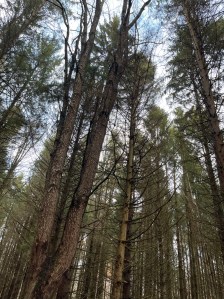
Environmental groups like Save Ohio Parks argue this isn’t compatible with natural, protected land. These forests are dense, biodiverse, and some experts say they’re second only to the Amazon for ecological richness. The fracking infrastructure could permanently harm the ecosystem.
Water is a major concern. Each frack well could use 4 to 10 million gallons of fresh water, according to the advocacy group. Some of that water could come from local lakes and streams. Yes, even the waters that feed Salt Fork Lake. Which will then return as toxic wastewater. That wastewater is often radioactive and must be injected deep underground. Thus raising long-term risks.
There have also been safety incidents: in January 2025, a well pad roughly five miles from the park had an explosion. While no injuries or water contamination were reported, the accident only increased community fears.
On top of that, dozens of environmental and public‑land groups are calling for a moratorium on fracking in Ohio’s parks. They argue the dangers are not just theoretical. Let’s be real… the land, water, and wildlife here deserve better than industrial extraction.
From forest fragmentation, constant truck traffic, night‑lighting, and the risk of chemical or wastewater leaks. The opponents say fracking could permanently change the character of Salt Fork.
It’s like an addict injecting poison deep into their veins. They continue hoping it stays contained… yet their body, or the earth, doesn’t always cooperate. Pressure builds, tremors come, and what you inject may seep into places you never intended, or imagined.
Yet here, in the wild heart of Salt Fork, that reckless injection threatens not just the rocks and streams, but the quiet sanctuary that has lasted for millennia.




Say it. Don’t spray it.