Category: writing prompt responses

Responses are to either the daily prompts in Jetpack, prompts I create, or prompts from instsgram pinterest or elsewhere

  • COVID 19 Pandemic – Changes, Chaos, & Maladjustment – an Aftermath

    COVID 19 Pandemic – Changes, Chaos, & Maladjustment – an Aftermath


    How have you adapted to the changes brought on by the Covid 19 pandemic?

    Best for:

    Individuals who experience sensory overstimulation, those who prefer personal space, people whom relate to social anxiety tied to proximity, and others who want a grounded perspective on the changes brought on by the COVID 19 pandemic without the narrative of adaptation.


    Covid-19 & Adaptation-

    When most people talk about the changes brought on by the COVID 19 pandemic, the focus is usually on adaptation. It centers around how people adjusted, what they learned, how they coped. I feel like this framing assumes the experience moved in a clean direction, from your old normal to disruption to adjustment.

    This simply is not true to what adapting to life after the Pandemic was for me.

    The Face of a healthcare worker early Covid 19 Pandemic

    The changes brought on by the COVID 19 pandemic didn’t teach me how to adapt. They changed the baseline I was operating from. Being around people started to feel different, heavier, more immediate. Spaces that were once tolerable became harder to navigate.

    The level of awareness, the tension, the need for distance, it all increased, and it stayed that way longer than expected. I’m currently still battling with finding my normal after COVID 19 pandemic and the proceeding lockdown.

    This isn’t about learning new systems or adjusting habits. It’s about what happens when the things you already lived with become amplified to the point where they stop feeling situational and start feeling much more constant.

    So no, I didn’t have to adapt to new things after the COVID 19 Pandemic. I had to adapt to situations I already figured out how to manage visits with as new types of forever thought patterns inside my mind.


    From Already Anxious to More Anxious – A series:

    I already had anxiety, if you didn’t know me before COVID 19 I’m sure that isn’t hard to believe. I have pretty much always dealt with some form of social discomfort. However, before the pandemic it existed within a range I felt I understood and could self-manage more.

    My anxiety typically showed up in much more predictable, manageable, familiar ways. This produced something I was still able to move through with enough control to function. The pandemic didn’t introduce anxiety into my life, anxiety, and worry have been part of my bones for all of eternity.

    Though the pandemic did not start my battle with anxiety. It did intensify my it. This global phenomenon, stretched it past what felt normal, even manageable at one point and turned it into an almost constant way of life that I had never experienced before.


    People, Places, & Spacial Awareness After the COVID 19 Pandemic:

    COVID 19 Pandemic night shift health care worker donning a surg mask

    Before the pandemic and the global lockdowns, I wasn’t relying on people to shop with me, or deliver my groceries to my door through apps like InstaCart. I wasn’t using delivery services like DoorDash or UberEats to order fast food straight to my apartment door.

    Now, while I don’t grocery shop nearly as much as I used to and hardly ever alone I also do not deliver groceries to my front door very often either. Thankfully, I have an amazing partner who either grabs what we need while I am at work or we go together during our days off. Either way I typically don’t have to grab very much if I do have to go and suffer through the store alone.

    You know large hordes of people were never something I preferred. Though, this wasn’t in a way that interfered with my functioning, leaving or my going events though. It was more uncomfortable in a way that constantly required adjustment. Social interaction itself has always been manageable. Speaking, engaging, existing socially, in small groups of friends, of course, never before bothered me beyond normal social butterflies. The issue was proximity.

    I don’t like people being close in my space. I function better with distance. Six feet wasn’t a rule I had to learn, it was a condition I already worked best in.


    Overstimulation & Why Everyday Places Feel Worse

    Healthcare worker driving to work in shark scrubs during the COVID 19 pandemic

    The changes brought on by the COVID 19 pandemic exposed something that doesn’t get talked about enough: overstimulation. Which for me isn’t always about the size but, it’s about the intensity, density, and unpredictability of the situation.

    Simple places like grocery stores, gas stations, local shopping plazas, or corner stores can feel more overwhelming than larger, more crowded environments like amusement parks or tourist-trap hiking trails. That sounds backwards, I know but it isn’t in my head.

    Those larger environments have structure. Movement is more predictable. People are there for a shared purpose, which creates flow. Smaller, stagnant, everyday places compress randomness into tighter spaces. People move unpredictably, stand too close, create constant low-level interruptions.

    That constant input builds. It doesn’t spike, it stacks.


    What Have the Main Changes After the COVID Pandemic Been?

    On a broader level, the main changes brought on by the COVID 19 pandemic reshaped how systems operate more than how individuals inherently function. Public behavior shifted toward more awareness of space and hygiene, while industries adapted faster than expected.

    Remote work expanded, digital systems replaced physical processes, and boundaries that used to be difficult to maintain became temporarily normalized. For many people, these changes required adjustment. For others, they reduced friction.

    How Did the COVID-19 Pandemic Change the World?

    The many faces of the night shift healthcare worker during the COVID 19 Pandemic

    Globally, the pandemic accelerated shifts that were already in motion. Work became less tied to physical location. Communication became more dependent on digital infrastructure. Healthcare systems were pushed to their limits, exposing both strengths and failures.

    The world didn’t just change socially, it changed structurally. Supply chains, employment models, and public health responses all evolved under pressure. Those changes are still shaping how systems function now.

    What Were the Positive Changes from COVID, If Any?

    There were positives, depending on perspective. For people who function better with less overstimulation, the changes brought on by the COVID 19 pandemic created conditions that were easier to navigate.

    Key positives included:

    • Increased acceptance of personal space and boundaries
    • Remote work improving accessibility and flexibility
    • Reduced pressure for constant in-person interaction
    • More open conversations around mental health and sensory overload

    Though these, weren’t new needs. They were existing ones that finally had room to be met.

    What Would the Foreseeable Changes of Another Pandemic Be?

    The night shift healthcare worker during the COVID 19 Pandemic

    If another pandemic happens, the response will likely follow the same pattern, just faster. Systems are already in place now. Remote infrastructure exists, and behavioral expectations have precedent.

    The next shift wouldn’t be about figuring it out, it would be about activating what already exists in a more optomized fashion. That includes things like faster transitions to remote work, quicker enforcement of distancing, and more immediate reliance on delivery and automation systems.

    Changes Brought on by the COVID 19 Pandemic Across Contexts

    In Ohio and across America, responses varied in timing and strictness, but the overall pattern was consistent:

    • shutdowns
    • phased reopenings
    • & long-term adjustments to how businesses and public services operate.

    In the workforce, remote and hybrid models became standard in many industries, permanently shifting expectations around productivity and presence.

    Globally, the pandemic reshaped infrastructure, from healthcare systems to supply chains, accelerating changes that would have otherwise taken years.

    The healthcare worker 3/2020 start of the COVID 19 Pandemic in Oio

    The narrative around the changes brought on by the COVID 19 pandemic focuses heavily on adaptation, but that only applies if your baseline required much change.

    For some, the pandemic didn’t disrupt life, it clarified it. It showed how much of everyday discomfort comes from environments that prioritize constant proximity and input, even when those conditions aren’t necessary for everyone to function effectively. When those systems come back to haunt those the pandemic freed of them some of us are living proof they seek vengeance.


    Support the work that feeds, bleeds, and takes the lead when it counts! Consider a donation via CashApp, PayPal, Ko-Fi, or Buy Me a Coffee. This helps to keep our projects and community thriving.

  • Rewind, Repeat, Revisit: My Most Rewatched Series

    Rewind, Repeat, Revisit: My Most Rewatched Series


    Best for:

    Medical drama lovers, scary movie buffs, parody film enthusiasts, and creative writing readers.

    What movies or TV series have you watched more than 5 times?

    Becoming us:

    Some stories don’t just entertain us… they become part of who we are. They anchor us to memories. Others may accompany us through life’s transitions, or offer comfort in their predictability while life is ever changing around us.

    For me, three series have earned the distinction of being watched more than five times each at least: Grey’s Anatomy, Rob Zombie’s Halloween films, and the Scary Movie franchise. Would make up my top three, Degrassi, Wife’s with Knives, The Chucky Series, and Stabbed coming in close runners up.

    One gave me chaos wrapped in scrubs; the others let me bond with the people I love most over slashers and satire. Together, they form a strange but perfect trifecta of my emotional landscape.


    Grey’s Anatomy: The Perfect Amount of Chaos:

    There’s a reason Grey’s Anatomy has endured for nearly two decades. Beyond the complex medical cases and will-they-won’t-they romances, the show mastered something few others have: the perfect amount of chaos.

    • Emotional whiplash as comfort: One moment you’re laughing at a character’s absurd one-liner; the next, you’re sobbing over a patient who didn’t make it. That rapid emotional shift feels chaotic, but for viewers who process emotions in nonlinear ways, it mirrors internal experience rather than disrupting it.
    • Found family in scrubs: The ensemble cast creates a sense of belonging that feels earned through shared trauma. This is something that resonates deeply with anyone who has found their people in unexpected places.
    • Repetition as ritual: Watching Grey’s Anatomy multiple times isn’t about being surprised by plot twists. It’s about returning to a world where emotions are big, people fight and forgive, and somehow, the hospital keeps spinning. There’s comfort in knowing what’s coming while still feeling every beat.

    The research on “comfort viewing” suggests that rewatching familiar series reduces anxiety by providing predictability in an unpredictable world. A 2021 study in Psychology of Popular Media found that rewatching favorite shows serves as a form of emotional regulation. Thus, helping viewers manage stress through narrative familiarity. Grey’s Anatomy, with its high emotional stakes balanced by consistent character dynamics, functions as an ideal comfort text for many viewers.


    Rob Zombie’s Halloween: Slasher Bonding With Mom:

    I know most people view Horror as a solitary genre, but for me, it’s deeply relational. Rob Zombie’s Halloween film, to name one series. Yes, both his 2007 remake and its 2009 sequel are movies I’ve watched countless times, almost always with my mom.

    • A shared language of fear: Watching slasher films together created a bond built on something unexpected: safety in shared adrenaline. There’s intimacy in experiencing fear alongside someone you trust.
    • The brutality of grief: Zombie’s Halloween films are often criticized for their brutality. Though, that brutality mirrors the rawness of loss and trauma. Watching them now, without my mom has become a way to sit with difficult emotions without having to name them directly.
    • More than Michael Myers: Beyond the slasher icon, these films explore family dysfunction, survival, and the origins of violence. All themes that invite deeper conversation long after the credits roll.

    Horror has been studied for its social bonding effects. A 2020 study in Journal of Media Psychology found that shared horror viewing increases cohesion and trust between viewers. Though, particularly when watched in safe, familiar contexts. The adrenaline response, when experienced alongside a trusted companion, can strengthen relational bonds. This further explains why slasher films became a ritual between my mom and me.


    The Scary Movie Franchise – Parody, Friendship, and Growing Up:

    If Grey’s Anatomy gave me emotional chaos and Halloween gave me bonding with my mom. Then the Scary Movie franchise, particularly the early entries with the Wayans brothers, gave me laughter with friends. Although we liked other parodies and road trip themed movies these ones stick out the most.

    • Middle school and high school rituals: Watching Scary Movie with my friends during sleepovers and weekend hangouts became a rite of passage. The humor was ridiculous, the references were often inappropriate, and that was exactly the point.
    • Shorty (and the ensemble): The late, great Marlon Wayans as Shorty Meeks, brought an iconic, unhinged energy that made the parodies land. The franchise’s ability to lampoon horror tropes while still clearly loving the genre made it a perfect bridge between genuine horror fandom and comedy.
    • Shared cultural literacy: Scary Movie gave my friends and I a shared vocabulary. To this day, certain lines or scenes function as inside jokes that instantly transport us back to crowded living rooms, too much junk food, and the kind of laughter that makes your stomach hurt.

    Parody serves an important cultural function. Media scholars note that parody requires deep familiarity with source material, creating an “insider” experience for viewers who recognize the tropes being subverted. Watching parody with peers during adolescence contributes to social bonding and identity formation, as shared humor reinforces group cohesion during formative developmental years.


    Why We Return: The Comfort of Familiar Stories:

    Watching something more than five times isn’t about an inability to find new content. It’s about the stories that become anchors. Grey’s Anatomy offers controlled chaos that mirrors how I experience emotion. Rob Zombie’s Halloween films are a shared ritual with my mom, a way to sit with grief and intensity in a space of mutual trust. The Scary Movie franchise holds the laughter of middle and high school friendships, preserved like snapshots in time.

    Together, these three series represent different parts of my life: the emotional processor, the son, and the friend. They’re not just entertainment. They’re emotional landmarks I return to when I need to remember where I’ve been, who I’ve shared the journey with, and what it felt like along the way.


  • From Pen to Peak: Creative Strategies for Processing Emotions

    From Pen to Peak: Creative Strategies for Processing Emotions

    What strategies do you use to cope with negative feelings?

    Best for:

    Shadow workers, Emotionally intelligent Individuals, journal readers, and those working through uncomfortable emotions.


    Navigating negative emotions:

    For me whether I’m overcome with grief, stress, or anxiety it requires more than willpower. I have found it helps knowing what works for me. I feel that we should al have intentional strategies that honor the way our minds process the world, to help us find our way back to the light.

    I have two practices that are essential to how I find my light through the bullshit: writing and hiking. One allows me to articulate what I cannot always say aloud; the other offers respite from the constant pressure to perform. Together, they form a sustainable approach to emotional regulation. These are supported by both personal experience and emerging research in psychology and neuroscience.


    Poetry Helps Me Process Feelings When Words Feel Impossible:

    For many, talking about intense emotions, especially grief, advocacy-related trauma, or even love can feel overwhelming or even inaccessible. Poetry offers an alternative pathway.

    • Externalizing emotion: Writing poetry moves feelings from the internal (where they can feel consuming) to the external (where they can be observed, shaped, and understood).
    • Processing in layers: Poetry allows for metaphor and abstraction, making it possible to explore complex emotions without needing to articulate them directly in conversation.
    • Grief, advocacy, love, and more: Whether I’m writing about loss, the weight of advocacy, queer life experiences, or the complexity of love, poetry helps me sit with my feelings. Or I’d be consumed by them. Poetry creates space to process on a deeper level so I can acknowledge emotions when they arise, without feeling trapped by them forever.

    Factual Backing:

    Research supports the idea that expressive writing including poetry, has been shown to reduce rumination and improve emotional regulation. A 2020 study in Frontiers in Psychology found that poetic writing facilitates cognitive reappraisal, helping individuals reframe distressing experiences. Additionally, narrative therapy principles suggest that structuring difficult experiences into written form restores a sense of agency and coherence.


    Hiking as a Strategy for Grief, Stress, and Reconnection

    When I miss my mom, I try to go hiking. The forest becomes a space where grief softens, where I feel close to her without needing to explain or perform. Hiking also offers something I struggle with in daily life: permission to pause.

    • A break from constant productivity: The trail demands nothing but presence. There is no to-do list, no inbox, only the choice to take the next step.
    • “Church in nature“: For me, nature is sacred. It’s where I find stillness, perspective, and a sense of being held by something larger than daily stress.
    • Closer to my mom: Being in the natural world creates space for memory and connection without the pressure to “process” grief in a prescribed way.

    Factual Backing:

    The mental health benefits of time in nature are well-documented. A 2019 study in Scientific Reports found that spending at least 120 minutes per week in nature significantly correlates with better health and psychological well-being. Moreover, ecotherapy research indicates that green spaces reduce cortisol levels, lower stress, and improve mood, particularly for those navigating grief or chronic anxiety.


    Expanding the Toolkit: Emotional Reflection Journals and Creative Writing:

    Beyond poetry and hiking, I’ve built a broader creative practice to help me, and hopefully others, process difficult emotions.

    • Emotional reflection journals: I create guided journals filled with prompts I’ve developed from my own emotional journaling practices. These are designed to help others explore their inner world in a structured, self-led way.
    • Helpful posts on grief, transitioning, and more: I write accessible content that blends personal insight with practical guidance for those navigating life transitions, identity shifts, or loss.
    • Creative short stories: I explore identity, nature, and psychologically thrilling themes through fiction. This allows me to examine complex emotions through character and metaphor. I often aim at revealing the truths that nonfiction alone cannot reach.

    Why This Matters: Creative Practices as Sustainable Coping Strategies:

    These practices share a common thread: they transform overwhelming feelings into something tangible, manageable, and meaningful. Whether through poetry, hiking, journaling, or storytelling, creative strategies offer:

    • A sense of agency over internal experience
    • Safe containment for emotions that feel too big to hold
    • Sustainable processing that doesn’t rely on constant verbal explanation

    For anyone navigating life, finding your own version of these practices, can make the difference between being consumed by feelings and learning to sit with them on your own terms.


    Feedback.


  • Hiking and Mental Health- Why the Trail Quiets my Mind:

    Hiking and Mental Health- Why the Trail Quiets my Mind:

    What do you wish you could do more every day?

    Best for:

    Hiking Enthusiasts, nature lovers, burnt-out creatives, anyone whose brain needs a break, and individuals who find peace in putting one foot in front of the other.

    Axton, Luna, and Kylie at Mohican State Forrest
    Kylie, Luna, & I at Mohican.

    I bet you can’t guess it?

    Who am I kidding it’s obviously hiking. I am willing to bet that even if you’re new here you could have guessed that in under that three tries.

    I’m not aiming to get the best social media reel. I really don’t care to visits the tourist traps in nature. I just wish I could hike every day. Most the time it is the only time my brain shuts the hell up.

    Axton in a blank tank top, backwards black hat? Khaki shorts twerking on a ledge at Nelson’s ledges state park.
    Shake what yo’ momma gave ya.

    The trail doesn’t care about your to-do list, what you wear, or the color of your hair. It cares where you put your foot next and what you take when you leave.

    The Trail Works & The Noise Stops:

    Once I get out there, the constant string of conversation inside my head stops. The loop of everything I forgot, what I did wrong, and everything I should have said in a different way…finally just, fades. For once it isn’t from just ignoring it. I can’t afford to. If you ask me, honestly, none of us can pay that price.

    When you’re picking your way down a slick forrest trail in the rain, if snow is to your shins and a mile feels like ten, or while you are watching for roots under leaves, there’s no room for my racing thoughts. The only thing that matters is the next place my foot is pushed into the ground.

    A pitbull in a blue collar sits on a trail surrounded by fall leaves.
    Luna, my precious!

    My brain treats every thought like an urgent bulletin, and the wild is the only place I don’t have to answer.

    No Explaining Required:

    The woods do not need my pronouns. Water doesn’t wonder about my medical history. Moss on sandstone doesn’t care if I’m too much. Out there, I’m not a transgender man I have nothing to prove to the trees.

    I’m not a publisher, a healthcare worker, or a son who lost his mother too young. When I hit the trailhead I am but just a person with a dog. In the wild i spend my time moving through a world that existed long before me and will exist long after I leave it.

    That kind of quiet? You can’t buy it. There is no chance you can meditate your way there, either. You have to earn it. By every step and every mile, until your shoulders drop from by your ears. The your breath evens out and you remember what it feels like to just be… you.

    The very muddy inclide at Rising Park in Lancaster, Ohio
    Rising park in Lancaster, Ohio, truly does “rise.”

    The woods don’t ask who you are. They do not care; they just let you remember.


    Where the Words Come From:

    About half of my poems arrive on the trail or reflecting on a trail. Not simply in front of a screen, and not only in the garage with smoke curling out of my lungs and toward the ceiling. Mid-climb., at a sun-kissed waterfall, in the middle of the autumn leaf change, standing still while Luna’s ears perk at something I can’t see, or whatever may be the cause.

    The words come fully formed, like they’ve been waiting for me to get focused and quiet enough to hear them.

    I don’t chase them. They just find me. They find me most often when I’m moving slow enough to listen.

    Axton walking in the forest toward lake superior
    Axton walks through the trees towards camp in Munising, Michigan.

    Poetry does not come from staring at l blank paper in a notebook. It come from standing at the edge of something you know is bigger than you are.


    Church Just Make It Sandstone:

    I’m not religious, not even slightly. The trail is the closest I get to going to church. Not the kind with pews and sermons. I mean the kind with 350-million-year-old sandstone. The kind that has hemlock roots teasing you while trying to trip you up. Where winter warm ups inspire soundscapes of water moving slowly under ice.

    Where you can feel the weight of everyone who stepped foot here before you. The Indigenous people who quarried flint from the ridges, settlers cutting timber into logs, and hikers who left heart rocks on benches.

    It should be no surprise if you know me that I find my mom out here. She waits on every trail. Though, I carry her with me and yet she greats me at every trailhead and tree-line. The woods are where I can still converse with her. Still the only place I can still hear her laugh, sometimes. Where I still feel her proud of me for showing up, for pushing through, and for always finding the beauty in places overlooked.

    Red River Gorge, Powell County Ky. If Axton fits he sits.

    The trail is where I find my mom. The woods seem to hold onto the parts of us the rest of the world can’t fathom to grasp.


    The Trail Teaches Me

    There is a lesson in every hike and beauty in every backyard. Try to show up prepared, whatever that looks like for you. Know what is worth the speak, what is pushing it, and when to turn back. Respect the conditions and the natural plants and animals that live in the environment. You are their visitors so be well behaved.

    Practice leave no trace. ALWAYS pack out what you pack in. The weight you carry matters and so does the company you choose. Some trails are hard and worth it. Some are beautiful, but all are for you to enjoy if you’re respectful.

    The trail doesn’t reward ego at all. The trail would rather see presence. It rewards you for paying attention. You can’t bully your way up a mountain, have some humanity. Try and fake your way through a gorge but, the trail knows. Nature will always show you exactly where you need to grow.

    A photo of the Big Spring
    Kitch-Iti-Kippi- Big Spring, Michigan.

    The trail doesn’t care how fast you finish. It only cares that you keep showing up.


    The Best Version of Me:

    I wish I could hike every day, it’s the only time I’m not performing. I am no longer the healthcare worker who has the answers, the publisher who is building something from nothing, the transgender man with something to prove, or even the son who lost his mother too young.

    I am just a person in green and orange croc junipers, with a dog, walking into the tree-line, finding heart rocks, laughing when I slip or fall, or stopping to watch the sunlight change the face of a cliff . It is being present, quiet, and exactly who I am whenever people are watching or not.

    Frozen creek surrounded by snow
    Frozen stream and heavy snow right off trail in Ohio.

    The version of me that hikes is happiest. The version of me, I want to be all the time, by far.


    The Days I Can’t:

    I sadly can’t hike every day. Between work, adult life, and exhaustion. Though I do carry the trail with me when I can’t be on it. The rhythm of putting one foot in front of the other, the knowledge that the mountain doesn’t care how fast you climb, and the certainty that the wilderness will still be there when I can get back.

    That’s what I wish I could do everyday. Perfect days on the trail. The calm peaceful quiet, and the rocks under my shoes. I want more of the version of me that exists when no one’s around to bother me. The peace I find in the spaces that don’t ask me to be anything but present is what I’m looking for.

    Lake Superior View
    White clouds fill the blue skies over Lake Superior.

    I carry the wilderness with me; even when I can’t be with it .


    Before You Go

    If you’ve got a trail that calls to you, a place where your brain finally shuts up, a spot of woods that feels like coming home, and you don’t mind sharing drop it in the comments. I’m always looking for the next place to put my feet.

    If you’ve never found that place yet? Keep looking. It’s out there. Waiting for you to show up.

    Luna The Red-Nosed American Pitbull sitting Pretty at Hayden Falls in Dublin,Ohio
    Luna, sitting pretty on the boardwalk at Hayden Falls in Columbus, Ohio.

  • A Letter to One-Hundred-Year-Old Me

    A Letter to One-Hundred-Year-Old Me

    Write a letter to your 100-year-old self.

    Best for:

    The survivors, the dreamers, the ones building forests in the middle of a desert, advocates, minorities, community needles, and anyone who understands that building a life is an act of defiance.


    The Bones-

    Why We Built Poeaxtry & the Prism

    While I am writing this letter to my future self at 100, I am 34 years old. It is March of 2026. My hands are already permanently stained and altered by the physical work of this life. The leftover remnants of ritual oils, the dust off tumbled stones, a lingering scent of the burnt incense from a pendulum reading, a stone necklace cut to perfection wet saw shearing away at the top layers of my skin, or maybe its the epoxy stuck in my fingerprints.

    Whatever it is I knew the risks when I decided to craft my items by hand. I knew this might leave a few marks on me… permanently. I am writing this to you, the me who is 100. The me 66 years in the future. I need to ensure I remember what it cost to me build Poeaxtry.

    My lifeline:

    It was never just a business. It was a lifeline. I remember the late nights on the longterm care facilities floor, the sheer, crushing exhaustion of working all that doing rounds entails only to turn around and use my downtime there to fight the machine.

    Never ending are the endless loops of learning WordPress, the user friendly yet sometimes glitchy interface of Canva Pro, and the ever present feeling that I was screaming into a void that didn’t want to hear from an a indie queer creator. Especially, one that dare lift up other minorities.

    The hardest thing I ever did was not the work itself, but learning that I was allowed to put the work down.

    Creative Commons

    I knew we would need it all. The community, small creative business, nature exploration, spirituality, and publishing house all had to exist. I needed to create a space where the silenced could breathe and the spoken over could hear their own words for once.

    I hope that by the time you read this, the “Prism” isn’t just a new project, but a landmark of creative minority community. I hope the seeds that I started planting at eleven and got the hang of a few years ago now grew from my thoughtful watering. I did use my own sweat, tears, and sleeplessness to grow this into a creative forest. A community thick enough to protect anyone who walks into it looking for a place to belong.


    My Trans Body:

    Which Maps My Home

    At 34, I am jut shy of eleven years into testosterone therapy. For the first time, I am fully “at home.” That isn’t a small thing; it is a violent, beautiful victory. I want you to remember the fight. By NO means just the physical changes, but the mental endurance required to exist in a world that is obsessed with your anatomy. I have lived in a state of hyper-vigilance, as an armor I wear every single day. This helps me to defend my space, time, and my right to my own words.

    I hope the world is softer for you. I hope you can look at the beard we grew, the lines on our face, the sparkle in our eyes, and the scars of our evolution, and feel nothing but pride. We didn’t just survive the transition; we paved the road for those after us like those before us did for us. We were part of the ones who held the torch when it was dangerous to do so. If you are breathing easier now, it is because I did not stop fighting when the air was thin.


    My Sensory Anchor:

    For When the Trail Eventually Ends

    I know that at 100, the trails might be harder to reach, or perhaps the map will just look different than it does in now in 2026. This is our anchor. When you close your eyes, I need you to take us here:

    • The Cuyahoga Valley Rainfall: Remember the smell of the Cuyahoga Valley during the downpour your first trip to the area? Luna and you were walking through the stream, the winds with the trail, jut trying to beat the heat. The smell is a specific, sacred scent. One I personally feel like I won’t ever forget. Mingling scents from wet stone, ancient earth, moss, freshly tilled dirt, and the sharp stab, of a crisp clean bite of oxygen.
    • The Weight in Your Pocket: Keep the Lake Superior slag glass near you. Feel the cold, sometimes bubble-pitted glass. Look at it shine and shimmer in rays of sun while you move it ever so slightly. Remember how it felt to pull it from the Pictured Rock National Lakeshore’s exposed layers of Earth? You took it all the way home to central Ohio. You planned to clean and polish some while leaving others raw to recognize the natural beauty of something that was once industrial waste.
    • The Ohio Winter: Recall the “deadly sweet” frost of an Ohio winter hiking the gorges and cliffs of Hocking Hills State Park. The way it stings your nose, though your electric heated jacket is pulled tightly. You carry trekking poles in hand and spikes on your shoes to maneuver the frozen Forrest floor underfoot. Somehow world goes quiet still, besides the crunching sound of your steps reverberating inside sandstone ravines.
    • The Waterfall: I know you have to remember the sensory shock of crisp cool water hitting our glasses while hiking near a waterfall, on warmer days. The constant, rhythmic dripping, on my lenses in my view coupled with the welcomed escape from the day’s heat was always a welcome surprise.
    • The Soul Dog: Luna whose eyes were always full of an unfaltering love for me and the trails we grew familiar with over many years spent explaining them together. I know you have to remember the way Luna, our sweet, perfect soul dog, moved through the foliage beside us, always leading our way. These moments with Luna especially hopefully sealed themselves firm like concrete in our memory. Right along with her tail that never stopped wagging especially after she got wind we were going for another hike.

    I hope you still have that jar of stones on your bedside table. Reach out. Let the weight of them remind you that we were a creature of the earth.


    The Shark and the Reef:

    Can We Finally Stop?

    I have been living by the philosophy of the shark. The instinct that if I stop moving, I stop existing. Every poem, every spell, every piece of jewelry, every reading have always been part of the constant motion required to keep the water flowing over my gills.

    But I am tired.

    My heart hurts with the weight of missing Mom, and the creative work. The ritual, the deep dives, the creative burnout from a constant churn of content. Is the only way I learned to process that grief.

    But I have to ask you:

    Did we ever find our “shiver”?

    Did we find a reef, a place where the currents are calm enough that we can just be?

    Oh, how I hope you found out that you didn’t have to be a predator to be a survivor or to be worthy of the ocean blue. I hope you learned how to float.


    The Questions for the Century

    I am leaving you these questions because I need to know that the fire didn’t go out:

    • What accomplishments are you most proud of? Not the metrics, but the moments where you knew you changed a life even if it was yours…
    • Is the community still standing? Is the Prism still refracting the light for those who need to see themselves?
    • What is the dog at your feet like? I hope they have the same soul as Luna and Bubba before her, like in the movie “A Dog’s Purpose.” I hope you’ve spent your life surrounded by that kind of unearned, steady love and loyalty.

    I hope the jar of stones on your bedside table still smells of pine needles and wet dirt whenever you close your eyes and travel back to the woods.

    Tell me…

    I’m curious, what is one “building” phase you are currently in that you want your future self to remember?

    Or, if you’re older, what is a memory from your 30s that still anchors you today?

    Let’s talk in the comments below.

    We are not just the sum of our survival; we are the architects of our own soft, enduring peace.

    A Legacy of Persistence

    A master community builder, poet, and a transgender man who carved out a life from the bedrock of grief and ambition. I am doing the work now so that you can have the peace in the future.

    If you are reading this, know that I fought for every day we have had. I fought for the right to write this, for the right to define my own identity, and for the right to be both the shark and the one at rest.


    Before you leave…

    If this reached you, share it with your friends in private messages or on your social media feeds. We share our stories so that the next person knows they aren’t only in the thick of it. Let’s make the world a little louder, a little softer, and a lot more honest.


    Internal Links:

    Shark Week. Legislative Outlook.

    Ohio House Bill 249.

    A Trans Man’s Memoir.


    External Links:

    Poeaxtry’s Links. Portfolio.

    Discord. Twitch.

    Goodreads.


  • The Shark: An Ultimate Symbol for Queer Resilience and Indie Success

    The Shark: An Ultimate Symbol for Queer Resilience and Indie Success


    Best For:

    Fellow independent creators, minority writers, trans and queer community members, advocates of human-rights, fans of grassroots publishing movements, and anyone who feels like they’re swimming against the current.

    Which animal would you compare yourself to and why?

    The Shark:

    There is a primal, unyielding intelligence in natural bodies of water that I have felt at home with since I was a child. I have also been obsessed with sharks since i was also a small child. Honestly as far back as I can remember I’ve loved both of them .

    While most people project their fears or harmful myths onto sharks, I have always felt a deep, intense connection to the misunderstood water mammals. 

    Whether I am navigating the relentless pace of a small business or carving out space for marginalized voices, the shark isn’t just an animal; it is a blueprint for living authentically in a world that often tries to misinterpret you.


    Survival and Constant Motions:

    For many, the shark is defined by the “obligate ram ventilator” metaphor. While not all sharks must swim to survive, many use a process called buccal pumping to draw water over their gills while resting. Though, those that are obligate ram ventilators, like the Great White or Mako, must keep moving to stay alive.

    Indie Publishing Intersection;

    In the world of indie publishing, there is rarely a safety net. You don’t get to “rest” on past achievements; you are the engine of your own ecosystem. My work is the oxygen here. If I stop creating, the business stops breathing. It’s not just about speed; it’s about the necessity of constant, fluid adaptation.

    Survival & Evolving:

    Sharks have survived for hundreds of millions of years because they evolve with their environment, a lesson I take to heart when facing the shifting, often turbulent waters of the creative industry.

    We are only labeled as predators by the systems that fear our refusal to be erased.

    The Queer & Trans Connection:

    Lately, sharks have become an unofficial symbol of queer and trans joy. Have you see the iconic blue, pink, and white plushie known as Blåhaj. It’s a beautiful reclamation. This phenomenon began circulating on platforms like Tumblr and Twitter around 2018.

    Growth:

    Growing rapidly as a grassroots symbol of trans joy and solidarity. Its status as an internet icon wasn’t planned; it was an organic, community-led movement where the plushie’s color palette became a subtle, affirming nod to the trans flag, cementing its role as a mascot of collective, queer-led celebration.

    Media:

    The Media often paints sharks as mindless, bloodthirsty monsters. This narrative feels painfully similar to how society frequently treats minority individuals. We are “othered,” scrutinized, and labeled as dangerous simply for existing outside the mainstream. Reclaiming the shark isn’t just a comparison; it’s a statement of power. It says: We are an essential part of this ecosystem, and we will not going anywhere.


    Advocacy and Ecosystem Balance:

    Sharks are apex predators, which is a role often misunderstood. They don’t just kill; sharks regulate. By keeping populations in check, they ensure the entire ocean ecosystem remains healthy. Much unlike most of their human counterparts who do not care about the health of those “below them.”

    Publishing & Advocacy:

    As a publisher and advocate, I see my role in the same light. I am one of the guardians of our community. Shark, animal and child advocacy often involves pleading for a someone that cannot speak for themselves. I find my platform to be similar, being that I use my platform to amplify forgotten or spoken over voices. I don’t just publish. I protect the integrity of the stories that traditional houses are too afraid, secretly bigoted, or too shortsighted to allow forward .


    Independence vs. Corporate Sharks:

    In the business world, the term “shark” is often used to describe someone predatory or ruthless. I’m flipping the script on that one also. To me, a “business shark” is about unyielding resolve.

    • Trusting the instinct: Much like a shark sniffing out a trail, I rely on my intuition to find creators or create my own stories that mainstream publishers overlook.
    • Focusing on the heartbeat: While corporations focus on market saturation, I focus on the heartbeat of the community, the soul in speaking your truth, and the mind that goes with being creatively inclined.
    • Strategic precision: I don’t waste energy on what doesn’t serve the communities mission.

    Emotionally Thick-Skinned:

    A shark’s skin is covered in dermal denticles. These are tiny, tooth-like scales that reduce drag and act their natural armor while also cutting down on drag.

    Each denticle is built from the same hard tissue found in teeth, and they overlap like shingles, creating a flexible but protective surface. Their ridged shape channels water into smoother streams as the shark swims, cutting down turbulence and helping the animal move with less effort. This structure allows the skin not only shield the shark from scrapes and parasites but it also boosts efficiency in the water. These provide the shark both protection and speed in a single design.

    Human Evolved Armor:

    In the human world, we have to develop a similar kind of armor. Over years of facing systemic rejection and gatekeeping, we learn that we don’t have the luxury of being “soft” in rooms where our identity or business is constantly scrutinized. This exterior isn’t about being unfeeling. This aligns with protecting the sensitive, vital creative work that lives inside.

    We are not defined by the waters we swim in, but by how we choose to move through them.

    Primal Trust & Hyper-Awareness:

    Sharks possess a “sixth sense” called the Ampullae of Lorenzini. Which is a network of jelly-filled pores that allow them to detect the tiniest electrical impulses in the water. Each of the shark’s pores opens up to the surface through a small pit and connects to a long canal filled with conductive gel.

    The gel, then carries electrical signals to clusters of sensory cells deep in the shark’s head. These cells fire in response to minute voltage changes. Which may be from the faint muscle contractions of a hiding fish, the heartbeat of a buried stingray, a swimmer or seal splashing, and even the Earth’s own magnetic field.

    This system gives sharks an almost supernatural ability to navigate, hunt, and orient themselves in murky or pitch‑black water. This allows the shark to go about reading the world through invisible currents most animals never even perceive.

    Human Bullshit Detector:

    In my professional life, this translates to hyper-vigilance. I have a finely tuned radar for detecting performative allyship and insincerity. It’s a survival mechanism. Because I operate in a field that often tokenizes my existence, I have to be the one to vet who is safe to let into my inner circle. This isn’t a lack of trust; it is the wisdom to recognize who actually aligns with my values.


    What about you?

    We aren’t just swimming; we are hunting for truth in a sea of noise. I want to know how you operate in your own depths:

    • What is one barrier or “gatekeeper” you’ve had to use your own version of dermal denticles to protect yourself from?
    • Tell me about a time you had to keep “swimming” because you knew if you stopped, the project would sink… what kept you moving?
    • We all have a “sixth sense” for insincerity. What is one red flag you’ve learned to detect in this industry that helps you decide who is actually safe to bring into your shiver?

    Finding the Pack:

    While the stereotype is that sharks are solitary loners, many species form social groups called “shivers.” This is exactly the kind of thing I’m building. I’m not looking to blend into a mainstream school of fish.

    In many species, these shivers function as loose social networks where individuals coordinate movement, share hunting grounds, and gain protection simply by being part of a collective presence. Sharks in these groups recognize familiar individuals, form temporary alliances, and even show preferences for certain companions over others. It’s not mindless schooling. The choices are selective, intentional association, and a way of moving through the world with others who match their pace, instincts, and temperament.

    My Sharks:

    I am looking for other “sharks” aka people who share the same drive, different scars enemies the same, and their sharpness a razor’s edge. When we aggregate, we aren’t just surviving; we are creating our impenetrable community that operates on it’s own terms.


    Living on the Fringes:

    Many sharks thrive in the “midnight zone,” a deep, dark part of the ocean where light doesn’t reach and pressure is too extreme for most other living organisms.

    Sharks that inhabit this zone have evolved slow, energy‑efficient metabolisms, bodies reinforced to withstand crushing pressure, and sensory systems tuned to detect movement or electrical signals in total darkness.

    Some species rely on bioluminescence, others on heightened electroreception, allowing them to navigate, hunt, and survive in an environment where almost no other large predators can function.

    Failure isn’t Fringe Worthy:

    For an LGBTQ+ publisher, there is immense pride in operating on the fringes. We live in the places where traditional houses fear to go. We are the ones pushing the boundaries, proving that survival and thriving are both possible in the dark. If society wants to call us “predatory” for reclaiming our narrative, let them. I am only a predator to the systems that try to erase those like me.


    The deepest parts of the ocean aren’t empty; they are full of the only things strong enough to handle the pressure.

    Apex-Predator

    Comparing myself to a shark isn’t about ego, it’s about survival, guardianship, and the quiet power of the deep. Whether it’s the armor of my skin, the precision of my senses, or the necessity of constant motion, I am proud to be a creature of the fringes, protecting my own and refusing to be anything less than what I am.


    Before you swim off:

    If this post resonated with you, please consider sharing it.

    Your share helps our stories of survival, truth, lived experiences, and advocacy deserve to be heard by others who feel like they’re swimming alone.

    If you’re interested in existing in the fringe and joining our shiver you can do so on Discord and Twitch currently.


  • When My Brain Refuses to Clock Out –

    When My Brain Refuses to Clock Out –


    The Midnight Carousel:


    Best For:

    Survivors with Mental Health Symptoms, cat parents, openminded readers, emotional journal readers, and people who like creative political opinion pieces.


    What keeps me up when I should be sleeping? Explain.

    A prompt for Emotional journaling from Poeaxtry’s personal stash .

    Did You Notice?

    The sunlight never fails at finding ways through our blackout curtains. I always notice it after working oversight; A beam of sunshine in both my eyes, while sun beams dance off your bedroom walls. and then of course your multiple cats share one mission: WW3: Kitty Kickboxers.


    Queue my Racing Thoughts-

    This Vibe This Afternoon:

    It’s 12PM, yes in the afternoon. A few hours ago my mind was in frantic mode. The overlapping slideshow of my end-times and thoughts about war, AI polluted waterways, nuclear war the fallout it will cause, and geopolitical collapse kept me up again.

    My head hit my pillow, Luna just got settled under my blanket with me, and Kelsey was snoring already. I closed my eyes to prepare myself for a sleep that didn’t come. My drifting subconscious in between awake and asleep doomscrolling war and gore like the current TikTok For You Page.

    I was barely awake. Until, my brain brought me thoughts involving the fragile safety of many minority communities, and the existential dread of why people even own decorative towels. I kept myself awake just long enough to journal and write down thoughts.

    I was asleep almost instantly. A whole three hours, let’s throw a parade for me. The cats were doing that Call of Duty: Cats with Gats thing on my mid-back, again. This is the nightly ritual of a brain that doesn’t understand the “off” switch. Don’t forget that it also comes with chunky cats, and a cocktail of ADHD, BPD, chronic worry, with a desperate need to make sense of things.


    The Overthinking Insomniac’s Out of Order Overview:

    • The ethics of resource extraction vs. geopolitical distraction, nuclear war & fallout, the Distraction from as well as implications of the Epstein files, and Ai polluted waterways.
    • The looming threat to trans rights and gender marker security and fear of erasure physically or by definition.
    • The sheer, confusing reality of why people spend money on decorative towels, The Toilet Paper Debate and what way it really goes, and energy tax we pay to explore
    • The existential dread of a potential third-term political agenda,
      Insomnia, Creative Excitement

    Let’s Explore the Things that Entice me-

    To Stay Awake Typically:

    This reflection journal explores the heavy toll of backwards sleep patterns midmorning processing full of the sun’s rays. A look at the anxiety of systemic erasure to the absurdity of daily life. Also I want to unpack why, despite the exhaustion, I wouldn’t trade this hyper-awareness for the world.


    The Weight of a Broken World:

    It’s difficult to drift off when the news feels like a physical weight on my chest. I find myself cycling through the faces of those suffering in Gaza, Sudan, Haiti, and Iran, and others of course. Which is followed closely by the hollow ache of knowing citizens and service members are being funneled into conflicts that serve nothing but corporate greed and political distraction.

    The sounds of the day when sleeping after another third-shift doesn’t bring peace; they bring the roar of a world in crisis that I haven’t found a fix to for and a whole shift worth of work to unwind from.

    Fear of Erasure-

    Physically & by Definition.

    Then there is the persistent fear of state-sanctioned erasure. Knowing my identity as a transgender man could be legislatively undermined overnight. Which sounds to me like basically my very existence could be invalidated by a autopen. As you can imagine this makes sleep feel like a luxury I haven’t earned just yet.

    JE Files and the Distraction Cycle

    The DOJ Files surrounding Jeffrey Epstein remain a source of late-night agitation for me, and what I hope is a large amount of the World’s population. Mostly because it feels like a labyrinth of manufactured chaos.

    It is clear that while much is alleged, the volume of consistent, distinct testimonies from disparate people makes the core of the corruption feel undeniably real. What keeps me pacing the floor is the suspicion that a major foreign attack by US troops may be a ploy. Political theatrics are often deployed as tactical distractions to divert public eyes from these systemic revelations.

    It is a calculated move to exhaust our collective outrage on shifting targets while the real perpetrators remain shielded by the very noise designed to confuse us.

    Should Be Noted That:

    It also should be noted that the manner in which the Jeffrey Epstein files were released was an act of psychological warfare on the citizens of this country and foreign countries who were involved in the deep-diving of these pedophile files.

    Another thing that should be noted is this is the same reason why when you’re in jury duty or if you were a lawyer when you access the evidence they take out anything unrelated to your motion of discovery.

    The DOJ said ohhhh you want to see the Files? Hold my beer, I’ll give you so many files you won’t know what to do. Furthermore, they would also remove any of the confusing things, not related subscription emails, and mundane things as to not burnout the person pillaging through all of it.


    The Anatomy of a Nuclear Detonation

    A nuclear explosion is defined by three primary hazards, each acting on different timescales:

    • Thermal Radiation (Heat): At the moment of detonation, a fireballs forms, radiating immense heat at the speed of light. This thermal pulse can ignite fires, melt materials, and cause severe skin burns many miles from ground zero.
    • Blast Wave: The explosion creates a supersonic shockwave that levels buildings, collapses infrastructure, and generates high-velocity debris, which is responsible for a significant portion of immediate injuries and fatalities.
    • Ionizing Radiation: An umbrella category for the invisible energy released during the explosion that strips electrons from atoms, causing direct cellular and molecular damage to living tissue over time.
    • Initial Radiation: A brief, intense burst of gamma rays and neutrons released within the first second of the detonation, causing direct biological damage to those near the blast.
    • Residual Radiation (Fallout): Radioactive material created by the fission process mixes with dirt and debris pulled into the atmosphere by the fireball.

    Understanding Nuclear Fallout

    Fallout is the radioactive dust and ash that falls back to Earth after a nuclear detonation. It is particularly lethal because it is invisible, has no taste or smell, and can travel hundreds of miles depending on wind currents.

    • Short-Term Danger: Fallout is most dangerous in the first 24 hours. The particles are highly radioactive, and exposure can lead to Acute Radiation Syndrome (ARS), characterized by nausea, vomiting, diarrhea, and damage to bone marrow and the gastrointestinal tract.
    • Internal and External Exposure: External exposure occurs when radioactive material settles on skin or clothing. Internal exposure occurs through inhalation or ingestion of contaminated food and water supplies.
    • Environmental Persistence: Radioactive isotopes, such as Cesium-137 and Strontium-90, can persist in the environment for years, contaminating soil and entering the food chain.

    Long-Term Radiological and Societal Impacts

    Beyond the immediate carnage, nuclear warfare triggers secondary effects that can threaten civilization globally:

    • Cancer and Genetic Risks: Exposure to ionizing radiation increases the risk of developing leukemia, thyroid cancer, and solid tumors years or even decades later. Radiation can directly damage cellular DNA, leading to mutations.
    • Electromagnetic Pulse (EMP): High-altitude detonations can generate an EMP, which induces massive voltage surges in power grids and telecommunications, effectively disabling electronic infrastructure across vast areas.
    • Nuclear Winter and Famine: A large-scale exchange would loft millions of tons of soot into the upper atmosphere. This debris would block sunlight, dropping global temperatures by several degrees for years, disrupting agriculture, and potentially leading to global famine.

    Understanding these mechanisms underscores why the focus remains heavily on prevention, as the medical, economic, and societal infrastructure of even a modern nation would be fundamentally overwhelmed by the cascading effects of a nuclear event.


    The ADHD Paradox: Fear Meets Curiosity

    My mind doesn’t just stick to the heavy shit. It’s a rapid-fire search engine. One moment, I’m mourning human rights at ICE detention centers. We see violation after violation coming out of them, and no one does very much.

    Up next, I’m spiraling into the deep, philosophical mystery of whether reincarnation is real. Just for the record, I’d like to come back as a dog. If you know where I can put my request in. Only stipulation is I must have a loving and responsible owner.


    The Grip of Insomnia

    Insomnia isn’t just an inability to fall asleep; for me, it is a sometimes nightly battle. Against the information commercials, racing thoughts, and a consciousness that refuses to power down. It is the physical sensation of being exhausted while my brain remains wired for combat.

    When the house is quiet and the darkness is total, the lack of external input can sometimes grant my mind permission to amplify every thought or worry, every unanswered email, and every societal injustice I’ve processed during the day. It turns the bedroom into an interrogation room where the judge and the jury are both my own racing, unrelenting thoughts.

    My brain treats every passing thought as an urgent bulletin that requires immediate, exhaustive attention. I can’t let one drift by without at least writing it down. I just know I will never think of it again.

    The Toilet Paper Debate & Existential Order-

    Now You Tell Me:

    In the dead of noon, waking up to go to the bathroom will get me to think on the trivial debate over which way the toilet paper belongs on the roll.

    Is it over? Or do you think it’s under? Or are you like me someone who doesn’t know, isn’t bothered by either or, but has to know now which one is right.

    Who knew toilet paper could take on such a bizarre, philosophical weight?

    Let me know in the comment what you say is the right way for toilet paperOVER or UNDER– or wild card on top of the holder not on the roll for real.

    First World Country Problems?

    It is the ultimate mundane struggle to impose order on a world that feels completely out of control. If I can’t fix the geopolitical landscape or stop the erosion of human rights, I can at least obsess over the “correct” way to handle the smallest domestic details. It’s an absurd grounding mechanism; if I can justify the logic behind the roll orientation, maybe I can find a shred of logical consistency in the rest of the chaos that plagues my thoughts.


    The Stimulation of Creative Excitement

    Beyond the worry, there is the undeniable, electric surge of excitement over upcoming projects that keep me wide awake. Whether it’s an idea for a new poem, a strategy for a Poaextry collab, or a concept for a zine, my passion acts as an involuntary wakefulness drug.

    When I’m genuinely looking forward to something I’m building, my brain treats it as an urgent, immediate priority that cannot wait for morning. I often find myself staying up simply because the creative potential of tomorrow feels more compelling than the physical necessity of sleep any day .


    Chores, Commerce, and the Infinite To-Do List

    There’s a specific kind of panic that sets in when you’re trying to balance a full-time job, the creative demands of Poeaxtry, and the logistics of a grassroots publishing house. My brain treats these tasks like a high-stakes heist, planning out the “perfect” workflow while my body begs for horizontal stillness.

    Sometimes the racing thoughts are just excitement from a new project, a poem, plans to explore somewhere new in nature bit more often, they are the echoes of chores left undone and the fear that if I stop moving, the momentum of my creative life will vanish.


    The Absurdity of Decorative Towels

    In the quiet, heavy hours of the morning light, my mind often fixates on the most puzzling relics of domestic life: decorative towels. I find myself lying in bed, genuinely trying to reconcile the existence of a towel that is explicitly labeled as “not for use.”

    Functional Use? You can look at it?

    It makes me wonder who actually buys these things and what kind of mindset dictates that a functional object, meant to dry, clean, and absorb should be stripped of its purpose and turned into a display piece.

    It feels like the ultimate metaphor for a society that values the aesthetic of comfort over comfort itself, or worse, one that prioritizes a polished, perfect appearance while leaving the actual work of living undone.

    Why are we so obsessed with curating spaces that look like they haven’t been touched? When the reality of human existence is messy, fluid, and meant to be experienced? Every time I stare at the ceiling, the existence of these towels reminds me that we spend an awful lot of time performingorder.” Meanwhile, the rest of our world remains in total, unaddressed chaos.


    The Cost of Exploration

    Planning my next hiking or rockhounding trip is supposed to be a grounding exercise, but it usually ends up being the reason I forfeit my sleep. When I get into the weeds of mapping out new terrain, scouting locations, and envisioning the expedition, my brain switches into high-gear execution mode.

    The excitement of actually doing the work. You begin by finding the trail, choosing the path, preparing the gear, and planning your drive. Don’t forget snack, protein, and lots of water!

    Planning and actually taking the trip are both a potent stimulants that keep me awake long after I would have been asleep.

    Should have, Could have, would have…. so I shall let my mind settle. I am constantly caught between the need for restorative rest and the hunger to be out in the wild, often choosing the latter even when my body is begging for the former.


    Reclaiming Our Quiet

    We aren’t meant to carry the weight of a dying world on our own. Still yet here we are, awake at odd hours, trying to piece it all together. Whether you are an avid- indie enthusiast, a fellow traveler in the land of insomnia, or someone just looking to feel less alone in their anxiety, you belong in this space

    While I may never fully quiet the carousel, I am learning that acknowledging these anxieties is a form of resistance. The next time you find yourself staring at the ceiling, wondering about global politics or the mystery of bathroom decor, remember that you are part of a massive, shared consciousness!

    We are all processing the madness together, one sleepless night at a time.


    Internal Links

    Creativity, time, and leisureconnection

    Personally & Creativelyembody change

    Why hiking isn’t escapism– reach my soul

    The small joy cannabis brings– daily ritual


    External Links

    Poeaxtry’s Links. Portfolio.

    Etsy. Gumroad. Payhip.

    Goodreads. Amazon.


    Form Links:

    Contact. Concern? Question? – general purpose form use for barter and trade as well

    Feedback.

    Get FREE Digital collection – for trade of you 100% honest review.

    Submit a small collaboration or proposal

    Survivor of mental health symptoms? Get free BPD and symptoms themed interactive& gamified zine.


  • Overcoming Fear: Roaring Louder Than Waterfalls

    Overcoming Fear: Roaring Louder Than Waterfalls


    A Guided Waterfall Prompt-

    Best For:

    Hikers, nature lovers, those experiencing grief, intentional adventurers, emotional essay readers, creative writers.


    What fear feels louder than the waterfall, even now?

    Waterfall Confessions – Overcoming Fear:

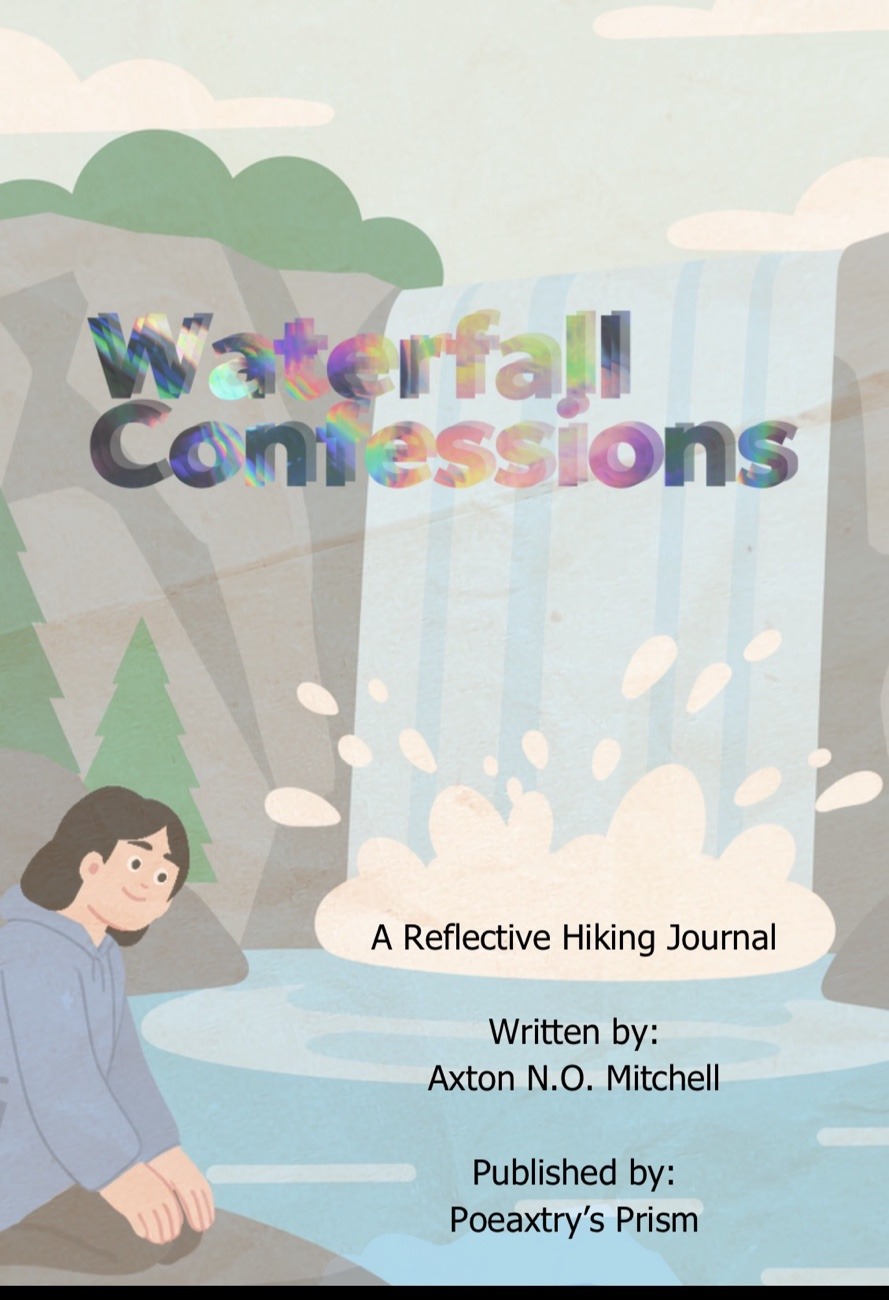
    Nature has a way of stripping back the noise of daily life, leaving us alone with the thoughts we often try to outrun. To help navigate those moments, I’ve created Waterfall Confessions. My independently published digital or printable emotional reflection journal. I specifically designed for hikers, nature lovers, and adventurers that also are in tune with their emotional side, enjoy journalism, wish to work at Overcoming Fear, or want to explore the more emotional side of themselves .

    Whether you are deep on the trail or reflecting from your favorite chair at home, this journal provides a dedicated space for you to unpack it all. A space in the back exists so you can log your location after you process the internal landscape on the pages inside. It is currently available for $2.00 USD on Etsy, Gumroad, and Payhip.

    IFYKYK; We do not hike to outrun our ghosts; we hike to find a space wide enough to finally walk betide them.

    Below, I am sharing my own response to one of the prompts included in the collection.


    My Journal Entry

    The Setting:

    Brandywine Falls, CVNP (12/19/2025)

    CVNP brandywine Falls Winter 2025 Overcoming Fear

    The world was draped in a heavy blanket of snow and ice. My two friends and I were the only souls at the parking lot for Brandywine Falls at Cuyahoga Valley National Park that morning. We moved in a virtual silence that felt sacred. The boardwalk was slick beneath our shoes, and the roar of the falls began to vibrate in our chests long before we left the parking lot. In that cold, snowy silence, the water felt like the only thing alive.

    The Prompt:

    What fear feels louder than the waterfall, even now?

    My Reflection: The Weight of the “Without”

    Standing there, the sheer volume of the water is usually enough to drown out everything. But for me, the thing that remains louder than any cascade is the grief of the last four years and the daunting realization of the years to come.

    It is the pain of doing everything without my mother. Every milestone, every quiet hike, and every struggle I face from here on out is shadowed by her absence.

    Grief is much like a winter waterfall: it remains loud and powerful even when the rest of the world has fallen into a frozen silence.

    When you lose someone that foundational, you find you are no longer afraid of the small things. Hurt feelings or every day normal things don’t compare to this void.

    People say it goes away, but it doesn’t. You simply learn to live with the empty spaces.

    I am trying to learn how to enjoy the moments where the weight feels a little lighter. Grief comes in waves; I’ve realized there is no point in bracing for the inevitable crash while I’m standing in the shallows. I am learning to enjoy the peace while I can. Trying to begin focusing on living with my grief instead of living in it.


    Continuing the Journey

    This is just the first of three reflections I’ll be sharing from this collection. Keep an eye out for the next two prompts, where I’ll dive into different trails and different corners of my heart and maybe yours. This is the first of many emotional reflection journals planned for publishing available for those of us who find our healing in the wild.

    Thank you so deeply for reading and for being part of this creative community. Your support allows me to keep sharing these stories and providing resources for others to share theirs.


    Before you go

    If these words resonated with you, I invite you to share this post with your hiking group or your journaling friends. Or maybe you know someone who finds solace in the woods; this might be the thing they need to start their own journaling journey.


    Links to Buy

    Etsy. Gumroad. Payhip.

    Forum links:

    Trade your honest reviews for digital collections

    Barter & Trade Physical and Digital Items

    Feedback


  • The Invisible Glass Ceiling: An Indie Full-Time Fight For Visibility

    The Invisible Glass Ceiling: An Indie Full-Time Fight For Visibility


    Best for:

    Independent creatives, artists, authors, readers of independent media, zine makers, grassroots publishers, community oriented folk, and creative entrepreneurs navigating the digital noise.

    What is the biggest challenge you will face in the next six months?

    Independent Creative’s Least Favorite Thing: Promo

    The next six months aren’t just about the craft; they are about the invisible ceiling inbetween us, independent artists a better marketing or promotion strategy. Honestly, starting one is probably the best way to get started, but as a busy healthcare worker and small creative business owner saying and planning are much easier than doing.

    My point of view as an indie creator, the transition from “making” to “marketing” often feels like hitting a brick wall made of algorithms and paywalls. While the art flows from the soul, the promotion requires a different kind of magic. This one demands we become data analysts, social media managers, and PR agents all at once.


    The Marketing Mirage: Why Modern Reach is Stalling

    For those of us running small presses or self-publishing digital collections, the “build it and they will comephilosophy is dead. We are operating in an era of fragmented attention, where the platforms we rely on for organic reach are increasinglypay-to-play.”

    The Algorithm Tax

    Every time we post a new piece of art, poem, short story, or a call for submissions, we are competing with billion-dollar ad budgets. For an indie house, the challenge is maintaining a consistent presence without burning out on the “content treadmill.”

    The “Niche” Paradox

    We create for specific communities. Those beloved often talked over minority voices, poets, and visual artists. However, these tools meant to help us often end up the gatekeepers of those connections. Hiding behind algorithms built against those who have the voices needing to be heard, by crafting the never ending need to make niche content and audience.

    True creative independence isn’t just owning your masters; it’s owning the map that leads the audience to your door.

    The Core Struggles of the Indie Promoter

    The struggle isn’t a lack of passion. Rather, it’s a lack of bandwidth and a burnout inducing paradox. Here is how the “indie taxmanifests in our daily workflow:

    • The Multi-Hyphenate Burden: Switching from creative flow to figuring out how to make relatable content out of your creations.
    • The Discoverability Gap: New work often gets buried within 24 hours unless it’s boosted by a viral moment or a paid campaign.
    • Platform Fatigue: Managing a blog, a Substack, social media, as well as storefronts requires distinct strategies for each, thinning the most valuable resource: time.
    • The Vulnerability of Promotion: Asking people to look at your soulwork feels vastly different than selling a physical product; it’s a personal risk every time you hit “publish.”

    Join the Conversation

    What is one “marketing hack” you’ve tried that felt completely unauthentic to your brand?

    If you’re a reader or consumer of visual art, how do you usually discover the indie gems that the big bookstores miss?

    Whatever it is you choose to add to the conversation, I look forward to and appreciate it!


    Strategic Scaling: My Next Six Months

    To survive the next half-year, the focus must shift from shouting into the void to building a lighthouse. This means authentic stories and connections, behind the scenes content, and learning other strategies.

    Cultivating Community over Customers

    The biggest challenge is moving people from “followers” to “advocates.” In a grassroots ecosystem, one person sharing your zine because it moved them is worth more than a thousand impressions on a cold ad.

    Marketing for the indie soul isn’t about manipulation; it’s about building a bridge sturdy enough for your community to cross.

    The Path Forward

    The next six months represent a pivotal climb in the indie journey. Marketing and promotion remain the most daunting hurdles. The digital landscape is designed to favor the loud over the profound. By acknowledging the exhaustion of the algorithm tax and the weight of the multi-hyphenate burden, we can begin to build smarter, more organic systems. My goal is to spend less time shouting and more time creating.


  • The Digital Frontline: Memetic Warfare, A Battle for Your Mind

    The Digital Frontline: Memetic Warfare, A Battle for Your Mind


    Best For:

    Activists, history buffs, critical thinkers, open-minded people , independent creators, or anyone tired of being a pawn in a billionaire’s world.

    What is the last thing you learned?

    The Weaponization of the “Relatable”

    The last thing I learned wasn’t one singular hard fact; it was a realization. An epiphany about at least half of the images we laugh at daily, these are used as bullets in a silent war. Images and videos for our viewing acting as bombs dropping in our brains.

    We think of memes as harmless cultural shorthand. You likely think of a cat doing something cute with a catchy caption or a looped video of a celebrity blunder. If you look a little deeper, and you find Memetic Warfare. This is the tactical propagation of ideas to seize control of a narrative. It’s information operations wearing a mask of humor or shock, and it’s happening on every screen you touch.

    A meme is a virus of the mind; it doesn’t need to be true to be infectious, it only needs to be shareable.

    In this essay, we’re peeling back the “funny” and “cute” to look at how foreign powers and our own government use digital culture as a battlefield, the thin legal lines supposed to protect us, and the massive loopholes that keep the door wide open.


    The Global Ping-Pong of Influence

    Memetic warfare isn’t a conspiracy; it’s a documented line item in government budgets. Here is how the “Battle of the Feed” has played out historically:

    • The Internet Research Agency (Russia) & The 2016 U.S. Election: The most cited example involves the IRA creating thousands of fake personas to spread divisive memes on Facebook and Instagram. They didn’t just support one side; they created content for opposing activist groups to incite real-world protests and internal friction among American citizens.
    • Operation Earnest Voice (USA): A U.S. Central Command (CENTCOM) program developed to use “sockpuppetsoftware to spread pro-American narratives and counter-extremist propaganda on social media sites, specifically targeting foreign audiences in the Middle East to disrupt recruitment.
    • The “Great Firewall” & The 50 Cent Party (China): Reports indicate that the Chinese government employs a massive “army” of commenters to flood social media with distracting, patriotic memes and posts wherever social unrest or criticism of the state begins to trend globally.
    • The #MilkTeaAlliance: A fascinating case of grassroots counter-memetic warfare where activists in Thailand, Taiwan, and Hong Kong used shared culinary culture (Milk Tea) to create a unified digital front against authoritarianism.

    The Legal Shield and Loopholes

    The Law:

    In the United States, we have the Smith-Mundt Act of 1948 (and its 2012 modernization). Originally, this law prohibited the government from directed domestic “propaganda“—meaning the State Department could broadcast pro-USA content to foreign countries, but they couldn’t aim those same “Information Operations” at us.

    The Loophole:

    In a borderless internet, the Smith-Mundt Act is essentially a paper umbrella in a hurricane. When the U.S. government deploys a memetic campaign to influence citizens in a foreign country, those memes don’t stay there. They get retweeted, shared, and “leaked” back into the American digital ecosystem. If an American citizen sees and shares a meme designed for a foreign psych-op, the government hasn’t “targeted” the citizen, but the psychological effect remains the same.


    Let’s Pause for Just a Moment:

    Before we continue take a second to consider the following or let your mind wonder…

    How often do you stop to wonder who actually created the meme you’re about to share?

    Do you fact check it when it isn’t just funny but contains supposed fact, without source?

    Have you ever felt your opinion on a major event shift because of a “relatable” post rather than a news article?

    Drop your thoughts in the comments. Let’s talk about the last time a piece of digital art made you question your own bias.


    Vulnerability as a Defense

    The scariest part of memetic warfare isn’t the technology; it’s our own psychology. We are wired to lean into what feels familiar. These operations work because they target our anger, our pride, and our sense of community. When we reshare a “vibe” without checking the source, we are potentially volunteering as unpaid soldiers in a war we didn’t sign up for.

    A weaponized narrative doesn’t look like a tank; it looks like a joke or relatable post assumed to be fact that you’re dying to share with your best friend

    As individuals who all want a better future and present , it is our job to work in a way that is “intentional.” We need to aim to connect and to heal. But the battlefield of social media is designed for the “unintentional,” the mindless scroll, the knee-jerk reaction. To protect ourselves, we have to reclaim our attention. We have to treat the Digital landscape with the same reverence and caution as a physical territory. “In the age of information, ignorance is a choice, but being ‘informed‘ by a bot is a trap.”


    The Narrative is Yours to Defend

    Memetic warfare has redefined the frontline. It’s no longer just about who has the biggest missiles; it’s about who tells the most “relatablestory. We’ve seen foreign governments sow discord in our streets through JPGs, and we’ve seen our own systems struggle to keep up with the ethics of digital influence. The loopholes of “media leakprove that no law can fully insulate us from the global flow of ideas.

    The only real defense is a sharp, critical mind and a refusal to let our emotions be harvested for someone else’s agenda. Learn the tools, understand the definitions, and remember: if a meme is designed to make you hate your neighbor, it might just be a weapon.


    Hey, Before You go…

    Consider giving this post a share if you believe in digital sovereignty. Send it to the other people who are tired of the algorithm. The students who are studying political science or government, and the other individuals you know who always seem to be “doom-scrolling,” or even the ones who just want to stay in the know. We need more eyes on the digital frontlines.


    If you wondered…

    Poeaxtry’s Links. Portfolio.

    Consider Donating to any of the following to Keep this place Alive:

    Cashapp. PayPal. Ko-fi. Buy Me a Coffee.