
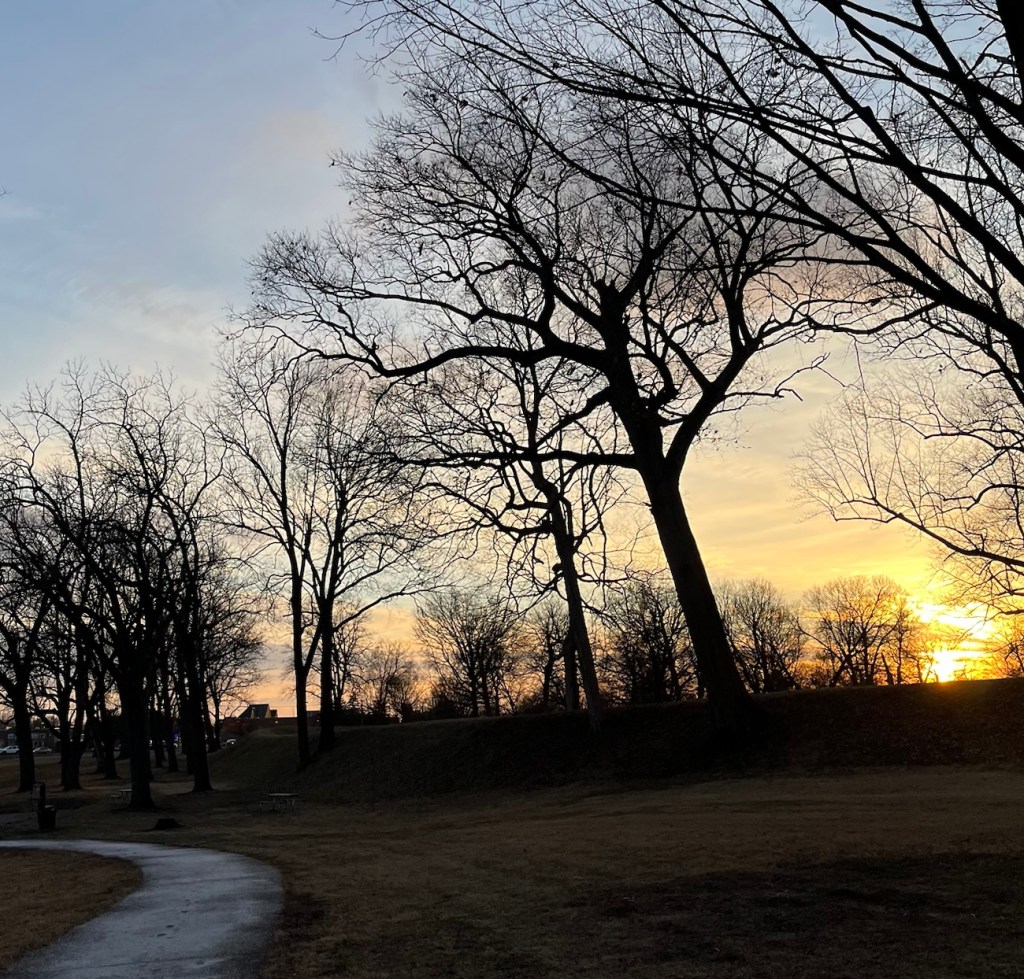
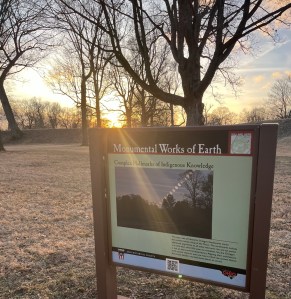
Sunset at the Mound on the Heath/Newark Ohio Border with Luna
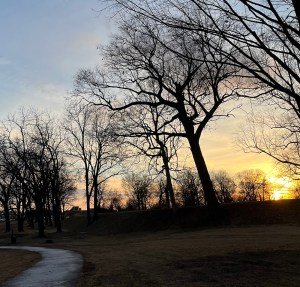
On January 23, after a full day of winter hiking around Hocking Hills and Licking County, Luna and I stopped at an earthwork in the Heath, Ohio. Where we decided watch the sun drop behind ancient earth. We walked about a mile along the length of the mound at low light, dusted snow underfoot, and cold air rolling down from the hills.
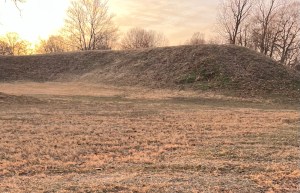
This wasn’t just any hill. What we walked along was part of the Newark Earthworks, one of the most remarkable prehistoric complexes of geometric earthworks in the world, built between roughly 100 BCE and 400 CE by Indigenous peoples often called the Hopewell culture.

What the Newark Earthworks Are and Why They Matter
The Newark Earthworks are a National Historic Landmark and World Heritage Site recognized in 2023 for their ancient craftsmanship and cultural significance.
The complex originally spread over several square miles of what is now Licking County, anchored by monumental earthen structures including the Great Circle Earthworks, the Octagon Earthworks, and the Wright Earthworks. The walls you see rising gently from the ground are not random hills but carefully constructed embankments, once part of geometric patterns aligned with cosmic cycles.
At the Great Circle Earthworks, for example, the nearly 1,200‑foot diameter enclosure is one of the largest prehistoric geometric earthworks in the Americas, with walls originally up to 8 to 13 feet high surrounding a deep ditch that may once have held water.
These works were more than simple mounds. Archaeologists now interpret them as multi‑purpose cultural landscapes used for ceremony, social gathering, astronomy, seasonal observation and memorialization, built by Indigenous people with deep knowledge of geometry and the sky.
Hopewell Culture and Indigenous Wisdom Beneath Our Feet
Although we lack direct written records from those who built them, what the earthworks tell us is profound. These structures are part of a network of Hopewell Ceremonial Earthworks across Ohio, collectively recognized for their monumental scale and alignment to solar and lunar events.
For centuries, Indigenous peoples traveled, met, traded and participated in spiritual gatherings around these sites. The precision of placements and connections among enclosures suggests knowledge of astronomy and cosmology far beyond mere utilitarian construction.
Walking along the mound as the sun lowered, it was easy to feel a sense of time deep time, held in the earth beneath my steps, not just as distant history but as lived landscape.
Sunset Light and Winter Walk Energy
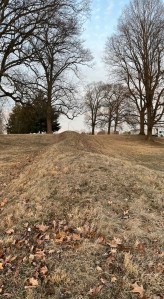
January’s sunset brings a special light. Golden rays flatten across ancient embankments and bring out texture in what otherwise looks like low, gentle rises in the ground. Luna and I walked about a mile of these earthen lines, the long shadows changing faster than the chill. The quiet of winter, sparse birds, cold wind, distant cars on the Ohio roads, made the moment feel wide in memory even if short on clock time.
Mounds, Meaning and Respect
These earthworks are sacred places as much as they are archaeological landmarks. They were built for ceremony and memory by real people whose descendants today maintain cultural ties to this land. Visiting them demands curiosity, respect, and quiet observation rather than disturbance.
The Great Circle, near where Luna and I walked, could once have hosted gatherings of people from across the region, moments of shared meaning held in earth and sky that were much more than simple trails or tourist stops.
Quick Facts for Visitors
Location: Near the border of Heath and Newark, Ohio in Licking County. Builder: Created by Indigenous peoples of the Hopewell culture between about 100 BCE and 400 CE. Designations: National Historic Landmark, UNESCO World Heritage Site. Structures: Includes the Great Circle Earthworks, Octagon Earthworks, and Wright Earthworks. Purpose: Likely used for ceremony, astronomy, social gathering and memorial practices shaped by landscape and cosmos.
Standing near these earthworks at sunset with Luna was a reminder that Ohio’s past is vast, visible, and deeply present in its landforms. The lines of earth underfoot tell stories of ancient organization, knowledge and presence. These stories long outlast cold winters and quick days. The mound was quiet at dusk, but in its silence was an invitation to listen across centuries, a living memory beneath winter sky.





Say it. Don’t spray it.