Tag: social justice

  • The World Burns, and We Scroll: Bearing Witness to Genocide, Greed, and the Price of Empires

    The World Burns, and We Scroll: Bearing Witness to Genocide, Greed, and the Price of Empires

    We live in a world that feels like it’s cracking under the weight of its own reflection.

    As of 2025, humanitarian crises and genocides continue across the globe, largely ignored or exploited by the same systems that profit from their pain. In Gaza, tens of thousands have been killed and displaced as infrastructure collapses and access to aid remains restricted. In the Democratic Republic of Congo, the cobalt and coltan mined by children still power the batteries of our phones, laptops, and electric cars. And in Sudan, an ongoing civil war has displaced millions, yet receives almost no media coverage compared to Western conflicts.

    Meanwhile, Americans scroll and spend, buried under debt, inflation, and propaganda. While, being told that freedom can be found in the checkout aisle or the next algorithmic distraction comes along.

    This poem was written as both confession and confrontation: a moment of truth-telling from within the belly of a capitalist empire that feeds on silence.

    Poem:

    “The World Burns, and We Scroll”

    I wake beneath the hum

    of screens,

    each one a sermon preaching more for sale,

    their glow a ghost of what we lost…

    to comfort,

    convenience,

    and compliance.

    The world burns,

    not metaphor,

    not news,

    she just burns.

    In Congo,

    in Sudan,

    in Palestine,

    children trade their breath for minerals.

    Their parents’ lives

    for borders drawn by hands

    that never had to bleed.

    Their cries travel

    through copper veins

    to light our phones, our news feeds,

    our many, many screens.

    The guilt, we share.

    We spend.

    We pretend.

    America,

    land of the barely living wage,

    where grief is taxed,

    and outrage costs extra.

    We chant freedom in discount aisles

    while bombs hum lullabies abroad,

    and children go to bed with dread

    fed by hunger.

    You’ve got to start to

    wonder.

    We are not free.

    We are stitched into these machines,

    screaming between algorithms.

    We need only to bear witness,

    to cradle a world that keeps unraveling,

    to tell everyone still fighting:

    we see you.

    Even if our country won’t.

    May every dollar dripped in blood

    rot back to dirt.

    May every empire collapse

    under its own reflection of depravity.

    May mercy outlive profit.

    May love…

    unfiltered, defiant, unbranded,

    outlast the hands that sell it.

    And may God hope He isn’t real

    after what He’s let these children

    feel.

    The violence unfolding in Palestine, Congo, and Sudan is not distant. It is wired directly into our daily lives. It is in our consumption, our comfort, our denial. Every tap, every scroll, every “neutral” stance allows empires to continue unchallenged. Bearing witness means refusing silence. It means calling it what it is: systemic greed, colonialism reborn, a global machine powered by both apathy and profit.

    But awareness can still become action. Sharing verified updates, supporting on-the-ground organizations like Doctors Without Borders, UNRWA, Refugees International, and Congo Relief Missions, or simply breaking the silence in our own communities. Each and every act chips away at the narrative that tells us we are helpless.

    Art alone cannot stop war, but it can refuse to let it vanish unseen.

    This poem stands as both lament and rebellion… against complicity, against erasure, and against the idea that humanity can be priced.

    Poet’s Note:

    I wrote this piece as an American who has grown exhausted by the repetition of history. We are watching the same injustices dressed in new slogans. We are taught to chase comfort while others are buried beneath it. This poem is not just grief; it’s a refusal to look away.

    If you read this and feel angry, good. That means you still have something the system hasn’t stolen, your empathy. Hold on to it. Use it. STAY WOKE!

    Because the world is burning, and still, somehow, we have the power to bear witness, to refuse to forget, and to keep telling the truth.
    Links. Portfolio. Poetizer

  • One Selfless Wish: Imagining Equality and Freedom for All

    One Selfless Wish: Imagining Equality and Freedom for All

    Prompt:

    A stranger offers you one wish, but it must be selfless: what do you wish for?

    Answer / Reflection:

    If I could make one selfless wish, it would be for equality, freedom, and equal rights for all humans everywhere. In a world so divided by wealth, power, and privilege, imagining a reality where everyone has the same opportunities, protections, and freedoms is not just idealistic… it’s essential.

    Equality isn’t about giving everyone the same thing; it’s about removing barriers that prevent people from living fully. Freedom isn’t just the absence of oppression… it’s the ability to pursue one’s passions, speak one’s truth, and exist without fear. A selfless wish like this could ripple across generations, changing lives in ways no single person could imagine.

    This wish may not be simple, but it’s universal. It’s for the person struggling in silence, the family denied rights, the communities still fighting for recognition. It’s for the world we can choose to create if empathy, justice, and courage guide us.

    Selfless wishes force us to look beyond ourselves and consider the collective good. Asking, “What would I wish for if it weren’t about me?” challenges us to imagine a better world, and more importantly, to work toward it in our everyday lives. Today, my selfless wish is equality, freedom, and equal rights for all. And a reminder that change begins with vision, empathy, and action.

    If a stranger offered you one wish but they told you it had to be selfless what would you wish for? Make your own list and tag me or tell me here in the comments.

    Poeaxtry’s Links portfolio buy me a coffee

  • Racism and Fascism in America Protest as Poetry

    Racism and Fascism in America Protest as Poetry

    This poem confronts the realities of racism, fascism, and systemic oppression in the United States. Through vivid imagery and raw emotion, it exposes how fear, privilege, and institutional violence shape American life, while highlighting the resilience and voice of marginalized communities.

    “The State of the Dis-United”

    An original poem by: Axton N.O. Mitchell

    Rabid preacher,

    lying through perfect teeth

    straightened by the braces of minorities.

    Speaking of liberty and God,

    sitting there choking on both.

    You draped hate in Stars and Stripes,

    hung pride from every porch post,

    called it patriotism…

    it was merely your fear

    in a pretty JoJo bow.

    Your police hunt.

    Your politicians feed.

    And your children pledge allegiance

    to the god, and to the country,

    that never answered a single prayer

    from the lips of someone “different.”

    You see shelter

    where I see a cage.

    I scream bullets.

    You respond justice.

    Where white is “normal,”

    and everyone else…

    a “problem.”

    I’ve seen your suburbs

    built on

    brown

    and

    black

    bones,

    your schools still teaching how to forget

    by preaching white lies.

    You sell “unity”

    with a Confederate discount,

    while renaming oppression

    “freedom of speech.”

    Your anthem is a siren,

    and every verse

    bleeds red, white, and bruise.

    And still…

    we breathe.

    We march.

    We write.

    Turning every war-won wound

    into witness.

    No fascist flag

    can outshine

    the fire of the people

    they try to silence.

    This poem is born from my lived experience as a trans person navigating a country built on fear, exclusion, and hierarchy. I wrote it to call out the hypocrisy, the violence, and the ways systems crush those they deem “other.” But it’s also a testament to: resilience, survival, and the voices of all marginalized communities. This is me and I stand with you. Every line is a refusal to stay silent, every image a witness to injustice. I wrote it because poetry is my weapon, my witness, and my way of demanding that the world see us, hear us, and reckon with what we endure.

  • How I’m Being the Change: Goals to Amplify Minority Voices

    How I’m Being the Change: Goals to Amplify Minority Voices

    Friday, on my way to work, I received a thoughtful email from the editor of Magique Publishing. This is a platform that has published me. They have also interviewed me in the recent past. Our relationship has been meaningful in a rather short amount of time. I value the insight, as we have built on a working relationship with shared values and mutual support. The editor read my recent blog post about the changes I wanted my blog to inspire. He reached out to tell me that my words had gotten him thinking. He pointed out something important: many people say they want to be the change. However, few ever talk about how they actually plan to be the change. The how is what baffles most. He also asked me a direct and challenging question: how am I going to be the change?

    The editor noticed something important. People are often aware of the big problems in the world. Yet, many don’t have clear guidance. Or they lack understanding on how to make a difference. We find it challenging to create impact on a small scale. He speaks about a university professor who, after leaving teaching, realized that practical “how-to” solutions for everyday activism were scarce. And wouldn’t you know he has a solution to help bridge that gap. He created a checklist of challenges. These are grouped by size and scope. People are welcomed to try them weekly or monthly. These challenges also include large spectrum goals. Examples are writing a letter to a government official or volunteering hours. They also consist of medium and small goals, like donating to a local charity or composting food scraps. He even suggested the possibility of joy-centered challenges to help people feel more connected and grounded in their communities. I love this idea of supporting each other through shared challenges and building momentum together.

    That email also motivated my own self reflection on ways I’ve actually been the change and where I can do more. It is rare you meet someone able to challenge you so respectfully and with the best intentions. But the questions he proposed pushed me beyond words into concrete action. I’m sure I’ll be forever grateful for that.

    In response, I’m dedicating time to developing two sets of goals organized into three clear categories: small weekly actions, medium monthly projects, and large bimonthly initiatives. One set will focus on personal goals for myself, while the other will center on community engagement, offering practical ways for contributors to get involved and create real change.

    I am also keenly aware that many people speak about being the change but rarely take real, measurable steps. This gap between words and action is what I am determined to close. One key way I live this is by intentionally publishing only minority creators in all my collaborations and projects. While I do allow ally-supportive works when they add meaningfully, they must not speak over marginalized voices. No minority submitting a piece on theme will ever be turned away. I may not publish every piece in a collaboration, but I will always include at least one from a minority creator. I’m not aiming to silence more of us. I’m committed to amplifying marginalized voices and ensuring they are never overshadowed.

    Though I am working steadily toward these goals, I know the work is ongoing and there is always more to do. That’s why I invite you, my readers and fellow changemakers, to consider your own goals for creating change. What small, medium, or large steps will you commit to? How will you move beyond talk and into meaningful action? I encourage you to share your goals in the comments. You can also reach out directly. Together, we can hold each other accountable. We can build a community dedicated to lasting impact.

    I am deeply thankful to Magique Publishing’s editor for inspiring this reflection. Sometimes, one thoughtful question from the right person is all it takes to turn intention into powerful action. If you want help crafting your own goals, I’m here to support you. I’m also here if you want to engage your community in this conversation. Let’s make change happen, now.

    Check out Magique publishing’s substack
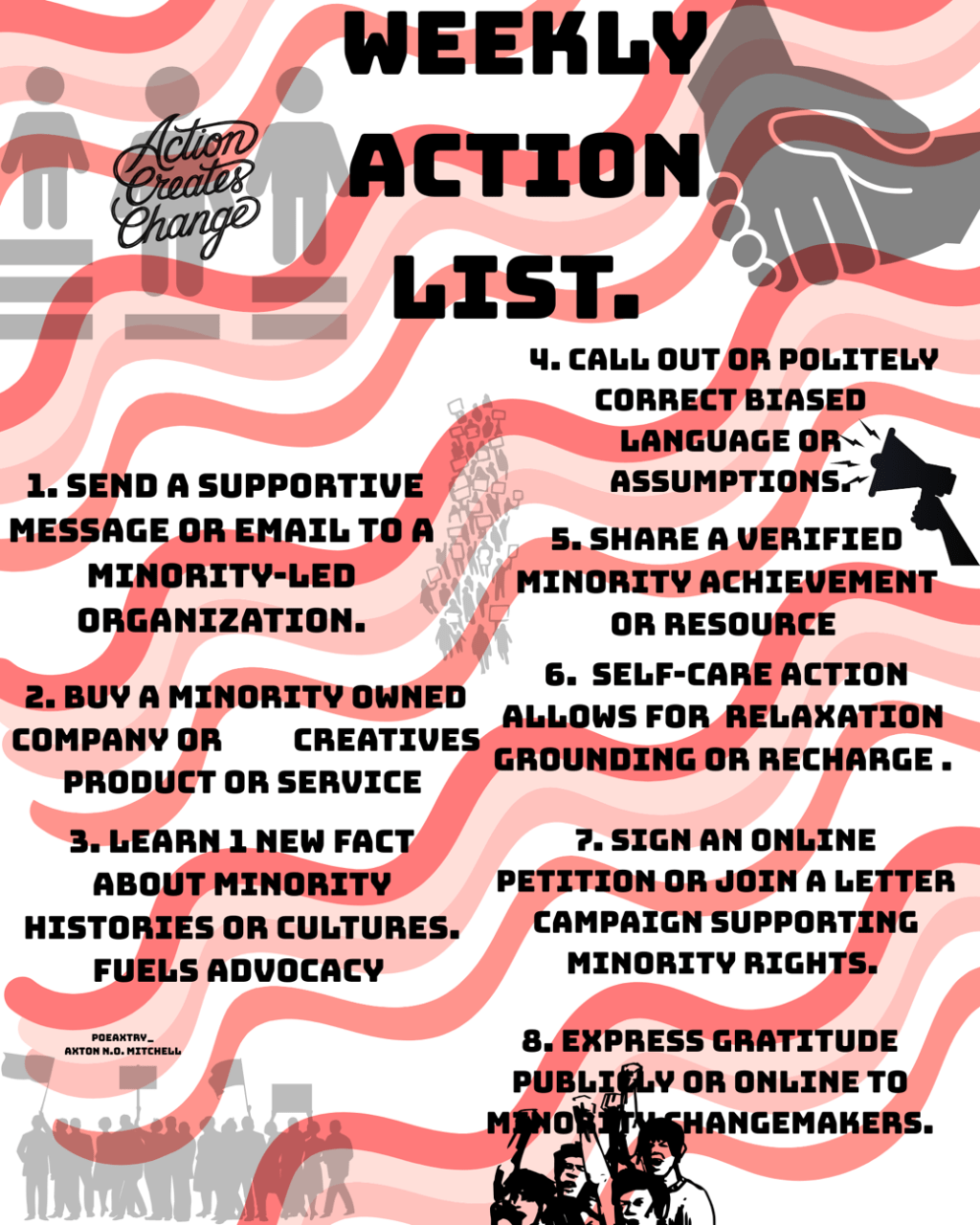
    Check out our List of ways to make actionable change!

  • 📢 Donald Trump isn’t “controversial.” He’s racist.

    📢 Donald Trump isn’t “controversial.” He’s racist.

    We’re not gonna keep pretending this was about “policy.” That it was “just politics.” That any of this was ever neutral.

    Donald Trump didn’t “divide the nation”; the nation was already divided. He just took a fucking blowtorch to it and got rich doing it.

    He didn’t build anything. He exploited what was already broken. He played white America’s fear like a damn fiddle and then sold tickets to the concert.

    Yes, from the beginning? It was racism.

    When he announced his campaign by calling Mexican immigrants drug dealers, criminals, and rapists. It wasn’t some offhand moment. It was the start of a plan. It was a signal to white supremacy: I’m your guy. Given his face looks like that little racist frog meme and all.

    This wasn’t new. He’d already been pushing that racist birther lie about Obama for years, acting like the first Black president wasn’t legit because his skin made Trump uncomfortable. It wasn’t “doubt.” It was hate. That’s what got him attention. That’s what built his base.

    He kept going.

    He called for a Muslim ban.

    He referred to Black and brown countries as “shitholes.”

    He told Black women in Congress to “go back” where they came from. Three were born here though, I don’t think any of Trumps wives were.

    He refused to condemn white supremacists. Told the Proud Boys to “stand back and stand by.” They heard him. Loud and clear.

    And this whole time he was being taken to court by E. Jean Carroll for sexual assault. She won. He was found liable for sexual abuse. That’s not speculation. That’s not internet gossip. That’s legal fact. You voted for a rapist and a man who is proven to have said he just can’t help himself around beautiful women and I’m sure you know the rest of the line. I mean for Christ sake your vote was for a racist walking meme.

    So while he was out here calling immigrants rapists , he was in court being held responsible for exactly that kind of violence. But the media won’t call it rape. They say “scandal.” They say “controversy.” They say “misconduct.” Nah. Say what the fuck it is.

    Your president is a RAPIST!

    This country made excuses for him. Over and over again. It’s not “bias” to say he’s racist . And it’s restraint not to say worse, honestly.

    And we’re not gonna do the media’s job and soften this shit for you.

    This is Poeaxtry’s Poetry Prism.

    We don’t worship people who use power to abuse.

    We don’t confuse “influence” for integrity.

    We don’t forget.

    We document the harm and provide a space for those targeted by Trump’s hate to share their own truths and reclaim their voices.

    Stick around for more.

  • Stephen King and the Horror of Ableism: When Disabled Women Are the Monsters

    Stephen King and the Horror of Ableism: When Disabled Women Are the Monsters

    Stephen King is undoubtedly one of the most prolific and influential authors in modern horror literature, but his depiction of disabled women often falls into troubling patterns that reinforce damaging stereotypes. In particular, the characters Annie Wilkes from Misery and Jesse from Gerald’s Game illustrate how King’s narratives tend to frame disabled women either as violent threats or tragic victims, a portrayal that not only simplifies disability but also perpetuates societal stigma.

    In Misery, Annie Wilkes is introduced as a physically disabled former nurse who rescues author Paul Sheldon after a car accident. However, as the story unfolds, Annie’s disability becomes closely intertwined with her erratic and dangerous behavior. She kidnaps Paul, holding him captive and subjecting him to physical and psychological torture. The character’s violent instability is amplified by her disability, which reinforces the harmful trope of the disabled individual as inherently unstable or dangerous. This representation can contribute to real-world prejudices by implying that disability is connected to unpredictability and violence, rather than portraying Annie as a complex person shaped by many factors beyond her physical condition.

    On the other hand, Gerald’s Game presents Jesse, a woman who becomes physically disabled after a traumatic event—a bondage game with her husband that goes wrong, leaving her handcuffed and stranded in a remote location. Jesse’s character is depicted with more psychological nuance as she battles not only her physical limitations but also her history of trauma and abuse. While this portrayal gives insight into the emotional and mental struggles tied to disability, it still frames disability largely through the lens of suffering and victimhood. Jesse’s survival story is powerful, but King’s focus on trauma risks reducing her disability to a symbol of pain rather than allowing for a broader, more empowering representation.

    Fact 1: Studies of disability in media highlight that disabled women are often confined to narratives of victimization or menace. Annie Wilkes’s violent actions in Misery and Jesse’s vulnerable predicament in Gerald’s Game both echo these patterns, emphasizing danger or helplessness as defining traits.

    Fact 2: These portrayals perpetuate social stigma against disabled women by framing their identities through extremes of fear or pity, limiting public understanding and empathy for their real-life experiences.

    King’s depictions mirror broader issues within popular culture, where disability is frequently sensationalized or used as a shorthand for horror and tragedy. This oversimplification overlooks the complexity and diversity of disabled individuals’ lives and fails to challenge the biases that continue to marginalize disabled women.

    Furthermore, the cultural impact of King’s storytelling is significant because of his vast audience and influence. When such stereotypes go unchallenged, they reinforce misconceptions and contribute to the social exclusion of disabled people. It is essential for media creators and consumers alike to critically analyze these portrayals and advocate for stories that present disabled women as fully realized individuals with agency beyond their disabilities.

    Adding to this complexity is the inequity in whose perspectives are valued when discussing disability. Disabled creators and activists who critique harmful portrayals are often dismissed or labeled as “dramatic” or “attention-seeking,” while mainstream authors like King receive less scrutiny. This double standard highlights ongoing challenges in elevating marginalized voices and underscores the importance of amplifying authentic narratives from disabled women themselves.

    By addressing these issues openly, readers and creators can push for more accurate and empathetic representations in literature and media, helping to dismantle stigma and foster a culture of inclusion.

    Have you noticed these instances in work from “the king” of horror? Do you also see the ugliness they perpetrate?

    Links Etsy song

  • What I’m Passionate About – Writing, Justice, Nature, and Voice

    What I’m Passionate About – Writing, Justice, Nature, and Voice


    What are you passionate about?

    I’m passionate about all minorities having equal rights and opportunities. I feel no one should be silenced, ignored, or erased just for existing. My mom raised me to speak up for those who can’t always do so. That’s something sacred to me: being a voice when silence is survival.

    I’m deeply connected to nature and spirituality; both ground me, challenge me, and remind me who I am. There’s a magic in the way the earth holds us without asking for anything but care in return.

    Writing is my lifeline. I aspire to paint with words the way artists do with color raw, vibrant, and honest. Every piece I write, I hope it hits deep and leaves a mark. I want people to feel seen in the lines I bleed out.

    I’m passionate about ending the war on drugs. I advocate for legal weed, and harm-reduction over 100% sobriety. Determined to tear down the systems that punish addictions instead of healing them. Police reform isn’t just a wish, it’s a necessity. Too many lives have been lost to injustice and too many voices drowned out by sirens and systems. I want better. I won’t stop fighting for better.


    Trade, swap, or barter!
    Trading for art, services, creations, and other digital exchanges can bring Poeaxtry’s digital creations to your screen and soul. Here at Poeaxtry_ also barters physical items for physical items. Submit a Form (1st blank put barter/ trade. In the last blank, describe what you want to receive/offer for trade.) Or email Poeaxtry@gmail.com with the same general information.

    links