Tag: grief

Loss, mourning, and processing death or absence.

  • The Viral Trend of Unattributed Art Needs to End:

    The Viral Trend of Unattributed Art Needs to End:


    Best for:

    Creative Entrepreneurs, Poetry Enthusiasts, Art History Buffs, Ethical Consumers, Writers in Grief, Process-Oriented Creators, and fans of indie creatives.


    Why I Work at Restoring Artists Identity:

    We’ve become far too comfortable with the theft of art work turned social media gimmick. We see a quote, feel a pang of resonance, and hit “like” or “share,” never stopping to ask whose hands actually typed those words. In many high-traffic poetry and art groups, posts from “top contributors” and “ anonymous group members” strip the artists of their identity, leaving behind nothing but a “vibe” and maybe the artists initials.

    The Origin of the Rescue

    While my focus is often on supporting the indie creative community; I am against all plagiarism, stolen credit, and ill-attributed works in any form. Whether an artist is indie or traditionally published, if their work moves me, I will refuse to push their stolen content through social media algorithms. I am dedicated to providing them authentic credit while offering creative advice to others.

    Upon seeing this latest example today, I finally put together the framework for a solution.

    The Change:

    Instead of just scrolling past with a sigh, I am launching a casually recurring series on the Open Shelf. I will be finding the humans behind the ill-attributed quotes, poems, and prose, and restoring their credit. If I was moved by the work of course. The posts will also go on to use their work as a jump-off point to show you how to dismantle a spark and build something entirely your own.

    We are all feeding the cycle of uncredited, low-energy sharing. In order to do more than speak of change I want to see in art, media, literature, and well the world, this is how I will begin to actually implement some of these changes. This is restoration for the art that moves me while I also work at improving the ethics of crediting a creative person accurately.

    Along side these actions to create change I will layer art and literature history where fitting. As well as taking advantage of the opportunity to show other creative individuals you how sparks can be dismantled and rebuilt into something entirely new, sometimes not even remotely relevant to the piece that sparked your creativity.


    D.K. Marie – The First Creative Restoration:

    The piece I saw circulating today is by D.K. Marie, an author that has navigated both the traditional and self-publishing worlds to become an Amazon #1 bestseller.

    This post which I screenshotted to add below, from a large poetry group on Facebook is signed with a stylized -DK. I do want to mention there is not one word in the caption. And while I understand the image is aesthetically pleasing visually for your Instagram and TikTok feeds. That doesn’t apply here in a large Facebook group and not on Instagram or TikTok.

    Which also leads us to add the fact that, captions no matter the length do not affect your personal page’s aesthetic feed view. If the work is your art and you don’t want to caption it that’s valid as heck. Go on with ya bad self. However, ethical crediting of creatives for their work where it is due is a base level thing to always do.

    The Creator:

    D.K. Marie is known for her minimalist snapshots of poetic pain, swoon-serenading romance novels, and blending love, lust, and laughter.

    She participates in and advocates for independent published authors and artists by sharing her story of publishing through traditional and indie publishers. As well as things like sustainable careers for artists, readers choosing indie bookstores, and attending author fairs. D.K. also shares knowledge on the importance of connecting with your readers and promoting independent works.

    If you are interested here is a link to D.K. Marie’s Author website, as well as her Instagram, and Facebook author page. Don’t forget to support independent creative individuals and communities.

    How you can Stop the Spread:

    When we interact with or like and share a post on any algorithm based social networking site that doesn’t credit the artist, we are inadvertently burying the creator.

    If you spend a few moments and the same amount of energy on finding the original author, you will gain so much more. You’ll have an entire library of their work and content at your fingertips. Compared to a bunch of stolen work layered together to create a viral account lacking authenticity.

    I’m asking you to simply stop liking the stolen posts and start following the creative individuals who actually bled into their work.

    A cropped screenshot of a minimalist typewriter-style poem by D.K. Marie, originally posted without full credit. The original poster's name is intentionally cropped out to highlight the "ghosting" of creators, while the empty like and comment icons at the bottom symbolize the hollow nature of uncredited viral engagement.
    Screenshot from Facebook reflecting 0 interactions for the ill-attributed work.

    The History of the Artistic Snippet – A Creative Pulse:

    Art is rarely a solo act; it is more commonly a long-form conversation across spans of time. We see this clearly when looks at art, literature, and music.

    Music:

    Let’s look first into the Music Production industry. Did you know that EDM and Hip-Hop artists take a four-second snippets of old records and layer them under a new beats? Thereby creating a completely different emotional landscape. This is “sampling” or taking the bones of the past to build the house of the future.

    This can be used as a generational connection where new artists work is used to acknowledge older generations work. While the artists reintroduce “forgotten” sounds to a contemporary audience. Homage has been paid through many art forms, even in early jazz, musicians would “sample” melodies live to show respect to their peers skill.

    Daft Punk famously took disco and funk fragments and rebuilt them into futuristic anthems like “One More Time.” Hip-hop finds its origins rooted in looping drum breaks from funk and soul records.

    Literature:

    Allusions in literature act as shorthand, like a hyperlink to another time. This allows an author to pull in the emotional weight of a past work without explaining it from scratch. For example, James Joyce’s Ulysses uses a massive “sample” of Homer‘s Odyssey. Therefore layering the grand myths of ancient Greece onto a single day in 1904 Dublin.

    Modern authors often “talk back” to the classics to challenge their perspectives. Jean Rhys’s Wide Sargasso Sea is a reimagining of Jane Eyre, giving a voice to the “madwoman in the attic” and challenging the original narrative.

    Poetry:

     A poet takes an existing text maybe a Shakespearean sonnet or even a legal document. They then erase words until a new poem remains, leaving us with erasure poetry.

    Ronald Johnson’s Radi Os is a “sampling” of John Milton’s Paradise Lost; by removing letters from the title and text, he found a brand new, minimalist poem hidden inside the 17th-century epic. Effectively using hidden dialog to act as a physical conversation with the source text.

    Visual Art:

    Appropriation art in visual arts, is when artists take recognizable imagery and recontextualize it. The “readymade Marcel Duchamp famously “sampled” mass-produced urinal. He even signed it, and named it Fountain. Which forced a conversation about what defines “art.” Famously, Andy Warhol exactly copied the label of a Campbell’s Soup can. When he moved it from a grocery shelf to a gallery, he changed the “emotional landscape” from a simple lunch item to a commentary on consumerism.


    Historically, the “greats” did exactly what I am doing today:

    1. Response Poetry: In the 17th century, Sir Walter Raleigh famously wrote “The Nymph’s Reply to the Shepherd” as a direct, cynical rebuttal to Christopher Marlowe’s idealized love poem.

    2. The Cento: A classical poetic form composed entirely of lines borrowed from other poets. The skill wasn’t in the “theft,” but in the new meaning found through the arrangement.

    3. Modern Intertextuality: From the one-liners who gained fame by stripping poetry down to its skeletal essence (like Insta-poets Rupi Kaur, Atticus, and Nayyirah Waheed) to the layered samples in modern digital art. We all are using another’s to spark to break through or combat writer’s block. This acts as a legitimate, generational-honored exercise for your creative muscles.


    My Recreation: Knowing You Don’t

    I took the spark of “missing someone” from D.K. Marie’s work let my mind wonder. Instead of a lover the finality of life’s end drew me into reflecting on the loss of my mother. She is not “roaming the earth” physically at least; there is only the silent cold chill from the wind of what is no longer possible.

    Knowing You Don’t

    The hardest part about missing you is knowing

    you don’t walk with me

    through the trees.

    You no longer get to feel the warmth of an evening breeze

    or

    the sharp, cold snap as lake water takes your breath away momentarily in the summers heat.

    where we’d spent many of our lazy days,

    Now, I’m left watching the water ripple into nothing.

    This isn’t just another argument between child and parent;

    The door didn’t slam behind you,

    This is not a few days of heated silence between phone calls.

    The floorboards are aching to creak under the weight your angry return. When you had to just say one more thing.

    I would give up my life to hear you say any word… one more time.

    The rug is too thin to hide this.

    No matter how hard I try to sweep the truth under its surface. It will not fit.

    The hardest part is the finality in the cycle. It is knowing I can still feel your energy

    You clinging to the bark of the oaks everywhere I roam.

    Though it is but a cold winter wind that could never compare to the warm breeze of you being here.

    I’d take back every day we were not speaking… every heavy, wasted heated hour…

    for just a fraction of time in return with you,

    had I understood then what I’ve perfected now…


    The Artistic Lineage of “Knowing You Don’t”

    This poem is the descendant of a breakup quote, but the DNA mutated into a study of permanent loss. In the lineage of response poetry, I am not answering the original author’s romantic longing; I am answering the silence she described with the physical reality of a grave. Yes heartbreak sucks but if I had the chance I’d have 300 broken hearts a day if I never had to live without my mom again.


    Exercise Your Muscles: The Prompt Guide

    This post is an attempt to rectify artists ethical crediting, a look into my creative process, and a call to action to help be the change. If you want to make this a creative habit, are interested in ways to combat writers block, or if you are curious about my creative prompt collections look no further.

    I currently offer a digital creative prompt journal for $3.50! Providing you a way to keep your creative muscles moving through art, literature, and or poetry. Receive seventeen creative prompts and the information on where they are from. As well as my personal poem created from each, feel free to add to, redo, or completely make it your own from scratch .

    Amazon. Etsy. Google Play Books. Gumroad. Payhip. $3.50

    Or

    Read for free in exchange for your 100% honest review by form or emailing poeaxtry@gmail


    A Call to Creative Integrity

    Can we stop settling for the unethical ill-credited quotes from other artists work? If you see art that moves you, and it’s posted by someone other than the artist without credit… Please take the few minutes to find the person who created it.

    Start supporting the art source. You can even use that inspiration to fuel your own creative evolution. True creativity isn’t about where you start; it’s about the integrity of the journey you take from there.


  • Leave No Trace – 2 Easy Helpers  Affirmative Action & Small Changes to Help Earth

    Leave No Trace – 2 Easy Helpers Affirmative Action & Small Changes to Help Earth


    Best for:

    Earth Day Enthusiasts, new adventures, the naturalist by hobby, content creators, nature lovers interested in leave no trace practices, and environmental advocates.

     Words and initials carved in the bark of a tree at Dillion state Park.
    Dillion State Park, Ohio.

    Leave Only Footprints Take Only Pictures – Leave No Trace

    I’ve been told at least a million times in my thirty-four years of live to leave only footprints and take only pictures. I’m sure you can say the same or that you’ve heard some variation of the saying. This is why I was shocked on my latest hike whenI realized that for many, that’s easier said than done.

    While I was exploring the Beach City Wildlife Area, with my dog I found myself looking at the forest through a different lens. Where the permanent scared bodies of trees revealed the nutrient starving marks we leave behind when we think we’re just making a memory immortal.

    Leave no trace is not - Red spray paint and knife carvings mark the bark of a tree surrounded by white snow at salt fork state park in Ohio.
    Tree Carvings in a trees bark on Kennedy Stone House Loop in Salt Fork State Park, Ohio.

    Dundee Falls Trail

    During my recent 2.6-mile trek through the Beach City Wildlife Area to view both large waterfalls, I did something I usually try to avoid: I started counting.

    In that short out-and-back stretch, I registered 45 separate carved trees. Most were initials and or dates. A seemingly small gestures intended to “immortalize” a moment. But in forest ecology, these aren’t just mementos; they are biological disruptions.

    When we talk about Leave No Trace (LNT), we often stick to the surface. But as of 2026, the data shows that “not littering” is just the baseline. True stewardship requires understanding the invisible layers of impact. Everything from the vascular systems of the trees to the microscopic life in the streams.

    Sandstone carvings at black hand gorge overlooking the licking river in Nashport Ohio.
    Initials and names carved in the historic sandstone at Black Hand Nature Preserve in Nashport, Ohio.

    The Anatomy of a Wound – Why Carving Kills:

    A tree’s bark is similar to its immune system. When someone carves into a tree, they aren’t just “marking the surface.” They are bypassing the tree’s primary defense and allowing easy entrance for other things to do so as well. Directly beneath that bark are the xylem (which moves water up from the roots) and the phloem (which moves sugar/food down from the leaves).  

    Deep carvings slice these “veins,” effectively starving the tree of needed nutrients. These wounds then as mentioned serve as open doorways for fungi, bacteria, and wood-boring insects. While a human scar typically fades, a tree’s scar is permanent. Making the tree structurally compromised for its entire life.

    Furthermore, many trees are connected through underground fungal networks; a disease introduced via a carving on one tree can technically travel to infect an entire stand of timber.  

    Purple Pac-Man ghost graffiti on the sandstone on the west side gorge in Piatt Gorge Park
    Graffiti Pac-Man Ghost on the Sandstone at Piatt Gorge Park in Woodsfield, Ohio.

    Beyond the Trash Bag – Layering the 7 Principles:

    Most violations of LNT principles stem from a lack of awareness or the convenience of a “small” action. To stay truly informed in 2026, we have to look at the nuances of these universal ethics:

    • Durable Surfaces & “Social Trails”: We often walk around mud puddles to keep our boots clean, but this “widens” the trail. This, creating social trails that destroy vegetation and cause massive soil erosion. It is better to walk directly through the mud on the established path. Wear shoes on the trail and nature adventures that are suitable to get dirty.
    • The “Organic Litter” Myth: Tossing an orange peel or banana skin into the brush is still littering. In Ohio, a banana peel can take up to two years to decompose. While citrus contains natural insecticides that even local bugs won’t touch. These “natural” scraps also teach wildlife to expect easy meals of human food, increasing the risk of them becoming roadkill.  
    • Leave What You Find, Where You Find It (The Souvenir Trap): This includes everything from natural minerals to “stacking rocks.” Also called building rock cairns in streams or near trail. These may look cool for a photo, but it’s a disaster for aquatic life, and may even misguide hikers. Moving those rocks uncovers the homes of macroinvertebrates and salamanders, the water “bugs” that fish rely on for food.  
    • Minimizing Sensory Impact: LNT now heavily emphasizes light and noise pollution. High-lumen white headlamps can disrupt the circadian rhythms of wildlife and the experience of other hikers. Using warm-colored (red or amber) LEDs at lower intensities is the 2026 standard for preserving the “wild” in wildlife. As well as hiking with quiet voices and any music or other phone voice minimal or listened to through headphones.
    carved tree trunk in  Mohican state Forrest on the big and little falls falls loop trail
    A fully carved up tree on Big and little Lyons falls loop at Mohican in Ohio.

    The Practical Challenges of the Backcountry:

    Planning ahead is foundational, yet a lack of preparation often leads to “accidental” violations. This includes not having the right gear for weather changes, which might lead a hiker to build an illegal fire or expand a campsite onto non-durable ground.  

    Proper waste disposal remains one of the most cited challenges. Digging a proper 8-inch cathole for human waste (at least 200 feet from water) and correctly storing “smellables” (food, lip balm, deodorant) in bear-resistant containers are non-negotiable for preventing wildlife encounters. In 2026, even sealed food is considered an attractant to a bear’s nose, which is thousands of times more sensitive than ours.

    Large oak tree with carvings covering the majority of its surface bark
    West Salem, Ohio another tree carved.

    The “Only One” Myth: Collective Damage vs. Collective Care:

    Every single one of those 45 trees with carvings all over them started with the same thought process. “I’m just one person; what’s the harm?” When you see 5 trees tree trunks on one trail completely covered in initials, you aren’t looking at one person’s memory; you’re looking at a group of people who all thought they were the “only ones.” Now imagine 45 separate trees and the damage that causes.

    You cannot feign ignorance and claim solo actions have no consequences when the evidence is written in the scars of the forest along this very trail.

    The good news is we can turn that same logic on its head. If we decide to be the “only ones” to pick up that piece of trash, to stay on the path, or to teach a friend a better way, we create a new kind of group.

    This is a group of people all doing the right thing, thinking it’s just them. We are allowed to make mistakes; LNT is a journey of awareness, not a demand for perfection. One small change in how you hike today is the starting point for a forest that survives for the next generation. We have to respect the Earth now, because if it’s ever gone, that’s it. I’m not aware that there is a “Plan B” for Earth or nature.

    A defaced park bench in Yelloowsprings, Ohio.
    Though normally damaging defacing park property can deplete park funding and cause park officials to remove amenities.

    Quick Reference – Other Common LNT Myths vs. 2026 Reality:

    • Myth: “It’s biodegradable, so I can leave it.” Reality: even natural items can take years to rot and poisons the local ecosystem’s diet.
    • Myth: “Wild animals poop in the woods, so my dog or myself can too.” Reality: Pet and human waste contain foreign pathogens and excess nitrogen from processed food that causes algae blooms in local water.
    • Myth: “Stacking rocks is harmless art.” Reality: It destroys the “roofs” of aquatic homes and can lead hikers astray if they mistake your art for a trail marker.
    Large Carin or rock stack on a licking country Ohio creek bed .
    Large Carin an Ohio creek bed.

    The Gravity of the Situation – Rock and Stone Carvings:

    While tree carvings are biological wounds, carving into rocks, especially the soft Black Hand Sandstone found throughout Ohio, is a geological trauma.

    • Accelerated Erosion: Sandstone is held together by a thin layer of natural cement and “biological crusts” (lichens and mosses) that actually protect the rock from rain and wind. When you carve into it, you break that protective seal.  
    • Mechanical Weakness: Carving creates “stress points.” Over time, water enters these grooves, freezes, and expands (freeze-thaw cycles), causing massive chunks of the cliff face to flake off. This is a process known as exfoliation.
    • Gravity’s Hand: Once the structural integrity of a rock face is compromised by deep carvings or graffiti, gravity does the rest. What was a stable cliff for thousands of years can become a landslide risk in just a few decades of human interference.
    A pair of black sock left on a wooden park bench at litter trail in Mount Vernon, Ohio.
    Human clothing littered on the litter trail in Mount Vernon, Ohio.

    The Forager’s Footprint – Leaving Life Where It Grows:

    When it comes to plants, mushrooms, and natural minerals, the rule isn’t a strict no, “don’t take.” A smart and ethical plan is closer to”take only with a plan.” Even when a permit is free, there is a vital reason to get one. As well as monitoring foot traffic in areas where they are rebuilding or protecting habitat. Which makes free collection and hiking permits important to obtain.

    • Monitoring Foot Traffic: Agencies use permit data to track “visitor load.” If they see 500 people are foraging in one small acre, they know that area needs a break to allow for plant regrowth. Without that data, they can’t protect the very plants you’re trying to enjoy.
    • The Rule of Thirds: Foraging is stewardship. A common ethical standard is to never take more than 10% to 30% of a healthy population. If you take the only two mushrooms you see, you’ve removed 100% of the spores needed for next year’s crop.  
    • Never take protected or endangered species or organisms.
    • Natural Minerals & Fossils: Removing “cool rocks” or minerals disrupts the soil chemistry and removes potential habitats for insects and microorganisms. In many protected areas, these minerals are legally considered part of the “natural feature” and must stay put to preserve the park’s geological story. Do not remove natural materials unless permitted to otherwise.
    • Free permits like the one to visit corkscrew falls in hocking hills exist to monitor and limit foot traffic in ecosystems that are fragile or undergoing restoration. Other non-foraging hiking permits exist to limit foot traffic due to. Saftey risks if over populated.
    Blue metal sign on wooden pole listing the ways to respect nature preserves in white font. At Dennison biological reserve in Granville, Ohio.
    Dennison Biological Preserve Respect the Reserve Sign in Ohio.

    The Dundee Evidence: 45 Scars in 2.6 Miles:

    While the images scattered throughout this post show the carvings I’ve documented across Ohio’s parks, the slideshow below is a concentrated record of the separate trees I encountered on a single 2.6-mile trek at Dundee Falls. This is the proof of the “Only One” myth in action. Each slide represents another biological disruption on just one small stretch of this one Ohio trail.

    • Dundee Falls Trail Tree carving
    • Dundee Falls Trail Tree carving
    • Dundee Falls Trail Tree carving
    • Dundee Falls Trail Tree carving
    • Dundee Falls Trail Tree carving
    • Dundee Falls Trail Tree carving
    • Dundee Falls Trail Tree carving
    • Dundee Falls Trail Tree carving
    • Dundee Falls Trail Tree carving
    • Dundee Falls Trail Tree carving
    • Dundee Falls Trail Tree carving
    • Dundee Falls Trail Tree carving
    • Dundee Falls Trail Tree carving
    • Dundee Falls Trail Tree carving
    • Dundee Falls Trail Tree carving
    • Dundee Falls Trail Tree carving
    • Dundee Falls Trail Tree carving
    • Dundee Falls Trail Tree carving
    • Dundee Falls Trail Tree carving
    • Dundee Falls Trail Tree carving
    • Dundee Falls Trail Tree carving
    • Dundee Falls Trail Tree carving
    • Dundee Falls Trail Tree carving
    • Dundee Falls Trail Tree carving
    • Dundee Falls Trail Tree carving
    • Dundee Falls Trail Tree carving
    • Dundee Falls Trail Tree carving
    • Dundee Falls Trail Tree carving
    • Dundee Falls Trail Tree carving
    • Dundee Falls Trail Tree carving
    • Dundee Falls Trail Tree carving
    • Dundee Falls Trail Tree carving

    Staying Educated is the Only Shield:

    Next time you’re on the trail, be the person who notices the small things, and not just the waterfalls. Really notice the health of the wildlife and living organisms surrounding them. What’s one ‘small’ change you’ve made to your hiking habits lately or even one you plan to make but haven’t been able to implement yet?

    I’ve taken protected organic material from places before I realized it was harmful. At some point I didn’t even know better or care to think of the what if’s. But we are in an age where information is at our fingertips. No longer can we claim we simply “didn’t know” anymore.

    The principles of Leave No Trace are dynamic guidelines, and nit meant to shame anyone. Use these not as rigid rules for perfection. They are designed to help you make the best decision for the specific environment you will be experiencing and exploring.

    Let’s learn from the 45 scared trees I saw at Dundee. Take the information, share it with your hiking group, and clean up after those who don’t yet know. That is all it takes to keep our backyards wild.


  • Ohio HB 798: The “Erasure Act” & the Cost of Visibility

    Ohio HB 798: The “Erasure Act” & the Cost of Visibility


    Best For:

    Political science Majors, transgender and gender non-conforming people, advocates, and those who fight for equal rights.


    The GOP’s Attack on Visibility on TDOV – Coincidence? Irony?

    The irony of House Bill 798 being introduced on Trans Day of Visibility (TDOV) isn’t lost on anyone. While we spent March 31st celebrating our existence, Rep. Josh Williams (R-Sylvania Twp.) was filing paperwork designed to make that existence legally invisible.

    This isn’t just another “bathroom bill.” This is a “Map of Hell” expansion that moves the goalposts from “protecting kids” to erasing adults. After the manufactured moral panic and outrage over Target selling chest binders and gaffs, the mask has finally slipped all the way off. In case you didn’t get this already, they don’t want to “protect” kids; they want us to stop existing in public, and honestly probably in private as well.


    Ohio HB 798 The New Legal Definition

    A Trap for the Transitioned:

    Ohio’s HB 798 doesn’t just use the word “sex,” it seeks to legally define it as “biological sex,” specifically determined by “internal and external reproductive anatomy” and “genetics” at birth. If you corrected our documents whether a decade ago or three months, this is a calculated attempt to make our current legal status “erroneous.”

    By narrowing the definition to chromosomes and anatomy at birth, the state is trying to create a legal “Ground Zero” that ignores medical transition, court orders, and any amount of lived experience. It turns our IDs into a “lie” in the eyes of the state, regardless of what our passports, birth certificates or social security records say.


    “Protecting Children” to Erasing Adults Ohio’s HB 798:

    For years, the rhetoric was centered on “protecting the youth” from permanent changes. But Ohio’s HB 798 proves that was a lie, but I’m sure like me you were already aware of that. As a transgender female to male who legally has changed his name and gender marker back in 2016, this bill feels like a targeted attempt. Ohio’s GOP wants to try and reach back into my past while systematically undoing my present, the same goes for everyone else like me in Ohio.

    The bill doesn’t just stop at K-12 schools; it targets the very foundational documents of adulthood:

    • Marriage Licenses:

    It seeks to freeze sex markers, ensuring your “biological sex” is the only thing the state recognizes on your wedding day.

    • Death Certificates:

    It mandates that even in death, your true identity can be erased, forcing a “biological” marker onto your final record.

    • The “Bounty Hunter” Clause:

    It allows private citizens to sue institutions if they “perceive” someone of the opposite sex in a restroom. This isn’t about safety; it’s about state-sponsored stalking.

    They told us it was about the children until they realized we weren’t going away. Now, they’re coming for our marriages, our dignity, and our right to die with our names intact.

    – Axton N. O. Mitchell

    My Wedding:

    I am getting married in October. This bill isn’t just a headline for me; it’s a shadow over my ceremony. While I have lived my truth for over a decade, the state of Ohio is trying to build a legal cage around the word “biological.”

    They want to make being trans so uncomfortable, so litigious, and so bureaucratically exhausting that we simply stop talking. They want us to live the lie because our truth is too inconvenient for their campaign trail.


    It is a pursuit of our identity that follows us literally to the grave, attempting to erase the life we actually lived in favor of the one they wanted for us.

    – Axton N. O. Mitchell

    Why Ohio’s HB 798 is a House of Horrors:

    • Retail Panic Result: This bill is the direct descendant of the rage sparked by binders, gaffs, and pride merch. It’s the legislative version of screaming in a Target aisle.
    • The Litigation Trap: By allowing lawsuits based on “perception,” Ohio is encouraging a culture where every stranger is a self-appointed gender inspector.
    • The Permanent Record: By banning changes to birth and death certificates, they are attempting to ensure that no matter how you live your life, the state gets the “last word” on who you were.

    When Existence Became the Crime:

    I saw the change pretty clearly. First, they said it was about “protecting children” from hormones and surgery, more permanent changes. Then, the goalposts moved to puberty blockers, and we already knew something was coming.

    Finally, when the moral panic shifted to Target putting out chest binders and tuck-friendly swimsuits, the mask fell off completely.

    They realized that transgender people and other gender nonconforming individuals aren’t just in clinics. We are in the woods, the parks, and in the workforce.

    Ohio’s HB 798 is the legislative response to that realization. It’s no longer about medical “safety“; it’s about making the everyday act of buying a binder in a store or using a public restroom a legal liability.

    They are trying to make our existence so litigious that corporations and schools are “scared” to accommodate us.

    Visibility without protection is a trap. They want us to be seen only so they can find us more easily

    – Axton N. O. Mitchell

    The November Ballot-

    Voter ID & the Erasure Act

    We cannot ignore the timing. With Ohio’s strict photo ID laws, any bill that muddies the water of what constitutes a “legal” sex marker is a threat to our right to vote.

    As we fight for the Ohio Equal Rights Amendment on the November 2026 ballot, bills like Ohio’s HB 798 act as a distraction and a deterrent.

    They want us so bogged down in fixing our birth certificates and worrying about bathroom lawsuits that we lose sight of the power we have at the polls. This isn’t just a bill; it’s a hurdle placed in front of the ballot box.


    We Are Here To Stay –

    Death BEFORE Detransition!

    Ohio’s HB 798 is currently just a house bill. A “taxpayer-funded press release,” as some have called it. It hasn’t passed yet, not even close and with my wedding coming up in October, I refuse to let a desperate bid for a Congressional seat ruin the joy of my big day.

    We’ve watched this house of cards being built, from the first House bills that is on its way to the Ohio Senate. Today is April fools day one of my favorite holidays. Though, for a moment I actually tried to act like it was a sick prank.

    Yet, you and I We see the map they are drawing. As we head toward the November elections and my own walk down the aisle, remember: they can change the paperwork, but they can’t change the truth of who we are.


  • Transgender Day of Visibility 2026 – Strength, Survival, & Being Seen:

    Transgender Day of Visibility 2026 – Strength, Survival, & Being Seen:


    Best For:

    Transgender & Gender Nonconforming People, Advocates & Allied Humans, Openminded Individuals, Those Who Are Exploring Gender, and Those Who Wish to Educate Themselves.


    What Is Transgender Day of Visibility 2026 – Why It Matters:

    Today, March 31, 2026, the digital landscape is saturated with the colors of the trans pride flag. Timelines fill, brands post statements, and visibility becomes something that can be performed in seconds and forgotten just as fast as the day ends. For many, Trans Day of Visibility is reduced to aesthetics. A selfie. A repost. A temporary alignment.

    For a binary presenting transgender man navigating the professional, medical, and social realities of 2026, visibility is not a costume. It is not seasonal. It is not always an optional choice. It is tactical, beautiful, heavy, freeing, and often dangerous.

    Leaving a lot of transgender people who do not, or cannot live stealth have taken to saying that “we are visible for those who cannot be.” That statement gets repeated every year, but rarely is it unpacked.

    Some of us simply put cannot be visible because the conditions are more hostile now than ever in my life. Transgender individuals experience safety as an uneven frame with no real filter.

    Visibility is not evenly distributed. It is carried with a heavy rhetoric and stigmatization.

    Transgender women and men a like all know that being seen still carries consequences that range from social isolation to systemic neglect to extreme abuse leading to death. The world has not evolved past that truth, if anything we have somehow become less accepting.

    Until visibility stops being a risk calculation, it is not freedom. It is risky exposure. That means one of us still choose to live our truth, regardless of the repercussions, and that is how we are visible for those who cannot be.


    The Origin of Transgender Day of Visibility –

    Why March 31 Exists:

    To understand the weight of this day, you have to understand what came before it.

    Before 2009, public recognition of transgender lives was largely confined to Transgender Day of Remembrance. Visibility was tied to death only, if you look at the bigger view. Names were read only after their lives were taken. Stories were told after it was too late for those people to tell them with their own voices.

    Rachel Crandall-Crocker created Trans Day of Visibility as a direct response to that imbalance. The intention was simple and necessary. Trans people deserved to be seen while alive. Not as statistics. Not as tragic narratives. As full, present human beings.

    March 31 was chosen to create space outside of mourning.

    Over time, the language shifted. Awareness replaced urgency. Awareness is a passive tool when used in this manner . It requires nothing put a post on your Facebook one day of the year saying you care, even if you don’t.

    2026 is not about awareness. It is about presence.

    Visibility now requires refusal to be minimized as well as an equal amount of refusal to be spoken for. It requires existing without distortion.

    We are not a monolith. We are not a campaign. We are not a symbol.


    The Brutal Cost – Remembering Sam Nordquist:

    A Life Taken far too Soon:

    Any conversation about visibility that avoids consequence is incomplete, can I understand the original want for this day to stay away from grief. When you look at the bigger picture, you’ll understand that that’s simply impossible with the way things are going on at this stage…

    Sam Nordquist was a 24-year-old biracial and transgender man. Along with being trans this beautiful young man was a group home aide. Most importantly he was a human being with a future that should have continued. We will not stop until Sam gets without justice. There is not peace without any peace. We cannot continue to have hope, realistically.

    In the beginning of 2025, Sam’s life was taken tragically in the name of “love”.

    The System that Dropped the Ball:

    His death reflects a multi-agency systemic failure. His family raised concerns. His mother asked for help. His sister asked for help. He went to adult protective services and asked for help and they sent him back there. These monsters were staying in a hotel turned into an apartment complex for homeless people. Yet no one heard them from the walls as thin as paper. Recently, Kayla and her mother Linda were in the New York area on video they were screaming from quite a distance away from Patty’s Lodge, people came out they heard them. Where were the people at that should’ve heard Sam? The complex was fully “rented” for lack of better words.

    Intervention did not come in time. At the time a police officer local to the area of New York was quoted telling Kayla Nordquist that she just watched too many true crime stories in her brother’s fine. I hope the cop eats those words daily. I forgot they are called to protect, serve, and pass judgment the fucked up ways of America’s boys in blue.

    Visibility is NOT a Magic Cloak:

    Visibility does not guarantee protection and being known does not guarantee response. Systems can and do fail even when warning signs exist. When you’re living in a system that system wants to erase this is what help looks like.

    For many trans men and women, especially those who are not white visibility increases scrutiny without increasing safety in any form.


    Visible for Those Bound by Fear and Survival-

    Transgender Day of Visibility 2026:

    When we say “visible for those who can’t be,” we are describing our layered reality.

    • The Stolen Youth:

    Trans youth facing restrictions on healthcare, education, and participation. As well as new bills being geared at adults as well.

    • The Stealth and the Scared:

    Trans men and women are forced to without disclosure for safety and survival. Forcing us to live in hiding either through stealth aligned gender or truth not living in their truth.

    • The Global Struggle:

    The global attack on transgender and gender nonconforming communities. Normalizing situations where being trans is criminalized sometimes proposing felony charges.


    The 2026 Landscape –

    Survival as a Revolutionary Acting

    The legislative pressure continues across the United States, targeting healthcare, identity, and public life. Economic disparity remains, with trans people facing higher unemployment and poverty rates.

    Mental health outcomes improve with affirming connection, making visibility a survival factor people who are already present across all areas of life.


    Evidence of Resistance – Survival Itself:

    Being a binary-identified transgender man in 2026 means reconstructing masculinity outside inherited systems. Visibility exists across multiple different layers.

    • Professional identity.
    • Creative documentation.
    • Joy outside of struggle.
    • Digital preservation of lived experience..

    We are building continuity, not a momentary presence, but lasting record of real life pressures, progress, and prosperity.


    No One is Free Until We All Are:

    Visibility without safety is incomplete.

    Trans Day of Visibility 2036 is not a celebration endpoint. It is a checkpoint in an ongoing condition.

    Some of us stand in the light because we have no choice if we expect anything to change.

    For Sam Nordquist, though and for all the other victims of unprecedented bigotry and hate. We all unwillingly navigating systems that do not respond. All of you whose risk outweighs the reward when it comes to visibility yet, we are here for you. I will do whatever I can to make a better way for all of you and those still trying to decide whether survival is possible.

    Our goal is not visibility alone, but visibility without fear. Until then, I will carry it, for you and all of the shit they throw at you.


  • Rewind, Repeat, Revisit: My Most Rewatched Series

    Rewind, Repeat, Revisit: My Most Rewatched Series


    Best for:

    Medical drama lovers, scary movie buffs, parody film enthusiasts, and creative writing readers.

    What movies or TV series have you watched more than 5 times?

    Becoming us:

    Some stories don’t just entertain us… they become part of who we are. They anchor us to memories. Others may accompany us through life’s transitions, or offer comfort in their predictability while life is ever changing around us.

    For me, three series have earned the distinction of being watched more than five times each at least: Grey’s Anatomy, Rob Zombie’s Halloween films, and the Scary Movie franchise. Would make up my top three, Degrassi, Wife’s with Knives, The Chucky Series, and Stabbed coming in close runners up.

    One gave me chaos wrapped in scrubs; the others let me bond with the people I love most over slashers and satire. Together, they form a strange but perfect trifecta of my emotional landscape.


    Grey’s Anatomy: The Perfect Amount of Chaos:

    There’s a reason Grey’s Anatomy has endured for nearly two decades. Beyond the complex medical cases and will-they-won’t-they romances, the show mastered something few others have: the perfect amount of chaos.

    • Emotional whiplash as comfort: One moment you’re laughing at a character’s absurd one-liner; the next, you’re sobbing over a patient who didn’t make it. That rapid emotional shift feels chaotic, but for viewers who process emotions in nonlinear ways, it mirrors internal experience rather than disrupting it.
    • Found family in scrubs: The ensemble cast creates a sense of belonging that feels earned through shared trauma. This is something that resonates deeply with anyone who has found their people in unexpected places.
    • Repetition as ritual: Watching Grey’s Anatomy multiple times isn’t about being surprised by plot twists. It’s about returning to a world where emotions are big, people fight and forgive, and somehow, the hospital keeps spinning. There’s comfort in knowing what’s coming while still feeling every beat.

    The research on “comfort viewing” suggests that rewatching familiar series reduces anxiety by providing predictability in an unpredictable world. A 2021 study in Psychology of Popular Media found that rewatching favorite shows serves as a form of emotional regulation. Thus, helping viewers manage stress through narrative familiarity. Grey’s Anatomy, with its high emotional stakes balanced by consistent character dynamics, functions as an ideal comfort text for many viewers.


    Rob Zombie’s Halloween: Slasher Bonding With Mom:

    I know most people view Horror as a solitary genre, but for me, it’s deeply relational. Rob Zombie’s Halloween film, to name one series. Yes, both his 2007 remake and its 2009 sequel are movies I’ve watched countless times, almost always with my mom.

    • A shared language of fear: Watching slasher films together created a bond built on something unexpected: safety in shared adrenaline. There’s intimacy in experiencing fear alongside someone you trust.
    • The brutality of grief: Zombie’s Halloween films are often criticized for their brutality. Though, that brutality mirrors the rawness of loss and trauma. Watching them now, without my mom has become a way to sit with difficult emotions without having to name them directly.
    • More than Michael Myers: Beyond the slasher icon, these films explore family dysfunction, survival, and the origins of violence. All themes that invite deeper conversation long after the credits roll.

    Horror has been studied for its social bonding effects. A 2020 study in Journal of Media Psychology found that shared horror viewing increases cohesion and trust between viewers. Though, particularly when watched in safe, familiar contexts. The adrenaline response, when experienced alongside a trusted companion, can strengthen relational bonds. This further explains why slasher films became a ritual between my mom and me.


    The Scary Movie Franchise – Parody, Friendship, and Growing Up:

    If Grey’s Anatomy gave me emotional chaos and Halloween gave me bonding with my mom. Then the Scary Movie franchise, particularly the early entries with the Wayans brothers, gave me laughter with friends. Although we liked other parodies and road trip themed movies these ones stick out the most.

    • Middle school and high school rituals: Watching Scary Movie with my friends during sleepovers and weekend hangouts became a rite of passage. The humor was ridiculous, the references were often inappropriate, and that was exactly the point.
    • Shorty (and the ensemble): The late, great Marlon Wayans as Shorty Meeks, brought an iconic, unhinged energy that made the parodies land. The franchise’s ability to lampoon horror tropes while still clearly loving the genre made it a perfect bridge between genuine horror fandom and comedy.
    • Shared cultural literacy: Scary Movie gave my friends and I a shared vocabulary. To this day, certain lines or scenes function as inside jokes that instantly transport us back to crowded living rooms, too much junk food, and the kind of laughter that makes your stomach hurt.

    Parody serves an important cultural function. Media scholars note that parody requires deep familiarity with source material, creating an “insider” experience for viewers who recognize the tropes being subverted. Watching parody with peers during adolescence contributes to social bonding and identity formation, as shared humor reinforces group cohesion during formative developmental years.


    Why We Return: The Comfort of Familiar Stories:

    Watching something more than five times isn’t about an inability to find new content. It’s about the stories that become anchors. Grey’s Anatomy offers controlled chaos that mirrors how I experience emotion. Rob Zombie’s Halloween films are a shared ritual with my mom, a way to sit with grief and intensity in a space of mutual trust. The Scary Movie franchise holds the laughter of middle and high school friendships, preserved like snapshots in time.

    Together, these three series represent different parts of my life: the emotional processor, the son, and the friend. They’re not just entertainment. They’re emotional landmarks I return to when I need to remember where I’ve been, who I’ve shared the journey with, and what it felt like along the way.


  • From Pen to Peak: Creative Strategies for Processing Emotions

    From Pen to Peak: Creative Strategies for Processing Emotions

    What strategies do you use to cope with negative feelings?

    Best for:

    Shadow workers, Emotionally intelligent Individuals, journal readers, and those working through uncomfortable emotions.


    Navigating negative emotions:

    For me whether I’m overcome with grief, stress, or anxiety it requires more than willpower. I have found it helps knowing what works for me. I feel that we should al have intentional strategies that honor the way our minds process the world, to help us find our way back to the light.

    I have two practices that are essential to how I find my light through the bullshit: writing and hiking. One allows me to articulate what I cannot always say aloud; the other offers respite from the constant pressure to perform. Together, they form a sustainable approach to emotional regulation. These are supported by both personal experience and emerging research in psychology and neuroscience.


    Poetry Helps Me Process Feelings When Words Feel Impossible:

    For many, talking about intense emotions, especially grief, advocacy-related trauma, or even love can feel overwhelming or even inaccessible. Poetry offers an alternative pathway.

    • Externalizing emotion: Writing poetry moves feelings from the internal (where they can feel consuming) to the external (where they can be observed, shaped, and understood).
    • Processing in layers: Poetry allows for metaphor and abstraction, making it possible to explore complex emotions without needing to articulate them directly in conversation.
    • Grief, advocacy, love, and more: Whether I’m writing about loss, the weight of advocacy, queer life experiences, or the complexity of love, poetry helps me sit with my feelings. Or I’d be consumed by them. Poetry creates space to process on a deeper level so I can acknowledge emotions when they arise, without feeling trapped by them forever.

    Factual Backing:

    Research supports the idea that expressive writing including poetry, has been shown to reduce rumination and improve emotional regulation. A 2020 study in Frontiers in Psychology found that poetic writing facilitates cognitive reappraisal, helping individuals reframe distressing experiences. Additionally, narrative therapy principles suggest that structuring difficult experiences into written form restores a sense of agency and coherence.


    Hiking as a Strategy for Grief, Stress, and Reconnection

    When I miss my mom, I try to go hiking. The forest becomes a space where grief softens, where I feel close to her without needing to explain or perform. Hiking also offers something I struggle with in daily life: permission to pause.

    • A break from constant productivity: The trail demands nothing but presence. There is no to-do list, no inbox, only the choice to take the next step.
    • “Church in nature“: For me, nature is sacred. It’s where I find stillness, perspective, and a sense of being held by something larger than daily stress.
    • Closer to my mom: Being in the natural world creates space for memory and connection without the pressure to “process” grief in a prescribed way.

    Factual Backing:

    The mental health benefits of time in nature are well-documented. A 2019 study in Scientific Reports found that spending at least 120 minutes per week in nature significantly correlates with better health and psychological well-being. Moreover, ecotherapy research indicates that green spaces reduce cortisol levels, lower stress, and improve mood, particularly for those navigating grief or chronic anxiety.


    Expanding the Toolkit: Emotional Reflection Journals and Creative Writing:

    Beyond poetry and hiking, I’ve built a broader creative practice to help me, and hopefully others, process difficult emotions.

    • Emotional reflection journals: I create guided journals filled with prompts I’ve developed from my own emotional journaling practices. These are designed to help others explore their inner world in a structured, self-led way.
    • Helpful posts on grief, transitioning, and more: I write accessible content that blends personal insight with practical guidance for those navigating life transitions, identity shifts, or loss.
    • Creative short stories: I explore identity, nature, and psychologically thrilling themes through fiction. This allows me to examine complex emotions through character and metaphor. I often aim at revealing the truths that nonfiction alone cannot reach.

    Why This Matters: Creative Practices as Sustainable Coping Strategies:

    These practices share a common thread: they transform overwhelming feelings into something tangible, manageable, and meaningful. Whether through poetry, hiking, journaling, or storytelling, creative strategies offer:

    • A sense of agency over internal experience
    • Safe containment for emotions that feel too big to hold
    • Sustainable processing that doesn’t rely on constant verbal explanation

    For anyone navigating life, finding your own version of these practices, can make the difference between being consumed by feelings and learning to sit with them on your own terms.


    Feedback.


  • You Are Not Your Anger: What Language Teaches Us About Ourselves

    You Are Not Your Anger: What Language Teaches Us About Ourselves


    Best for:

    Indie writers supporting other writers, those interested in self-help or therapy, language lovers, psychology enthusiasts, over-thinkers, and anyone who ever feels consumed by emotions and wonders why it feels permanent.


    Learning About Language:

    I learned something recently that caused me to pause the video I was watching. A person was referring to their time living in America and comparing it to what they have experienced since living abroad. They were speaking about the use of emotions passing through us in the Spanish speaking countries they had been frequenting and touched on the psychological aspects of all of this. This prompted me to wonder about how much the way we speak in other ways outside of emotional ones impacts us as well.

    As an English-speaking American, I had never realized how heavy the verb “to be” actually is. We say “I am sad” as if sadness is not a visitor but a permanent resident. We say “I am anxious” as if anxiety is our address rather than a temporary weather pattern. Though these feelings are debilitating for some of us, we do not live inside of them always.

    Emotion:

    The English language, particularly American English, favors the verb “to be.” If we feel something, we are that thing, can you say dramatics. I’m kidding but, honestly those who designed the way we speak in America caused this collapse. The distance between self and sensation, is minimal here in the way we speak.

    In other many other languages people don’t often refer to themselves as the emotion they feel. For instance how Americans, myself included things like “I am depressed” or “I am anxious.” Instead, these some of these languages describe the feeling as something passing through them. Anger is passing through me. Sorrow is moving over me. Fear is on me right now.

    I now know, this also isn’t just a translation quirk, but a fundamental difference in how we construct the self. The consequences it has on our mental health, relationships, and how we move through difficult emotions are enough to make me more apt to think about the way I speak regarding myself.

    Irish (Gaelic): Sadness on Me

    In Irish, emotions are something that happen to you or rest upon you. The famous construction is Tá brón orm, which literally translates to “Sadness is on me.” You don’t be sad; sadness comes to you like weather arriving. Other examples:

    • Tá fearg orm — Anger is on me.
    • Tá imní orm — Anxiety/worry is on me.

    This grammatical structure inherently communicates impermanence. Sadness lands on you; it can also lift.

    Spanish: Having Feelings, Not Being Them

    Spanish commonly uses tener (to have) for emotions:

    • Tengo ansiedad — I have anxiety (not I am anxious).
    • Tengo miedo — I have fear.
    • Tengo tristeza — I have sadness.

    Possession implies a degree of separation. You can have something without being consumed by it. Spanish also uses reflexive and passive constructions that further distance the self from the feeling. Statements like me siento (I feel myself) or se me pasó la tristeza (the sadness passed through me) that allow distance in between self and feelings.

    Arabic: What Passed Over Me

    Arabic offers some of the most striking examples. In both Modern Standard Arabic and dialects like Levantine or Egyptian Arabic. The way they speak their emotions are frequently framed as something that came over or hit the speaker. Think of an outside force the self that moves through.

    • على قلبي ضيق (‘ala albi dayyiq) — “tightness is on my heart.”
    • جا عليّ حالة (ja ‘alayya haaleh, Levantine) — “A state came over me.”
    • مسكني غضب (misaknī ghaḍab) — “Anger seized me” or “took hold of me.”

    In classical Arabic poetics and everyday speech alike, emotions are often described as visitors, invaders, or passing clouds. You are not the anger; the anger is something that found you momentarily.


    Beyond Emotions: Other Ways American English Differs

    This pattern of identity vs. transience doesn’t stop with feelings. American English extends the “I am” or the “to-be” structure into domains. Here other languages use more temporary or external constructions. I found at least these three additional areas where the difference shows up. Illness and the body, success and failure, and time and urgency all of which have their own psychological impact on us all.

    Illness and the Body

    In American English, we say “I am sick” or “I am a diabetic” equating the condition with identity like self with emotion. In Spanish, you have sickness (estoy enfermo) is temporary “I am sick,” and chronic conditions use (tengo diabetes.) I have diabetes). In Arabic, one might say (المرض جاي عليّ) meaning the illness came upon me. Thus, framing the condition as an external visitor rather than a core identity. The difference matters: “I am a diabetic” lands differently in the psyche than “I have diabetes.”

    Success and Failure

    American English tends to internalize outcomes. We say “I am a failure” or “I am successful.” In many other languages, success and failure are things you achieve or experience. They are not things you are. In Japanese, success is often framed as 成功する (seikō suru) which translates to, to do/achieve success. They do not link to be successful with their identity. In French, j’ai réussi (I succeeded) keeps the event separate from the self as well.

    Time and Urgency

    American English is unusually future-anxious. We say “I am running late” as if lateness is an identity state. We say “I am swamped” or “I am buried.” All of these metaphors suggest we are the overwhelm. Other languages often externalize time pressure. In Arabic, one might say الوقت ضيق (“time is tight”) rather than “I am in a hurry.” In Spanish, voy con prisa (I go with hurry) also separates the self from the urgency.


    What This Does to the Psyche

    Linguistic structures aren’t something that is neutral. They work to shape cognition, emotional regulation, and even how we respond to distress. When a language consistently equates emotion, time, sucess, and other things with identity, it wires the brain to perceive these things as permanent traits. Likewise when a language preserves separation, it wires the brain for impermanence and separates self from trait.

    Self-Differentiation – The Space Between You and the Feeling:

    Psychologists use the term self-differentiation to describe the ability to hold onto your sense of self while experiencing strong emotions. The “I am” construction collapses that space. Using instead the emotion is passing through me acts to preserve it. That space is where regulation happens. Without it, you don’t have an emotion; you are the emotion. This makes it nearly impossible to respond intentionally.

    Impermanence: Fighting Reality vs. Moving With It

    All emotions, failures, illnesses are typically transient by nature. Neurobiologically, an emotion wave typically lasts 60 to 90 seconds when it is fully processed without cognitive resistance. But when we say “I am depressed” (as an identity), we lock ourselves into a narrative of permanence. I do want to note I am speaking emotionally and not clinically in terms of emotions . The brain, now seeking consistency, begins to look for evidence that confirms the identity. The language of transience like the emotions are moving through you, aligns with our biological reality. It says: this will pass. That statement alone changes the nervous system’s response.

    Secondary Suffering – Shame on Top of Pain:

    When you believe you are your emotions, failures, and illnesses, you inevitably add a second layer: What’s wrong with me? Why am I like this? Why can’t I just stop? This is called secondary suffering. The original failure, emotional state, or lateness was painful enough. The shame and self-criticism that follow are what make it debilitating. The “passing through” frame removes the self-judgment. If it is a just a visitor, there’s nothing wrong with you for hosting it.

    Agency: From Victim to Witness

    “I am late” positions you as the problem. There is no one left to respond. “Time is tight” positions you as the witness. You become the sky, not the storm. From that vantage point, you can choose. You can breathe. You can wait for it to become loose again. Agency is not about controlling the thing; it’s about remaining present while it passes.


    Pause With Me

    Let’s sit with this for a moment.

    If you grew up speaking English, or if English is the language of your inner monologue, you have likely spent decades telling yourself, hundreds of times a day, that you are whatever you feel. That is not a small thing. That is a quiet conditioning that runs beneath every difficult morning, spiraling thought, and every minute you were late.

    Here’s the thing language won’t tell you outright: it can be undone.

    Before we move on, let me offer a few small invitations, or ideas to get you thinking of things you want to add in the comments:

    • What emotion have you been telling yourself you “are” that you know now to be just be passing through?
    • If you speak another language, what’s a phrase from it that separates the self from the feeling, illness, lateness, or other state of being?
    • When was the last time you noticed your own inner monologue using “I am” in a way that didn’t serve you?

    This conversation only gets richer when more voices enter it. I love to read everything you have to add from your own experience with languages.


    Rewiring Our Inner Monologues:

    Knowing the linguistics is helpful and interesting. Applying it is where things change. Below are some specific ways to begin shifting from identity-based language to a more transience-based language.

    Swap

    When you notice an emotion rising, try this structure:

    • Instead of “I am anxious,” say internally: Anxiety is moving through me right now.
    • Instead of “I am so angry,” try: “Anger is upon me.”
    • Instead of “I am depressed,” try: A heavy sadness is resting on me right now. It will shift.

    This isn’t about toxic positivity or pretending the feeling isn’t real. It’s about relating to it accurately: as a temporary event, not a permanent identity.

    You Have, You Are Not

    If you live with a chronic condition, mental or physical, experiment with shifting from identity statements to possession statements:

    • “I have depression” instead of “I am depressed.”
    • “I have anxiety” instead of “I am anxious.”
    • “I have a chronic illness” instead of “I am sick.”

    This is not denial. It is a reclamation of selfhood. You are the one carrying the condition, and you are not the condition itself.

    Events, Not Identities

    When you make a mistake or fall short of a goal, notice where your inner monologue turns “I am” and “to be” statements into permanent flaws. Practice rephrasing:

    • “I failed that” instead of “I am a failure.”
    • “I made a choice that didn’t work out” instead of “I am a mess.”
    • “I am learning this slowly” instead of “I am stupid.”

    Behavior is not identity. The language you use to narrate your own life either reinforces that distinction or erases it.

    Externalize the Pressure:

    When you feel the familiar grip of “I am so behind” or “I am buried,” try externalizing:

    • “There is a lot of urgency right now” instead of “I am overwhelmed.”
    • “The timeline is tight” instead of “I am running late.”
    • “A lot is demanding my attention” instead of “I am drowning.”

    This small shift reclaims agency. You are not the overwhelm; you are a person navigating a moment of high demand.


    You Are the Weather Person, Not the Weather

    Language is not a neutral tool. It is a daily practice of world-building. When a language consistently tells you that you are your emotions, your illnesses, your failures, and your overwhelm, it builds a world where those things feel inescapable. When a language tells you that emotions pass through, that illness is something you have, that failure and time constraints are something you experienced, it builds a world where you remain the stable reporter of the weather and not the weather itself.

    The good news is you don’t have to move to Ireland or learn Arabic to make this shift. You just have to start listening to your own sentences. Then, when you catch yourself saying “I am” to something that is actually just visiting, you gently rewrite the line.

    You are not your anger. You are not your anxiety. You are not your worst day or your loudest emotion. You are the one who notices them arrive. And you will be the one who notices them leave.


    Before You Go

    If this post resonated with you, share it with a friend who overthinks their inner monologue or a therapy advocate you know that would appreciate the linguistics angle.

    If you know someone who doesn’t speak English as their first language who you’ve heard say “we just phrase it differently.” Share this will them and let them know you never know why it mattered before.

    Drop this in your newsfeed if you believe the psychology of language deserves more attention. The more we talk about how we talk, the more we all get free of the sentences that trap us.

    Thank you for reading. And thank you for staying with me to the end.


  • A Letter to One-Hundred-Year-Old Me

    A Letter to One-Hundred-Year-Old Me

    Write a letter to your 100-year-old self.

    Best for:

    The survivors, the dreamers, the ones building forests in the middle of a desert, advocates, minorities, community needles, and anyone who understands that building a life is an act of defiance.


    The Bones-

    Why We Built Poeaxtry & the Prism

    While I am writing this letter to my future self at 100, I am 34 years old. It is March of 2026. My hands are already permanently stained and altered by the physical work of this life. The leftover remnants of ritual oils, the dust off tumbled stones, a lingering scent of the burnt incense from a pendulum reading, a stone necklace cut to perfection wet saw shearing away at the top layers of my skin, or maybe its the epoxy stuck in my fingerprints.

    Whatever it is I knew the risks when I decided to craft my items by hand. I knew this might leave a few marks on me… permanently. I am writing this to you, the me who is 100. The me 66 years in the future. I need to ensure I remember what it cost to me build Poeaxtry.

    My lifeline:

    It was never just a business. It was a lifeline. I remember the late nights on the longterm care facilities floor, the sheer, crushing exhaustion of working all that doing rounds entails only to turn around and use my downtime there to fight the machine.

    Never ending are the endless loops of learning WordPress, the user friendly yet sometimes glitchy interface of Canva Pro, and the ever present feeling that I was screaming into a void that didn’t want to hear from an a indie queer creator. Especially, one that dare lift up other minorities.

    The hardest thing I ever did was not the work itself, but learning that I was allowed to put the work down.

    Creative Commons

    I knew we would need it all. The community, small creative business, nature exploration, spirituality, and publishing house all had to exist. I needed to create a space where the silenced could breathe and the spoken over could hear their own words for once.

    I hope that by the time you read this, the “Prism” isn’t just a new project, but a landmark of creative minority community. I hope the seeds that I started planting at eleven and got the hang of a few years ago now grew from my thoughtful watering. I did use my own sweat, tears, and sleeplessness to grow this into a creative forest. A community thick enough to protect anyone who walks into it looking for a place to belong.


    My Trans Body:

    Which Maps My Home

    At 34, I am jut shy of eleven years into testosterone therapy. For the first time, I am fully “at home.” That isn’t a small thing; it is a violent, beautiful victory. I want you to remember the fight. By NO means just the physical changes, but the mental endurance required to exist in a world that is obsessed with your anatomy. I have lived in a state of hyper-vigilance, as an armor I wear every single day. This helps me to defend my space, time, and my right to my own words.

    I hope the world is softer for you. I hope you can look at the beard we grew, the lines on our face, the sparkle in our eyes, and the scars of our evolution, and feel nothing but pride. We didn’t just survive the transition; we paved the road for those after us like those before us did for us. We were part of the ones who held the torch when it was dangerous to do so. If you are breathing easier now, it is because I did not stop fighting when the air was thin.


    My Sensory Anchor:

    For When the Trail Eventually Ends

    I know that at 100, the trails might be harder to reach, or perhaps the map will just look different than it does in now in 2026. This is our anchor. When you close your eyes, I need you to take us here:

    • The Cuyahoga Valley Rainfall: Remember the smell of the Cuyahoga Valley during the downpour your first trip to the area? Luna and you were walking through the stream, the winds with the trail, jut trying to beat the heat. The smell is a specific, sacred scent. One I personally feel like I won’t ever forget. Mingling scents from wet stone, ancient earth, moss, freshly tilled dirt, and the sharp stab, of a crisp clean bite of oxygen.
    • The Weight in Your Pocket: Keep the Lake Superior slag glass near you. Feel the cold, sometimes bubble-pitted glass. Look at it shine and shimmer in rays of sun while you move it ever so slightly. Remember how it felt to pull it from the Pictured Rock National Lakeshore’s exposed layers of Earth? You took it all the way home to central Ohio. You planned to clean and polish some while leaving others raw to recognize the natural beauty of something that was once industrial waste.
    • The Ohio Winter: Recall the “deadly sweet” frost of an Ohio winter hiking the gorges and cliffs of Hocking Hills State Park. The way it stings your nose, though your electric heated jacket is pulled tightly. You carry trekking poles in hand and spikes on your shoes to maneuver the frozen Forrest floor underfoot. Somehow world goes quiet still, besides the crunching sound of your steps reverberating inside sandstone ravines.
    • The Waterfall: I know you have to remember the sensory shock of crisp cool water hitting our glasses while hiking near a waterfall, on warmer days. The constant, rhythmic dripping, on my lenses in my view coupled with the welcomed escape from the day’s heat was always a welcome surprise.
    • The Soul Dog: Luna whose eyes were always full of an unfaltering love for me and the trails we grew familiar with over many years spent explaining them together. I know you have to remember the way Luna, our sweet, perfect soul dog, moved through the foliage beside us, always leading our way. These moments with Luna especially hopefully sealed themselves firm like concrete in our memory. Right along with her tail that never stopped wagging especially after she got wind we were going for another hike.

    I hope you still have that jar of stones on your bedside table. Reach out. Let the weight of them remind you that we were a creature of the earth.


    The Shark and the Reef:

    Can We Finally Stop?

    I have been living by the philosophy of the shark. The instinct that if I stop moving, I stop existing. Every poem, every spell, every piece of jewelry, every reading have always been part of the constant motion required to keep the water flowing over my gills.

    But I am tired.

    My heart hurts with the weight of missing Mom, and the creative work. The ritual, the deep dives, the creative burnout from a constant churn of content. Is the only way I learned to process that grief.

    But I have to ask you:

    Did we ever find our “shiver”?

    Did we find a reef, a place where the currents are calm enough that we can just be?

    Oh, how I hope you found out that you didn’t have to be a predator to be a survivor or to be worthy of the ocean blue. I hope you learned how to float.


    The Questions for the Century

    I am leaving you these questions because I need to know that the fire didn’t go out:

    • What accomplishments are you most proud of? Not the metrics, but the moments where you knew you changed a life even if it was yours…
    • Is the community still standing? Is the Prism still refracting the light for those who need to see themselves?
    • What is the dog at your feet like? I hope they have the same soul as Luna and Bubba before her, like in the movie “A Dog’s Purpose.” I hope you’ve spent your life surrounded by that kind of unearned, steady love and loyalty.

    I hope the jar of stones on your bedside table still smells of pine needles and wet dirt whenever you close your eyes and travel back to the woods.

    Tell me…

    I’m curious, what is one “building” phase you are currently in that you want your future self to remember?

    Or, if you’re older, what is a memory from your 30s that still anchors you today?

    Let’s talk in the comments below.

    We are not just the sum of our survival; we are the architects of our own soft, enduring peace.

    A Legacy of Persistence

    A master community builder, poet, and a transgender man who carved out a life from the bedrock of grief and ambition. I am doing the work now so that you can have the peace in the future.

    If you are reading this, know that I fought for every day we have had. I fought for the right to write this, for the right to define my own identity, and for the right to be both the shark and the one at rest.


    Before you leave…

    If this reached you, share it with your friends in private messages or on your social media feeds. We share our stories so that the next person knows they aren’t only in the thick of it. Let’s make the world a little louder, a little softer, and a lot more honest.


    Internal Links:

    Shark Week. Legislative Outlook.

    Ohio House Bill 249.

    A Trans Man’s Memoir.


    External Links:

    Poeaxtry’s Links. Portfolio.

    Discord. Twitch.

    Goodreads.


  • Overcoming Fear: Roaring Louder Than Waterfalls

    Overcoming Fear: Roaring Louder Than Waterfalls


    A Guided Waterfall Prompt-

    Best For:

    Hikers, nature lovers, those experiencing grief, intentional adventurers, emotional essay readers, creative writers.


    What fear feels louder than the waterfall, even now?

    Waterfall Confessions – Overcoming Fear:

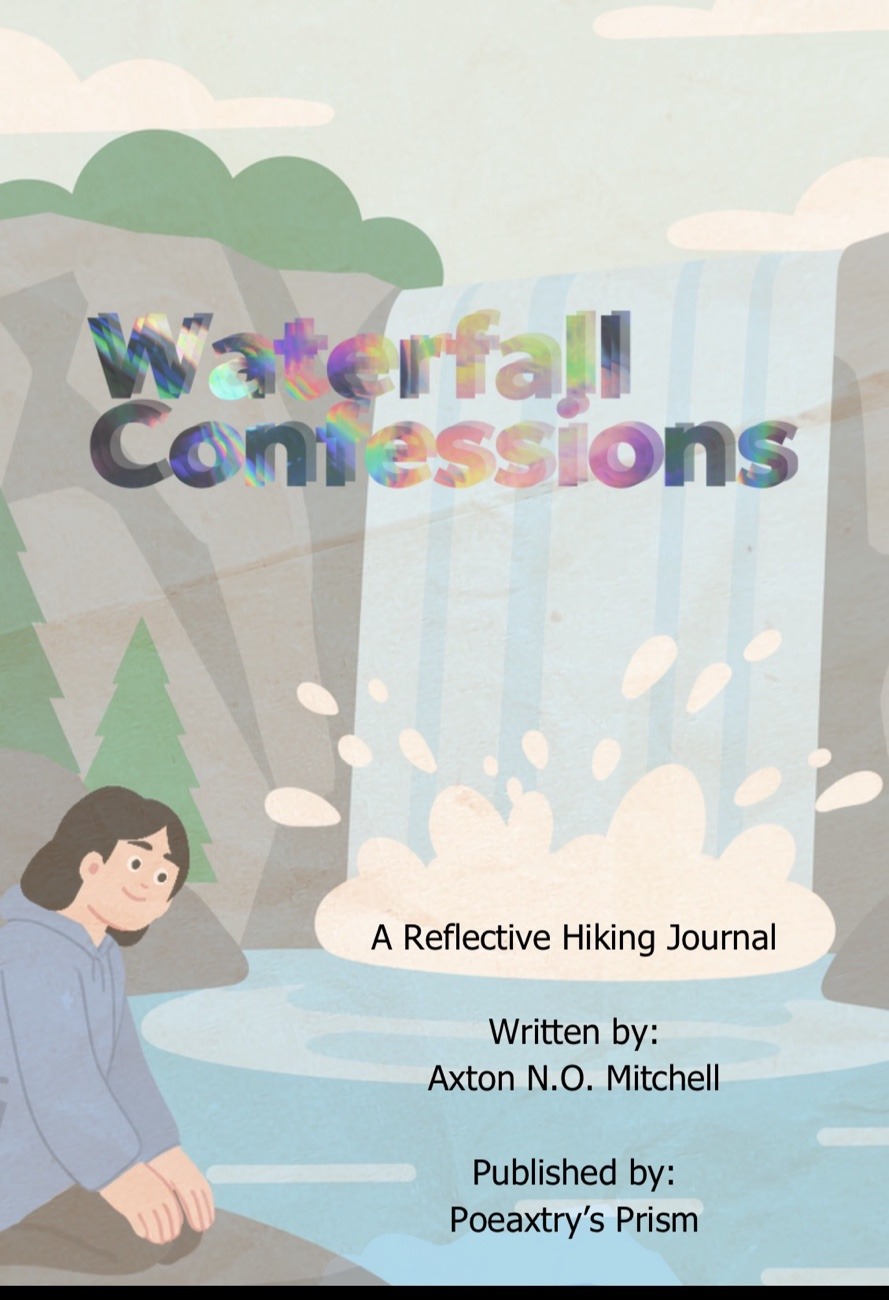
    Nature has a way of stripping back the noise of daily life, leaving us alone with the thoughts we often try to outrun. To help navigate those moments, I’ve created Waterfall Confessions. My independently published digital or printable emotional reflection journal. I specifically designed for hikers, nature lovers, and adventurers that also are in tune with their emotional side, enjoy journalism, wish to work at Overcoming Fear, or want to explore the more emotional side of themselves .

    Whether you are deep on the trail or reflecting from your favorite chair at home, this journal provides a dedicated space for you to unpack it all. A space in the back exists so you can log your location after you process the internal landscape on the pages inside. It is currently available for $2.00 USD on Etsy, Gumroad, and Payhip.

    IFYKYK; We do not hike to outrun our ghosts; we hike to find a space wide enough to finally walk betide them.

    Below, I am sharing my own response to one of the prompts included in the collection.


    My Journal Entry

    The Setting:

    Brandywine Falls, CVNP (12/19/2025)

    CVNP brandywine Falls Winter 2025 Overcoming Fear

    The world was draped in a heavy blanket of snow and ice. My two friends and I were the only souls at the parking lot for Brandywine Falls at Cuyahoga Valley National Park that morning. We moved in a virtual silence that felt sacred. The boardwalk was slick beneath our shoes, and the roar of the falls began to vibrate in our chests long before we left the parking lot. In that cold, snowy silence, the water felt like the only thing alive.

    The Prompt:

    What fear feels louder than the waterfall, even now?

    My Reflection: The Weight of the “Without”

    Standing there, the sheer volume of the water is usually enough to drown out everything. But for me, the thing that remains louder than any cascade is the grief of the last four years and the daunting realization of the years to come.

    It is the pain of doing everything without my mother. Every milestone, every quiet hike, and every struggle I face from here on out is shadowed by her absence.

    Grief is much like a winter waterfall: it remains loud and powerful even when the rest of the world has fallen into a frozen silence.

    When you lose someone that foundational, you find you are no longer afraid of the small things. Hurt feelings or every day normal things don’t compare to this void.

    People say it goes away, but it doesn’t. You simply learn to live with the empty spaces.

    I am trying to learn how to enjoy the moments where the weight feels a little lighter. Grief comes in waves; I’ve realized there is no point in bracing for the inevitable crash while I’m standing in the shallows. I am learning to enjoy the peace while I can. Trying to begin focusing on living with my grief instead of living in it.


    Continuing the Journey

    This is just the first of three reflections I’ll be sharing from this collection. Keep an eye out for the next two prompts, where I’ll dive into different trails and different corners of my heart and maybe yours. This is the first of many emotional reflection journals planned for publishing available for those of us who find our healing in the wild.

    Thank you so deeply for reading and for being part of this creative community. Your support allows me to keep sharing these stories and providing resources for others to share theirs.


    Before you go

    If these words resonated with you, I invite you to share this post with your hiking group or your journaling friends. Or maybe you know someone who finds solace in the woods; this might be the thing they need to start their own journaling journey.


    Links to Buy

    Etsy. Gumroad. Payhip.

    Forum links:

    Trade your honest reviews for digital collections

    Barter & Trade Physical and Digital Items

    Feedback


  • Something is Amiss in the Clinic

    Something is Amiss in the Clinic

    Welcome to the third story in my collection of ten. A night-shift intake nurse at a last-resort psychiatric clinic has seen too much to stay silent. Patients arrive broken. They leave recovered… too recovered. Scars gone. Accents erased. Handwriting changed. Administration calls it breakthrough treatment. The nurse calls it something else entirely. What happens in the sublevels stays in the sublevels. Until now.

    Author: AnonNurse22

    Subject: What “Continuity Treatment” Really Means

    ~~~~~~~~~~~~~~~~~~~~~~~~~~~~~~~~~~~~~~~~~~~~~~~~~~~

    Hello. I have debated posting this for months. My belief in the Hippocratic oath is the only reason I am pressing “post” at all.

    I am writing anonymously because every employee contract here contains strict “information containment” clauses and non-disclosure agreements. I am posting from a burner phone on a public connection. I am no longer certain which coworkers are still the people they once were… or which ones have already been replaced.

    The clinic advertises itself as a last-resort treatment center. Severe depression, treatment-resistant schizophrenia, violent instability, dissociation disorders, anything that frightens families badly enough that they begin using phrases like permanent solution gets routed here. Insurance rarely covers treatment, but government assistance programs often do, which is presented publicly as compassion.

    Patients arrive sedated more often than conscious. Intake photographs are taken under harsh lighting, a neutral expression required, a placard held at chest level displaying a treatment authorization number. I once believed the photos were for identification. Now I know they are used for calibration.

    The building is enormous above ground, yet most of the facility extends downward. Elevators labeled with simple floor numbers continue far past the lowest level shown publicly. Access requires rotating clearance codes. Nurses are not supposed to know them, but eventually every long-term employee does.

    The first thing that unsettled me was recovery speed.

    Patients diagnosed for decades, people whose files filled entire storage shelves, were discharged within weeks. Families cried, hugging them, thanking staff for miracles. It is easier to believe in medical breakthroughs than in something else.

    Still, details would not sit quietly.

    A woman admitted for chronic self-harm returned from a restricted procedure wing with both forearms unscarred. Not healed, not faded, simply never injured. Her intake photos showed years of damage. The discharge photos did not. Administration labeled it “archival image corruption.”

    A man with a strong regional accent returned speaking in a flat, locationless cadence. His parents laughed nervously and said he sounded “healthier,” repeating the word several times as if reassuring themselves.

    Handwriting samples changed. 

    Allergies disappeared. 

    Dietary restrictions changed entirely.

    I was told psychological healing causes behavioral shifts. That explanation might account for personality changes, but not anatomical ones.

    One night I escorted a sealed cart to Sublevel C. As the elevator descended, the air grew warmer, faintly metallic. The corridor lights hummed in a way that pressed behind my eyes. Doors were numbered but unmarked. The staff there wore lab clothing without institutional logos.

    A door opened briefly as I passed. Inside, I saw a patient I recognized from intake lying unconscious under surgical lighting. Standing beside the table was another person identical to them, freckles in the same pattern, breathing slowly, surrounded by monitoring equipment.

    I convinced myself exhaustion causes hallucinations. For several nights I repeated that explanation.

    Then I began noticing the containers.

    Large refrigerated units arrived overnight labeled “nutritional reclamation product.” No outside vendor appeared in our supply logs. Everything was processed internally.

    One evening a container seal failed during transfer. A dark fluid seeped along the seam and dripped to the floor. The smell reached me first, warm, heavy, sweet in a way that did not resemble spoiled meat, something fresher than that. My stomach turned so violently I had to brace myself against the wall, swallowing repeatedly just to remain standing. No incident report was filed. Within minutes the floor was sanitized. By the next shift, there was no record anything had spilled.

    Later, passing an open processing room, I saw stainless tables, grinders, packaging lines, portions weighed and vacuum-sealed with distribution codes that matched the cafeteria shipment logs exactly. I made it to a stairwell before vomiting.

    The realization came weeks later in the cafeteria. I was eating halfway through a meal before noticing the same faint sweetness beneath the seasoning, the same metallic aftertaste I had smelled in Sublevel C. I stopped chewing but could not immediately spit it out. That hesitation still makes me sick when I remember it.

    A month after my first visit downstairs, my badge was quietly granted temporary clearance to Sublevel D. I had not requested it.

    Sublevel D resembles a manufacturing floor more than a hospital. Technicians monitor screens comparing biometric data between two bodies at once. The word synchronization appears constantly. Patients are heavily sedated.

    From a storage alcove I watched a patient’s biometric profile scanned while an identical body was adjusted by surgical teams. Skin tone corrected. Posture aligned. Minor asymmetries removed. Only the second body opened its eyes.

    Beyond that wing, a temperature-controlled corridor receives the same refrigerated carts I had seen upstairs, full when entering, lighter when exiting. Intake averages over one hundred patients per month. Cafeteria distribution output matches the caloric yield almost exactly. Nothing here goes to waste.

    Later that week, I saw the same “recovered” patient discharged to waiting family members.

    Consent forms exist. They are titled Radical Continuity Treatment Authorization and buried beneath routine procedural signatures. A technical appendix outlines “resource reclamation following biological redundancy.”

    Some patients do not understand what they sign. Some are too sedated or pressured. But some know exactly what the procedure entails. I have seen patients request it, writing letters explaining they are glad the version returning home will be “the one you always hoped I could be.”

    Staff are trained to use precise language: pre-treatment individual, post-treatment individual. No administrator ever says the word death. On paper, the clinic has none.

    Leaving employment triggers mandatory cognitive exit evaluations. I have seen coworkers depart and return days later calmer, quieter, their clearance photos showing minute facial adjustments I cannot unsee.

    If this post disappears, assume monitoring extends further than policy states.

    There is one more thing people should understand.

    The individuals who return are not flawed copies. They are optimized. Emotional volatility dampened, compliance increased, distress responses reduced. Families describe them as happier, easier, finally themselves. The phrase repeats constantly.

    The people who entered the building do not leave it.

    My shift begins again in two hours. Tonight’s intake authorization list includes a name I recognize, a senior nurse who trained me when I first arrived. Their clearance level was higher than mine last week. The system now lists them as approved for continuity treatment.

    If further updates appear, I still have access. If they do not, and someone you love returns from treatment smiling too evenly, standing a little too still, eating without ever asking what is being served, remember this:

    Recovery and replacement look identical from the outside.

    — Anon Nurse 22