Tag: geology

  • Winter Quiet at Conkle’s Hollow: Gorge Trail Snow-Covered Hike

    Winter Quiet at Conkle’s Hollow: Gorge Trail Snow-Covered Hike


    Wide of the creek you cross to get to the gorge and rim trail heads.
    ❄️

    The Walk

    On December 4, 2025, I dramatically layered up. I’m saying multiple layers, coveralls, a heated jacket, hiking shoes, 3 pairs of socks, multiple sweaters, and more! Then I headed out the lower gorge of Conkle’s Hollow State Nature Preserve. Of course I had to have friends with me so Skylar, the baby, strapped in. We found something rare… peace. No chatter, no other hikers, just the hush of winter slowing everything down. Literally not one other car at Conkles hollow beside a forest employee is UNHEARD OF!

    We followed the path up to the first waterfall, just past where the concrete path ends. From there the trail becomes rougher. A little too uneven, icy, and rocky. Totally not ideal when you’re carrying or walking with a little one. So we paused the adventure there, grateful for what we saw, and turned back. Safety first, always.

    Axton all layered up, bright yellow jacket and jeans showing, goofing off in the Grotto at Conkles Hollow in Hocking Hills, Ohio.
    The Grotto

    The gorge in winter has a ghostly hush to it. Frozen trickles, patches of ice along the creek, stones dusted with snow, frost clinging to moss and rock. And we just got a nice bit of snow. To me it felt like walking inside a memory, or a dream. The cliffs loomed high, silent sentinels watching over the narrow floor beneath.

    Even with the smaller hike (1.2 miles), coupled with the 29 degrees Fahrenheit the baby didn’t seem to mind. I felt the weight of quiet, with the kind of calm that demands you slow your breath, and your thoughts. That alone the silence, the cold, the hush, honestly made the hike worth it.

    Even if you account the 5+ feral and ethereal gut wrenching screams I let out. I got the baby to join but Sky wouldn’t even try.
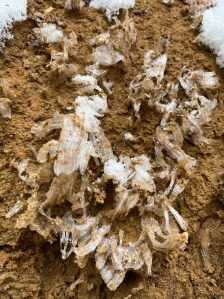
    Frost flowers peaking out of soil and snowfall!
    Frost Flowers

    I only just learned about “frost flowers” earlier in the morning the day of this hike! These are surreal little winter magic flowers. What you’re seeing isn’t a true bloom, but thin ribbons of ice exiled from plant stems. This happens when cold air hits sap‑rich plants while the ground is still warm. Water gets drawn up from the roots, freezes in the stem, cracks it open, and then slowly seeps out and crystallizes in delicate, sheets of ice… fragile and fleeting, often gone by mid‑morning once sun or warmth touches them.

    A Month Ago Rim Trail,

    11/8/2025

    Axton sit's on the edge of a cliff on Conkles Hollow Rim trail

    A few weeks earlier, on November 8 my momma’s death anniversary, and a day I dedicate to celebrating her. Kylie and I walked the rim trail on the top of the rock walls at Conkles Hollow. The contrast between that high, exposed cliff line covered in early Autumn bliss and the now frozen ravine beneath struck hard.

    I remember sitting on a sandstone edge, dangling my legs over the drop, taking in the leaves changing colors for mile in the forest, valley. Up there the wind carried memories, grief, quiet gratitude. Down below the gorge held silence and survival. And I now got to see just how high my seat really was. I basically had to do a backbend to see the top of the cliff from the gorge trail!
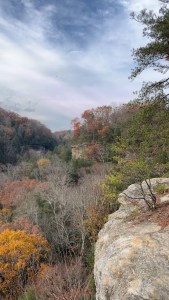
    Conkle's Hollow Rim trail, one of many overlooks boasting autumn leaf treetop views, clear skys, and stone cliffs

    Walking the rim gave me perspective… on loss, on smallness, on beauty. Walking the gorge later with Skylar gave me gratitude… for warmth, life, safety, and the chance to bring new memory into old stone.

    Why Conkle’s Hollow Means Something

    Deeper

    Conkle’s Hollow lies carved into the ancient bed of Black Hand Sandstone. These formed roughly 350 million years ago when this land was under a shallow sea. Over time, sands and silts compressed and hardened. Later Earth’s shifting gave rise to uplift, and water carved deep gullies and gorges into this sandstone. And that erosion sculpted the cliffs and narrow ravines you see today. 

    Cliffs of nearly 200 feet tower above a gorge so tight in places it’s only 100 feet across.  Inside the gorge the micro‑climate supports ferns, hemlocks, hardwood trees, mosses and wildflowers. Deep shade, cool air, damp rock, and sometimes timelessness. 

    The preserve was purchased by the state in 1925, and dedicated as a protected area in 1977. This means these ancient cliffs and narrow depths are preserved, free for folks to walk through and reflect on age and time. 

    What to Know: Tips + Safety for a Winter Baby Hike

    Lower Gorge trail: mostly paved or flat at first, but rougher after the concrete ends. Icy snow and uneven footing make anything past the first waterfall risky when carrying a baby or holding their hand. Dress in warm layers! I had three sweaters, three pants, and coveralls. Under a heated jacket. Hiking shoes with grip are essential when snow or ice coat stones or wood. Stay on marked trails. Cliffs rise high up to 200 feet and rims above the gorge are beautiful but dangerous when wet or icy.  In winter the gorge is almost silent. So no crowds, no summer moisture but, that also means less water from the falls, and colder, steeper, slick-er terrain.
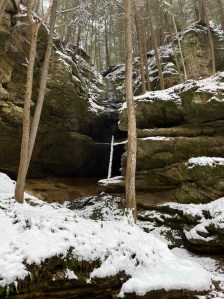
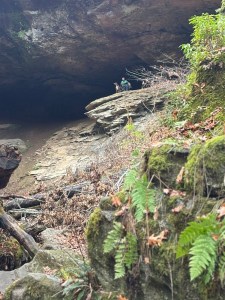
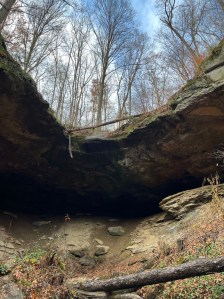
    Caves, cliffs, rock walls, snow, and not one waterfall in sight.
    The “waterfall” pp

    Nearby Trails & Bonus Stops Continue the Hocking Hills Journey

    If you liked Conkle’s and want to wander more in the region, check these spots:

    Cantwell Cliffs State Nature Preserve about 7 miles from Conkle’s Hollow on S.R. 374. Deep gorge, rugged terrain, canyon-like passageways and spring wildflowers. A great “next time” option for us since we had planned to go there before I became starved!

    Rock House State Nature Preserve a “cave” cut into Black Hand Sandstone cliffs. Tunnel‑like, dramatic, offers a contrast to open gorge and rim walks. 

    Good for slow days, clear skies, or scratching your itch for hidden magic.

    Reflection Loss, Life, Little Feet on Old Stone

    Walking those cliffs and that gorge reminded me just how small I am… how fleeting we all are. Rock 350 million years young, carved slow over eons by water and time?! Well now compared to that, my grief and memories feel small.

    Walking with the baby and my buddy down that gorge, past icy stones and silent walls, I felt something bigger. A bridge between the ancient, the lost, and the living. A chance to carve a new memory in the old stones of the world.

    That’s the power of this land. It is timeless but alive. Harsh but beautiful. And it allows you hush your grief into the quiet of a winter gorge, and come out lighter.
    Links Rim trail rock house permits

  • Hiking Salt Fork: A Cave, A Summit, And a Quiet Mind

    Hiking Salt Fork: A Cave, A Summit, And a Quiet Mind

    Planning the hike:

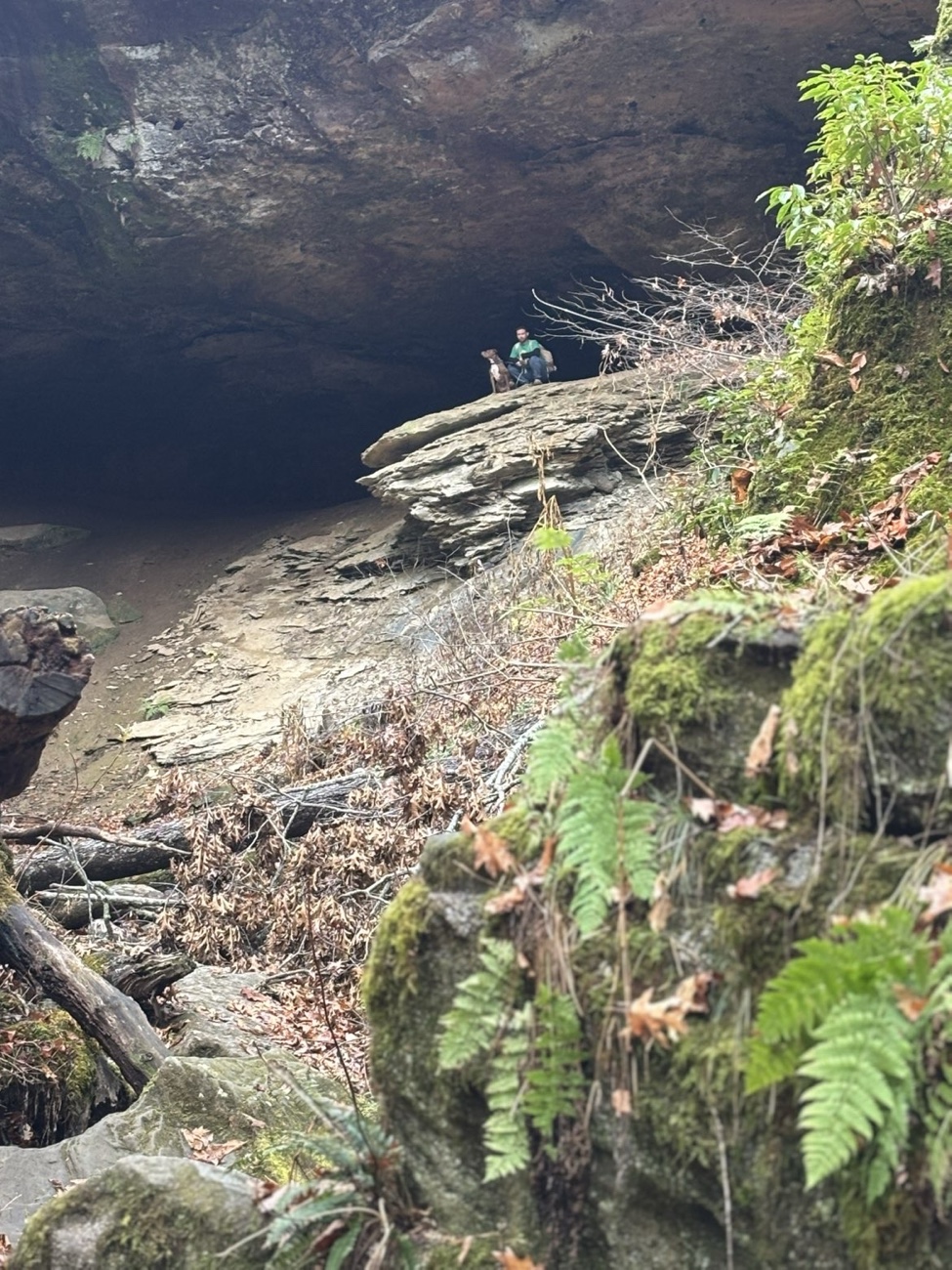
    Man in jeans a hat and a green shirt and his red nosed American pitbull terrier dog onto of a rock in Hosak’s cave.
    Luna and I in Hosak’s Cave

    We set out pretty early considering we got off work at 6am. I left my house and headed to pick up Sky and The baby shortly after 12 noon. We had been planning three hikes. The Hosak’s Cave Trail to warm up. Then Morgan’s Knob Loop for waterfalls and a summit. Finally finishing up with Stone House Loop to walk through history. By the time we came down from Knob loop, though, the sky was reaching beyond dusk. The pine trees formed a tunnel of shadows, and there was no way we could safely complete the third trail. Considering our lack of headlamps and the baby in tow.. we left it. But what we did finish the cave, the climb, and the peace felt like more than enough.

    Exploring the Cave

    Climbing into Hosak’s Cave was like slipping into another world. We ignored the “trail ends here” signs. Well Luna and I did at least. We then pushed past rough sandstone walls, slipped on loose dirt way to high up, and then found a seat up there too tucked just under the cave’s roof. I sat there for a long moment. I felt the rock beneath me, the forest breathing just beyond the cave’s mouth, and the drip of water somewhere i couldn’t quite see. It felt sacred, strong, feral. It was like the stone held stories just for me. It reminded me of Red River Gorge, but quieter, deeper, soaked in stillness.

    The mouth of Hosak’s Cave in Salt Fork State Park Ohio November 2025
    Hosak’s cave

    Morgan’s Knob Loop

    Then came Morgan’s Knob. The trail wound through rooted forest, climbing gently, until it opened up into rocky outcroppings. At the top, the wind and the stone told me a few import things. The fists was that this land was older than all of us. It reminded me time does not rush here the way people do. Before I left thought it added that no matter what people who are different belong.

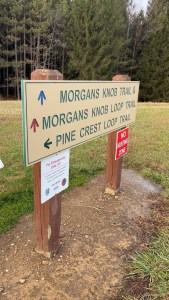
    Morgan’s Knob Loop trail.  trail head sign
    Morgan’s Knob Loop Trail

    Salt Fork State Park: Geology and Geography

    All around us, Salt Fork State Park stretched wide. It’s the largest state park in Ohio. This park covers a massive 20,181 acres roughly of rugged hills, ravines, and ridges.  Its terrain belongs to the unglaciated Allegheny Plateau. Simply put that means the hills and valleys were never flattened by ice. This gives the park its wild, carved feel.  The rock underfoot is sandstone, shale, and siltstone. These formed in ancient layers of Pennsylvanian-age geology.  They eventually erode unevenly over time, forming caves like Hosak’s, cliffs, and even blocks of sandstone that break off and slump down. 

    Salt Licks and Human Use

    The name “Salt Fork” comes from mineral salt springs. The natural licks where animals once gathered.

    Native Americans, including the Wyandot, harvested the salt for food and trade. In the 1800s, settlers drilled wells nearly 450 feet deep to extract brine, which was boiled down into salt for commercial use.

      These salt licks helped shape how the land was used, how people lived, and what wildlife visited.

    History and Local Lore

    Speaking of people, history runs deep here. Kennedy Stone House, built in 1837 from sandstone quarried nearby. Is still standing in the park.  It was built by Benjamin Kennedy, whose family lived there for more than a century.  The house eventually became a museum, preserved by a volunteer group that revived it in the early 2000s.  Local lore suggests Hosak’s Cave was used as a hide-out during the Civil War.  This rocky overhang, as creaky as it looks, has seen more than just hikers.

    Legends and Bigfoot

    If you hike Salt Fork, you’ll find places you wouldn’t expect: meadows, deep forest, ridges, and stream valleys. But there’s also a weird, beautiful piece of legend here. Bigfoot tales swirl through these hills.  According to local reports, more than 36 Bigfoot sightings have been claimed here since the mid‑1980s.  The park even hosts Bigfoot Night Hikes. These hikes are where people walk in the dark, listening, eyes open, hoping for something monstrous and mysterious.  One of the wildest things the park was ranked by USA Today as one of the top “Squatchiest” places in the U.S. 

    The upcoming Eco‑Discovery Center includes a Bigfoot character for environmental education. 

    I for one am totally down for a Bigfoot night hike!

    Native American Stories

    Native American stories, too, speak of the place. According to a geological survey, the Wyandot people used the caves for shelter. They may have harvested salt from the licks.  In certain remote caves, “hominy holes” or pits in the stone used as ovens served as places to bake cornbread.  It’s hard not to feel their presence when you touch those walls.

    Modern Park Activities

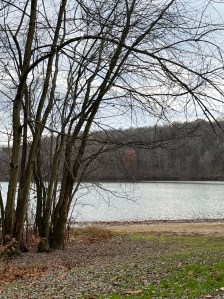
    Autumn bars trees, grass covered in fallen leaves, and a lake view
    Salt Fork Lake

    Today, Salt Fork is alive for modern adventurers. There are 14 scenic hiking trails and six bridle paths.  The lake, made when the Salt Fork Dam was built (completed in the late 1960s), spans thousands of acres. The lake offers boating, fishing, and quiet reflection as common in Ohio lake life.  There’s also a nature center, archery range, miniature golf, and a lodge nestled in the woods.  For families, the park runs a gem‑mining station, where kids sift for semi‑precious rocks and fossils. Which we all know kid or not is RIGHT UP MY ALLEY! Geologically, this place is a gem. 

    Personal Reflection

    Walking Salt Fork felt like walking through time. The cave and rocks held ancient stories. The summit whispered of wind, motivation, moss, and manifestation . The forest pulsed with leaves, legends, salt, and shadow. By the time we left, I carried something soft and heavy. As well as a piece of earth, memory, and wonder.o

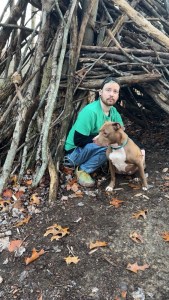
    A man in jeans, a green shirt, and a backwards hat sits with his American Pitbull Terrier near a stick fort on a Morgan’s Knob loop.
    Luna and I near a stick fort on Morgan’s Knob loop.

    Nature as Meditation

    This hike felt different… refreshing, soul‑cleansing still but different. I didn’t think about deadlines or noise. For once my head was full of only leaves and rocks, trees and quiet hours, quality time with nature instead of running amuck. This hike wasn’t about conquering anything. Today was about listening, slowing, and sitting in spirit. Nature held still for us, and we held still for nature.

    Hiking today felt different for me. I wasn’t pushing for a peak, checking my watch, or rushing to do do do. I was quiet. Listening. Letting rock and leaf and shadow hold me steady for a few hours.When we left, I felt lighter but not less.

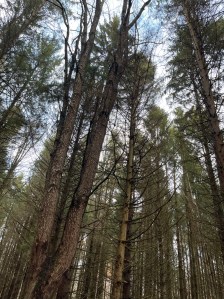
    Evergreen trees and Bare fall trees line the entrance and exit to Morgan’s Knob Loop trail
    The Line of trees guarding the trail

    Fracking and Controversy

    Near the edges of Salt Fork State Park, fracking is no longer just a rumor. This is happening and in a way that worries a lot of people. According to WOSU, the first well pad was built just outside the park boundary, and from there, the wells will go deep underground and then horizontally beneath the park’s terrain.  The process involves pumping millions of gallons of water mixed with sand and chemicals into the rock layers to break them apart and release gas. 

    Environmental groups like Save Ohio Parks argue this isn’t compatible with natural, protected land.  These forests are dense, biodiverse, and some experts say they’re second only to the Amazon for ecological richness. The fracking infrastructure could permanently harm the ecosystem. 

    Water is a major concern. Each frack well could use 4 to 10 million gallons of fresh water, according to the advocacy group.  Some of that water could come from local lakes and streams. Yes, even the waters that feed Salt Fork Lake. Which will then return as toxic wastewater.  That wastewater is often radioactive and must be injected deep underground. Thus raising long-term risks. 

    There have also been safety incidents: in January 2025, a well pad roughly five miles from the park had an explosion.  While no injuries or water contamination were reported, the accident only increased community fears.

    On top of that, dozens of environmental and public‑land groups are calling for a moratorium on fracking in Ohio’s parks.  They argue the dangers are not just theoretical. Let’s be real… the land, water, and wildlife here deserve better than industrial extraction.

    From forest fragmentation, constant truck traffic, night‑lighting, and the risk of chemical or wastewater leaks. The opponents say fracking could permanently change the character of Salt Fork.  

    It’s like an addict injecting poison deep into their veins. They continue hoping it stays contained… yet their body, or the earth, doesn’t always cooperate. Pressure builds, tremors come, and what you inject may seep into places you never intended, or imagined.

    Yet here, in the wild heart of Salt Fork, that reckless injection threatens not just the rocks and streams, but the quiet sanctuary that has lasted for millennia.

    All hiking raw media

    Links. Portfolio. Ko-fi. Twitch.

    One hike. Another hike. A different hike?

  • Buzzard Roost Hike & Serpent Mound: Southern Ohio Day Trip

    Last night I excitedly set my alarms for 7:00am, 7:05am, and 7:10am. I was awake and in the shower by 6:15 am. I set my clothes out and had my hiking sack packed all up before bed as well. Three different charger types, two battery packs, a selfie stick/ tripod, a notebook, sharpie, pens, first aid kit, multiple waters, grinder, cones, jar of weed, flash light, hand sanitizer, and sunglasses in tow. I made it to Starbucks by 7:11am. I typically don’t go there but Sky chose the beverages this morning.

    The Trek Into Edge of Appalachia

    It was a drive of roughly 2 hours and 17 minutes when Skyler, her new friend, the baby, and I hit the road from Sky’s place. Our destination: Buzzardroost Rock Trail, part of the Edge of Appalachia Preserve in Adams County, Ohio. Though many sources list the trail as 4.4 miles round trip with a moderate difficulty, my watch clocked about 6 miles. It maybe the side loops, pauses, and a bit of wandering.

    We arrived to near silence. And only one other car joined us at the lot. The trailhead hosts a small booth run by two men who asked visitors to leave reviews via QR code or by filling a hand questionnaire. I liked that dual option… inclusive, versatile. They are from some organization forgive me for allowing the name to slip.

    The trail winds through mixed woodlands and prairie remnants. You cross several geologic layers: including Estill shale, Lily/Bisher/Peebles dolomites, and Ohio Shale. The preserve’s management protects rare plant communities by asking hikers to stay on boardwalks and overlook platforms. Which we did when I mention wondering around I mean on clearly marked trails to small lookouts and cliffs.

    Elevation gain is moderate, footing can be rooty or slippery, especially after rain . The payoff: when you crest to the overlook, the vista opens wide over Ohio Brush Creek Valley. From that cliff you may spot turkey vultures (buzzards) gliding the namesake of the place. Though I thought it might be have been named because they doo poo on the hand rail at the look out so don’t touch!

    I found a painted rock tucked near the overlook trailhead, with a floral front and a Bible verse on the back (John 3:17). I’m not religious, but the message: “you don’t know what is planned for you.” Was like an echo in that wild place. Yesterday, at Glenford Fort Preserve, I picked up two other painted rocks; I keep them as small tokens of the journey.

    We finished in about three hours including breaks. The trail was clean, the signs clear, and the natural diversity compelling.

    Lunchtime & The Serpent Mound detour

    After the hike we grabbed a quick lunch at McDonald’s not glamorous, but practical. We then drove roughly 35 minutes to Serpent Mound in Peebles, Ohio. This was a perfect mid-return detour. The museum was closed, and the fire tower is under reconstruction, so our visit was limited to the outside paths and overlook.

    Serpent Mound is a prehistoric effigy earthwork shaped like a serpent, extending about 1,300–1,376 feet in length and varying from 1 to 3 feet in height.  Archaeologists have long debated its builders. Early theory favored the Adena culture (~300 BCE) but more recent work suggests possible later reconstruction by the Fort Ancient culture (~A.D. 1000).

    The serpent’s head faces east, often aligning with solar events. And some people believe it marks the summer solstice sunset.  Beneath it lies the Serpent Mound Impact Crater (aka Serpent Mound Disturbance), an eroded meteorite impact structure estimated at ~8 km diameter (5 mi) with an age younger than 320 million years. The unusual geology here likely influenced indigenous peoples’ decision to locate the effigy along the rim. 

    Walking around the coils, tail, and head is haunting. It feels like walking along a living myth, tracing the centuries in soil and stones.

    House of Phacops Rock Shop: Hidden Gem

    A short drive from the mound sits House of Phacops (Alternate Universe Rock Shop) in Peebles, Ohio (29894 State Route 41)  . This shop doubles as a Trilobite Gallery and fossil/mineral store. It’s about 3 miles from Serpent Mound. 

    Tom Johnson, the owner, is well known in fossil circles. The shop features specimens, handmade crystal jewelry, carved items, art, and more. It sits on the southeastern edge of the same impact crater and above a deep fault zone. Some believe this location emits a “positive energy” because of its geology.

    Inside, I scored:

    A small meteor piece which was a free gift. I bought a u.v. glowing chunk of the meteor that struck the mound and a malachite necklace for my sister. I had a Conversation with Ton about his recent trip to mine Herkimer diamonds in New York.

    Seeing that orangutan statue deck to climb was whimsical; it gave a fun, quirky moment in an otherwise earth-heavy day.

    The deck at the rock and mineral gallery in Peebles, Ohio
    I love this awesome find

    Notes on Herkimer Diamonds (for future trips)

    Herkimer diamonds are double-terminated quartz crystals found in Herkimer County, NY. They’re prized for clarity, natural facets, and their “diamond-like” aesthetics. Many rockhounds plan overnight or multi-day trips to harvest them.

    This was one of those travel days that blends the wild, the ancient, and the quirky. Hiking along biodiversity-rich slopes, peering out over hills from high rock, then stepping into time at Serpent Mound, and finally touching pieces of skystone in a curious shop. It all felt like a grounding experience.

    If I go back, I’ll time better: visit the museum at Serpent Mound, climb the reconstructed tower, join a crater geology tour from Phacops, and maybe sneak in an early morning hike to avoid crowds. And yes! I’ll chase those Herkimers next summer.

    If not before then!

    Links portfolio photos coffee

  • Daily Prompt 18 – Do You Have a Collection? My Rockhounding Journey

    Daily Prompt 18 – Do You Have a Collection? My Rockhounding Journey


    Do you have any collections?

    Do I collect anything? Oh, just a few things…

    I collect the Earth, stone by stone, crystal by crystal. Not usually ones bought in bins, but treasures I hound myself. I trade with other rockhounds too, offering my finds for theirs like stories passed between old souls. Some I tumble. Some I slice. Some I slice and tumble or polish. Some I polish by hand until their true colors and patterns shine through like secrets whispered by time.

    You’ll find them transformed into necklaces, keychains, and little “Stoney Homies.” Some are left whole, smoothed and gleaming. They rest on altars, shelves, or windowsills. I carry slag glass with me that glows beneath UV light, found in the sands of Lake Superior. Not all glow from here either. I also have its bluer, non-reactive cousin from Lake Erie. Leland Blue, yopperlites, pudding stones, labradorite, Petoskey and unakite. Jaspers, agates, quartz, flint from Nethers Farm on Flint Ridge (some sparkling with quartz inclusions).

    Hiking = Hounding

    Every hike becomes a hunt for treasure. Every shoreline offers gifts. I have a special UV map for the Great Lakes region. I use a 365nm light to spot the glow in the dark. Chisels, buckets, hammers, even an old 1970s Sears tumbler join me in this ritual. I can tumble up to 14 lbs at once, and still find joy in spending hours hand-polishing just one stone.

    Alongside the rocks come ancient echoes. These include crinoid fossils, coral fossils, and brachiopods. Some are cleaned and gently polished, while others are left mostly raw. Nature’s memory is preserved in stone.

    So yes, I collect.

    But not just rocks

    I collect moments, beauty, and the deep magic of the Earth itself.


    If you want to explore the physical and digital side of Poeaxtry, the stores are always open. Physical items like handmade pieces, ritual tools, and select creations live only on Etsy. Digital books, zines, and downloads are available through Gumroad, Etsy, & Payhip. As well as some being available on Kindle & Amazon. Same hands clicking keys across all, just different formats for different hands, needs, and screens.


    links