
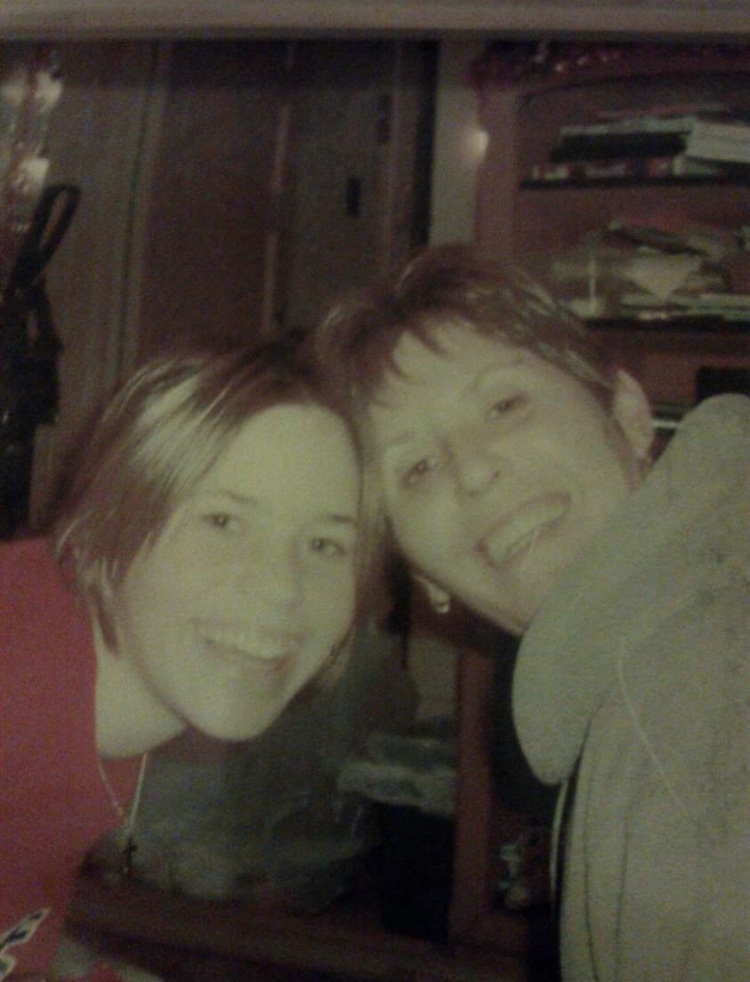
Sleepless Nights and Haunted Dreams
I haven’t been sleeping very well since mid‑October. Not from tossing and turning, but because my nights have gotten populated by fragments of her dead, walking through scenes that don’t make sense. I know she was cremated. My brain knows that. My dreams don’t care. They hand me versions of her that are wrong in small, cruel ways, and I wake up hollow, disoriented, and exhausted.
Usually I don’t remember my dreams. That had always felt like mercy. Now the dreams are sharp,enough to cut me out of the fabric of my sleep. A physical reaction to what I know can’t be real. I would trade anything to stop carrying them into daylight . They are grotesque and tender in the same breath. Sometimes a dream turns ridiculous.
Kelso as some “boob‑head” character, storming heaven like an absurd hero to bring her back. You know the boobs stayed as a stubborn, surreal trophy. I laughed when I woke from that one at noon when I should have been sleeping for work. This is ugly, honest, and necessary. Humor slides under grief like sunlight through cracked glass. And it doesn’t fix anything, but it convinces you for a second that you’ll survive the next hour.
Facing the Anniversary and Birthday Blues
Saturday, November 8th is the fourth anniversary of her death. My birthday is November 16th. Those two dates sit like magnets on the calendar and pull at everything around them. People say time heals, but time just rearranges the edges. The hole stays, and never really goes away. The fall light grows brittle and memory gets louder. The anniversary reopens the wound; the birthday asks me to pretend there’s room for celebration when there’s barely room to breathe.
Some years I was prepare with self care and such things. As if lighting a candle, walking a trail she loved, and writing a letter I never intended to send was better. Others, I keep the day hollow and move through it like a ghost that has learned to mimic presence. This year the dreams have made it worse: they throb up from sleep into waking, so the days (I work nights) feel longer and the nights feel thin.
The Only Constant in Nearly Thirty Years
My mom was my base code. For almost thirty years she was my first and fiercest believer. You know the person who read my early poems, who clasped my hands and told me to keep going when I wanted to hide. She was not only a supporter; she was the architecture of my risk. She taught me to put words out into the world, and to take the small, stupid leap that turned into Poeaxtry_. Without her, I’m not convinced I would have trusted that anyone needed the corners of my voice.
Losing her didn’t just remove a person; it removed orientation. There are empty chair conversations, and moments when I start to share a small victory and realize there’s no one there to make that face I used to chase: the proud, slightly embarrassed, always‑loving face. I carry her in the choices I make now. She’s in every collab I push for, the minority voices I refuse to let slip, and the low‑cost entry points I design. She believed access mattered. Those are her fingerprints on everything I build.
Dreams as Mirrors of Grief
Dreams become a theater where loss rewrites itself nightly. Sometimes she appears whole and familiar; sometimes she’s an impossible version that breaks my chest open. When my subconscious stages the Kelso quest, ridiculous, cartoonish, oddly tender. I saw how the mind tries to make sense of an impossible absence. There’s grieving and then there’s surviving. Your brain will invent a plot if it thinks it can get you through the night.
Those surreal bits matter. They remind me that grief is not a problem to be solved. And is a presence to be navigated. The dream logic is vulgar and honest: it says, if I can’t have her back, then let me at least laugh at my ridiculous attempt to smuggle her home. That laughter is not betrayal. It’s armor.
Laughing, Crying, and Writing Through Loss
Writing has been the only honest map I possess. Pouring the ache into lines gives my grief shape; sharing the lines gives it witness. Public writing didn’t start as strategy. She passed away and I hadn’t done it yet. So it started because she pushed me toward it even in death. She would read my messy poems and she always insisted they mattered. She was the one who taught me to put emotions in my words. So I write because she taught me; I publish because she believed it was worth the risk.
There’s a thin, fierce purpose that comes from turning grief into craft. That is this: every poem, every collab, every free spotlight I give a marginalized voice is a way to keep her impulse alive. She taught me to make room at the table. I try to make that room as wide and stubborn as she would have wanted.
The Weight of Absence and the Persistence of Love
The absence is heavy, but it is proof. Proof that something true was there. The ache is the mirror of what I had: it indicates depth, not failure. I miss the private conversations, the small practical kindnesses, the ways she was present without trying to be noticed. Missing someone who was your constant is also learning to carry them differently. You see she is in policy decisions for the collabs, in the language I use when I offer critique, in the empathy that underpins how I run things publicly.
Grief shapes you into a different steward of your work. I find myself patient with voices that are less polished, insisting on publication for those a gate would have stopped. That stubborn inclusionism is a living tribute.
Carrying Her Presence Into Creation
This November has been the sharpest yet. The anniversary and the birthday will land, and I’ll meet them the only way I know how: by making something that outlives the day. I write because she told me to. I run Poeaxtry_ because she imagined I would. I build community because she taught me generosity wasn’t optional.
I can’t call her. I wish I could. I can’t ask what she thinks about the newest collab. I can’t show her the little victories and expect that laugh that makes everything feel both ridiculous and necessary. But I can work. I can create spaces for the marginalized voices she would have defended. I can keep her first faith in me alive with every small, defiant publication.
For now, that has to be enough… because it is after all, all that I have.


