
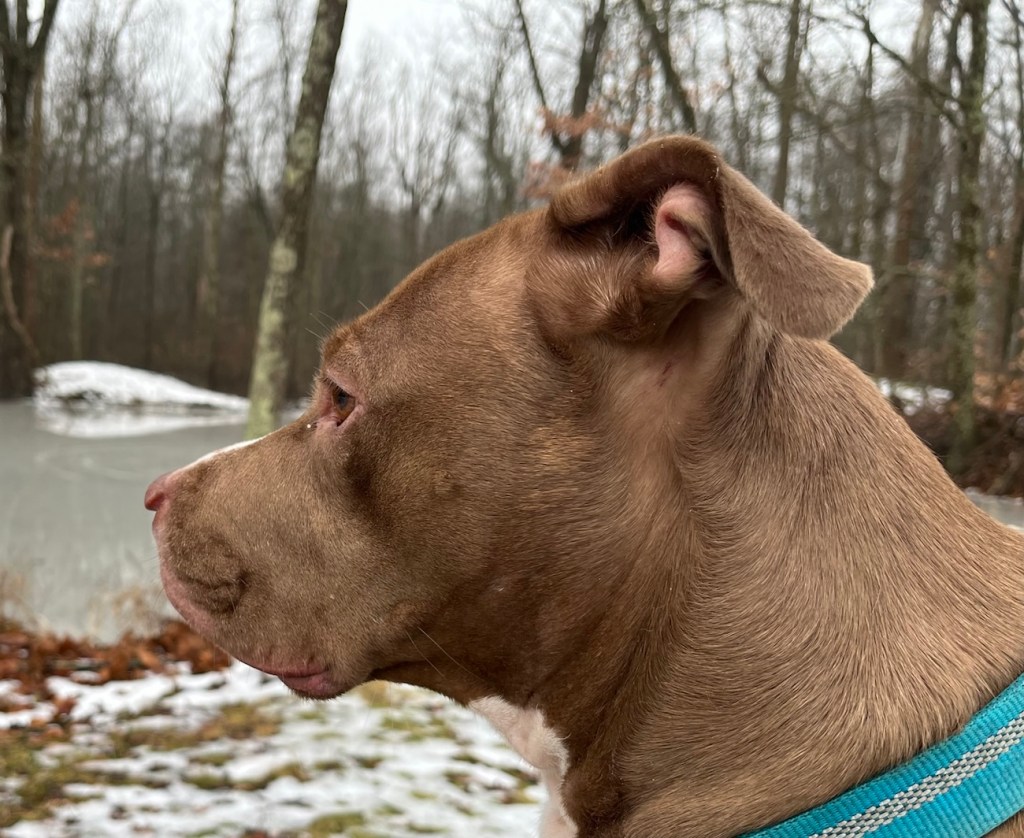
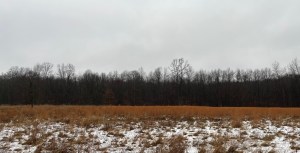
On January 6th, I walked the Flint Ridge to the Creek Trail, a modest distance, just under two miles, but heavy with time. This was not a mileage day, it was a listening day. Winter had stripped the woods back to their bones. No leaves to soften the view, no green distractions, no canopy to hide the land’s shape. Just stone, bark, frozen ground, and the quiet pressure of cold air sitting against the skin.
January in central Ohio does not ease you in. The air was sharp without being cruel, cold enough to keep the trail firm and the mud locked in place. A thin crust of frost clung to shaded patches, crunching under my crocs. While open stretches stayed dry and reliable. Wind moved lightly through the ridge, not howling, just enough to remind you that winter was in full effect. And she was paying attention. This coldness rewards preparation and punishes distraction, gloves on, layers balanced, breath steady.
Location, Location, Location…
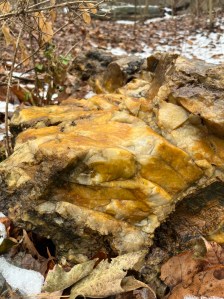
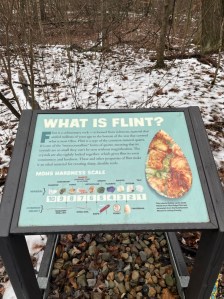
Flint Ridge sits in Licking County, Ohio, preserved today as a State Memorial. Long before trail markers, paved lots, and signage, this ridge was one of the most significant prehistoric flint quarry sites in North America. For more than 10,000 years, Indigenous peoples returned here again and again to extract flint. This stone is prized for its durability, predictability, and clean fractures. Projectile points, blades, scrapers, and tools made from Flint Ridge flint have been found across much of eastern North America. This is evidence of vast trade networks and migration routes that existed long before colonial borders or state lines.
Geology
The geology is the reason the ridge exists at all. Layers of Mississippian-age limestone hold dense seams of high quality flint, exposed through erosion and time. What you see today, shallow pits, uneven ground, subtle rises and dips, are not random. They are the physical record of careful extraction methods repeated across generations. These are not careless scars. They are marks of knowledge, restraint, and survival.
Trails
Walking this trail in winter makes those features easier to read. Without undergrowth, the old quarry depressions stand out clearly, small bowls in the earth that catch shadow and light differently. You are not just walking through woods, you are moving across an active historical document. This one was written in stone and absence.
The Flint Ridge to the Creek Trail begins near the quarry landscape and gradually descends toward water. The grade is gentle, approachable for most hikers, and well suited to days when you want presence over push. Underfoot, the ground feels distinct, firmer, and rockier in places. Almost, as if the land is reminding you what it is made of. Dogs and kids are welcome. Though the trails aren’t exactly ADA accessible, there is a nice-paved part with educational sines and a museum.
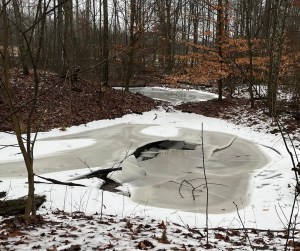
As the trail drops, sound becomes more noticeable. Water moving beneath thin ice, then opening up again, a distant-low conversation that cuts through the quiet. The creek is not wide or dramatic, but it anchors the hike. Stone and water have always worked together here, shaping tools, shaping trade, shaping movement.
Dogs

As mentioned, it is a dog friendly trail. Though, hiking it with a dog in winter adds another layer of attentiveness. Leashes are required, and for good reason. The terrain is uneven in spots, and the historical features deserve protection. Winter conditions also mean watching paws for ice buildup and cold exposure. I always make Luna don booties. You need to remember water even when temperatures are low. Always stay alert near the creek edge. The trail length makes it a solid outing for dogs who enjoy exploration without overexertion, especially on colder days.
Ethics
Flint Ridge State Memorial is a protected site, collecting flint or removing natural materials is prohibited. This matters. Rockhounding ethics are not optional here. The ridge has already given enough. The act of leaving everything where it lies is part of respecting the thousands of years of use that came before modern recreation.
More trail traits
The trail itself is well-marked and easy to follow, even in winter. Foot traffic keeps it visible, and the shorter distance makes it accessible while still feeling meaningful. This is not a destination built around spectacle. There is no overlook designed for photos, no dramatic payoff at the end. The reward is cumulative, built step by step. The pieces of flint and quartz you see along the way, and the history.
More trails and things to see
Flint Ridge State Memorial also includes additional trails and an interpretive center. Education here goes deeper into the archaeology, geology, and cultural significance of the site. Even without stepping inside, the land teaches quietly. It shows how landscapes hold memory, and how walking can be a form of respect when done intentionally.
This January hike did not need distance to feel complete. Just under two miles was enough to feel grounded, slowed, and centered. Winter sharpened the experience, stripped it down to essentials. Stone. Water. Breath. Time.
If you hike Flint Ridge, go gently. Stay on trail. Keep dogs leashed. Leave what you find. Let the ridge speak for itself. Bring your kinds and educate them. The story is already there, layered beneath your boots, older than any of us, and still very much alive.
Want to explore more?
Visit Poeaxtry and the Prism’s Archive Cheat Sheet. Discover all post categories, with a blurb and link to full post archive for each. Then find every post in that category in chronological order.


