A stranger offers you one wish, but it must be selfless: what do you wish for?
Answer / Reflection:
If I could make one selfless wish, it would be for equality, freedom, and equal rights for all humans everywhere. In a world so divided by wealth, power, and privilege, imagining a reality where everyone has the same opportunities, protections, and freedoms is not just idealistic… it’s essential.
Equality isn’t about giving everyone the same thing; it’s about removing barriers that prevent people from living fully. Freedom isn’t just the absence of oppression… it’s the ability to pursue one’s passions, speak one’s truth, and exist without fear. A selfless wish like this could ripple across generations, changing lives in ways no single person could imagine.
This wish may not be simple, but it’s universal. It’s for the person struggling in silence, the family denied rights, the communities still fighting for recognition. It’s for the world we can choose to create if empathy, justice, and courage guide us.
Selfless wishes force us to look beyond ourselves and consider the collective good. Asking, “What would I wish for if it weren’t about me?” challenges us to imagine a better world, and more importantly, to work toward it in our everyday lives. Today, my selfless wish is equality, freedom, and equal rights for all. And a reminder that change begins with vision, empathy, and action.
If a stranger offered you one wish but they told you it had to be selfless what would you wish for? Make your own list and tag me or tell me here in the comments.
National Coming Out Day isn’t just about one announcement. It’s about every version of ourselves we’ve had to reintroduce to the world and to ourselves.
This is Part 2 of my coming out story. The first time, I came out as a lesbian. This time, I came out as me.
The Second Time Someone Saw It Before I Did
I was 19 when I met an out trans man for the first time. It was at a wedding, and he came up to me like he already knew something I didn’t.
He said, “Oh my god, it’s so cool to meet someone like us in public.”
I glitched. I remember thinking, What does he mean, “like us”? I didn’t think he was right, but I also couldn’t stop thinking about it. I wasn’t aware he was trans I just saw a cis man and I was so confused.
It was one of those moments that doesn’t make sense until years later.
The Quiet Realization
Fast forward to when I was 21. I was in an online community space surrounded. This man was filming a Q&A video, answering random questions, when it just… hit.
I started asking the influencer questions about t and transitioning etc.
And I thought, Wait a minute. Maybe that guy was trans at the wedding.
I laughed it off at first. Said thing to myself like, “No, bro.” But, Deep down, I knew something had shifted.
That’s when I realized: I wasn’t a lesbian who looked masculine. I was a trans man who had finally found the words for what had always been there.
Transition and Transformation
At the time, I was in a long-term relationship with a lesbian partner. I didn’t say anything right away. I didn’t feel like I had the space to explain myself.
My identity wasn’t up for debate, and it didn’t need validation to be real.
A little while later, I moved to Las Vegas, started testosterone, and began living fully as myself. Two years after that, I got top surgery.
Now, I’ve been on T for almost 11 years, and post-op for nearly 9.
No spectacle. No huge reveal.
I just made a post, changed my name everywhere, and kept living.
Coming out as a trans man wasn’t some cinematic event. It was quiet, steady, necessary.
It was me updating my social media, me existing without apology, me living a truth that had been simmering under the surface since long before I even had the language for it.
Every year on National Coming Out Day, I think back to both moments. To the young girl who came out as a lesbian, and the man who came out as himself.
Both were acts of courage. Both were survival. Both were me.
Coming out isn’t a one-time performance. It’s a lifetime of peeling back layers until you recognize yourself: fully, completely, without shame.
I came out twice.
Once for who I loved.
Once for who I am.
And both times, I chose to live.
Because that’s what coming out really is. It is choosing life, truth, and freedom, again and again.
In eighth grade, I told my best friend at the time that I had to tell her something. Before I could even say it, she looked at me and said, “What, you like girls?”
No duh, me too.
That moment was my quiet entry into honesty. It was not a big speech, not a dramatic scene, just truth spoken aloud. I told a few other friends. Most didn’t care, one freaked out a little. You know, the classic “ew, we slept in the same bed!?” comment. In my usual fashion, I just told her, “Yeah, no shit. Doesn’t mean it was anything weird. Just because I’m gay doesn’t mean I’m into all girls.”
It wasn’t some grand parade or rainbow banner moment. I just stopped hiding it from all my homies.
High School and Small Town Silence
I grew up in small-ass Martins Ferry, Ohio. A tiny town, tight gossip circles, everyone knowing everyone’s business. I graduated in 2010, and there were maybe three out lesbians in my class. The rest were “straight in public” or “hush-hush about it.”
I wasn’t loud about my sexuality in high school. But the moment I was no longer a student, I made my Facebook and MySpace say “interested in women.” No more hiding, no more pretending. Just existing.
Family Reactions and Reality Checks
My mom’s best friend was a lesbian who came out in the early 1980s, so she didn’t have much to say beyond not wanting it “broadcasted” to my little sisters. They were nine at the time. But my younger cousins told them. It wasn’t like they knew better.
One sister said she didn’t care. The other said “ew,” but she got over it fast enough. Kids echo what they hear. And they learn what we show them.
But there was one adult man, a friend of my mom’s. He was much older than me, always joking that he’d “take me on a date when I turned 18.” Everyone would laugh like it was harmless. I knew it wasn’t.
Sure enough, once I turned 18, he messaged me on Facebook asking me out. I told him, “Dude, I’m with my girlfriend. I’m gay.”
He flipped out, said I “lied” instead of just saying no. But I wasn’t lying. I was telling the truth, my truth. But he just couldn’t handle it.
Looking Back on Coming Out
Back then, coming out wasn’t about attention or pride flags. It was about not lying anymore. It was survival in small-town Ohio. And being honest even if nobody clapped for it.
When I think about National Coming Out Day, I think about that moment in eighth grade. The one where I said, “Yeah, I like girls.” I think about every time after that when I had to say it again. Whether that was to friends, to family, to strangers who thought they had a say in it.
This is Part 1 of my story… the first step in a much longer journey.
Part 2 will come later today. It’s about when I came out again, not as a lesbian.
Because coming out isn’t one moment. It’s a lifetime of moments: each one a little braver, a little louder, a little more you.
Today, on National Coming Out Day, I remember that younger version of me. Who was scared, quiet, and honest anyway. The one who chose quiet truth in small towns where everyone knew your name.
I came out as a lesbian first. I came out as myself second. Both are chapters worth telling. Both matter.
Because every story of coming out whether it’s whispered, shouted, or written down… reminds someone else they’re not alone.
If you had a million dollars to give away, who would you give it to?
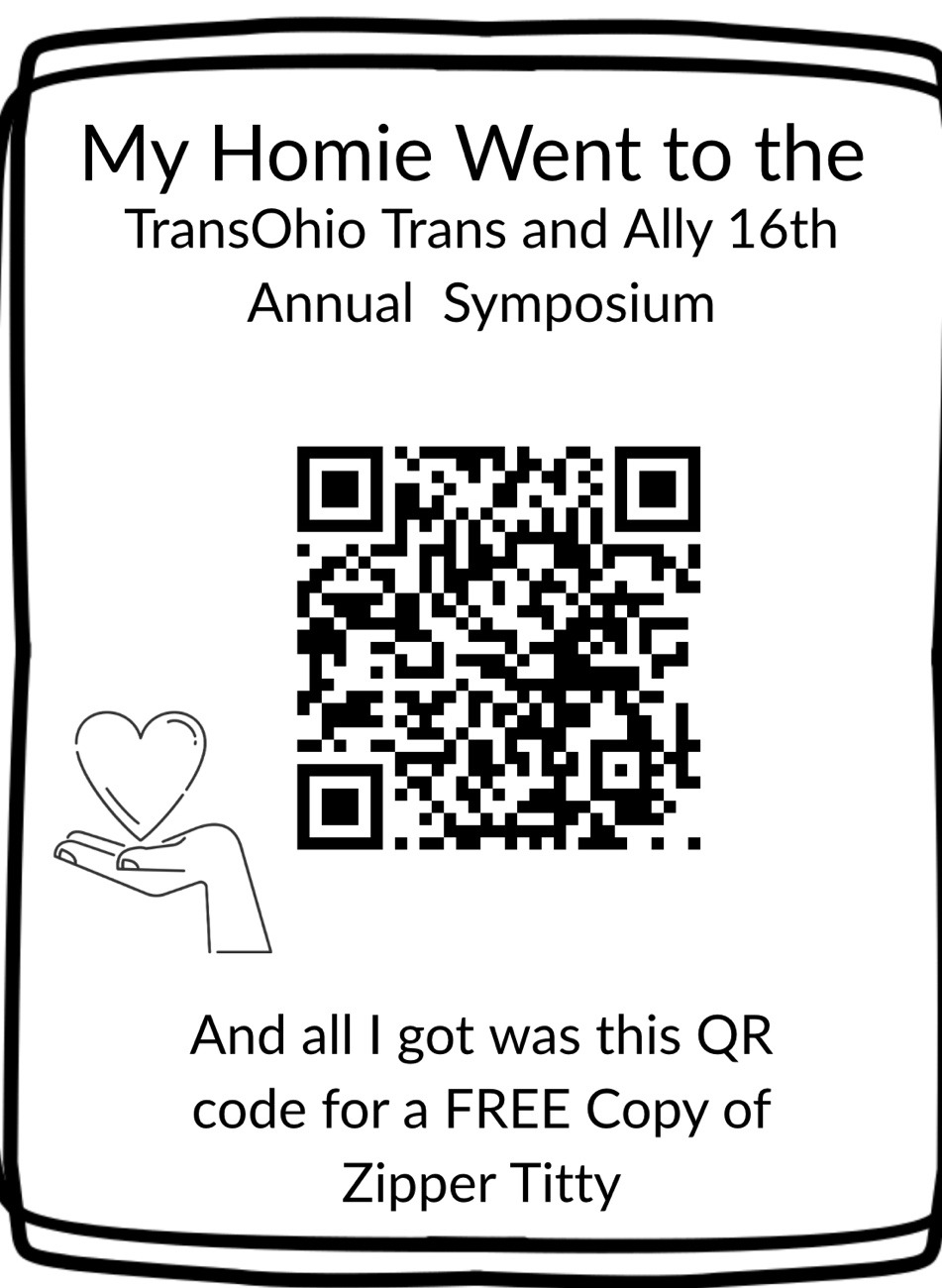
Use this code of your free copy! Just for reading this post!
If I had a million dollars to give away, I wouldn’t hesitate… every cent would go to TransOhio and other transgender nonprofits across America. Right now, the political climate in the U.S. is hostile toward transgender people, with countless bills attacking trans rights, healthcare access, and youth protections in multiple states. Organizations like TransOhio are on the frontlines, offering essential resources, advocacy, and legal support to protect transgender lives.
Funding these nonprofits isn’t charity. Yet, it’s a critical investment in human dignity, equality, and survival. Transgender communities face systemic discrimination, harassment, and targeted legislation designed to erase their rights. But by supporting them financially, I can help provide safe spaces, mental health services, legal defense, and community programming that keeps trans individuals (like me) and families alive, thriving, and visible in society.
Giving to trans nonprofits nationwide also amplifies a ripple effect. Every local program, educational workshop, and advocacy effort contributes to a larger movement resisting oppression, dismantling misinformation, and fighting for civil rights. In a time when politicians and legislators increasingly threaten trans existence, this support isn’t optional… it’s necessary.
So… if I had a million dollars, it would fuel the fight for equality, safety, and community. TransOhio and other trans nonprofits deserve more than just recognition. And they deserve tangible action. So, I’d use that money to make sure their work can continue, expand, and protect those who need it most.
What aspects of your cultural heritage are you most proud of or interested in?
Heritage shapes who we are, connecting us to the past and guiding how we see ourselves in the present. For me, my cultural background includes both Native American and Polish roots. I feel they each offer a unique perspective and sense of identity. Exploring these lineages has been a journey of pride, curiosity, and reflection, even when faced with challenges in learning about them.
Native American Heritage:
My Native American lineage comes from my father’s side, and it’s the part of my identity I feel deeply connected to, even though I’ve had limited access to family knowledge. My dad’s mother was fully Native American, but I don’t know the specific tribe or much about the traditions she may have practiced. She passed from liver related illness when my dad was very young. Also, if you didn’t notice, I don’t speak to my father, connecting with this side of my heritage has been a challenge.
Still, I’m proud of this lineage. I am fascinated by the culture, history, and values it represents. It inspires me to learn independently through research, books, and online resources, seeking to understand and honor the heritage that is uniquely mine.
Polish Heritage:
On my Polish side, I have a clearer connection. Both my great-grandmother and grandfather were fully Polish, and I had access to stories, traditions, and family memories that enrich my understanding of this heritage. I could speak fluent polish up until the age of 14. My “butchie” passed and for me that was unrealistically out of know where. I had not yet seen death. I think because of this I somehow repressed the majority of the language we spoke together.
Anyway. I am proud of the resilience, values, and cultural richness passed down through generations. From Polish customs to the shared family narratives, this helps me feel rooted and connected to a broader story beyond my immediate experience.
Reflections on Heritage and Family:
Exploring both lineages has highlighted how family dynamics can impact access to heritage. Some family members I know are not closely connected to older generations or to those who have passed, making certain knowledge difficult to retrieve.
Even with these limitations, I feel a sense of responsibility to honor both my Native American and Polish heritage. These experiences have taught me that heritage is not just about knowing every detail, it’s about curiosity, pride, and intentional exploration of the traditions, stories, and values that shape us.
Learning about and celebrating my Native American and Polish roots has been a meaningful part of understanding my identity. Even when access to family history is limited, cultural heritage offers a path for self-discovery, connection, and pride. Whether through independent research, storytelling, or embracing family traditions, I am committed to honoring both lineages and sharing the lessons, values, and beauty they bring into my life.
Lately, I’ve been thinking about what I need more of. And not in the material sense, but in the marrow of my days. The kind of “more” that fills, steadies, and fuels. The kind of “more” that shapes a life worth remembering. It’s not about excess, it’s about abundance in the things that matter most: trails, laughter, waterfalls, family, community, creation. These are the moments that root me, the pieces of life that remind me why I keep pushing forward.
I want more Ohio winding trails, through forests, hills, and hidden ridges that still call my name.
The backwoods bonfires, with sparks lifting like prayers into the dark.
Then of course more s’mores, sticky fingers and laughter mixed with smoke.
Relaxing trips to the lake, the sun reflecting on ripples like glass.
That leads to more camping trips, with the quiet hum of crickets and the steady breath of earth beneath me.
I’m a sucker for a waterfall, tumbling like time itself.
And I could use more kayaking, with my arms burning but spirit alive.
I’d love time with Kelso, their presence steady as a compass.
And time with my sisters, weaving memories out of ordinary afternoons.
I’ll always want time with my mom. May she rest in paradise. Though, I am carrying her in every quiet moment, every place where the wind sounds like her voice.
I want more of these moments because they are the anchors: where the noise quiets and the core of living rises up clear. Trails, rivers, bonfires, and late-night laughter don’t just fill time; they carve it into memory. They remind me I’m not just moving through life, I’m part of it… woven into the forests, the water, the people who walk beside me.
I want more because “more” isn’t greed, it’s gratitude. It’s choosing to multiply the things that heal instead of the things that drain. More connection, more earth beneath my boots, more stories written in smoke and stone. These are the things that make the days stretch wide and give me the energy to keep pushing, keep creating, keep fighting for the world I believe in.
The list Continues:
All this make me want More sunrises on trailheads.
And then sunsets bleeding across horizons too wide for words.
I wish for journals filled, ink poured like rivers of thought.
I’d love a good rockhounding trip, uncovering pieces of the earth’s hidden heart. UP MICHIGAN is always on my list!
I want advocacy, protests, standing up when silence would be easier.
And More poetry read aloud, words stitched into air.
With this I need more community built, where every voice finds its place.
I love more time with my dog. The walks, snuggles, the simple grounding presence only she can give.
And time with my cats, their quiet purrs stitching calm into my days.
Who wouldn’t love more time gaming? We know play matters too, and escape can be just as healing as creation.
I would die for more time making physical products for my shop: witchy items, jewelry, keychains, and more. The tangible art that keeps my hands moving and my spirit rooted.
And more time on writing retreats, they don’t need to be fancy! I just need the only noise to be pen to paper and the only task is to let words flow free.
Spending time connecting with other poets and creators, trading sparks and building bonfires out of shared voices.
More more more ! Give me more! experiments, more mistakes, more chances to grow without apology.
Why?
Because if I’m honest, FOMO: the fear of missing out, lurks in the background. Not about the shiny, curated things the world flaunts online, but about missing the marrow of my own life. Missing the trails I haven’t hiked yet, the poems I haven’t written, the moments with the people and creatures I love most. Fear of missing the work that matters, the fire that only comes alive when I’m fully in it.
So this is my reminder to myself: don’t let fear decide. Let more decide. More moments, more presence, more joy stacked up like stones marking a trail forward.
Because life isn’t about less. It’s about leaning into more, the kind of more that fills you up without emptying the world.
Wanting more doesn’t make me restless, it makes me aware. Aware that life is short, that moments slip by, that time with people I love and places that restore me cannot be taken for granted. So I’m choosing more. More presence, more connection, more experiences that outlast the scroll of a screen.
Your turn:
What would you want more of? Where do you feel time calling you? Share it with me, and let’s hold each other accountable to seek more of what matters, and to build lives overflowing with meaning, not scarcity.
Energy is slippery for me. With ADHD, I don’t always wake up with a neat little battery icon at 100 percent. Instead, it’s closer to an energy reserve that ebbs and flows. And sometimes that spark is bright and fast. While other times it’s dwindling with little to no warning. I’ve had to learn that energy isn’t just about sleep or food for me, and it’s more about where my spirit plugs in.
Nature:
Nature is my primary resource. Hiking trails, creeks running wild, sandstone ridges shaped by centuries of wind, and a roaring waterfall at the end of a sweat soaked trail. There is where energy is recharged for me. In those places I refill in ways caffeine never could.
The Red River Gorge or a simple forest path near home becomes a charging station for my mind and body. It’s like a Tesla charging station I didn’t need Elon Musk to build. The rhythm of my tennis shoes against dirt, the press of cool rock in my palm, the sudden flash of a butterflies wings are all part of what fuels me.
Out there, my ADHD mind isn’t too much; it’s just right. It matches the chaos of leaves, the unpredictability of weather, the endless possibility around each bend in the trail.
Advocacy:
Advocacy also gives me energy, though it comes from a different kind of spark. Speaking up, protecting minority community voices, making space for marginalized creators. This is the kind of work that costs energy and yet somehow returns it at the same time. Fighting for change isn’t easy, but it is necessary. And every time I see someone feel heard, every time a voice long silenced finally resonates, I feel that flicker of fire in my chest. That fire is renewable.
Energy:
So, what gives me energy? It’s a perfect mix curated by and for me. The rush of ADHD hyperfocus when I’m passionate. The grounding pulse of nature that steadies my racing thoughts. The charge of advocacy that reminds me I’m not just one voice, and I’m part of something larger: a collective heartbeat that refuses to be quiet. My energy isn’t always predictable, but it is powerful, and I wouldn’t trade it for anything.
People exploring perfectionism, readers reflecting on self-worth, individuals approaching personal growth differently or struggling with unrealistic standards, & the homies in toxic relationships.
The Vault:
• Perfection as a carefully maintained image.
• Healthy growth & their relationship with mistakes.
• Vulnerability Vs Performance .
• why perfect people are difficult to trust.
• Authenticity & imperfection a companionship
• The strongest relationships allow room for mistakes, learning, and growth.
The perfect conditions formed to create this beautifully imperfect coral fossil.
What personality trait in people raises a red flag with you?
Fake Found Perfectly:
Perfection. You know that flawless facade that some wear like armor. This is my ultimate red flag in any relationship, professional connection, or friendship.
When someone presents themselves as perfect, never making mistakes or showing vulnerability, it’s not a sign of excellence but a warning of what lies beneath. Perfect people don’t exist. What does exist are individuals who have constructed elaborate defenses to hide their humanity.
So what are you trying so hard to hide?
The Danger Behind the Flawless Facade
The pursuit of perfection creates impossible standards that crush creativity and authentic connection. I’ve watched “perfect” people:
Refuse to acknowledge their mistakes, even when obvious to everyone
Shift blame rather than accept responsibility
Hide struggles until they become unmanageable crises
Judge others harshly for normal human limitations
Exhaust themselves maintaining an unsustainable image
This relentless perfectionism isn’t strength… it’s fear wearing a mask of confidence.
A urban drain tunnel in Columbus, Ohio.
What Perfection Hides
Behind the polished exterior of perfectionism often lurks deep insecurity. The person who can never be wrong, never show weakness, and never admit confusion is typically terrified of being seen for who they truly are.
This fear creates a barrier to genuine connection. How can you truly know someone who refuses to show their rough edges? How can you trust someone who can’t acknowledge their mistakes?
The Value of Beautiful Imperfection
I’m drawn to people who embrace their imperfections. People who can laugh at their mistakes, acknowledge their limitations, and show up authentically even when it’s messy. There’s something profoundly trustworthy about someone who can say “I don’t know” or “I was wrong” without their world crumbling.
The Japanese concept of wabi-sabi celebrates the beauty in imperfection. A handmade ceramic bowl with slight asymmetry holds more character and value than a mass-produced “perfect” one. The same applies to people.
What performance causes you to overlook.
Healthy Striving vs. Perfectionism
There’s an important distinction between healthy striving for excellence and toxic perfectionism:
Healthy striving is motivated by growth and learning
Perfectionism is motivated by fear and avoidance
Healthy striving allows for mistakes as part of the process
Perfectionism sees mistakes as unacceptable failures
Healthy striving focuses on the journey
Perfectionism fixates solely on flawless outcomes
When I meet someone who can talk openly about their failures, who approaches challenges with curiosity rather than certainty, and who shows compassion for others’ mistakes… that’s not a red flag. That’s a green light for authentic connection.
In my experience, those who project an image of perfection aren’t just hiding normal human flaws but, they’re often concealing something far more concerning. The person who can never admit to being wrong, who crafts an immaculate social media presence while their real life crumbles, who dismisses others’ struggles while presenting themselves as flawless. And these aren’t just annoying perfectionists. They’re often hiding deep-seated insecurities, manipulation tactics, or even abusive tendencies.
When Perfectionism Becomes Harmful:
Perfectionism rarely stays contained to a single area of life.
What begins as high standards at work can become impossible expectations in relationships. A person who cannot tolerate their own mistakes often struggles to tolerate mistakes in others.
Over time, this can create criticism, resentment, defensiveness, and emotional distance. The problem does not exist in wanting to improve.
The problem is believing that mistakes make someone unworthy.
When people tie their value to flawless performance, every setback becomes a threat to their identity. Every disagreement feels like an attack. Every criticism feels like proof that they have failed.
That pressure is exhausting. It surely doesn’t create excellence, for me it creates anxiety.
Some of the healthiest people I know are not the most accomplished, polished, or impressive. They are simply comfortable being human. These individuals can apologize when necessary, adjust when they are wrong, and continue moving forward without needing to appear perfect.
When Being Right Matters More Than Being Honest:
My perspective on this doesn’t come from theory alone.
I’ve experienced a few relationships with people who always needed to be right. Not occasionally. Always. I don’t mean as a joke or a bit either.
Each disagreement became an argument; how dare I pose a challenge to their version of events. That means to them I officially became a threat.
Conversations stopped being about understanding each other and became contests they felt compelled to win. I didn’t and still don’t understand because I assumed competition had winners not conversations.
I could be wrong though. Over time, I noticed something important. The need to appear right often came with a need to control information. They for some reason needed to decide what people knew, what people believed, and sometimes even how events were remembered.
Admitting fault would have cracked the image they worked so hard to maintain. It wasn’t confidence; It looked like fear to me.
Fear of accountability.
Fear of vulnerability.
Fear of being seen as imperfect.
That experience taught me that authenticity matters more than appearances. I don’t trust people because they seem flawless. I trust individuals who can acknowledge their mistakes, apologize when necessary, and allow others to have perspectives different from their own.
Perfectionism can become dangerous because it often develops into image management and control.
Teamwork makes the dream work.
My Xp:
The most dangerous people I’ve encountered weren’t those who openly acknowledged their struggles with anger, anxiety, or past mistakes. It was those who insisted they had none. Those who gaslit others into believing their perception of reality was wrong. When someone shows you a perfect facade, they’re not showing you who they are; they’re showing you what they want you to believe. And that gap between image and reality is where the real danger lies.
True connection happens in the spaces where we allow ourselves to be seen… yes, the imperfections and all. Someone comfortable with their flaws rarely needs to control how others perceive them. Remember this the next time you meet someone who seems too perfect to be true. They probably are.
The most interesting people I know are gloriously, beautifully imperfect. And that’s exactly what makes them perfect for genuine relationship.
What trait do you consider an instant red flag? Share your thoughts in the comments.
It’s the little things.
TLDR:
Perfection is often a performance, and not reality. Healthy growth leaves room for mistakes.
People who acknowledge flaws tend to be easier to trust. Authentic relationships require vulnerability.
The goal should be growth, accountability, and being fully human; never perfection.
There’s nothing like a week dedicated to hunting beauty. Whether that is from the rocks I am hounding or the falls we are chasing. We are surrounded by natural beauty and creative inspiration. My ideal l getaway unfolds somewhere with diverse geology. A place where I can find fossils in the morning and crystals or semiprecious stones in the afternoon, all while soaking in breathtaking landscapes and the suns rays.
Dawn to Midday: The Hunt
Each morning starts with Luna’s cold nose nudging me awake as first light filters through the tent. Kelsey stirs beside me, already reaching for the camp stove to brew coffee. Our campsite sits far from designated campgrounds and tourist trails just wilderness, silence, and possibility. Oh yea and a composting toilet.
After a quick breakfast, I grab my field kit. The essentials hammers, chisels, brushes, and collection bags organized for efficiency or just Aldi bags (if I’m being honest). The morning hours belong to serious specimen hunting, when my eyes are a little more sharp and my patience abundant. Some days I explore exposed rock faces rich with marine fossils; other days I sift through creek beds for tumbled treasures or I chip carefully at promising outcroppings.
Luna explores nearby, occasionally bringing me sticks instead of rocks (still working on her training after all this time). We like it out here since she doesn’t need a leash. My partner alternates between helping me search and capturing the landscape through their camera lens. We work in comfortable silence, occasionally calling each other over when something interesting appears.
Midday to Afternoon: Water and Wonder
When the sun climbs high and the day heats up, we transition to water exploration. A series of waterfalls create the perfect swimming holes. There are some shallow enough for Luna to splash in, others deep enough for proper diving. The cold water shocks against sun-warmed skin, creating that perfect contrast that makes you feel completely in the moment.
After swimming, we spread our morning’s finds across sun-heated rocks to dry and examine. I pull out my loupe to inspect the details of particularly interesting specimens or finds. I love the crystalline structure of a geode, the delicate imprint of an ancient fern, and the perfect spirals of a fossil shell. Each piece tells a story millions of years in the making.
Evening Rituals: Fire and Flow
As afternoon fades, we return to camp to prepare for evening. May i build the perfect campfire while Kelso seasons thick-cut steaks with just rosemary, salt, and pepper. The simple preparation lets the quality of the meat speak for itself when it sizzles over open flames.
With dinner preparations underway, I settle into my hammock strung between two sturdy pine trees. This is when I roll a blunt of quality green, taking slow, appreciative draws as I flip through my journal to go over notes for the day’s finds. The combination of physical exertion, successful discoveries, and gentle relaxation creates the perfect mindset for creativity.
As twilight deepens, we feast on perfectly flame cooked steaks and fire-roasted vegetables. Luna lies nearby, gnawing contentedly on her own special treat, occasionally looking up to ensure her humans are still present.
After dinner, the campfire becomes our center. My partner roasts marshmallows for s’mores while I pull out my laptop, the words flowing more freely here than they ever do in civilization. Poems about ancient oceans, the patience of stone, and the fleeting nature of human existence emerge onto the page.
Days of Discovery
Each day follows this rhythm but with different locations to explore. One day might focus on sedimentary layers rich with fossils; another might take us to mineral veins in metamorphic rock. We hike to panoramic overlooks where the landscape reveals its geological story in exposed strata.
In the evenings, we alternate between different campsites, each offering its own unique character. We spend one night beside a waterfall, another on a ridge with sunset views, a third in a grove of ancient trees whose roots have witnessed centuries.
The Essence of Escape
What makes this week ideal isn’t just the specimens collected, though my bags grow heavier with treasures each day. It’s the rhythm of existence dictated by sunlight rather than screens, the deep conversations that emerge around campfires, and the way that disconnecting from everything else connects me more deeply to what matters: creativity, companionship, and the ancient stories told by stones.
As the week concludes, I carefully wrap each specimen in paper, noting observations. But the real treasures are the filled digital journal pages, the renewed connection with kelso, Luna’s evident joy, and the lingering sense of peace that comes from a week lived exactly as we choose.
This is freedom: rocks, water, words, love, and enough green to keep the edges soft. This is my ideal week.
I’m holding a grudge against whatever deity, universe, or cosmic force decided it was okay for my mother to die when I was only 30. Actually, twenty-nine. It has been almost four damn years. I can’t believe it was eight days before my birthday and before my twin sister’s her youngest children were even 21.
And you know what? I will forever hold this grudge against whatever divine being made that choice. Because fuck them for taking the only thing I had to rely on, the only parent I ever really had.
When Grief Becomes a Grudge:
There’s something raw about admitting you’re angry at God, at fate, at the universe itself. Society tells us to “let go,” to “find peace,” to “accept what we cannot change.” But sometimes a grudge isn’t just anger…it’s love with nowhere to go.
My grudge isn’t really about hatred. It’s about the unfairness of losing your anchor when you barely feel enough to understand what an anchor even is. It’s about growing old with a mother-shaped hole that no amount of hiking, poetry, self-help books, or well-meaning advice can fill.
The Poetry of Anger
In the witchy, spiritual communities I often steer clear of there’s a lot of pressure to be “love and light” all the time. But what about love and rage? What about the sacred anger that comes from being robbed of something precious?
My grudge is a form of devotion. It says: “She mattered. Her absence matters. The injustice of her early death matters.” How the fuck is it fair she gets to die right after she experiences happiness? Right when she got clean? Like you have to be kidding me!
Some grudges are worth holding and not because they serve us, but because they honor what we’ve lost.
Questions for Your Own Journey:
What grudges are you carrying that might actually be love in disguise?
How do you honor your losses while still moving forward?
When has anger been a teacher rather than a burden?
Sometimes the most honest spiritual practice isn’t forgiveness—it’s admitting that some wounds change us forever, and that’s okay too.