Category: Poeaxtry’s Open Shelf

Curated collection of spontaneous essays, creative explorations, prompt responses, political takes, minority highlights, cultural reflectons, spirituality, indie and small business shout-outs, and more.

  • Dr. Seuss Was Racist: The Truth They Hid in Plain Sight

    Dr. Seuss Was Racist: The Truth They Hid in Plain Sight

    Theodor Seuss Geisel, widely known as Dr. Seuss, is often celebrated as a beloved children’s author whose whimsical stories have enchanted generations. However, beneath this nostalgic legacy lies a troubling reality of racism. Dr. Seuss was also responsible for spreading racist imagery, harmful stereotypes, and participating in practices that reinforced systemic racism.

    During World War II, Geisel created political cartoons for the U.S. military and newspapers that featured dangerous caricatures of Japanese Americans and other Asian people. These cartoons amplified xenophobic sentiments and contributed to public support for the forced internment of Japanese American citizens, a grave injustice that violated civil rights and caused lifelong trauma. That is still widely ignored by people as a whole when speaking on American transgressions against minorities.

    Beyond his political work, Dr. Seuss’s children’s books included offensive and demeaning portrayals of Black, Asian, and Indigenous peoples. His illustrations often leaned on racial stereotypes that reduced complex cultures to exaggerated, harmful tropes. The severity of this imagery was such that in 2021, several of his titles were officially pulled from publication by the publisher due to their racist content.

    Adding to this, less known but equally disturbing, is Geisel’s association with pamphlets circulated during the early 20th century that listed people of color for sale under racist terms that commodified them in deeply offensive ways. This reflects a direct involvement in perpetuating dehumanizing views of Black people and communities of color. It underscores that the harmful narratives linked to Dr. Seuss go beyond caricatures in books and into real-world racist practices.

    Dr. Seuss presents a confusing legacy of contradictions. The reality of his good vibes and racism” is summed up by “green eggs, red flags”. While his playful stories like Green Eggs and Ham charm generations, these beloved tales mask the red flags hidden beneath. His cheerful façade conceals troubling racist imagery and messages that demand a closer, critical look. This contrast shows how something seemingly innocent can still carry deep and harmful issues. Also reminding us to question and unpack what we celebrate.

    These facts highlight a deeply problematic side of a figure many of us grew up idolizing without question. It reminds us that cherished childhood stories and authors can harbor legacies of racism and oppression that deserve acknowledgment and critique.

    The cultural impact of these racist portrayals is significant, given the widespread reach of Dr. Seuss’s works in schools and homes worldwide. When children are exposed to stereotyped and racist imagery under the guise of innocent stories, it reinforces prejudiced worldviews early on. This demands a critical examination of the stories we pass down and the voices we elevate.

    We don’t buy books to worship. We buy them to question. So thrift, borrow, secondhand your way through the wreckage of art, but be the voice for those who cannot be one. Point out what’s broken when you see it. Respect the talent, when it exists, not the trash. Respect the people affected more than the pen.

    So if you grew up on the racism of Dr. Seuss tell me did you notice the issues before? Did you know he was involved in more than cute kiddie books? Or do you think I’m out of line?

    Links coffee Amazon

    Trump Shapiro

  • Stephen King and the Horror of Ableism: When Disabled Women Are the Monsters

    Stephen King and the Horror of Ableism: When Disabled Women Are the Monsters

    Stephen King is undoubtedly one of the most prolific and influential authors in modern horror literature, but his depiction of disabled women often falls into troubling patterns that reinforce damaging stereotypes. In particular, the characters Annie Wilkes from Misery and Jesse from Gerald’s Game illustrate how King’s narratives tend to frame disabled women either as violent threats or tragic victims, a portrayal that not only simplifies disability but also perpetuates societal stigma.

    In Misery, Annie Wilkes is introduced as a physically disabled former nurse who rescues author Paul Sheldon after a car accident. However, as the story unfolds, Annie’s disability becomes closely intertwined with her erratic and dangerous behavior. She kidnaps Paul, holding him captive and subjecting him to physical and psychological torture. The character’s violent instability is amplified by her disability, which reinforces the harmful trope of the disabled individual as inherently unstable or dangerous. This representation can contribute to real-world prejudices by implying that disability is connected to unpredictability and violence, rather than portraying Annie as a complex person shaped by many factors beyond her physical condition.

    On the other hand, Gerald’s Game presents Jesse, a woman who becomes physically disabled after a traumatic event—a bondage game with her husband that goes wrong, leaving her handcuffed and stranded in a remote location. Jesse’s character is depicted with more psychological nuance as she battles not only her physical limitations but also her history of trauma and abuse. While this portrayal gives insight into the emotional and mental struggles tied to disability, it still frames disability largely through the lens of suffering and victimhood. Jesse’s survival story is powerful, but King’s focus on trauma risks reducing her disability to a symbol of pain rather than allowing for a broader, more empowering representation.

    Fact 1: Studies of disability in media highlight that disabled women are often confined to narratives of victimization or menace. Annie Wilkes’s violent actions in Misery and Jesse’s vulnerable predicament in Gerald’s Game both echo these patterns, emphasizing danger or helplessness as defining traits.

    Fact 2: These portrayals perpetuate social stigma against disabled women by framing their identities through extremes of fear or pity, limiting public understanding and empathy for their real-life experiences.

    King’s depictions mirror broader issues within popular culture, where disability is frequently sensationalized or used as a shorthand for horror and tragedy. This oversimplification overlooks the complexity and diversity of disabled individuals’ lives and fails to challenge the biases that continue to marginalize disabled women.

    Furthermore, the cultural impact of King’s storytelling is significant because of his vast audience and influence. When such stereotypes go unchallenged, they reinforce misconceptions and contribute to the social exclusion of disabled people. It is essential for media creators and consumers alike to critically analyze these portrayals and advocate for stories that present disabled women as fully realized individuals with agency beyond their disabilities.

    Adding to this complexity is the inequity in whose perspectives are valued when discussing disability. Disabled creators and activists who critique harmful portrayals are often dismissed or labeled as “dramatic” or “attention-seeking,” while mainstream authors like King receive less scrutiny. This double standard highlights ongoing challenges in elevating marginalized voices and underscores the importance of amplifying authentic narratives from disabled women themselves.

    By addressing these issues openly, readers and creators can push for more accurate and empathetic representations in literature and media, helping to dismantle stigma and foster a culture of inclusion.

    Have you noticed these instances in work from “the king” of horror? Do you also see the ugliness they perpetrate?

    Links Etsy song

  • Quentin Tarantino’s Use of the N-Word Isn’t “Edgy”—It’s Exploitation

    Quentin Tarantino’s Use of the N-Word Isn’t “Edgy”—It’s Exploitation

    Let’s not pretend this is new. Quentin Tarantino has a long and well-documented history of using the n-word in his films. But what makes his case especially disturbing isn’t just the frequency of its appearance. It’s that he casts himself to say it.

    This isn’t incidental. It’s not some “gritty realism” or “necessary evil” in the name of authenticity. Tarantino doesn’t just write scripts where racial slurs. He inserts himself as the mouthpiece for them. The industry then claps for it.

    Over and over, in movie after movie, he writes the word, directs the scene, walks on camera, and delivers it. Full control, full authorship, full power. This isn’t a creative accident. It’s a pattern and a choice.

    Take Pulp Fiction. He plays Jimmie, a white man. Jimmie casually spits the n-word while discussing a dead Black man in his garage. There is no reason this scene needed to include that word. There is certainly no reason Tarantino had to be the one saying it. He’s the writer. He’s made any choice. Not only that, but he chose that.

    People have called this out many times. They include critics, scholars, Black viewers, and even fellow filmmakers. Yet, the industry still refuses to hold him accountable. Instead, they’ve labeled him “a provocateur,” a “visionary,” a “master of raw dialogue.”

    What does it say that a white man can repeatedly use anti-Black slurs in entertainment? He profits from it all while Black creators constantly have to justify even showing their pain.

    This Isn’t About One Word. It’s About Control.

    Tarantino’s use of racial slurs isn’t about storytelling. It’s about power.

    White filmmakers like him write themselves into roles that allow them to say the n-word on screen. They’re not pushing boundaries. They’re reinforcing a long history of white ownership over Black narratives. It’s voyeuristic at best, violent at worst.

    This dynamic isn’t limited to Tarantino, but his case is one of the most egregious. He profits from Black trauma. He peppers his scripts with the aesthetics of Blackness by using slang, music, and cultural references. He even includes entire character archetypes. Then he centers himself and other white people in the telling.

    Even Django Unchained, which they say features a Black hero, focuses largely on white characters during its runtime. These include white saviors, white villains, and white storytellers. And again, the n-word appears more than 100 times. It’s everywhere. Gratuitous. Heavy-handed. But in interviews, Tarantino defends it as “truthful” or “necessary.”

    Truthful to what? Necessary for whom?

    You don’t get to use realism as a shield when you’re writing the fiction yourself.

    When bipoc tell their Stories, they are silenced. When He Tells Them, He’s celebrated.

    Here’s the part that stings the most. A project by a Black or Indigenous filmmaker with the same level of graphic violence would contain racial slurs. It would include cultural trauma similar to Tarantino’s films. Such a project would be torn apart in the press. Their project would include racial slurs. It would also involve cultural trauma, similar to Tarantino’s films.

    They’d be accused of exploiting pain. Of playing the victim. Of being too angry. They are told their stories are “too much” or “not universal enough.” The same people who praise Tarantino’s “grit” would call others “divisive.” Or worse yet, “irrelevant.”

    When minorities create art rooted in our reality, they call it trauma porn. When he does it, they hand him awards.

    Black creators have to walk a razor-thin line. They balance honest expression with marketability. They tone police themselves at every turn just to be taken seriously. Meanwhile, Tarantino gets to waltz into the conversation, drop the n-word a dozen times, and get called authentic.

    That is the very definition of privilege.

    It’s Time We Say It Plain.

    This isn’t about whether Quentin Tarantino is “racist” in the most obvious sense. This is about who gets to tell stories and what they get praised or punished for.

    Many people of color hesitate to share their own experiences with racism. It’s because minorities know how these experiences will be received. We’ve all as minorities have seen it too many times. We are labeled attention-seeking. Dramatic. Angry. Bitter. Especially those of us whose difference is their race.

    Meanwhile, a white man says the n-word on screen, over and over again. Sometimes, he does this while laughing about a corpse. Other times, it happens while playing slave masters, and the media calls it brave.

    They say it’s bold. They say it’s raw. Worse by far is them say it’s “grit.”

    Let’s say what it really is: exploitation.

    And let’s stop pretending it’s anything less.

    So if you’re a fan of his work, and you’re willing to say why, please enlighten me. If you’re one of the same standpoint as me, please add anything to your comment. Mention anything you see that he does that accompanies his racism in writing and directing.

  • What Do Angel Numbers Really Mean? Ancient Roots Revealed.

    What Do Angel Numbers Really Mean? Ancient Roots Revealed.

    Have You Seen Repeating Numbers? Unlock the Secrets of Angel Numbers.

    You know the feeling? I know I do. I’ll glance at the clock and see 11:11. Then I notice my receipt total is $22.22, or I catch license plates with repeating digits like 333 or 444. These number sequences catch our eyes for a reason. Many call them “angel numbers,” thought to be spiritual messages guiding us in life’s twists and turns. Though the term angel numbers is newer, the thought behind them has almost always been around.

    Where did this idea come from? What do these numbers really mean? We’re going on a trip in our favorite rocket ship. We will travel through time and explore spirituality. Our goal is to uncover the ancient roots and modern interpretations behind these mysterious sequences. I’ll also tell you how you can use them as tools to deepen your intuition.

    A long long time ago way before any one heard of “angel numbers”. Numbers were seen as sacred and powerful. One of the earliest people to come up with this idea was Pythagoras. He was the Greek philosopher and mathematician who lived over 2,500 years ago. To Pythagoras and his followers, numbers were not just symbols or tools. But they were the very essence of reality itself.


    Each single digit from one through nine held its own unique vibration and meaning:

    1 stood for unity, beginnings, and leadership. This is the spark of creation. 2 symbolized balance, partnership, and cooperation. 3 was about creativity, expression, and joy. 4 represented stability, order, and hard work. 5 brought freedom, change, and adventure. 6 carried harmony, responsibility, and nurturing energy. 7 invoked spirituality, wisdom, and introspection. 8 embodied power, abundance, and success. 9 stood for completion, compassion, and universal love.

    This wasn’t just a Greek idea, though. Ancient cultures like the Babylonians and Egyptians believed numbers had mystical qualities. They connected numbers to the divine order of the universe. Across time and place, numbers served as bridges between the physical world and the unseen spiritual realm.

    Fast-forward all the way to the current day, aka late 20th century. The concept of seeing repeating numbers as messages took on a new name and form, angel numbers. We can thank Doreen Virtue, a spiritual teacher and author, for this term. She coined the term “angel numbers” to describe sequences like 111, 222, or 555. She interpreted them as specific messages from angels or spiritual guides. These messages are meant to help us navigate life.


    Virtue’s angel numbers often carry themes like the ancient meanings but framed as divine guidance:

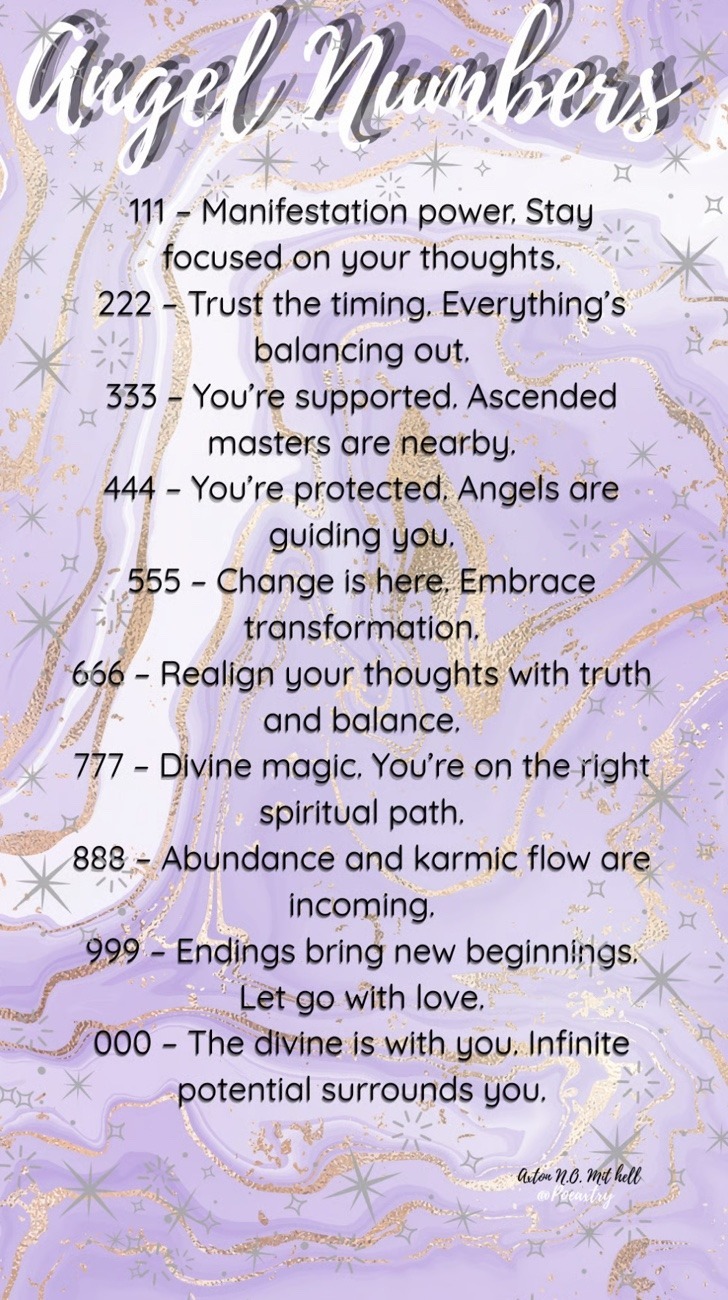
    111 signals new beginnings and alignment with your highest thoughts. 222 encourages faith, balance, and trust in divine timing. 333 reminds you that ascended masters are near, offering support. 444 signifies protection and stability angels are watching over you. 555 signals big changes and transformation ahead. 666 asks you to realign your focus toward spiritual growth over material concerns. 777 marks spiritual awakening and divine guidance. 888 promises abundance and prosperity. 999 heralds completion and preparation for new cycles.

    Let’s get weird. Oh, no, that’s Ronnie from Jersey shore.. Oops. Anyway, this is interesting. When we look at Pythagoras’s ancient meanings for the single digits, we see many instances of beautiful overlap. We also notice Doreen Virtue’s modern angel number interpretations. These similarities reveal how the messages have transcended centuries and cultures.

    Look at the number 1. Pythagoras, thought it stood for unity, beginnings, and leadership. Virtue’s angel number 111 shares these ideas, emphasizing new beginnings and manifesting your thoughts into reality. They both talk about the power of starting fresh and stepping into your own creative potential.

    The number 2 in Pythagorean’s is about balance, partnership, and harmony, Also isn’t this idea echoed in 222? 222 encourages faith, trust, and divine timing in your relationships and life decisions.

    Number 3 signals creativity and joyful expression. In contrast, 333 highlights support from ascended masters. This is a spiritual form of encouragement to keep expressing your true self.

    For 4, stability and hard work are core, matching with 444, a sign of protection and solid foundations. They both reassure you that you are supported and on the right path.

    5 stands for freedom and change. These directly aligning with 555, a clear signal of major life transformations and adventure.

    Number 6 shifts: Pythagoras viewed it as harmony and nurturing responsibility. While 666 asks for reflection and realignment toward spiritual values over material distractions. It’s a call to balance the earthly with the spiritual.

    The spiritual depth of 7 remains consistent, with Pythagoras emphasizing wisdom and introspection. 777 marks spiritual awakening and divine luck.

    Both 8 and 888 embody power and abundance, whether material success or spiritual prosperity.

    Finally, 9 and 999 full cycles. They are bringing compassion and universal love while preparing for fresh starts.


    In the end, these number sequences have maintained their symbolic power through time. All while adapting to modern spirituality, never loosing their ancient wisdom.

    Use these meanings as a compass. Still, know your intuition is the ultimate guide. Notice how you feel when you see these numbers. What’s happening in your life at that moment? That personal context brings the message fully to life.


    Want a handy guide to carry with you?
    Download my printable and digital
    “Book of Spells Cheat Sheet”.
    It is a simple reference.
    The guide includes these angel numbers and their meanings.
    It also offers tips on how to tune in to your intuition when you see them.

    It’s perfect for daily inspiration, journal prompts, or adding a little magic to your spiritual practice. Beginners & seasoned seekers both can connect deeper to the surrounding messages.


    Repeating numbers are more than coincidence in some beliefs. They are also ancient symbols speaking through the language of the universe. Just inviting you to listen. Both Greek numerology and angelic messages, have the same goals: to guide, reassure, and awaken you.

    So next time you catch 111 on the clock or 444 on a sign, pause. Take a breath. Trust what your heart and mind are telling you. These numbers are tools for you to connect with your intuition and the greater mysteries that surround you.

    Have you noticed any repeating numbers lately? What do they mean to you? Share your experiences in the comments. Let’s explore this magical language together.🖤


    Angel numbers grimore insert purple background gold and silver stars with white and black font
    Angel number cheat sheet

    Payhip Free Download OR GumRoad Free Download
    Links


    Want to explore more?

    Visit Poeaxtry and the Prism’s Archive Cheat Sheet. Discover all post categories, with a blurb and link to full post archive for each. Then find every post in that category in chronological order.


  • The Boy Who Lived Was Not Hairy — She Was Pre-T

    The Boy Who Lived Was Not Hairy — She Was Pre-T

    Fandom used to be the only place I could almost exist.

    I had to headcanon myself into the background, wedge myself between the margins, beg fanfic for scraps of survival. There was no trans joy in here though because J.K. Rowling didn’t forget us.

    She excluded us.

    “The Sorting Hat took one look and said, ‘She’s a TERF, but she’s OUR problem now.’”

    This wasn’t a stumble. This was erasure. This was policy. This was the same woman who built seven books of magical realism. Her books have no space for trans bodies or queer love. They lack Black protagonists outside of tokenism and tropes.

    So this is how I fight back:

    With glitter. With pettiness. With poetry. With jokes too trans and too alive for her to handle.

    Because the boy who lived was not hairy.

    She was pre-T.

    “She didn’t forget to write us. She made sure we weren’t there.”

    TWO TRUTHS J.K. ROWLING WISHES YOU’D FORGET

    1. She didn’t stumble into TERFdom she committed to it.

    She didn’t get tricked or “radicalized.” She’s not misinformed. Rowling writes essays defending anti-trans bigots. She follows every pipeline Twitter account imaginable. She promotes “gender critical” authors and retweets the worst of them with pride. This isn’t a misunderstanding. It’s a mission.

    2. Her magical world made sure we weren’t invited.

    No canonically queer characters until the series was over, and even then she had his gayness retrofitted. Poor Dumbledore. Yet never once did Rowling put it on one page. No trans characters. No fat characters who were treated with dignity. No explicitly Jewish or Muslim heroes. No central Black or brown characters. No disability. No real neurodivergent individuals. The most magical place on earth was somehow just… white, thin, cis, straight, able-bodied. That’s not coincidence. That’s design!

    “The boy who lived was not hairy but, she was pre-T.”

    It’s a joke, but it’s also a gut punch.

    Because if J.K. had her way, we wouldn’t exist at all.

    We grew up in the shadow of books that trained us not to see ourselves. Then we hacked the system. We wrote fanfics. We transed the characters. Then we turned Hogwarts into a trans haven. And the minute she noticed, she lost her mind.

    She has to fear us.

    Not because we’re wrong.

    But because we’re free in a way she never was.

    She writes trauma and calls it womanhood. She cages her characters in binaries. Rowling creates entire species of magical slaves and calls it world building. She lets evil rise again and again, but heaven forbid we give Hermione a girlfriend or make Harry trans.

    And she actively dead names Voldemort!

    She hates us because we found joy inside what she thought was a cage.

    And that’s what terrifies her the most, I bet

    That we exist anyway.

    That we make it funny.

    And then we make it magic.

    So yes, the boy who lived was pre-T. He is she. I know this tranny right here doesn’t owe that woman a damn thing.

    “She fears trans joy more than she feared Voldemort.”

    I don’t write these because I think JK Rowling will change.

    I write them for the kids like me who had to twist canon just to breathe. For the ones who made their first “they/them” OC on DeviantArt. For the ones who had to carve community out of thin air tags. This is for every trans kid who saw magic, but never saw themselves.

    You saw it anyway.

    You made it anyway.

    You are living it anyway.

    This hunt?

    It’s our coven now.

    🪄

    “If your villain is a snake-man, but your real enemy is a trans teen on T? You’re not writing fiction. You’re writing a manifesto.”

  • Intentional Visibility for BPD Community Free Poetry Zine by PoeAxtry

    Intentional Visibility for BPD Community Free Poetry Zine by PoeAxtry

    I am a trans writer creating poetry zines, e-books, and collaborative projects for people living with trauma, emotional dysregulation, mental illness, and for marginalized and minority communities seeking authentic representation and possibly healing.

    My latest zine is free for those living with Borderline Personality Disorder. It’s for people like us and others who are struggling with similar symptoms or facing the same stigmas. I’d like to offer it to you all for free to read if interested. I know sometimes it’s easy to feel like there’s no one else like us. I wouldn’t forgive myself, if I left a zebra to feel like a strange horse.

    However, we don’t even have to be besties. Honestly you do not have to like me. This work is still available to you if it speaks to you.Not all will understand it. That is okay, it is not meant for everyone.

    You can find it here: gumroad & payhip (I am attempting to put it on Etsy with no luck but I’m looking for an alternative to Etsy.)

    Honesty is the only requirement, and karma takes care of the rest. Well karma and my own form of protections. Hey don’t mess with a witchy. It’s like practically asking for it.

    So, if you (or your homie) live with BPD, email me (poeaxtry@gmail.com) and I will send you a discount code you can use at checkout. No questions and no judgment, just say “BPD” in the subject or message.

    I do and will always offer free digital items for reviews. (Honest ones, seriously no hard feelings unless you lie to me.) So, if you don’t have BPD, nor the money to blow on a zine we can do a trade just (email me or dm) and we can form a plan.

    Portfolio links zipper titty

  • Queer Artist & Creator Call for Interview Series for LGBTQIA2S+ E-Magazine

    Queer Artist & Creator Call for Interview Series for LGBTQIA2S+ E-Magazine

    I am building a series of interviews and creator features for an LGBTQIA2S+ centered e-magazine. This project is meant to uplift real stories, showcase queer creativity, and offer wisdom, perspective, and truth through your voice and your work. Whether you are an artist, small business owner, band, brand, writer, witch, or activist, this space is for you.

    This is for the queer community.

    This is for the ones who are building something and offering it to others.

    This is for those of us who are human, healing, and trying to exist while creating something meaningful.

    If you are making or sharing something and you identify within the LGBTQIA2S+ umbrella, I want to hear from you.

    You do not have to be well known. You do not need a large following.

    If you are creating something and offering it to others, that is enough.

    Please feel free to DM me at any contact mentioned on the social page or email me at poeaxtry@gmail.com.

    Use the subject line Interview, so I can keep inquiries organized.

    What to Expect

    • Interviews are conducted via email in written form to allow you to speak in your own words, at your own pace. This helps ensure your answers feel personal and genuine, and readers get to read them how you’d say them.

    • All questions will be sent to you in advance.

    • Any question can be skipped, asked to be altered, or asked to be removed and replaced. & I will facilitate a more appropriate replacement or revision.

    • You are never expected to answer anything that makes you uncomfortable.

    • You may ask for edits or clarification at any time.

    • You will have full approval of your final piece before it goes live.

    Optional Inclusions

    Contributors may choose to include any of the following:

    • A short, self-written bio

    • A photo of yourself

    • Links to your work, storefronts, websites, or socials

    • A brief message to readers

    • A personal note on:

    How would being interviewed support your journey and help someone else in the queer community?

    (This answer is optional but helps me decide who and why to choose.

    Please Note:

    Your interview may not appear in the very next issue. Depending on the number of contributors already scheduled, your interview may be held for a future release. You will always be informed of the issue number you are featured in once confirmed. I only contribute 3 pieces guaranteed each month and will post 1-2 interviews each month as allowed.

    If you are unsure whether you are a fit, here is the short version:

    If you are queer and you are creating something this is for you. (18+ in any country)

    This space is not designed for those who are simply queer and existing.

    It is built to uplift queer people who are making, offering, teaching, or building something through their own expression.

    That includes solo artists, underground bands, spiritual guides, handmade shop owners, mutual aid organizers, educators, and anyone who brings their queer identity into the work they offer others. This may even include queer people with positive and uplifting stories of becoming sober, facing incarceration and overcoming the stigma, overcoming another struggle, etc who also use their experiences to help others like them in someway educational or otherwise.

    If this speaks to you, please reach out. I would love to know what you are creating, why it matters, and how your voice can help others feel seen.

    With sincerity,

    Axton

    poeaxtry@gmail.com

    Links

  • Publishing With Purpose: Uplifting Marginalized Voices with Creative Collabs — by Axton N. O. Mitchell

    Publishing With Purpose: Uplifting Marginalized Voices with Creative Collabs — by Axton N. O. Mitchell

    Current Goals & Future Visions

    🖤📣✊🏽✍🏿🌍

    Right now, I’m just an indie poet, self-publishing, editing, creating, and promoting my own work from the ground up. I’ve only recently started submitting my poetry to outside publications, and I’m already seeing the work pay off. Two LGBTQ+ magazine partnerships are in progress, and I’ve got multiple collections brewing on my own terms.

    But this was never just about me.

    Honestly, if I ever experienced a come-up, would it even be a come-up if I did it alone? If I didn’t reach back and bring others with me? If I didn’t use that platform to spotlight the very people I was once, and still am, standing among? If I didn’t at least try to put them in the same place as I. I mean I can’t make anyone else’s work a hit but, I can at least try to bring anyone who wants to along for the ride.

    The current goal is to build and release themed collections of art and writing created by minority communities, impoverished individuals, and anyone who has been politically or socially silenced. I’m talking about the people who rarely get the spotlight, not because they lack talent, but because the system makes excuses not to see them.

    To pack the punch or add more power and meaning, some collections will also include pieces by true allies. The people who stand firmly with us, even if they are not directly affected. Because sometimes the people on the other side only start listening when the truth comes from someone they view as “like them.” When cis, straight, white people…. No shade but, especially men of average or higher socioeconomic status speak up, other men are more prone to stop and listen. That pause can lead to understanding. And sometimes, that understanding becomes one more changed person, or even the start of what will come to change the person. Allies have a role. Not to speak for us, but to speak with us and to challenge the circles we cannot always safely enter ourselves.

    Each contributor to these projects will have at least one piece included in the final publication, as long as their work aligns with the theme of the project they’re submitting to. In many cases, all of their pieces or many may be featured. The goal is to create a space for minorities to share not to create another loop of submitting their work and then not getting a chance. Art and literature are both things that are not accurately defined by “good or bad” and should be up to each person who has the opportunity to experience the piece. So, no I won’t bother excluding any creator who is in theme and mutually respectful simply because they create art that is not necessarily my taste.

    However, this space does not tolerate bigotry disguised as art or resistance. If it becomes known that a contributor has actively spoken against or harmed any marginalized group, they will not be included. We all have a place. We all belong. But I do not work with people who are not accepting of differences that are not harmful to others. If someone has made appropriate, sincere apologies and shown clear evidence of growth and changed behavior over time, we will reconsider them. But I make no space for underdogs who are just as guilty of stepping on the necks of other oppressed groups to make themselves feel powerful. That’s not resistance. That’s replication of oppression, and it won’t be welcome here.

    After each creator’s final piece a short bio they write themselves will be included, with space for links to their websites, social media, and online stores. This way readers and art lovers can find their favorite contributors. Artists may also opt to remain anonymous, but must let me know in writing if they wish to do so.

    Submissions are open to anyone 18 or older, in any country.

    Because American politics and media don’t exist in a vacuum. Our choices ripple out globally. Pretending they don’t is a privileged stance, and I’m not interested in gatekeeping based on borders. Don’t bother. I won’t be hearing how the world is following the same path Trump is paving against transgender people and yet you somehow don’t see the effect or the cause.

    The Bigger Picture

    This isn’t just a one-off. This is the beginning of something more.

    My long-term goal is to create a full publishing company, one that centers and uplifts the work of marginalized artists, especially those coming from impoverished backgrounds, queer and trans communities, BIPOC artists, disabled creatives, neurodivergent voices, and more.

    A space where we stop handing the mic to cis actors to speak over trans lives. Where we stop letting white actors play all races on screen. Where we stop making queer people audition for lives they’re already living.

    I want to build something that funds and amplifies the real stories of real people. Not inspiration porn. Not watered-down versions. Not token diversity.

    Actual lived experience. Actual voices. Actual art. Here the art or literature degree you hold is the thing that makes you not a fit candidate. When usually it’s used as a substitute paywall. You know, not many people who face poverty get degrees. If they do they have to be lucrative positions. Though situations are and changing if you are a fit and also have a degree I would never want to work against you so please do at least explain how you fit and submit.

    The most important and the least obtainable goal is to offer payment for submissions, paid collab content. I know that you must walk before you run, and I know that offering things for free to read while we grow will boost the ability for the contributors to be heard. However, creating isn’t charity. It’s overdue recognition.

    Call for Core Contributors

    If you’re interested in becoming a core contributing member to these goals, both current and future, please reach out by email or through any of the contact methods listed on my Connection Page.

    Core contributors are not required to submit art or writing to the collaborative projects, though they are welcome to, but instead assist with the behind-the-scenes work. This may include editing, promoting projects, reaching out to other marginalized artists, helping create and plan future collaboration themes, uploading projects to indie storefronts, seeking out new partnerships and visibility opportunities, and helping grow the foundation that will become a fully functional publishing company.

    Expectations and Structure

    Core contribution is voluntary on your part and not automatically guaranteed on mine. Contributors must commit to a few hours each week to the tasks they’ve been approved for. Missed deadlines without prior communication will result in your removal from the contributor list. All work will come with at least one month’s notice. There will be no last-minute surprises. You will always be credited for your work, even if your role is discontinued.

    If you help develop a concept for a collaborative project, that idea may continue to be used by me and the future publishing company, with full credit always given, unless we’ve agreed in writing that it won’t be.

    This is about building something sustainable. Something honest. Something real.

    We grow together. We hold space for each other. We amplify each other’s voices. This is community, not hierarchy. It’s effort, not ego.

    Core contributors are the first to be considered by me when the goal to offer payment for creators is a reality. The eventual need for paid employees will hopefully also be the next step and anyone interested who has contributed previously or currently will be eligible before any new individuals.

    The need to expand and improve may not always be something foreseen and if the company needs to pivot to become a better more successful company we will do so, BUT we will always have the same base core value of creating a space where minorities are listened to, respected, valued, and never spoken for.

    Stay tuned. Stay loud. Stay rooted in what matters.

    Questions? Comments? Concerns? Ready to take the plunge with me? Poeaxtry@gmail.com

    — Axton N. O. Mitchell (@poeaxtry_)

    Links

    Northern lights central Ohio

    Hike

  • Submission Calls for Poetry, Essays, Art & Prose by Marginalized Voices

    Submission Calls for Poetry, Essays, Art & Prose by Marginalized Voices

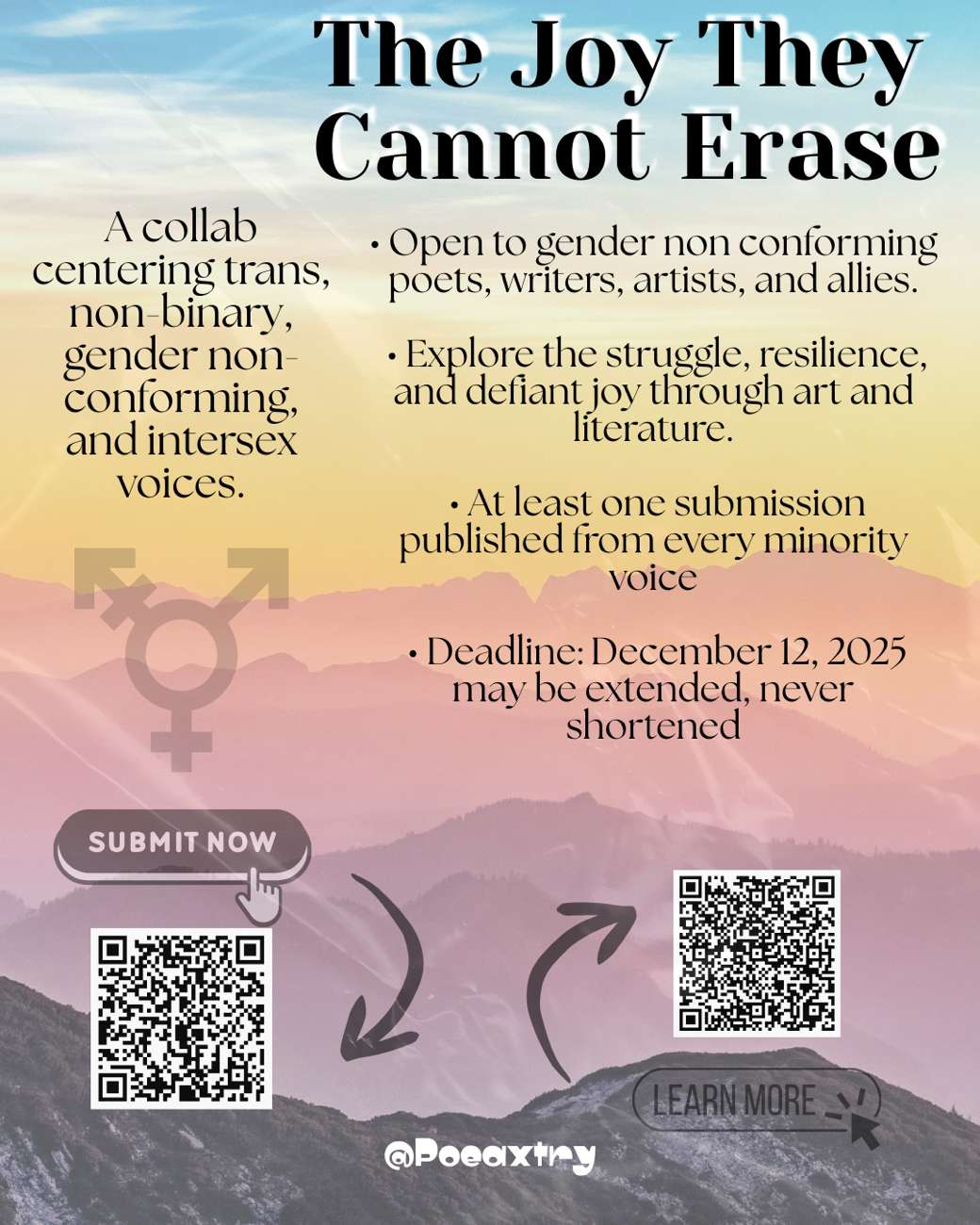
    Open calls for poems, essays, art, and prose: Voices for the Voiceless focuses on minority experiences since the 2025 US inauguration (deadline Dec 12, 2025). The Joy They Cannot Erase celebrates trans, gnc, and intersex voices (deadline TBD). Submit to poaxtry@gmail.com

    red rose background black font qr code collab announcment
    rainbow background mountains black font QR code COllab Announcment

    Links Portfolio


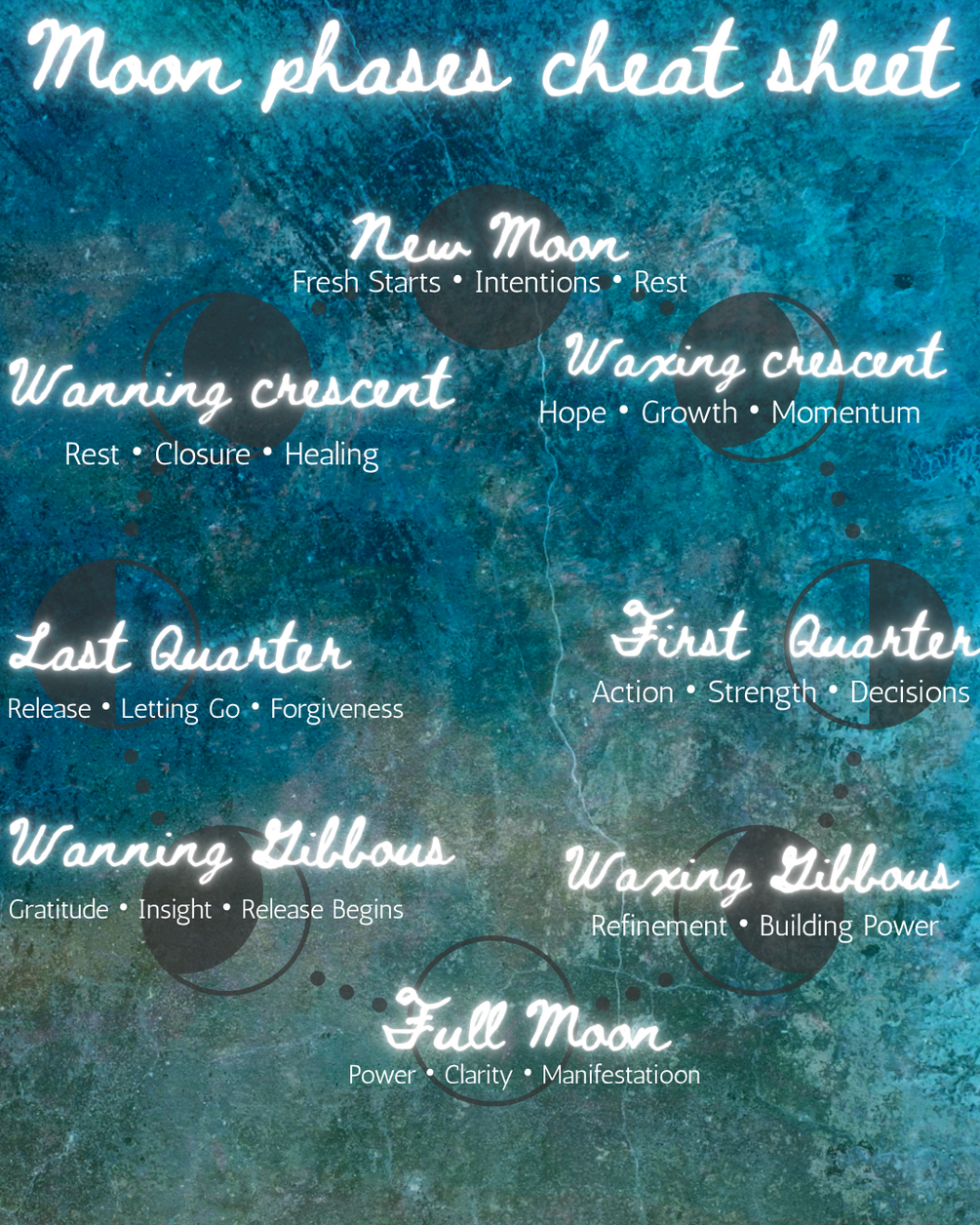
  • Witchy Moon Phases: Deep Dive + Free Printable Cheat Sheet

    Witchy Moon Phases: Deep Dive + Free Printable Cheat Sheet

    Harnessing lunar phases for spell work, intention, shadow work, and personal ritual


    🌙 Why We Work With the Moon in Witchcraft

    The moon is a mirror, a teacher, a timekeeper.

    In witchcraft, we don’t just look at the sky. We move with it.

    We listen, honor, and adapt the ebb as much as the flow.

    Witchcraft is cyclical. So is healing.

    And the moon, in all her shifting light, helps us shape our intentions to match the rhythm of nature.


    Working with the moon helps you:

    Plan spells and rituals with intention Align with natural emotional tides Honor your energy rather than force it Deepen intuitive and psychic connection Understand shadow, surrender, release

    This guide is your full breakdown of each moon phase. It explains how to work with it. It also highlights what kind of magic resonates best. A free, printable fill-in cheat sheet is included below.


    🔁 Understanding the Cycle: 8 Phases of the Moon

    The lunar cycle is about 29.5 days long. Each phase carries a unique magical energy. Most witches are familiar with the new moon and full moon. However, the in-between phases carry just as much sacred opportunity.


    🌑 NEW MOON

    Magical Themes: beginnings, shadow work, silence, intention-setting

    Elemental Vibe: Earth / Void

    Good for: manifesting, cleansing, writing goals, resting before action

    This is the womb of the moon cycle. A place of quiet potential. Your magic here is about seeds, not harvest.

    Spell work ideas:

    Write new moon intentions in your journal Cleanse your altar or home Banish old energy through smoke or salt Do low-energy shadow work or divination


    🌒 WAXING CRESCENT

    Magical Themes: growth, curiosity, baby steps, beginnings

    Elemental Vibe: Air

    Good for: small spells, momentum, visualization, energy raising

    This is the spark stage. Ideas take root. You’re not meant to leap, just stretch.

    Spell work ideas:

    Start a sigil activation Speak affirmations aloud Plant something (literal or symbolic) Choose one action toward a bigger dream


    🌓 FIRST QUARTER

    Magical Themes: decision-making, pressure, commitment, friction

    Elemental Vibe: Fire

    Good for: focus magic, inner conflict, obstacles, courage

    This is the “choice” moon. The phase where resistance creeps in. Stay the course.

    Spell work ideas:

    Burn doubt in a fire-safe bowl Cast a spell for confidence or clarity Do physical movement to shake stuck energy Draw a boundary or cut off distractions


    🌔 WAXING GIBBOUS

    Magical Themes: refinement, momentum, adjustment, perfecting

    Elemental Vibe: Fire/Water

    Good for: abundance spells, attraction magic, improving results

    This phase asks: Are you aligned? Are you prepared to receive? Tune your magic and your mindset.

    Spell work ideas:

    Abundance bowl or jar Gratitude journaling Spell bag for confidence or clarity Candle spell with fine-tuned intentions


    🌕 FULL MOON

    Magical Themes: illumination, climax, power, deep emotion

    Elemental Vibe: Water

    Good for: charging tools, ritual work, manifesting, release

    This is the height of lunar power. Intuition is sharp. Magic is amplified. Truth shines through.

    Spell work ideas:

    Full moon ritual for release Charging crystals and tools under moonlight Dance or howl to raise energy Perform high magic or deep ancestral work


    🌖 WANING GIBBOUS

    Magical Themes: gratitude, wisdom, sharing, self-inquiry

    Elemental Vibe: Water/Air

    Good for: journaling, healing, teaching, dream work

    This is the reception phase. You’ve cast your spell. What now? Reflect, integrate, rest.

    Spell work ideas:

    Gratitude altar Dream journaling Give an offering or teach someone Reflect on outcomes from your last spell


    🌗 LAST QUARTER

    Magical Themes: release, endings, clarity, accountability

    Elemental Vibe: Earth/Air

    Good for: shadow work, cord cutting, clearing energy

    This moon demands honesty. Time to let go of what’s not serving your path.

    Spell work ideas:

    Cut cords or bury written “goodbyes” Do heavy shadow work Banish toxic patterns with black salt Detox your space, altar, or habits


    🌘 WANING CRESCENT

    Magical Themes: rest, closure, surrender, ancestral guidance

    Elemental Vibe: Spirit

    Good for: sleep magic, healing, divination, dream work

    The void returns. This is sacred rest, not failure. Reconnect with spirit, grief, truth.

    Spell work ideas:

    Divination with tarot or pendulum Sleep sachets or pillow spells Meditation with ancestors or deities Journaling on what still needs to soften


    🖤🌙 Free Downloadable or Printable Moon Magic Cheat Sheet

    Want to track each moon phase in your own practice?

    Download this moon phase cheat sheet for free:

    👉Moon Chart Cheat Sheet👈 👉PayHip👈

    Includes reminders for:

    Multiple ways to celebrate and use each moon phase

    ✨ Keep it in your Book of Shadows, or keep it digitally.


    🧿 Final Thoughts: You Are the Cycle

    The moon doesn’t demand perfection. She shifts, she darkens, she grows, she glows.

    So do you.

    You don’t have to be consistent to be powerful. You don’t have to track every phase to be valid.

    But when you start moving with the moon, not just noticing her, but dancing with her you find rhythm. You find yourself. You remember.

    And if nothing else, you remember this:

    You’re not too late.

    You’re right on time.


    Blue background white font moon phase cheat sheet for digital or physical books of spell uses

    Free Printable PDF Payhip Free Printable PDF GumRoad

    Want To Explore more of my creations?
    Links
    Thank you for supporting me an Indie Poet, Witch, and Creator.


    Want to explore more?

    Visit Poeaxtry and the Prism’s Archive Cheat Sheet. Discover all post categories, with a blurb and link to full post archive for each. Then find every post in that category in chronological order.