Curated collection of spontaneous essays, creative explorations, prompt responses, political takes, minority highlights, cultural reflectons, spirituality, indie and small business shout-outs, and more.
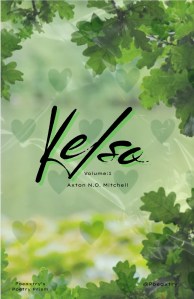
The Kelso 2 Poetry Zine has officially launched! It’s the 2nd edition in the Kelso Collection. This edition captures poetry from our 3rd and 4th years together, exploring a love that is mature, real, and beautifully flawed. Kelso 2 isn’t about the rush of new romance; it’s about the moments that come after. Here is where the patience, honesty, and quiet strength that define enduring connections comes into the picture.
Highlighted pieces like “You Are Not the Sun” reflect the truths of lasting love: life goes on if someone is gone, but their absence changes everything in subtle, poignant ways. Every digital download of Kelso 2 includes six hidden mystery extras woven into the PDF. Through hidden words and QR codes, designed to make every reading experience personal and immersive.
Where it started:
Kelso volume 1 where it started
The first Kelso zine started as a handmade, one-of-a-kind gift for my partner. I started making digital zines later and, the natural thing to do is to immortalize the personal physical copy as a digital item as well. Kelso is about love that is new and exciting, while also adapting to reflective and enduring love. Kelso 1 introduced readers to the thrill of early connection, while Kelso 2 you will see a new side of me that dives into realistic, patient love that lasts. Together, they form the Kelso Collection, a cohesive, poetic exploration of human relationships.
New options for ease of access:
Excitingly, the Kelso series (and all my other zines & ebooks also) will soon be available on Google Play Books. We are currently awaiting verification, but the files are already prepared and ready to launch as automatically when approval is complete. This will make the collection accessible to more readers worldwide, expanding the reach of Poeaxtry’s indie poetry zines & ebooks while keeping the curated, intimate experience of the PDF format intact.
Written & Curated by Poeaxtry and Published by Poeaxtry’s Poetry Prism, the Kelso series continues to push the boundaries of indie poetry, combining authenticity, relatability, and the immersive experience of hidden digital content.
Whether you’re a long-time Poeaxtryreader or discovering the zine for the first time, Kelso 2 is your invitation to explore love beyond the surface, paired with surprises that make the reading experience unique.
Trade art or curated items for zines/ebooks: submit here
While the reviewer form is for just that the trade form is just the general contact form. So just let me know what you wish to trade for what and your best contact information to reply.
Everyone deserves to experience art and literature, so I help where I can by keeping my curated collections accessible. With these options I am able to destroy the paywall while also leaving the option to support my indie community projects and goals.
Samhain, is one of the most powerful Sabbats on the Wheel of the Year.
Observed from the evening of October 31 through November 1, it marks the transition from the light half to the dark half of the year. Many witches regard it as the Witches’ New Year, a liminal time when the veil between the worlds is at its thinnest.
It is a season of endings, beginnings, remembrance, and transformation.
This resource explores the history of Samhain, its multiple cultural roots, the way people celebrated in the past, how witches celebrate it now, the symbolism and correspondences tied to this sacred night, and ways to practice sustainably.
History and Origins of Samhain:
Samhain comes from Gaelic and Celtic tradition and was celebrated in Ireland, Scotland, and the Isle of Man. It marked the end of the harvest season and the arrival of winter. for ancient people, this was not only the division of the year but also a sacred turning point. Archeological sites like the Mound of the Hostages at Tara show alignments with sunrise around Samhain, suggesting the importance of this moment stretches back even further than Celtic times.
In medieval Irish texts, Samhain appears as one of the great seasonal festivals. The name itself is tied to “summer’s end,” and in the Irish language, Samhain is also the word for November.
During this time, the burial mounds or fairy hills…were believed to open, becoming portals to the Otherworld. Spirits, fairies, and ancestors could move more freely, and it was customary to honor and appease them.
Bonfires were central to Samhain. Families would extinguish their home hearths and relight them from the great communal fire. People cast stones, bones, or tokens into the flames, sometimes as offerings or as part of divination.
The Ashes and fire were believed to carry cleansing and protective powers. In some accounts, livestock were culled and sacrificed to ensure survival through the winter.
Samhain was also a season of prophecy. Masking and guising also have deep roots here. Villagers disguised themselves to confuse or avoid malevolent spirits, and many went door to door reciting verses or performing small acts in exchange for food what we now know as trick-or-treating.
Symbolism and Correspondences
Samhain’s imagery is steeped in themes of death, rebirth, and liminality. The colors most often associated with this Sabbat are black, deep purples, fiery oranges, and blood reds.
Crystals like obsidian, smoky quartz, onyx, hematite, and amethyst resonate strongly with Samhain energy.
Herbs such as mugwort, sage, rosemary, cinnamon, and wormwood are commonly used in spells and rituals.
Symbols that dominate this season include skulls, bones, cauldrons, jack-o’-lanterns carved from pumpkins or turnips, and keys or crossroads imagery.
Animals tied to Samhain include ravens, crows, owls, bats, and black cats.
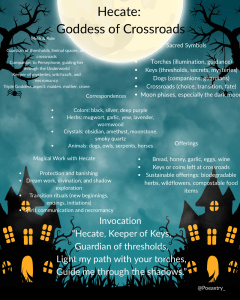
Spiritually, this time is connected to deities of the underworld and death, such as the Morrígan, Hecate, Donn, Hel, or the Cailleach, depending on tradition.
Fire and earth are powerful elements here, representing both purification and the return of life to the soil.
Traditional and Modern Practices
Rituals of Samhain historically centered on fire, offering, divination, and honoring the dead. Today, witches and pagans adapt these practices to personal and cultural needs.
Altar and ancestor work are central. Many build altars decorated with autumn harvest foods, skull imagery, bones, and photographs of loved ones who have passed. Offerings of bread, fruit, or herbs are common, left either at the altar or outdoors. Some practitioners hold a “dumb supper,” a ritual meal eaten in silence where a place is set for the dead, inviting them to share in the gathering.
Fire remains an important symbol. Witches may light bonfires, hearth fires, or candles as a way to purify and honor the season. Writing down things you wish to release and casting them into flame is a powerful practice at Samhain.
Divination thrives during this liminal night. Tarot readings, runes, scrying mirrors, pendulums, and dream work are all seen as especially potent now. Journaling or meditating on what must be released and what new cycles need to begin helps align with the natural energy of death and rebirth.
Samhain can be a night of shadow work. Or a time to face inner truths and release old habits. Some may focus on protection and cleansing rituals, strengthening psychic shields, or setting wards for the long winter ahead.
Because of urban living, fire restrictions, and ecological awareness, many witches adapt ancient practices. Instead of bonfires, they light candles. Instead of leaving large offerings at cemeteries, they create home altars or symbolic offerings. Many now prioritize sustainable and ethical practices, ensuring offerings do not harm the land or wildlife.
Samhain’s rituals often involve burying, burning, or leaving offerings, so ecological mindfulness matters. Use biodegradable materials such as paper towel rolls, untreated wood, or natural herbs. Avoid synthetic glitters, plastics, or toxic inks. Reuse jars, cloth, and candles rather than buying new every year.
A Flow for Ritual
A Samhain ritual can be as simple or elaborate as you like. You may begin by cleansing and grounding yourself, then inviting ancestors and guides into sacred space. Lighting candles or a fire connects to the ancient communal flames. Offerings and prayers to the dead bring remembrance and connection. Divination, journaling, or meditation help you gather insight for the year ahead.
A practice of release: whether by burning, burying, or composting, is powerful at Samhain. Once you have let go of what must die, you can set new intentions, plant seeds, or carry charms to symbolize rebirth. Close the ritual with gratitude to spirits, ancestors, and deities, then return to the mundane world with renewed focus.
Samhain is a threshold in the year, when endings and beginnings weave together. It honors death as a part of life and opens a space for transformation. Whether you light a single candle, share a feast with friends, or hold a private vigil, Samhain reminds us that magic is not only in growth but also in release. By walking with our ancestors, respecting the cycles of the earth, and practicing sustainably, we carry forward the essence of the Witch’s New Year.
Download free digital/printable book of spells insert at Gumroad or Payhip below
Visit Poeaxtry and the Prism’s Archive Cheat Sheet. Discover all post categories, with a blurb and link to full post archive for each. Then find every post in that category in chronological order.
Dave Chappelle, is a renowned comedian. He is known for his sharp wit and controversial humor. This has been cause for him facing significant backlash for his repeated transphobic remarks in recent years. Here I will delve into specific instances where Chappelle’s comments have been deemed harmful to the transgender community, supported by facts and reactions from various organizations and individuals.
“The Closer” (2021) – A Stand-Up Special Under Fire
In his 2021 Netflix special, The Closer, Chappelle made several statements that many perceived as transphobic. Notably, he declared himself “Team TERF” (Trans-Exclusionary Radical Feminist), aligning himself with author J.K. Rowling, who has been criticized for her anti-transgender views. Chappelle’s comment, “They canceled J.K. Rowling… my God. Effectually she said gender was fact, the trans community got mad as shit, they started calling her a TERF … I’m team TERF,” drew immediate criticism from LGBTQ+ advocacy groups and allies. GLAAD and the Human Rights Campaign condemned the special, and Jaclyn Moore, a transgender writer and showrunner for Netflix series Dear White People and Queer as Folk, announced she would no longer work with the company.
“The Dreamer” (2023) – Continued Transphobic Content:
Chappelle’s 2023 Netflix special, The Dreamer , further perpetuated transphobic narratives. The special included extended segments mocking transgender individuals, with some jokes lasting up to 12 minutes. Critics argued that these remarks continued Chappelle’s pattern of “punching down” on marginalized communities, particularly transgender people. The Conversation described Chappelle as an “egalitarian bully” who continues to target the transgender community.
Public Defenses of Transphobic Content:
In response to the backlash from The Closer, Chappelle addressed the controversy by appearing to blame the transgender community. He suggested that their reactions were the cause of the ongoing discussions about his remarks, rather than acknowledging the potential harm caused by his words.
Chappelle’s comments have not gone unnoticed within the entertainment industry. Following the release of The Closer, several Netflix employees, including transgender individuals, organized a walkout to protest the company’s decision to continue streaming the special. They demanded that Netflix take a stronger stance against content that perpetuates transphobia.
Additionally, comedian Michelle Buteau criticized Chappelle’s recurring anti-transgender jokes, labeling them as “dangerous” and emphasizing the importance of comedy that does not harm specific communities.
Dave Chappelle’s repeated transphobic remarks, particularly in his Netflix specials The Closer and The Dreamer, have sparked widespread criticism from LGBTQ+ advocacy groups, fellow comedians, and industry professionals. These instances highlight the ongoing challenges faced by the transgender community in combating harmful stereotypes and the responsibility of public figures to be mindful of the impact their words can have on marginalized groups.
Spell jars, also known as witch bottles, are powerful tools in witchcraft. They combine intention, symbolism, and natural elements. This combination is used to manifest desires. Whether you’re a seasoned practitioner or a curious beginner, understanding the fundamentals of spell jars can enhance your magical practice.
🏺 How to Choose a Jar:
Selecting the right container is the first step in crafting your spell jar. The jar serves as the vessel for your intention and the ingredients that will empower your spell. Consider this next:
Material: Glass is commonly used due to its transparency and purity, allowing energy to flow freely.
Size: Choose a size that corresponds to your intention. Use a small jar for personal spells. Use a medium jar for household or family spells. Opt for a large jar for community or long-term spells.
Closure: A tight-sealing lid or cork ensures the energy remains contained. Some practitioners seal the jar with wax to lock in the intention.
🎨 Jar Colors & Their Meanings:
The color of your jar can amplify your intention. While the jar’s color isn’t as critical as the ingredients, it can still add a layer of symbolism:
Including a taglock personalizes the spell, making it more potent and specific.
🔒 When to Open, Keep, or Bury
The fate of your spell jar depends on your intention and the desired outcome:
Open the Jar: If the spell is to be shared, released, or allowed to grow freely.
Keep the Jar: Store it in a sacred space or carry it with you to maintain the energy.
Bury the Jar: Often used for banishing, grounding, or sealing the spell into the earth.
Always dispose of spell jars respectfully, considering the energy and intention they hold.
Hexes, Disposal, and Sustainable Spell work
When it comes to hexes or any spell you’re releasing into the world, how you handle them afterward matters. Many practitioners choose to bury them in the earth, allowing the ground to absorb and neutralize the energy. Ideal spots are safe, natural areas. These can be gardens, forests, or anywhere that feels energetically aligned. It’s important to select locations where the materials won’t harm the environment.
Sustainability can also guide your spell craft. Ordinary household items like toilet paper rolls or paper towels make excellent biodegradable bases for spells. They must be free from toxins or inks that are harmful to the soil. I collect these for my spells. They work beautifully for energy release. They also help in planting intentions directly into the earth.
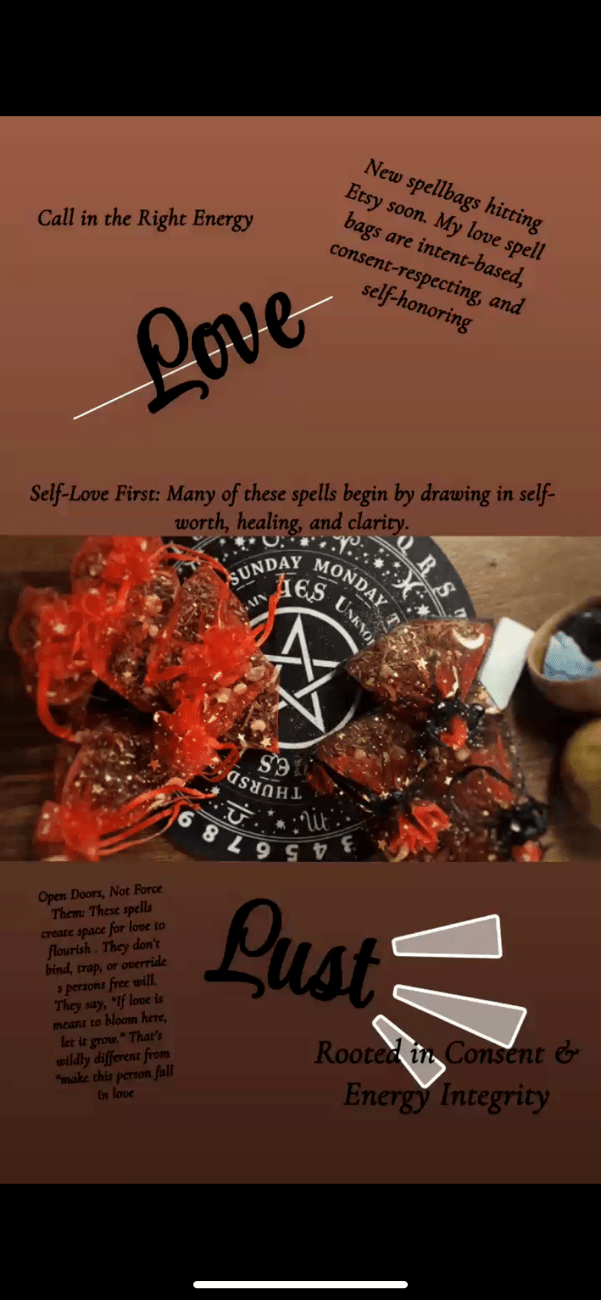
If you’re creating spells for clients or friends, consider offering a “green choice.” Ask whether they’d prefer their spell jarred or released in a biodegradable, eco-conscious way. For jarred spells, you can offer options for the jar type. This choice lets them feel personally connected. It also supports sustainability in magical practice. Spell work doesn’t have to leave a negative footprint… it can be effective, intentional, and earth-friendly all at once.
Crafting a spell jar is a deeply personal and intentional act. Understand how to choose the right jar. Recognize the significance of colors. Master the art of layering ingredients, and learn the use of tag locks. Know the appropriate disposal techniques. By doing so, you can enhance your magical practice. Remember, the most important ingredient in any spell jar is your focused intention.
Big news: Poeaxtry is now streaming live! Tune into our Twitch channel for poetry readings, creative collabs, and behind-the-scenes looks at our indie publishing and witchy projects. Maybe some rock slicing jam sessions? Who knows I Just set it up last night… FINALLY! So come check it out: twitch!
Expect live Q&As, community spotlights, and surprises along the way.
Poeaxtry Revolt – Your Creative Community Hub
REVOLT:
If you haven’t heard Poeaxtry’s Poetry Prism discord got a twin server. Where you ask? We joined the Revolt app, now felt like the perfect time. Our creative community is growing with discussion spaces for poets, artists, and writers of all kinds. Join here.
Whether you’re here for poetry, art, or just to meet like-minded creators, there’s a spot for you.
Connect and EngageFollow, join, or just watch! Let’s bringing all corners of Poeaxtry together online. Stay tuned for streams, events, and community-driven projects highlighting voices that need to be heard.
Voices for the Voiceless & The Joy They Can’t Erase
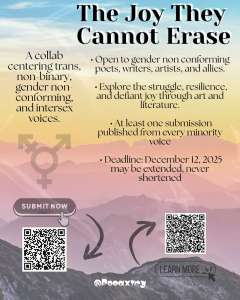
I’m excited to announce that the promo flyers for our current Poeaxtry_ collaborations have been updated! They’re clean, readable, and designed to make it simple for anyone to get full project details or submit their work directly. Each flyer now has two QR codes one linking to full project info and one taking you straight to the submission form.
Voices for the Voiceless amplifies minority voices and explores how life has changed under shifting political landscapes. This collaboration is open to poets, writers, artists, and allies. Every minority voice that submits will be published at least once.
Deadline: December 12, 2025 (may be extended, never shortened) QR codes: “Submit here →” for submissions, “More info here →” for full project details Visuals: Use a strong, striking image representing voices, expression, or activism Handle: @poeaxtry_
These flyers are designed to make it simple to participate and ensure your story reaches the world.
The Joy They Can’t Erase centers trans, non-binary, gender non-conforming, and intersex voices, celebrating resilience, struggle, and the defiant joy that cannot be erased. It is open to creatives and allies, with every minority voice guaranteed at least one publication.
Deadline: December 12, 2025 (may be extended, never shortened)
The Unexpected Health Challenge After preparation, marketing campaigns, and building anticipation among my community, I found my bestie facing a health-related obstacle that made hosting a seminar impossible. The initial frustration was underwhelming at first even with all that preparation, the excited attendees, and suddenly everything having to be put on hold didn’t hit me in the eyes of my friend’s health. But sometimes the universe has different plans, and what initially felt like a not a factor became the catalyst for something even better.
The Pivot: Embracing the Power of Micro-Learning
Rather than canceling everything entirely, I made a strategic decision that would ultimately (hopefully) reach more people than my original seminar could. I decided to break down my comprehensive seminar content into digestible, engaging mini-segments perfect for today’s fast-paced digital consumption habits.
TikTok became my platform of choice for this transformation. Why TikTok? The platform’s algorithm favors short-form video format is perfect for delivering powerful insights in bite-sized portions that viewers can easily consume and share.
Why Mini-Segments Work Better Than Traditional Seminars:
Accessibility and Convenience Traditional seminars require significant time commitments that many people simply can’t make. By breaking content into 60-90 second segments, I’m making valuable information accessible to busy professionals, people with accessibility issues, parents, and anyone with a packed schedule.
Enhanced Retention:
Research shows that information delivered in smaller chunks is better retained than lengthy presentations. Each mini-segment focuses on one key concept, allowing viewers to fully absorb and implement the learning before moving to the next piece. Increased Engagement Short-form content naturally encourages higher engagement rates. Viewers are more likely to watch, comment, share, and save content that doesn’t feel overwhelming or time-consuming.
Reach Potential:
Unlike traditional seminars that reach a limited audience, TikTok’s algorithm can exponentially increase reach. Each mini-segment has the potential to go reach new people, introducing my content to audiences I never could have reached through conventional methods.
The Pivot: Embracing the Power of Micro-Learning
Strategic Content Breakdown I’ve carefully deconstructed my original seminar into themed mini-segments, each designed to deliver maximum value in minimum time. Every video addresses a specific pain point or provides actionable advice that viewers can implement immediately.
Sequential Learning Path While each segment stands alone, I’ve structured them to build upon each other, creating a comprehensive learning journey for viewers who engage with the entire series.
Interactive Elements TikTok’s features allow for polls, Q&A sessions, and direct engagement that traditional seminars often lack. This creates a more dynamic and personalized learning experience.
The Unexpected Benefits of Going Digital Greater Reach Physical seminars are limited by geography and venue capacity. TikTok eliminates these barriers, allowing me to connect with a global audience interested in my expertise.
Flexibility for Viewers People can consume content at their own pace, rewatch segments they found particularly valuable, and share specific pieces with their networks.
Cost-Effectiveness Producing TikTok content requires minimal overhead compared to hosting physical events, making it sustainable for long-term content creation.
Real-Time Feedback The platform provides immediate insights into which topics resonate most with my audience, allowing me to adjust and refine my content strategy in real-time.
Looking Forward: The Future of Educational Content Delivery
While TikTok is my current focus, this format opens doors to expanding across other platforms. The mini-segment approach translates perfectly to Instagram Reels, YouTube Shorts, and LinkedIn video content, potentially multiplying my reach across diverse professional networks.
My friends health setback taught me that sometimes the most innovative solutions emerge from unexpected challenges. What began as a crisis became an opportunity to revolutionize how I share knowledge and connect with my audience.
Key Takeaways for Content Creators and Educators:
Embrace Adaptability When traditional methods aren’t feasible, look for alternative approaches that might actually serve your audience better. Consider Your Audience’s Reality Modern attention spans and busy lifestyles often favor bite-sized content over lengthy presentations.
Leverage Platform Strengths Each social media platform has unique features and audiences. TikTok’s algorithm and format are particularly suited for educational micro-content. Turn Setbacks into Comebacks What appears to be a disadvantage can often become your greatest advantage with the right perspective and strategy.
The Bottom Line Sometimes life forces us to innovate in ways we never would have chosen voluntarily. My unexpected health issue led to a content strategy that’s more accessible, engaging, and far-reaching than my original seminar plan ever could have been.
The mini-segment format on TikTok has proven that valuable education doesn’t require hours of commitment . And it just requires the right approach, genuine value, and platform-appropriate delivery. For now, TikTok remains my primary platform for these educational mini-segments, but the possibilities for expansion are endless.
What started as a health-related pivot has become a sustainable, scalable approach to sharing knowledge that serves both my audience’s needs and my goals to support other indie creators.
The Join Us Today: “Poetry-Ink, Identity, and Insistence: Trans Creation as Survival and Defiance”
I’m excited to share that I’ll be presenting at the TransOhio 16th Annual Transgender & Ally Symposium today at 3:15 PM in Room Aat Owens Community College in Perrysburg, Ohio!
Session Details:
Title: Poetry-Ink, Identity, and Insistence: Trans Creation as Survival and Defiance
Presenter: Axton N.O. Mitchell (he/him)
Time: 3:15 PM
Location: Room A, Owens Community College, Perrysburg, Ohio
Date: September 6, 2025
About My Session:
As a published trans poet, I’ll be introducing two community projects I’ve built from the ground up. One specifically designed to uplift trans, gender non-conforming, intersex, and the other all marginalized creators. These projects provide completely free collaborative editing, formatting, and visual design services using Canva Pro, with contributors retaining full rights to their work.
The During this session, I’ll cover:
How these publishing projects operate
The submission process
Ways to get involved (both as contributors and behind-the-scenes supporters)
Guidance on finding trustworthy submission opportunities
How to identify and avoid exploitative publishing practices
Information about our safe creative spaces, including our Discord community
Plans to transition these projects into paid opportunities
While my speaking focus today is primarily on trans, GNC, and intersex experiences, our broader mission includes publishing works from all minority communities, with themed publications for specific individual groups of people.
About the Symposium:
The TransOhio Annual Symposium is specifically designed for transgender, nonbinary, gender non-conforming, and intersex individuals and their allies. The event features a wide range of sessions covering important topics for our community.
Other exciting sessions today include:
Reimagining the American dream
Violence Prevention
Trans Sex and Relationships
Personal Note:
A huge thank you to my friend Dea for driving me to the symposium today! Community support makes events like this possible, and I’m grateful for allies who help us access these important spaces.
I hope to see many of you there, either in person or virtually. These community gatherings are vital for our collective growth, healing, and empowerment.
Join Our Creative Community:
After the symposium, all attendees are invited to join our Discord space for writers and artists where we continue to build connections and support creative expression year-round.
Axton N.O. Mitchell is a published trans poet and community publisher dedicated to uplifting marginalized voices through accessible, ethical publishing projects.
Sometimes the universe knows what you’re supposed to do before you even know it yourself. That’s exactly what happened with me and the TransOhio Symposium.
I signed up months ago. Saw some posts online, clicked through their website, thought “hmm.” A few days went past and I was seeing them all over, I mean I have lived in Ohio most of my life and never heard of TransOhio before Spring 2025. So I went back to their website. Signed up to present at this symposium and then… completely forgot about it. When I recently thought about it I chalked it up to just me not being picked. And honestly There were a few other prior times I had thought about it like damn that would have been cool. But I was in a sense moved on from that idea.
How I Almost Missed My Big Opportunity:
Then, while cleaning out my inbox at the 2am midnight shift drag purging the nonsense, unsubscribing the usual clutter that I never get to. I happen on three emails from TransOhio. One of them told me I did get accepted I received it over a month ago. Filtered, messages can eat my booty. It didn’t go to spam or and if the folders. I didn’t notice it in my general inbox, but I randomly go through my subscription list and WAM! BAM! Thank you not so random urge to clean that up. Just about ten days prior to kick off. Don’t worry I’m gonna deliver.
What Is the TransOhio Symposium?
TransOhio is the annual 3-day symposium at Owens Community College in Toledo, Ohio, this year from September 5th through 7th. Over 200 participants, 40 workshops, continuing education credits, entertainment, food, and a space alive with connection, conversation, and creation. It’s a place where trans artists, thinkers, and allies come together.
My session is “Poetry, Ink, Identity, and Insistence: Transcreation and Survival in Defiance” at 3:15 PM in room A. I’ll have printouts, slides, maybe even other physical items you can keep. I will bring the kind of threads that link through art, poems, ideas, and experiences. Some will overlook this thinking it’s just another poetry session. This is tangible real life community building.
From Fear to Acceptance: My Journey to the Stage
Honestly, I had completely forgotten about this thing. I thought it wasn’t happening. When I signed up I thought I was way out of my league, but I like to aim high. My speech class in college of less than 15 people was scary. I am going to stutter but I’m going to totally fucking do it. I really didn’t expect it. And I guess that’s the point. Sometimes you do something you don’t even know you’re supposed to do. You don’t even know it. The universe knows, though. And it makes sure you get there, at the perfect time, in the right way, for the right people, and you’ll know exactly what you’re supposed to say.
How This Differs From My Previous Experience:
I’ve done one seminar before, if you want to call it that. I stood shirtless under 1 year post op with my surgeon at GenderFest Vegas also a trans conference. I was just Standing there bar-b-Que sauce on my titties, kidding. Anyway the lovely artist, surgeon, god Brandon Reynolds did all the talking and I just tried not to stare at anyone too long, or make direct eye contact, and I fought so hard to hold still and still lost.
Why This Event Matters Beyond Just a Presentation
This isn’t just a seminar or a conference I stand in-front of shirtless. It’s a community, a vision, a connection, a series of small nudges and echoes for change. It’s 10 days before showtime, filtered emails, patterns in timing that line up so perfectly you can’t call it luck. It’s survival. It’s defiance. It’s insistence. It’s my mom being the best damn guardian angel a transgender son or any son could need.
So, whether you’re reading this sooner or later. Maybe you’re thinking about the symposium, either way the lesson is clear: do the thing. Yes, even if you don’t know why. Sometimes the universe handles the rest. Sometimes it’s emails in the right moment, or it’s seeing a new thing or place nonstop now. The best is when you just stand there and everything clicks.
But that is what it’s supposed to do. That’s how it’s meant to happen. 10 days. Three emails. One untraceable filter. And suddenly, the universe is in motion, the room is ready, the words are ready, and somehow I know I will be too.
This is my yellow and I keep experiencing more and more yellow things. Listen to Coldplay or something.
Jordan Peterson has long presented himself as a defender of free speech, but when it comes to trans rights his rhetoric crosses into documented misinformation and targeted harassment. This is not about debating his philosophy or nitpicking semantics. This is about two verifiable cases where Peterson’s words had real-world impact: his false claims about Canada’s Bill C-16 and his public misgendering of actor Elliot Page that led to YouTube penalties. Both instances are grounded in evidence, not opinion, and together they illustrate how his voice has fueled anti-trans hostility.
What Was Bill C-16 Actually About?
When Canada introduced Bill C-16 in 2016, the purpose was clear. The bill extended protections in the Canadian Human Rights Act and Criminal Code to cover gender identity and gender expression, ensuring that trans people could not be legally discriminated against in housing, employment, or public services. Peterson went on record insisting that the bill would criminalize refusal to use someone’s chosen pronouns and that he could be arrested for declining to comply. He described the legislation as a form of compelled speech, warning that Canadians would face state punishment for what they did or did not say.
How Legal Experts Debunked Peterson’s Claims:
Legal experts immediately pushed back. Brenda Cossman, a University of Toronto law professor, explained that Peterson’s interpretation was simply wrong. The law did not create new criminal offenses, nor did it authorize arrests for pronoun misuse. Instead, it placed gender identity and expression alongside race, religion, and disability as protected categories. Kyle Kirkup, another legal scholar, stressed that the legislation did not criminalize speech but instead provided mechanisms for addressing discrimination under existing human rights law. In other words, Peterson’s widely broadcast warnings were false. By misrepresenting Bill C-16, he cast a law designed to protect vulnerable people as a threat to free expression, distorting public understanding and fanning the flames of anti-trans panic.
The Elliot Page Controversy: From Words to Consequences:
Years later, Peterson’s rhetoric crossed another line, this time aimed directly at an individual. In 2022, he targeted actor Elliot Page, who had come out as transgender in 2020. On Twitter, Peterson misgendered Page, referred to him by his former name, and accused him of committing a “criminal act” simply for receiving gender-affirming surgery. Misgendering and deadnaming are widely recognized as forms of harassment, and Peterson’s comments were not neutral critiques of policy. But they were aimed squarely at a trans man living publicly and proudly.
How Platforms Responded to Peterson’s Harmful Content:
The controversy deepened when Peterson used his YouTube platform to expand on those remarks. In videos uploaded to his channel, he misgendered Page again and compared gender-affirming healthcare to Nazi-era medical experiments. This comparison was inflammatory and grotesque, equating the lifesaving care sought by trans people to some of the worst atrocities in human history. YouTube responded by demonetizing at least two of his videos, citing violations of its ad-friendly and hate-speech policies. The enforcement notice confirmed that Peterson’s content had crossed the line into harassment and harmful rhetoric. For a creator of his size, demonetization was a major penalty: his videos could no longer generate advertising revenue, and their visibility was curtailed. The action was widely reported by outlets like Axios and documented by watchdog organizations such as GLAAD, underscoring that this was not a matter of debate, it was a formal acknowledgment by one of the world’s largest platforms that his anti-trans speech was unacceptable.
Why This Pattern Matters for Trans Communities:
These two moments, taken together, illustrate a consistent pattern. In the case of Bill C-16, Peterson distorted a legal protection for trans people, framing it as an assault on free speech when no such threat existed. In the case of Elliot Page, he engaged in direct harassment, weaponizing misgendering and historical trauma to attack a visible trans figure. Both are documented, verifiable, and consequential. One misled the public about law, the other triggered enforcement action from a global platform.
This matters because Peterson’s words do not exist in a vacuum. His misrepresentation of Bill C-16 has echoed across international debates, shaping narratives that oppose protections for trans people in other countries. His attacks on Elliot Page amplified harassment against one of the most visible trans men in the world, reinforcing stigmas that make everyday life dangerous for trans communities. The facts are not abstract. They show how rhetoric becomes reality, shaping law, culture, and personal safety.
Jordan Peterson claims to defend free expression, but these cases reveal something different: a pattern of misrepresentation and targeted hostility. Bill C-16 did not compel speech or create new crimes, despite his warnings. Misgendering Elliot Page was not free inquiry, but harassment that led to real penalties. Both moments are on record, both have been fact-checked, and both prove the same truth — his rhetoric is not neutral. It is anti-trans, it is harmful, and it has been met with consequences.