What are the most important things needed to live a good life?
A good life, for me, is simple but, not small.
I need nature. Dirt on my chucks, wind that speaks louder than people do. I need to know I can disappear into a trail and be found only by the sky.
I require a dog. Maybe two. Some cats too. Who else will knock my crystals off the altar mid-spell and remind me that magic doesn’t always go as planned?
I need tea. Not for caffeine, but for ritual. Warm mug. Still hands. A moment to breathe.
I want witchy wonder. The kind of worldly knowing that lives in herbs, stars, bone memory. I want to keep learning the language of intuition and fire and the spaces between.
And, unfortunately, I must have money. Because capitalism doesn’t care if your soul is full—just if your rent is paid. A good life shouldn’t have to be expensive, but here we are.
I pine for peace. Not just the absence of noise, but the presence of calm. People who let me be fully me. A home that doesn’t ask me to dim anything.
I fight for equal rights. Not just for me, a trans man making his way in central Ohio, but for all of us. I fight for my lover and for my friends. Strangers I may never meet but still care about. We share this wild human experience.
If you had to change your name, what would your new name be?
I already changed my name, legally, spiritually, emotionally. I changed it with a trembling hand and a voice steadier than it had ever been before. The boy who lived beneath years of being called the wrong name he is why I changed my name. I changed it for the person I became, and the one I’m still becoming. Changing it was never just about paperwork. It was the exhalation after holding my breath for two decades and two-years. It was stepping into my own skin without apology.
So the idea of changing it again… it hits different. There’s resistance there. I chose this name. Axton, like a sword off the wall, like a stone I’d polished myself. It fits the weight of me. It sharpens my edges. Axton belongs to me in a way nothing ever did before.
But if I had to change it? If some strange force or alternate life demanded a new label for my soul. Maybe something natural and weightless, like Lief, a name that drifts like wind through leaves, soft but certain. The type of name whispered in the dark and meant to be remembered. Names with strength wrapped in stillness, with calm in their bones. Names that grow quietly, like roots reaching deep beneath the surface.
Or maybe I’d lean into the names I already carry in my middle spaces. Names no one sees unless I let them. That’s the funny thing about being trans, we become archivists of all the names we’ve worn. Some we buried. Some we still wear close to the skin, even if we don’t speak them aloud.
There’s no name that would ever feel exactly like the one I already chose. Axton is stitched into my story. It’s the signature I sign under every poem. Every spell. The endless love letter to this life I’ve clawed my way into carry the signature.
So sure, I technically it is possible to find another. But it would never be the same home.
I’ve overcome fears that don’t scream loud but echo. Quiet ones. The kind that pull up a chair and settle into your bones.
I feared that becoming me would cost me everyone, and for a while, it did. I feared my voice would never drop far enough for the world to let me be. Feared mirrors, waiting rooms and ID checks. I feared that no matter how hard I tried, I’d still be some ghost caught between versions.
But I transitioned anyway. I started long before most people understood. Seven years before she died, I was already halfway home to myself.
And my mom… she didn’t just accept me. She showed up. She took care of me after surgery. Made sure I had soft blankets and real food. Talked to nurses when I couldn’t. Sat by my side with her steady warmth when the world felt too heavy to hold. She loved me as her son, not after time, not with hesitation, but with her whole heart.
I thought that meant I’d have more time. That she’d be around to see the rest of me grow into the man she already believed in.
But life doesn’t ask for timing. It just takes. Losing her wasn’t a dramatic moment. It was slow, then sudden, and then everything was different. The fear that followed wasn’t about being trans anymore. It was about being here without her. How do you keep going when the person who provided unconditional love is no longer here? How do you continue when those words are no longer spoken?
That’s the fear I never knew how to name, learning to live without her.
But somehow, I kept going. I carried her voice in the wind. In old voicemails. In the way, I still make tea like she did. I kept writing. Kept healing. I didn’t stop transitioning. I just started becoming someone who was able to grieve and grow.
So what fears have I overcome?
Plenty still reside in my ribs. I’ve stared down identity loss, transphobia, surgery scars. Then the bottomless grief of losing the one person who held it all together. I’ve found home in my reflection. I’ve become a man she’d still recognize, and be proud of.
And I learned that love can outlive the body.
That becoming isn’t something you do until someone dies.
It’s something you keep doing, because they loved you enough to help you start.
Describe one simple thing you do that brings joy to your life.
For me, it’s cannabis.
This is not done in some over-hyped influencer way. It’s not to escape or erase the hard parts. Instead, it is an intentional, grounding practice. A small ritual that helps me settle into my body when the day’s left me scattered and tight. I live in a legal state, and that alone feels like a gift. It means I can let go of the shame that used to linger around this choice. I can choose this softness on purpose. And I do.
Some days it’s a joint rolled with care, stepped outside just as the sky turns bruised and quiet. Other days it’s a single gummy that says, hey, you made it, you can exhale now. Sometimes, it’s the slow breath that comes after the first hit. My chest finally stops holding on so tight, and I remember what it feels like to just be.
Marijuana
Cannabis doesn’t fix anything. It doesn’t erase my struggles. But it softens them. It gives me a little more space between my thoughts. It lets joy creep in through the cracks. I experience unexpected laughter. I find deeper sleep. Music suddenly feels like it’s playing for me. I’m more myself, not less. Just a version with more room to feel without being overwhelmed.
We are all Valid
I know not everyone connects with this plant the way I do, and that’s okay. But I think we all have something like this. Something small, sacred, maybe a little misunderstood by others. Something that reminds us we’re allowed to feel good. We’re allowed to feel pleasure, calm, silliness, stillness. We’re allowed to tend to ourselves, even in tiny ways.
So that’s mine. That’s the thing that brings me a quiet kind of joy.
What’s yours? What small thing do you do, not because it solves everything, but because it brings you back to yourself?
How do you know when it’s time to unplug? What do you do to make it happen?
I know it’s time to unplug when my thoughts stop echoing in my own voice. When the rhythm of my mind gets replaced by headlines, hashtags, outrage, and urgency. When I read one more story about someone like me, someone trans, or someone of a different race. It could be someone disabled or simply living, being silenced, erased, or attacked. Then I can’t even feel the full grief of it because the next notification is already coming in.
The build-up
It builds up, quietly and violently. The scrolling doesn’t feel like a choice anymore. It’s like I’m monitoring a storm I never signed up for, making sure no one I love gets struck. I absorb it all: the policies, the slurs, the opinions that mistake my existence for debate. And still, I don’t unplug. Not because I don’t want to, but because part of me feels like I can’t.
The Need to Unplug
If I unplug, who holds the line? Who keeps watch? Who amplifies the ones being shouted over, or reminds the world we’re still here? Staying connected feels like an act of resistance, even as it drains me. It feels like a duty, even as it blurs my sense of self. I don’t know how to look away, not when looking feels like a kind of protection, a kind of presence.
The signs are all there, though. I stop creating. I get snappish. I wake up already tired. I consume more than I respond to. My body tenses, my chest hurts, my hands hover over screens instead of reaching toward anything real. Still, I refresh the feed. I think if I just know more, I’ll be ready. I’ll be safe. But there’s no endpoint to awareness. There’s only exhaustion.
So when I do try to unplug, it’s rarely graceful. I have to force it: turn off the phone, leave the house, touch something not made of pixels or panic. Write a poem with no goal. Light a match and breathe. Let silence ring louder than the news for once. Let my thoughts come back in my own voice.
The Hard Part
That’s the hardest part, reminding myself that being informed and being overwhelmed are not the same thing. That I can care deeply without letting it hollow me out. That unplugging isn’t abandoning the fight. Sometimes, it’s how I return to it stronger.
Watching out for ALL Minorities
And it’s not just people like me I’m watching out for. My feed is full of grief and fury for so many others. Black communities are still brutalized and blamed. Indigenous voices remain silenced. Disabled people are pushed to the margins of every movement. Immigrants are treated like threats. Women and femmes are denied autonomy. Jewish and Muslim communities are caught in cycles of violence and erasure. The list doesn’t end, and neither does the ache of seeing it all unfold in real time.
Even when the news isn’t about me, it’s about us. All of us who live at intersections deemed inconvenient by the powerful. All of us who get flattened into statistics, headlines, or hashtags. I carry that with me. I don’t just stay online to protect my people. I stay to bear witness, to amplify, to hold space for others who are just as tired, just as sacred.
Respect
So when I say unplugging feels like absence, it’s not only personal. It’s collective. It feels like turning away from people I care about, even if we’ve never met. But I’m learning that I can’t hold all of it all the time. I can step back without stepping away. I can rest without forgetting. We all deserve that kind of permission, to pause, to breathe, and to come back when we’re ready.
Dial-up didn’t just connect us to the internet, but it introduced us to waiting. Fifth grade, AOL, the sound of the modem screeching through the speakers like it was fighting for its life. That chaos meant something exciting was about to happen.
Dial-up
Before that, the computer was just a thing that sat there, mostly used for schoolwork or solitaire. Then one day, it became a portal. Logging into AOL felt monumental as if I was stepping into a secret space, somewhere beyond the world you knew. The Welcome! voice, the neon-blue interface, the thrill of clicking into chatrooms, instant messaging, early websites that felt infinite. Everything took time, loading pixel by pixel, but it didn’t matter. It was new. It was discovery.
Betrayal
The betrayal came when someone picked up the phone. One second, you were connected, deep in conversation, and the next all was gone. Screen frozen, world vanished, internet sacrificed because someone needed to make a call. You’d storm into the kitchen, frustrated, but there was no winning. The phone ruled the household.
Patience
And then there was patience, waiting for pages to load, images to reveal themselves line by line. Clicking a link wasn’t casual. It was a commitment, a hope that after enough buffering and struggle, the site would finally appear.
AOL dial-up wasn’t just technology. It was an experience. Anticipation, frustration, triumph. It was strategy, timing, knowing when it was safe to log in without interruptions. The internet wasn’t always mine. I had to fight for it.
Clunky, slow, maddening. But it was a first step into something bigger than a fifth-grade world. It wasn’t just about signing on, it was about realizing there was more out there.
More people. More ideas. More places to explore.
Even if you had to hear the modem scream every single time.
and for safety, that doesn’t feel like a question.
I draw sigils in journals
and stir hope into my coffee
with cinnamon and spells.
My practice is survival.
It is making the ordinary holy
because I was once told I wasn’t.
It’s the spell work of staying.
The prayer of not vanishing.
No altar, no pews,
but a thousand wild sanctuaries
where grief and softness can sit side by side.
Call it what you want—
but when I speak my truth
and let it live out loud,
that feels close to worship.
That feels like a homecoming.
Spirituality
🌿 If you practice belief in your own way through soil, silence, or survival. I’d love to hear how. Leave a comment or share your reflection. Your voice belongs here.
Having It All: A Reflection on Equality & Coexistence
What does “having it all” mean? Some define it by personal success, material wealth, or fulfilling relationships. But on a broader scale, having it all should mean equity and freedom, not just for some, but for everyone. The right to marry. The right to accessible healthcare. Protections for disabled individuals. Trans people’s access to care. Diversity, equity, and inclusion as more than corporate buzzwords. The freedom to exist authentically without fear, without unnecessary barriers, without unjust restrictions.
Can we obtain this?
Is this obtainable? Yes, but only if society moves with intention. Laws and policies are the framework, but coexistence is the spirit that makes lasting change possible. True equality isn’t just about legislation; it’s about culture, action, and accountability. It’s about actual separation of church and state, ensuring governance isn’t dictated by religious dogma but by principles of fairness. It’s about understanding that individual freedoms don’t diminish collective progress, they strengthen it.
More. MORE. MORE!!!
What else belongs in this conversation? Reproductive rights. Indigenous sovereignty. Racial justice. Economic accessibility. Every movement that pushes back against marginalization contributes to a larger pursuit. This pursuit aims for an existence where we aren’t merely surviving but thriving. We strive to thrive in ways that honor identity, autonomy, and dignity.
Having it all isn’t about perfection. It’s about a world where no one has to fight just to be seen, valued, or safe. And that is worth working toward.
I collect the Earth, stone by stone, crystal by crystal. Not usually ones bought in bins, but treasures I hound myself. I trade with other rockhounds too, offering my finds for theirs like stories passed between old souls. Some I tumble. Some I slice. Some I slice and tumble or polish. Some I polish by hand until their true colors and patterns shine through like secrets whispered by time.
You’ll find them transformed into necklaces, keychains, and little “Stoney Homies.” Some are left whole, smoothed and gleaming. They rest on altars, shelves, or windowsills. I carry slag glass with me that glows beneath UV light, found in the sands of Lake Superior. Not all glow from here either. I also have its bluer, non-reactive cousin from Lake Erie. Leland Blue, yopperlites, pudding stones, labradorite, Petoskey and unakite. Jaspers, agates, quartz, flint from Nethers Farm on Flint Ridge (some sparkling with quartz inclusions).
Hiking = Hounding
Every hike becomes a hunt for treasure. Every shoreline offers gifts. I have a special UV map for the Great Lakes region. I use a 365nm light to spot the glow in the dark. Chisels, buckets, hammers, even an old 1970s Sears tumbler join me in this ritual. I can tumble up to 14 lbs at once, and still find joy in spending hours hand-polishing just one stone.
Alongside the rocks come ancient echoes. These include crinoid fossils, coral fossils, and brachiopods. Some are cleaned and gently polished, while others are left mostly raw. Nature’s memory is preserved in stone.
So yes, I collect.
But not just rocks
I collect moments, beauty, and the deep magic of the Earth itself.
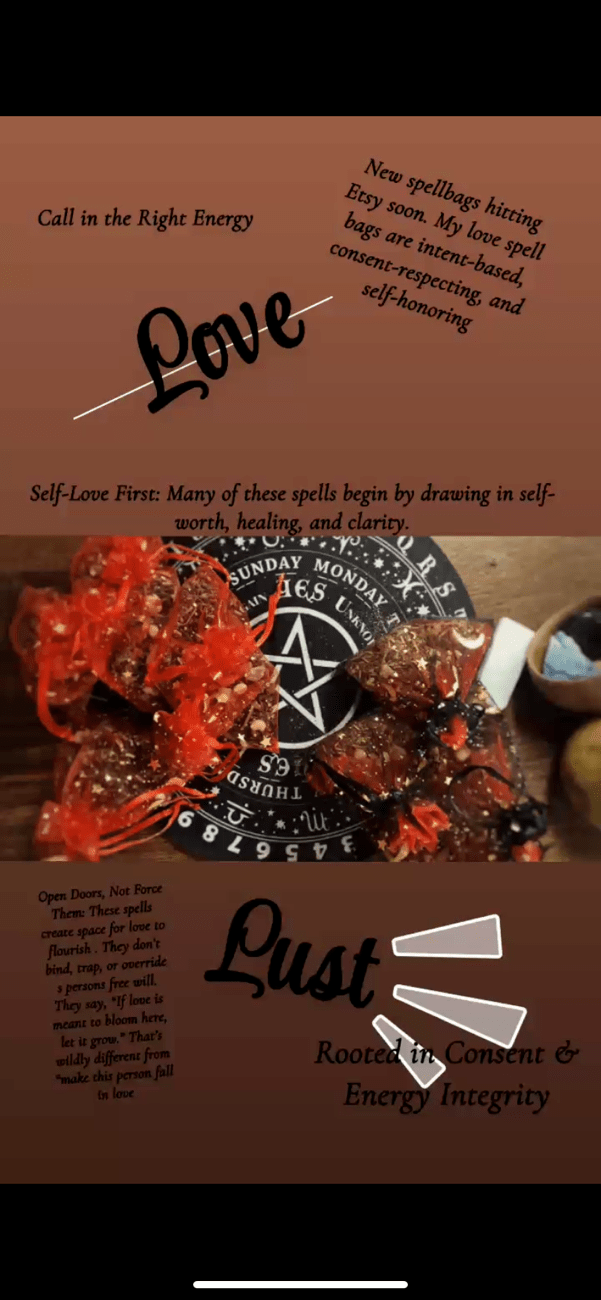
If you want to explore the physical and digital side of Poeaxtry, the stores are always open. Physical items like handmade pieces, ritual tools, and select creations live only on Etsy. Digital books, zines, and downloads are available through Gumroad, Etsy, & Payhip. As well as some being available on Kindle & Amazon. Same hands clicking keys across all, just different formats for different hands, needs, and screens.
When I think about legacy, I don’t picture wealth or status, I envision of a shelf. A tall, dusty shelf sits in some quiet room, decades from now. It is lined with books that echo voices. These are the voices that were once silenced. I want my poetry to outlive me. This is not just for the sake of art. It is for the sake of those who have felt or will feel invisible. My legacy will be one of poetic excellence, but also one of resistance, resilience, and raw truth.
Words like Lanterns
I want to be remembered as someone who used his words like lanterns. I aim to light paths for trans and queer youth. They need to see themselves clearly in a world that often erases them. I want to leave behind a body of work that makes people feel braver, more seen, and more whole. My legacy will focus on collaboration in publishing.
I aim to publish not only my own books. I also lift others’ voices in shared collections. These collections challenge injustice and document our collective truths. I will also start a publishing company. Its primary focus will be on publishing the work of those who are most vulnerable. These individuals are often most likely to be ignored.
Restless Care
Above all, I want my legacy to be one of relentless care. I care for the underdog, for the misrepresented, and for those living in the margins. I want my words and projects to remind future generations that their stories matter. Once upon a time, someone fought like hell to make sure they’d be heard.
Axton is the Change!
Just in case this was a thing you didn’t pick up on. I don’t want to be remembered as someone who simply talked about the need for change. I want to be remembered as someone who was the change. Someone whose voice didn’t just echo in empty halls. It moved through communities, laws, and generations. This helped to carve out a freer world for minorities. A world where they are no longer just fighting to be heard, but living loudly, boldly, and without shame.